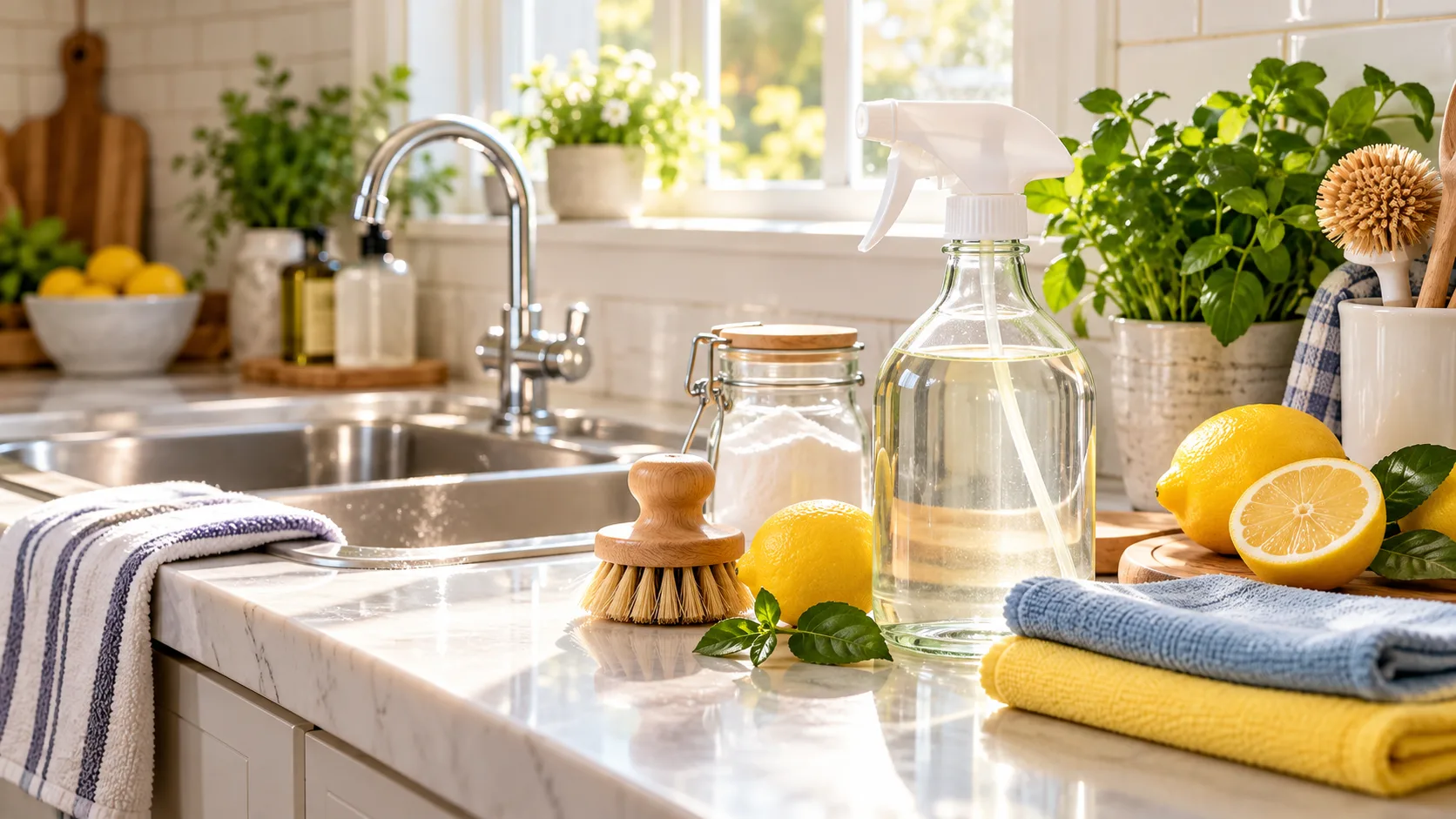
White vinegar is one of the most popular household ingredients for simple, natural cleaning. Its acidity can help loosen certain mineral deposits, cut through light residue, and freshen some washable surfaces without relying on heavily fragranced cleaners. Used correctly, it can be a practical addition to an everyday home cleaning routine.
The key is knowing where vinegar works well and where it should never be used. Because it is acidic, vinegar can damage natural stone, some grout, waxed finishes, certain appliance parts, and other sensitive materials. It should always be matched carefully to the surface you are cleaning rather than treated as an all-purpose solution.
These vinegar cleaning hacks focus on safe, realistic uses around the home, including glass, certain bathroom fixtures, kitchen residue, and small household cleaning jobs. Always check manufacturer instructions first, test unfamiliar surfaces in a hidden area, and never mix vinegar with bleach or other cleaners that can create harmful fumes.
1. Use Diluted Vinegar for Certain Glass Surfaces
Diluted white vinegar can be useful for removing light fingerprints, water spots, and everyday residue from compatible plain glass surfaces. Mix a small amount with water and apply it lightly using a spray bottle or damp cloth. Follow with a clean microfiber cloth to reduce streaks and leave the surface looking clearer.
Avoid oversaturating mirrors or framed glass because excess liquid can seep into edges and potentially damage backing materials. Work in small sections and wipe the surface promptly rather than allowing the solution to sit for a long time. A light application is usually more effective than soaking the entire surface.
Do not use vinegar automatically on coated glass, specialty window films, tinted surfaces, or materials where the manufacturer advises against acidic cleaners. When you are unsure, plain water and a microfiber cloth may be the safer option. Vinegar works best on simple glass surfaces known to tolerate mild acidity.
2. Remove Light Hard-Water Residue From Compatible Fixtures
Mineral deposits can collect around bathroom taps, shower fittings, and other areas exposed to hard water. On compatible fixtures, diluted vinegar can help loosen light mineral residue and make it easier to wipe away. Apply a small amount with a cloth rather than pouring it directly over the fixture.
Allow the vinegar to sit only as long as needed, then rinse the area thoroughly with clean water. Drying the fixture afterward can help reduce new water spots. A soft toothbrush or microfiber cloth may be useful for reaching small areas around tap bases and edges.
Avoid vinegar on finishes that may react badly to acids, including some plated, specialty, or decorative coatings. Natural stone around bathroom fixtures also requires extra caution because acidic products can damage it. Always confirm the manufacturer’s cleaning recommendations before using vinegar on unfamiliar materials.
3. Freshen a Compatible Kitchen Sink
Certain durable kitchen sinks can benefit from a diluted vinegar wipe when light water spots or mild residue appear. Apply the solution to a soft cloth and wipe the surface gently rather than soaking the sink. This can help refresh the appearance between deeper cleaning sessions.
Rinse the sink thoroughly after using vinegar so acidic residue does not remain on the surface. Dry it with a clean microfiber cloth to reduce water marks and improve the finish. Regular quick maintenance can keep the sink looking cleaner without requiring aggressive scrubbing.
Do not use vinegar on natural stone sinks, some composite materials, or specialty coatings unless the manufacturer specifically approves it. Stainless steel may also have finish-specific care instructions. Natural cleaning should always protect the material first rather than forcing one method onto every sink.
4. Use Vinegar to Help Clean Certain Shower Glass
Shower glass can develop visible water spots and soap residue over time. On compatible plain glass, diluted vinegar may help loosen some mineral buildup and make routine cleaning easier. Apply it lightly and allow it a short contact time before wiping the surface with a soft cloth.
Follow with clean water and dry the glass using a microfiber cloth or squeegee. Removing leftover moisture helps prevent new water spots from appearing as quickly. Using a squeegee after regular showers can also reduce the amount of buildup that needs stronger cleaning later.
Avoid getting vinegar onto natural stone tiles, sensitive grout, metal finishes, or coated shower surfaces. Acidic runoff can affect nearby materials even if the glass itself tolerates vinegar. Apply carefully and keep the solution limited to surfaces that are known to be compatible.
5. Use Vinegar for Light Residue on Certain Washable Surfaces
Diluted vinegar can help with light residue on some sealed, washable household surfaces. It may be useful for areas such as certain laminate surfaces, plain glass tables, or other materials whose care instructions allow mild acidic cleaners. Always start with a weak solution and a soft cloth.
Wipe gently and follow with clean water when appropriate. You do not need large amounts of vinegar for routine cleaning, and using too much can create an unnecessary odor or leave the surface wet longer than needed. A small amount is usually enough for basic maintenance.
Never use vinegar on marble, granite, limestone, unsealed grout, waxed wood, or other acid-sensitive materials. Electronics and specialty finishes should also be cleaned according to their own instructions. Vinegar is useful in the right situations, but it is not a universal household cleaner.
How to Dilute Vinegar for Household Cleaning
For many basic cleaning tasks, diluted vinegar is a better choice than using it at full strength. A simple solution of vinegar and water is often enough for light glass or mineral-residue cleaning. Using less acid can also reduce the risk of unnecessary surface damage.
Keep any homemade mixture clearly labeled and stored safely away from children and pets. Do not reuse drink bottles or food containers for cleaning solutions because they can create confusion. A dedicated spray bottle helps keep the product organized and easy to identify.
Avoid preparing large amounts that sit unused for months. Mixing only what you reasonably expect to use keeps the routine simple and reduces clutter. Natural cleaning works best when the process remains practical, safe, and easy to manage.
Surfaces You Should Never Clean With Vinegar
Natural stone is one of the most important materials to protect from vinegar. Marble, limestone, travertine, and some other stone surfaces can react with acids and become etched or permanently dulled. Use a cleaner specifically recommended for stone instead.
Waxed wood and certain flooring finishes can also be damaged by acidic solutions. Repeated exposure may affect protective coatings or leave the surface looking uneven. Always follow the flooring or furniture manufacturer’s instructions before introducing vinegar into your cleaning routine.
Other materials such as some grout, appliance components, electronics, and specialty metal finishes may also require different care. When in doubt, avoid experimenting. A manufacturer-approved cleaner is usually a safer choice than risking permanent damage for the sake of a cleaning shortcut.
Why Vinegar Works for Some Cleaning Jobs
Vinegar contains acetic acid, which helps explain why it can loosen certain mineral deposits and light residue. That mild acidity makes it useful for specific household tasks, particularly when dealing with hard-water marks on compatible surfaces. It can also help break down some types of buildup.
However, the same acidity that makes vinegar useful can also make it damaging. Acid-sensitive materials may lose their finish, become etched, or weaken after repeated exposure. This is why vinegar should be used selectively rather than promoted as an all-purpose cleaner.
Understanding the material you are cleaning is more important than choosing a trendy household hack. A simple product can be very effective when matched correctly to the task. Used carelessly, even a natural ingredient can cause expensive surface damage.
Common Vinegar Cleaning Mistakes to Avoid
One of the biggest mistakes is assuming that natural means harmless. Vinegar can still damage surfaces, affect finishes, and irritate sensitive skin or eyes. Always use it with the same level of care you would apply to any other household cleaner.
Another mistake is mixing vinegar with other cleaning chemicals. Vinegar should never be combined with bleach because the mixture can release dangerous chlorine gas. Avoid random homemade combinations altogether unless you know they are safe and appropriate.
Using too much vinegar is also unnecessary. More acid does not automatically produce a cleaner surface and may increase the risk of damage. A light, diluted application is usually enough for the household tasks where vinegar is genuinely suitable.
Vinegar Cleaning vs. Disinfecting
Cleaning and disinfecting are not the same process. Vinegar may help remove visible residue or mineral buildup from compatible surfaces, but it should not automatically be treated as a substitute for a registered disinfectant. Different situations require different levels of hygiene.
If you need to disinfect a surface because of illness, food safety concerns, or another specific reason, use a product designed and labeled for that purpose. Follow its contact-time and safety instructions carefully. A natural cleaning solution may not provide the same level of germ control.
For ordinary household maintenance, removing dirt and residue is often the main goal. Vinegar can be useful for some of those jobs, provided the surface is compatible. Knowing when cleaning is enough and when disinfection is needed helps you choose the right method.
How to Make Natural Cleaning More Effective
Natural cleaning works best when small messes are handled before they become heavy buildup. Wiping water spots early, drying shower glass, and cleaning kitchen residue promptly can reduce the need for stronger methods later. Prevention is often the easiest cleaning hack of all.
Use microfiber cloths, soft brushes, and reusable cleaning tools alongside simple solutions. The right tool can often improve results more than adding extra ingredients. Good technique is just as important as the cleaning product itself.
Keep your routine simple and focused on surfaces that genuinely benefit from natural methods. Specialty materials should still receive specialty care. Combining practical maintenance with careful product selection can keep your home cleaner without unnecessarily relying on harsh or complicated cleaning systems.
Conclusion
Vinegar can be a useful natural cleaning ingredient when it is used on the right surfaces. Diluted vinegar may help with certain glass areas, light mineral deposits, compatible sinks, and selected washable surfaces while keeping your routine relatively simple.
The most important part of vinegar cleaning is knowing its limitations. Natural stone, waxed finishes, specialty coatings, some grout, and certain metals can be damaged by acids. Checking care instructions before cleaning can prevent an inexpensive hack from turning into a costly repair.
Used thoughtfully, vinegar can become one practical tool within a broader household cleaning routine. Combine it with reusable cloths, regular maintenance, and good surface care to keep your home fresher while avoiding unnecessary or overly harsh cleaning products.
FAQs
What can I safely clean with vinegar?
Diluted vinegar can be useful on some plain glass, compatible bathroom fixtures, certain sinks, and other washable surfaces that tolerate mild acids. Always check care instructions first.
Can vinegar be used on granite or marble?
No. Vinegar is acidic and can etch or dull natural stone such as marble, limestone, and many granite surfaces. Use a stone-safe cleaner instead.
Can I mix vinegar with bleach?
No. Never mix vinegar with bleach because the combination can release dangerous chlorine gas. Keep household cleaning chemicals separate unless labels specifically state they are compatible.
Does vinegar disinfect household surfaces?
Vinegar can help clean certain surfaces, but it should not be relied on as a replacement for a registered disinfectant when true disinfection is required.
How can I reduce the vinegar smell after cleaning?
Use a diluted solution, avoid applying excessive amounts, rinse compatible surfaces when appropriate, and improve room ventilation. The smell usually fades relatively quickly once the area dries.