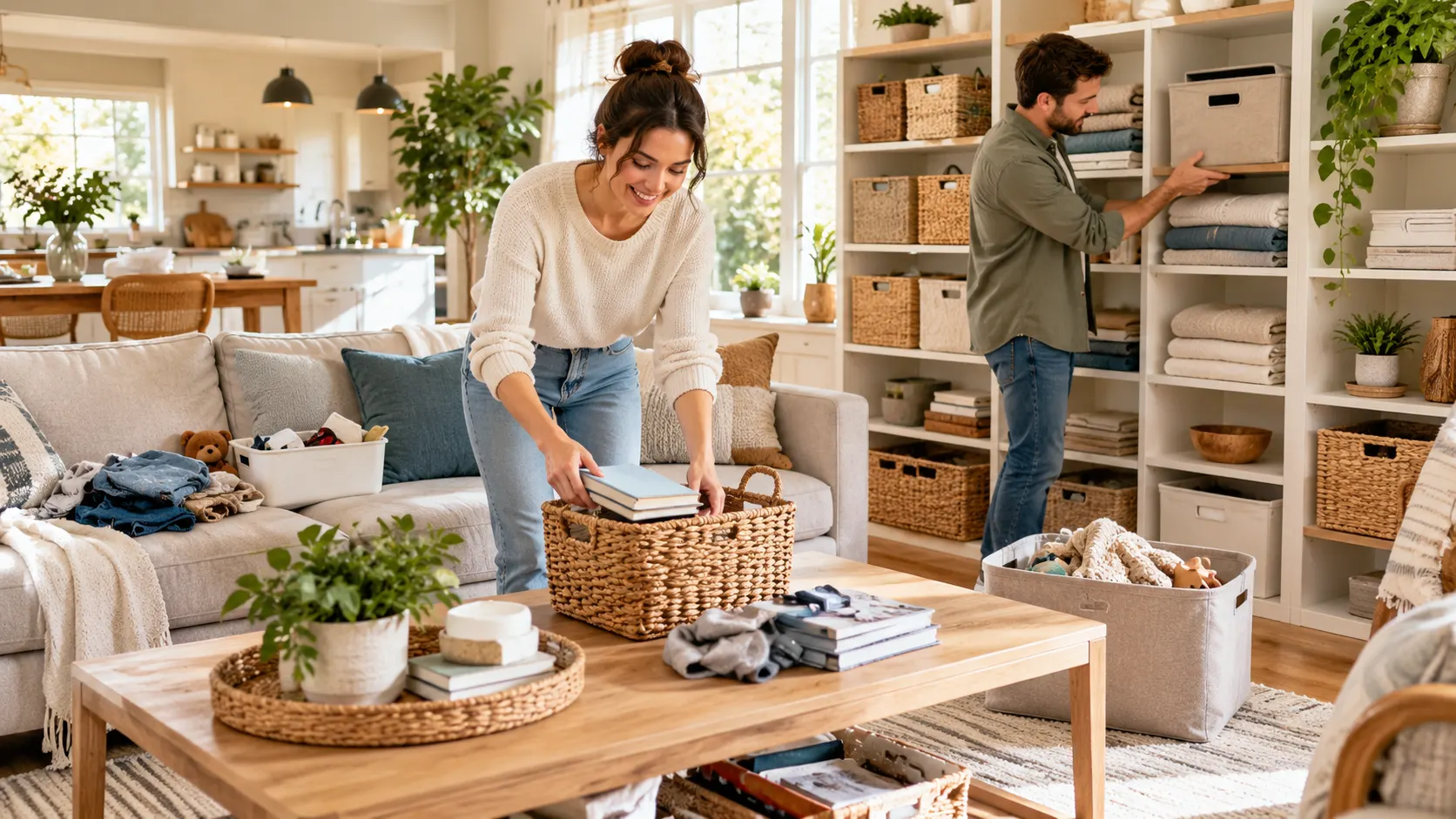
Clutter can make even a clean home feel stressful, crowded, and difficult to manage. When belongings pile up on countertops, tables, floors, and shelves, simple everyday tasks can start taking longer than they should. Fortunately, you do not need an expensive storage system or an entire weekend to create noticeable improvements around your home.
The key to effective home organization is making quick decisions and giving everyday belongings a practical place to live. Small changes such as using baskets, organizing vertical space, and removing items you no longer use can transform messy rooms surprisingly quickly. These home organization hacks will help you get rid of clutter fast while creating a system that is easier to maintain.
1. Start With a 15-Minute Decluttering Sprint
Trying to organize your entire home at once can quickly become overwhelming, so begin with a short 15-minute decluttering session. Choose one visible area such as a kitchen counter, coffee table, bedroom chair, or bathroom vanity. Set a timer and focus only on removing items that clearly belong somewhere else or are no longer needed.
Use three simple categories while working: keep, relocate, and remove. Items you use regularly should stay nearby, misplaced belongings should return to their proper rooms, and unwanted objects can be donated, recycled, or discarded. Keeping your decisions simple prevents you from spending valuable time debating every small item and helps create immediate visual progress.
Once the timer ends, stop and look at the difference you have made before choosing another area. Short organizing sessions feel much more manageable than large cleaning projects and can easily fit into busy schedules. Repeating this home organization habit several times throughout the week can gradually eliminate clutter without requiring hours of exhausting work.
2. Use a Basket to Collect Items That Belong Elsewhere
Walking back and forth between rooms while decluttering wastes time and can easily distract you from the area you are organizing. Instead, carry a medium-sized basket while moving through each room and place misplaced belongings inside it. Toys, chargers, books, clothing, toiletries, and miscellaneous household items can all be collected before being returned to their proper locations.
Once you finish clearing one room, take the basket around the house and put everything away in a single trip. This simple clutter-control technique keeps you focused and reduces unnecessary movement while organizing. It is particularly useful in family homes where personal belongings frequently migrate from bedrooms into living rooms, kitchens, hallways, and shared spaces.
You can even keep a small decorative basket near a staircase or central hallway for items that need to move to another floor. At the end of each day, quickly empty the basket and return everything to its designated place. This prevents random objects from accumulating on tables and countertops while creating an easy daily home organization routine.
3. Give Every Everyday Item a Permanent Home
Clutter often appears because commonly used items do not have clearly defined storage locations. Keys land on countertops, mail collects on tables, shoes spread across entrances, and remote controls disappear between sofa cushions. Giving these everyday belongings a permanent home reduces visual mess and makes it easier for everyone to put things away automatically.
Think about where each item is naturally used rather than where you believe it should theoretically be stored. Place a small tray near the entrance for keys, hooks near the door for bags, and a basket beside the sofa for blankets. Convenient storage encourages consistent habits because putting something away becomes easier than leaving it somewhere random.
Avoid creating overly complicated organizing systems that require several steps just to store basic household items. Open baskets, simple hooks, shallow trays, and clearly divided drawers often work better than elaborate storage containers. The best home organization system is one that fits your daily routine and makes returning items to their designated places almost effortless.
4. Use Vertical Space to Clear Crowded Surfaces
When countertops, desks, and floors feel crowded, look upward for additional storage opportunities. Walls, cabinet doors, shelving units, and unused spaces above furniture can provide valuable organization without consuming extra floor space. Floating shelves, wall hooks, pegboards, and over-the-door organizers are especially useful in smaller homes where storage options may be limited.
Vertical storage works particularly well in kitchens, bathrooms, bedrooms, garages, and home offices. Install hooks for utensils, towels, bags, or accessories, and use shelves to hold frequently used items that would otherwise cover work surfaces. Keeping belongings visible but contained can make cramped rooms feel more spacious while also making everyday objects easier to find.
Be selective about what you display because overcrowded walls can create a different type of visual clutter. Group similar objects together and leave some open space between storage areas whenever possible. Thoughtful use of vertical space helps you organize more efficiently while maintaining a clean, balanced appearance throughout your home.
5. Organize Drawers With Simple Dividers
Drawers can hide clutter from view, but that does not mean they are actually organized. Kitchen utensils, office supplies, bathroom products, socks, and accessories can quickly become tangled together when everything shares one large space. Simple drawer dividers create smaller categories that prevent items from shifting and make it easier to see exactly what you own.
You do not necessarily need specialized organizers for every drawer in your home. Small containers, shallow boxes, trays, or repurposed packaging can divide larger drawers into practical sections. Group similar items together, such as charging cables, pens, makeup products, utensils, or grooming tools, so you can immediately locate what you need without searching through piles.
Avoid filling every compartment simply because space is available. Keeping some breathing room inside drawers makes items easier to remove, return, and maintain over time. Once drawers have clear categories, household members can quickly understand where things belong, reducing the likelihood that hidden clutter will rebuild after only a few days.
6. Create a Simple Drop Zone Near the Entrance
Your home’s entrance is one of the easiest places for clutter to accumulate because several everyday items arrive there at the same time. Shoes, jackets, backpacks, keys, sunglasses, packages, and mail can quickly cover nearby furniture or floors. Creating a designated drop zone provides an immediate storage location before these belongings spread throughout the rest of the house.
Keep the system simple by combining a few hooks, baskets, trays, or shoe storage solutions according to your available space. Give frequently used belongings specific locations that can be accessed quickly when entering or leaving the home. Families can assign individual hooks or baskets to each person, making it easier to manage personal belongings without mixing everything together.
Spend a minute or two resetting the drop zone at the end of each day. Remove junk mail, return unnecessary items to their proper rooms, and place shoes or bags neatly where they belong. Maintaining this small area can prevent clutter from traveling deeper into your home and create a calmer first impression whenever you walk through the door.
7. Use Clear Containers for Small Household Items
Small household items are easy to lose because they often disappear inside drawers, cabinets, closets, or deep storage boxes. Clear containers allow you to see what is stored without opening multiple boxes to find one particular object. They work especially well for craft supplies, toiletries, pantry items, batteries, cables, children’s accessories, and seasonal household essentials.
Group similar items together before placing them into containers rather than using storage bins to hide random clutter. One container might hold spare charging cables while another stores batteries or basic repair supplies. Categorizing belongings first makes containers genuinely useful because you know exactly where to look when something is needed.
Choose containers that fit your available shelves and drawers instead of buying storage products before measuring your space. Oversized bins can waste valuable room, while dozens of tiny containers may create unnecessary complexity. Simple, visible storage helps reduce duplicate purchases because you can easily see what you already own before buying replacements.
8. Apply the One-In, One-Out Rule
Clutter eventually returns when new belongings constantly enter the home without anything leaving. The one-in, one-out rule creates a simple boundary by encouraging you to remove one similar item whenever you purchase something new. Buying a new shirt, kitchen gadget, toy, or decorative object becomes an opportunity to evaluate whether an older item still deserves space.
This home organization habit is especially useful for categories that tend to grow quickly, such as clothing, shoes, children’s toys, books, and beauty products. You do not need to follow the rule rigidly for every small purchase. Instead, use it as a practical reminder to regularly review possessions before storage areas become overcrowded again.
Keeping a donation box in a closet, garage, or storage area makes the process even easier. When you discover something you no longer want, place it directly into the box rather than returning it to a crowded shelf. Once the container becomes full, donate appropriate items and restart the system so decluttering becomes an ongoing habit.
9. Declutter Flat Surfaces Every Evening
Flat surfaces naturally attract clutter because placing something on a table or countertop requires almost no effort. Kitchen islands, dining tables, bedside tables, desks, and dressers can quickly become temporary storage zones for mail, clothing, dishes, and miscellaneous belongings. A quick evening reset prevents these surfaces from gradually disappearing beneath accumulated items.
Spend five or ten minutes before bedtime returning objects to their designated locations. Put dishes in the kitchen, place clothes in closets or laundry baskets, file important papers, and throw away obvious rubbish. You do not need to perform a complete cleaning session; the goal is simply to restore clear surfaces before starting another day.
Clear surfaces create an immediate sense of order even when other parts of the room are not perfectly organized. They also make routine dusting and cleaning significantly easier because you are not constantly moving piles of belongings. Turning this small nightly habit into a regular routine can dramatically reduce the amount of clutter that builds up between larger organization sessions.
10. Create a Weekly Clutter Reset Routine
Even the best organization system requires occasional maintenance because daily life naturally creates disorder. Choose one day each week for a quick whole-home clutter reset rather than waiting until the house feels completely overwhelming. Walk through each room, return misplaced items, empty collection baskets, review visible surfaces, and address any problem areas that have started accumulating belongings.
Your weekly reset does not need to involve deep cleaning or detailed closet organization. Focus primarily on restoring the systems you have already created, such as clearing the entryway, reorganizing drawers, and returning frequently used belongings to their designated places. Keeping the session short makes it easier to maintain consistently instead of postponing the task.
Pay attention to areas that repeatedly become messy because recurring clutter usually indicates that your storage system needs improvement. If shoes constantly collect near the door, you may need easier shoe storage rather than more discipline. Adjusting organization systems around your actual behavior makes it much easier to maintain a clutter-free home over the long term.
Conclusion
Getting rid of clutter does not require perfectly organized closets, expensive storage products, or complicated systems. Simple strategies such as using baskets, clearing surfaces, dividing drawers, and assigning permanent homes to everyday belongings can create noticeable results quickly. The goal is to make organization convenient enough that maintaining your home requires less effort.
Start with one small area rather than trying to transform every room at the same time. Quick decluttering sessions provide visible progress and can motivate you to continue improving other spaces around your home. As unwanted belongings disappear and frequently used items gain practical storage locations, everyday cleaning and household routines become easier to manage.
A clutter-free home is created through consistent habits rather than one large organizing project. Small daily resets combined with a weekly organization routine can prevent belongings from accumulating again. By using these practical home organization hacks, you can create cleaner, calmer spaces while spending less time searching for things, moving piles, and managing unnecessary clutter.
FAQs
What is the fastest way to declutter a house?
Start with visible surfaces and use three categories: keep, relocate, and remove. Work in short 15-minute sessions and focus on one small area at a time instead of attempting the entire house.
How do I organize my home when I have too much stuff?
Begin by removing items you no longer use, need, or enjoy before purchasing additional storage. Once unnecessary belongings are gone, group similar items together and give frequently used possessions convenient permanent locations.
How can I keep clutter from coming back?
Create simple storage systems, clear surfaces regularly, and follow habits such as the one-in, one-out rule. A short weekly clutter reset can also prevent small messes from becoming overwhelming again.
What areas of the home should I declutter first?
Start with highly visible and frequently used spaces such as kitchen counters, entryways, living rooms, and bathroom surfaces. Improving these areas creates immediate results and makes your entire home feel more organized.
Do I need expensive storage containers to organize my home?
No. Baskets, repurposed boxes, hooks, trays, and existing containers can organize most household items effectively. Removing unnecessary possessions and creating practical storage locations are usually more important than buying expensive organizing products.