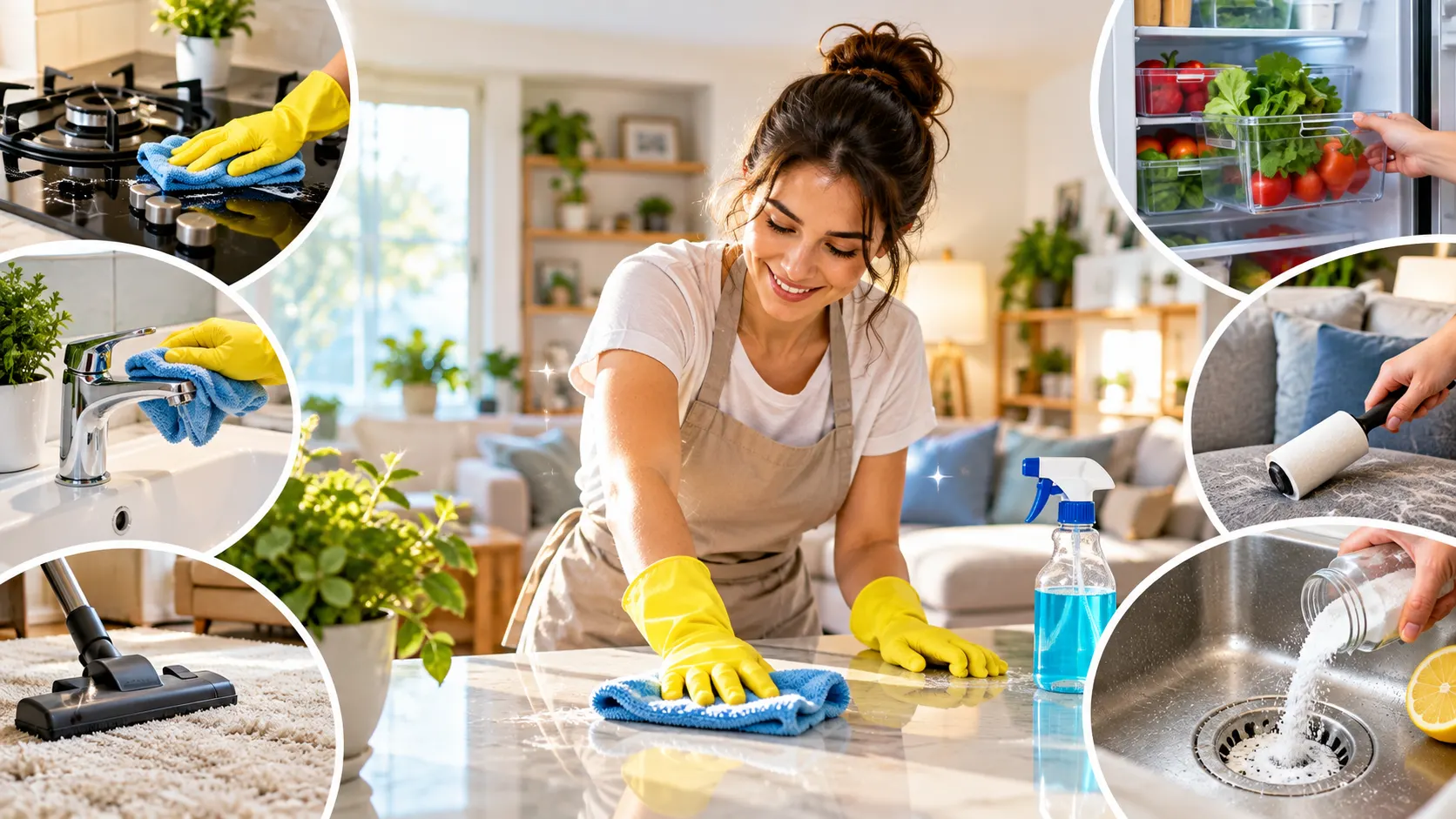
Keeping your home tidy every day does not require hours of cleaning or a strict housekeeping schedule. Small habits performed consistently can stop clutter, dust, dishes, and laundry from piling up. When cleaning becomes part of your normal routine, the home stays more manageable without needing frequent marathon sessions.
The best daily cleaning hacks are simple enough to repeat even on busy days. Instead of trying to deep clean every room, focus on small actions that create the biggest visible improvement. A few minutes spent on counters, floors, laundry, and clutter can keep your space looking fresher and more organized.
These practical home cleaning tips are designed for everyday life. They help you stay ahead of mess, save time, and reduce the stress of weekend cleaning. Whether you live alone or with a busy family, these habits can make your home easier to maintain from morning to night.
1. Make Your Bed as Soon as You Wake Up
Making your bed is one of the fastest ways to make a bedroom look more organized. Because the bed takes up so much visual space, straightening the sheets and pillows instantly improves the appearance of the entire room. It also creates a sense of order before the rest of the day begins.
You do not need to style the bed perfectly or spend several minutes arranging decorative pillows. Simply pull the bedding into place, smooth obvious wrinkles, and place pillows neatly at the head of the bed. This basic habit usually takes less than two minutes but makes a noticeable difference.
A tidy bed can also motivate you to keep the rest of the bedroom under control. Once the main surface looks organized, you may be more likely to put away clothing, clear bedside tables, and return items to their proper places. Small visual wins can encourage better daily cleaning habits.
2. Follow the One-Minute Cleaning Rule
The one-minute rule is simple: if a cleaning task takes less than a minute, do it immediately. Wipe a spill, hang up a jacket, put away a cup, straighten a cushion, or place shoes in their proper location instead of leaving the task for later.
Small unfinished tasks quickly become larger messes when they accumulate throughout the day. One dish on the counter may turn into several, and one piece of clothing on a chair can become a full pile by evening. Handling tiny chores immediately prevents clutter from multiplying.
This habit works particularly well because it does not feel like formal cleaning. You simply complete quick tasks as you notice them while moving through your normal routine. Over time, these small actions can significantly reduce the amount of tidying needed at the end of the day.
3. Wipe Kitchen Counters After Every Meal
Kitchen counters collect crumbs, food splashes, grease, and packaging throughout the day. Wiping them after every meal prevents residue from drying and keeps the kitchen looking cleaner. Fresh messes usually take only a few seconds to remove compared with stubborn buildup that has been sitting for hours.
Keep a clean microfiber cloth or appropriate wiping cloth somewhere convenient so the task feels easy. Use a surface cleaner that is suitable for your countertop material and follow care instructions for stone, wood, laminate, or specialty finishes. Keeping supplies nearby makes quick maintenance more likely.
Clear away dishes and ingredients before wiping so you can clean the full surface efficiently. Once counters are clean, the entire kitchen feels more organized even if other tasks remain. This short routine can dramatically reduce the amount of scrubbing needed during weekly cleaning.
4. Put Items Away Instead of Putting Them Down
Many household clutter problems begin when belongings are placed on the nearest available surface. Keys land on counters, clothing ends up on chairs, and chargers remain on tables. Making a habit of putting items directly in their designated place prevents small piles from forming throughout the home.
Create convenient storage for things you use every day. Use hooks near the entrance, baskets in shared rooms, trays for keys, and clearly assigned spaces inside drawers and cabinets. The easier something is to put away, the more likely you are to return it consistently.
Try repeating a simple rule whenever you finish using something: put it away rather than setting it down temporarily. This small change reduces visual clutter and saves time because you no longer need to gather and reorganize dozens of misplaced items during larger cleaning sessions.
5. Do a Quick Bathroom Sink Wipe Each Day
Bathroom sinks quickly develop water spots, toothpaste marks, soap residue, and stray hair. A quick daily wipe can keep the area looking fresh without requiring a full bathroom cleaning session. It usually takes less than a minute when residue has not been allowed to build up.
Keep an appropriate cloth nearby and wipe the sink basin, tap, and surrounding counter after your morning or evening routine. Choose cleaning products that are safe for the materials in your bathroom. Avoid abrasive methods on surfaces or fixtures that could scratch easily.
Daily maintenance helps prevent dried toothpaste and soap deposits from becoming stubborn. It also makes weekly bathroom cleaning faster because you are starting with a relatively clean surface. A consistently tidy sink can make the entire bathroom feel noticeably cleaner.
6. Sweep or Vacuum High-Traffic Areas First
Entryways, kitchens, hallways, and living rooms usually collect dirt faster than less-used areas. Giving these spaces a quick sweep or vacuum each day can keep visible debris under control. You do not need to clean every floor in the house to create a noticeable improvement.
Focus on crumbs, pet hair, dust, and dirt that appear in the areas your household uses most. A few minutes with a lightweight vacuum or broom can prevent debris from spreading into bedrooms and other spaces. Entryways deserve extra attention because outdoor dirt often enters the home through shoes.
Save detailed edge cleaning and furniture-moving for scheduled weekly or deep-cleaning sessions. Daily floor maintenance should be quick and practical rather than exhaustive. Targeting high-traffic zones gives you the biggest visual benefit while keeping the routine easy enough to repeat.
7. Load Dishes Immediately After Eating
Dirty dishes can make a kitchen look messy faster than almost anything else. Instead of leaving plates, cups, and utensils on counters or in the sink, place them directly into the dishwasher when possible. If you wash by hand, rinse and organize them immediately after meals.
Encourage everyone in the household to handle their own dishes rather than leaving them for one person. This simple shared habit prevents large piles from forming and reduces the amount of cleanup needed later. Small contributions can make a major difference in busy family homes.
Before going to bed, aim to have the sink reasonably clear. Waking up to a clean kitchen makes mornings feel calmer and gives you a fresh start. Consistent dish habits also make counters easier to wipe because fewer items are standing in the way.
8. Use a Basket for Items That Belong Elsewhere
Walking back and forth between rooms every time you find a misplaced item can make tidying inefficient. Instead, keep a small basket in a central location and place objects inside when they belong somewhere else. This allows you to gather clutter without interrupting your current cleaning task.
At the end of the day, carry the basket around the house and return everything to its proper place. You can also assign family members to remove their own belongings from the basket. This creates a simple system for controlling loose items without spending all day moving between rooms.
The basket should remain temporary rather than becoming permanent storage. Empty it regularly so clutter does not simply move from surfaces into another container. Used correctly, this hack can make daily organization faster while keeping common areas visibly cleaner.
9. Reset the Living Room Before Bed
Living rooms often collect cushions, blankets, cups, toys, remote controls, and other everyday items by the end of the day. Spending a few minutes resetting the space before bed can make the room feel completely different the next morning. Straighten furniture and remove anything that does not belong there.
Fold blankets, arrange cushions, return remote controls, and collect dishes or rubbish. If toys are present, place them inside a basket or designated storage area. You do not need to dust or vacuum every night unless the room genuinely needs it.
A consistent evening reset prevents small messes from carrying over into the next day. It also reduces the amount of visible clutter waiting for you in the morning. This habit works especially well when combined with a short family cleanup routine before bedtime.
10. Finish the Day With a Ten-Minute Whole-Home Reset
A ten-minute evening reset can keep your home from gradually becoming untidy during a busy week. Set a timer and move quickly through the most-used areas, focusing on obvious clutter and unfinished tasks. The goal is basic order rather than detailed cleaning.
Use the time to clear counters, put away shoes, collect laundry, load remaining dishes, and return misplaced items. Prioritize the areas that will make tomorrow morning easier. Even if you do not complete everything, ten focused minutes can produce a noticeable improvement.
Keeping the routine short makes it easier to follow consistently. If several household members participate, divide the rooms and work at the same time. Regular evening resets can dramatically reduce weekend cleaning because much of the everyday mess has already been handled.
How to Make Daily Cleaning Feel Easier
Daily cleaning becomes easier when useful supplies are located close to where tasks happen. Keep kitchen cloths near the counters, bathroom supplies nearby, and laundry baskets where clothing is usually removed. Convenient systems reduce the number of extra steps involved in maintaining the home.
Avoid trying to fit deep cleaning into your daily routine. Everyday maintenance should focus on visible mess, clutter, dishes, laundry, and small spills. Larger jobs such as cleaning windows, appliance interiors, and areas behind furniture can remain part of a weekly or monthly schedule.
You can also attach cleaning habits to activities you already perform. Wipe the bathroom after brushing your teeth or reset the kitchen immediately after dinner. Linking a new habit to an established routine makes it easier to remember and helps cleaning become automatic over time.
Common Daily Cleaning Mistakes to Avoid
Trying to make every room perfectly clean each day can quickly become exhausting. Daily cleaning is meant to prevent mess from growing, not replace deeper household maintenance. Focus on a few high-impact tasks and allow less urgent jobs to wait until their scheduled cleaning time.
Another common mistake is creating organization systems that are too complicated. If putting away one item involves opening multiple boxes or rearranging a shelf, people may stop using the system. Easy-access baskets, hooks, drawers, and storage zones usually work better for everyday household organization.
Do not allow quick cleaning to become an excuse for ignoring larger problems indefinitely. Regularly review areas that need deeper attention and schedule time for them. Daily habits are most effective when they support, rather than completely replace, a sensible weekly cleaning routine.
How Daily Cleaning Can Save Time on Weekends
Small daily tasks prevent several days of clutter from accumulating into one large weekend cleanup. When dishes are handled, counters are wiped, and belongings are returned throughout the week, there is far less basic tidying left to complete. Weekend cleaning can then focus on more detailed tasks.
Regular floor maintenance also means less dirt has time to spread through the house. Bathrooms stay easier to scrub when sinks are wiped daily, and kitchens require less effort when grease and spills are removed quickly. Prevention is usually faster than dealing with hardened or heavily accumulated mess.
The biggest time savings come from consistency. Five or ten minutes every day can be easier to manage than spending hours restoring the house after an entire week of neglect. Simple routines help spread the workload and make cleaning feel like a normal part of daily life.
Conclusion
Keeping your home tidy every day is easier when cleaning happens in small, manageable steps. Making the bed, wiping counters, handling dishes immediately, and returning belongings to their proper places can prevent most everyday mess from becoming overwhelming.
You do not need to deep clean your entire house daily. Focus on high-use areas and small tasks that create the greatest visible improvement. Combining quick morning habits with a short evening reset can help your home stay comfortable and organized throughout the week.
The most effective daily cleaning routine is one you can maintain consistently. Choose habits that fit your schedule, keep storage simple, and involve other household members when possible. A few minutes of regular effort can keep your home tidier while reducing the time needed for larger cleaning sessions.
FAQs
What cleaning tasks should I do every day?
Focus on dishes, kitchen counters, visible clutter, bathroom sinks, dirty laundry, and quick floor cleanup in high-traffic areas. These tasks prevent the most common household messes from accumulating.
How long should daily cleaning take?
Around 10 to 20 minutes can be enough for basic maintenance in many homes. The exact time depends on household size, pets, children, and how responsibilities are shared.
How can I keep my house tidy with a busy schedule?
Use short routines, complete one-minute tasks immediately, keep supplies nearby, and reset important rooms before bed. Consistency is more useful than trying to complete long cleaning sessions.
Is it necessary to vacuum every day?
Not every home requires daily full-house vacuuming. Focus on high-traffic areas when needed and schedule more thorough floor cleaning according to your household, pets, and activity levels.
What is the easiest daily cleaning habit to start?
Begin with a ten-minute evening reset. Clear surfaces, put away loose items, handle dishes, and prepare shared spaces for the next day without turning it into a deep-cleaning session.