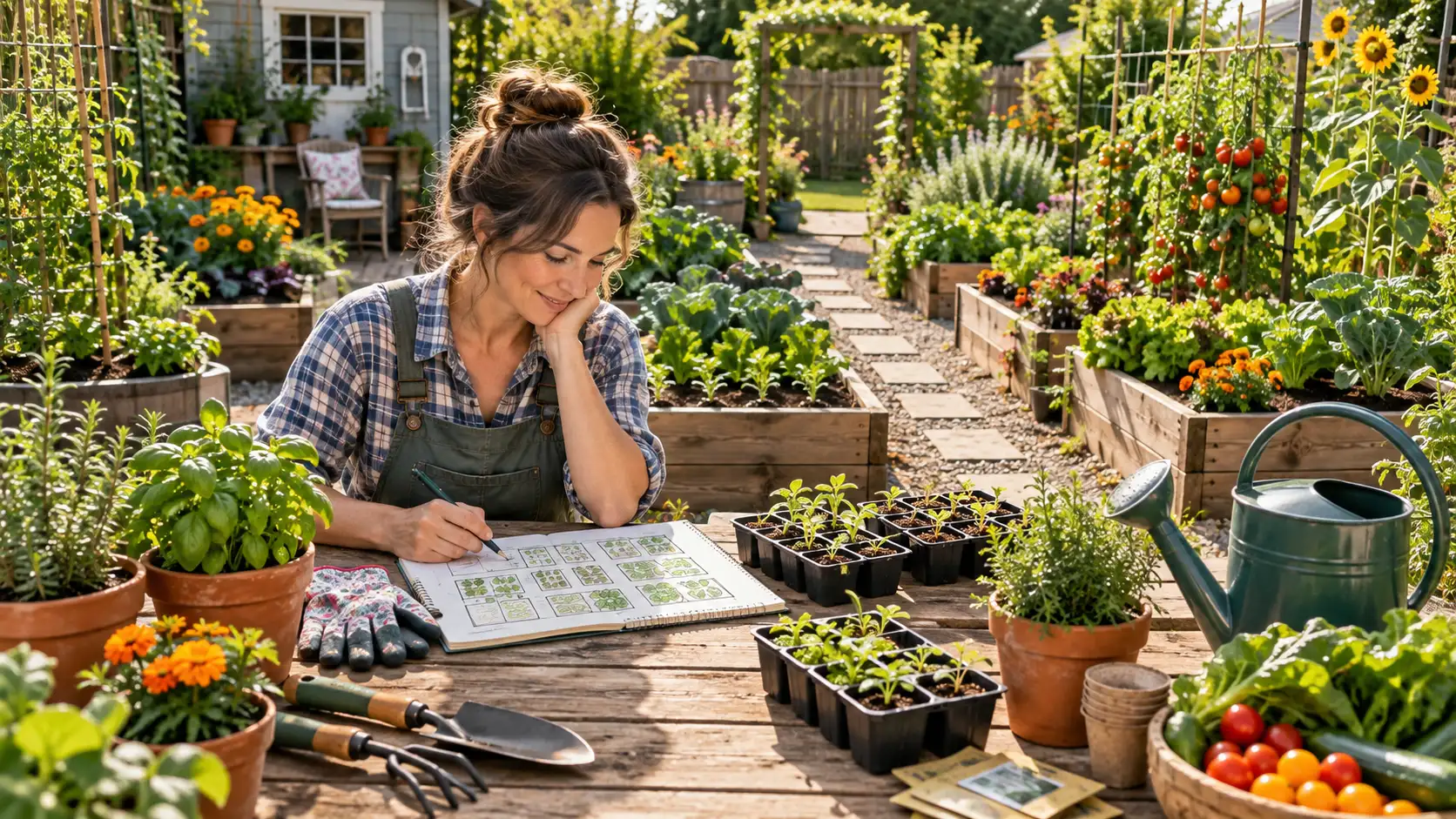
Assess Your Garden Space Before Planting
Good garden planning starts with understanding the space you already have. Walk around your yard and note sunny areas, shaded corners, slopes, existing trees, fences, and structures. These features influence where different plants can grow successfully. Taking time to observe the site before planting helps you avoid placing vegetables, flowers, or shrubs in conditions that do not support healthy growth.
Measure the approximate size of your available planting areas so you know how much space you can realistically use. A garden does not need to be large to be productive, but it should be manageable. Knowing the dimensions also helps you estimate how many plants will fit comfortably. This prevents overcrowding and makes future watering, pruning, and harvesting much easier.
Think about how people move through the garden as well. Leave enough space for paths, watering access, maintenance, and harvesting without stepping directly onto growing areas. Clear access protects soil from unnecessary compaction. A practical layout allows you to care for plants more consistently, which can have a direct impact on their overall health and development.
Study Sunlight Throughout the Day
Sunlight is one of the most important factors affecting plant growth, so observe your garden at different times. Some areas may receive direct morning sun but become shaded later, while others may stay bright for most of the day. Understanding these patterns helps you decide where sun-loving vegetables, herbs, flowers, or shade-tolerant plants should be placed.
Buildings, fences, and trees can create moving shadows that change across the seasons. A location that receives strong summer sunlight may become much darker during another part of the year. Consider these seasonal differences before creating permanent beds. Matching plants to realistic light conditions reduces weak growth and limits the need to relocate them later.
Group plants with similar sunlight requirements whenever possible. Full-sun crops can share one bed, while plants that tolerate partial shade can occupy another area. This makes garden care more organized and reduces competition between plants with different needs. Thoughtful light planning gives every plant a better opportunity to photosynthesize efficiently and develop strong, balanced growth.
Check and Improve Your Garden Soil
Healthy soil provides roots with water, oxygen, nutrients, and physical support. Before planting, check whether your soil is compacted, sandy, heavy, or rich in organic matter. Notice how quickly water drains after rainfall or irrigation. These simple observations can reveal whether the soil needs improvement before you begin growing vegetables, flowers, shrubs, or herbs.
Adding well-decomposed compost can improve many garden soils by increasing organic matter and supporting better structure. Compost can help sandy soil hold moisture and make heavier soil easier for roots to penetrate. Mix it gradually into growing areas rather than adding extremely large amounts. Improving soil quality before planting can support stronger roots and more consistent plant development.
If you frequently experience poor growth, a basic soil test can provide useful information about pH and nutrient levels. Avoid adding fertilizer simply because plants look weak, since drainage or watering problems can create similar symptoms. Understanding the soil first helps you make more accurate decisions. Better soil planning reduces unnecessary amendments and creates healthier growing conditions.
Decide What You Want to Grow
Choosing plants before creating the final garden layout helps you plan more effectively. Decide whether your priority is vegetables, herbs, flowers, ornamental plants, or a combination of these. Each group can have different sunlight, spacing, watering, and soil requirements. Knowing what you want to grow allows you to design the garden around real plant needs rather than appearance alone.
Select varieties suited to your climate and growing season. Plants that naturally match local temperature patterns are often easier to maintain and more likely to perform consistently. Read seed packets and nursery labels for information about mature size, sunlight, planting time, and spacing. These details help you avoid buying plants that are unsuitable for your available conditions.
Try not to grow too many varieties at once, especially if you are still developing your gardening skills. A smaller number of well-chosen plants is easier to monitor and maintain. Once you understand how they perform, you can expand gradually. Planning around realistic plant choices makes the garden easier to manage and supports healthier growth throughout the season.
Plan Plant Spacing Carefully
Correct spacing allows roots, stems, and leaves to develop without excessive competition. Small seedlings often make a garden look empty, which can tempt gardeners to plant them too closely together. However, mature plants can become much larger than expected. Crowded conditions reduce airflow and can increase competition for sunlight, nutrients, moisture, and growing space.
Use the mature spacing recommendations shown on seed packets or plant labels. These guidelines are more reliable than estimating distance based on the current size of young plants. Proper spacing also gives you room to weed, water, prune, and harvest. A well-spaced garden is usually easier to maintain and provides plants with a healthier growing environment.
Think about height as well as width when arranging the garden. Tall plants can cast shade on shorter varieties, particularly when they are planted in the wrong position. Place climbing plants near suitable supports and keep lower crops where they can still receive enough light. Planning vertical space helps you use the garden more efficiently without creating unnecessary competition.
Group Plants With Similar Needs
Grouping plants according to similar watering, sunlight, and soil preferences can simplify garden maintenance. When plants in the same area require comparable care, you can water and manage them more consistently. This prevents situations where one plant receives too much moisture while another nearby plant remains dry. Good grouping creates a more predictable growing environment.
Herbs that prefer drier conditions, for example, may not perform well beside plants that require consistently moist soil. Similarly, full-sun crops should not be mixed randomly with shade-loving species. Consider these differences before assigning plants to beds or containers. Organizing plants according to compatible needs can reduce stress and make your care routine more efficient.
Grouping also helps you identify problems more easily. If several plants in the same section begin struggling, you can review sunlight, watering, soil, or pest conditions within that zone. This is much easier than managing a completely mixed garden. A clear planting plan creates more consistent growing conditions and makes future troubleshooting simpler.
Plan an Efficient Watering System
Water access should be considered before you finalize your garden layout. Beds located far from a hose or tap may become difficult to maintain during hot weather. Position frequently watered areas where irrigation is convenient. If your garden is large, think about practical watering methods such as drip lines, soaker hoses, or clearly accessible watering paths.
Different sections of the garden may need different amounts of water. Containers often dry faster than in-ground beds, while shaded areas may stay moist longer. Grouping plants with similar moisture requirements makes watering more efficient. This reduces both underwatering and excessive irrigation, helping roots develop in conditions that are more stable and supportive.
Regular soil checks should still guide your watering routine even if you use an irrigation system. Rainfall, wind, temperature, and plant maturity can all change moisture needs. For more practical ways to maintain plants across changing conditions, these healthy garden tips offer useful guidance. Flexible watering is more effective than following one fixed schedule.
Include Paths and Easy Garden Access
Paths are an important part of garden planning because they make maintenance easier without disturbing planted areas. Leave enough space to walk comfortably between beds, containers, or growing rows. Stepping repeatedly on planted soil can cause compaction, making it harder for roots to access air and water. Defined paths protect growing areas while improving garden organization.
The material you use for paths can depend on your budget and garden style. Gravel, mulch, stepping stones, bricks, or simple grass paths can all work effectively. The main goal is to create clear access to every part of the garden. You should be able to reach plants for pruning, watering, harvesting, and pest inspection without damaging nearby growth.
Keep pathways wide enough for the tools you regularly use. If you rely on a wheelbarrow, hose, or garden cart, make sure turns and entrances are practical. Good access saves time and encourages regular maintenance. A garden that is easy to move through is more likely to receive consistent attention, which directly supports healthier plant growth.
Use Raised Beds and Containers Strategically
Raised beds can be helpful when existing soil is compacted, poorly drained, or difficult to improve. They allow you to create a controlled growing medium and organize plants into clear sections. Raised beds can also make maintenance more comfortable by reducing the need to bend deeply. Their defined structure makes spacing and garden planning easier.
Containers are useful for patios, small yards, and areas where permanent planting is not practical. They allow you to move plants if sunlight conditions change and make it easier to control soil quality. Choose containers large enough for mature roots and make sure drainage holes are present. Small pots can dry quickly, especially during warm weather.
You do not need to choose between in-ground beds, raised beds, and containers. Combining all three can help you use different parts of your garden more effectively. Place each growing method where it makes the most sense. Strategic use of available space can increase plant variety without making the garden feel crowded or difficult to manage.
Plan for Seasonal Changes
A good garden plan should account for how conditions change throughout the year. Temperature, daylight, rainfall, and plant growth patterns can shift significantly between seasons. Some crops prefer cool weather, while others perform best during warmer months. Understanding these differences helps you schedule planting so plants grow during conditions that suit them naturally.
Think about what will happen when one crop finishes growing. Empty spaces can sometimes be replanted with another seasonal vegetable, flower, or cover crop depending on your climate. Planning ahead can help you use garden space more efficiently. It also prevents beds from remaining unused simply because the first planting cycle has ended.
Permanent plants should also be considered when planning seasonally. Trees, shrubs, and perennials may change size, shade patterns, or appearance throughout the year. Leave enough space for their mature growth. A garden designed around both short-term crops and long-term plants can remain productive and visually balanced across multiple seasons.
Add Mulch to Your Garden Plan
Mulch can support healthier growing conditions while reducing routine maintenance. Organic materials such as bark, straw, shredded leaves, or compost help cover exposed soil and slow moisture loss. Mulch can also limit weed growth by reducing the amount of light reaching weed seeds. Including it in your original plan makes soil care easier later.
Apply mulch after plants have become established, leaving some space around stems and trunks. Piling material directly against plant bases can hold unnecessary moisture and reduce airflow. A moderate layer is usually enough to protect soil without interfering with irrigation. Check mulch throughout the season and replenish it when it becomes thin.
Mulch can also help stabilize soil temperature during changing weather. Organic materials gradually decompose and contribute additional matter to the soil. These benefits support roots while keeping beds more organized. Planning for mulch from the beginning is a simple way to reduce weeds, conserve moisture, and create a healthier environment for plants.
Review and Improve Your Garden Layout
Garden planning does not end once everything has been planted. Observe how plants perform and note which areas receive too much shade, dry quickly, or stay overly wet. Real-world conditions may differ from what you expected during planning. Regular evaluation allows you to improve the layout instead of repeating the same problems each season.
Keep simple notes about varieties, planting dates, watering needs, pest issues, and harvest results. These records can reveal patterns that are easy to forget over time. You may discover that certain plants grow better in one bed or that another section needs improved drainage. Your own garden history becomes a useful planning tool for future seasons.
Avoid making several major changes at once unless there is an obvious problem. Adjust one part of the garden, observe the result, and continue improving gradually. This helps you understand which changes actually benefit plant growth. Over time, your garden plan will become more accurate because it is based on direct experience with your own space.
Conclusion
Planning a garden for better plant growth starts with understanding your space, soil, sunlight, and available water. Choosing suitable plants and giving them enough room creates a healthier foundation before maintenance even begins. A thoughtful layout can reduce competition, improve access, and make everyday care more efficient throughout the growing season.
Good garden planning also makes it easier to respond to seasonal changes. Group compatible plants, create clear paths, plan watering carefully, and use raised beds or containers when they solve practical problems. Mulch can further improve soil conditions while reducing weeds and moisture loss. Each of these choices contributes to a more manageable growing environment.
Most importantly, treat your garden plan as something that can improve over time. Observe plant performance, keep useful notes, and make adjustments based on real results. No layout needs to be perfect from the beginning. With careful planning and gradual refinement, you can create a garden that supports stronger, healthier, and more productive plant growth.
FAQs
What is the first step in planning a garden?
Start by assessing sunlight, soil, drainage, available space, and water access. Understanding these conditions helps you choose suitable plants and decide where beds, paths, and containers should be placed.
How should I arrange plants in a garden?
Group plants with similar sunlight, moisture, and soil needs while considering mature height and width. Keep taller plants from unnecessarily shading smaller varieties and leave enough spacing for airflow.
How much space should I leave between garden plants?
Spacing depends on the mature size of each plant. Follow seed packet or nursery recommendations instead of judging by seedling size, because crowded plants can compete for light, nutrients, water, and airflow.
Is it better to use raised beds or plant directly in the ground?
Both methods can work well. Raised beds offer greater control over soil and drainage, while in-ground planting can be simpler when existing soil is healthy and suitable for the plants you want to grow.
How often should I change my garden plan?
Review your layout at least each growing season. Adjust plant locations, spacing, watering, or soil management based on what performed well and which areas experienced recurring problems.