Starting With Too Many Plants
One of the most common gardening mistakes beginners make is planting too much at once. A large number of vegetables, herbs, flowers, or shrubs can quickly become difficult to water, weed, and monitor. New gardeners often underestimate how much time regular maintenance requires. Starting with a smaller growing area makes it easier to learn without becoming overwhelmed.
A few well-chosen plants can teach you more than a crowded garden filled with unfamiliar varieties. You can observe how each plant responds to sunlight, watering, soil conditions, and seasonal changes. This makes it easier to identify problems and understand what successful growth looks like. Once your routine feels manageable, you can gradually add more plants.
Starting small also helps control costs. Buying too many plants, containers, fertilizers, or tools before understanding your garden can lead to unnecessary spending. Focus on a simple setup and build from real experience. A manageable first garden creates better habits and gives you more confidence for future growing seasons.
Choosing the Wrong Garden Location
Planting in the wrong location can make even healthy plants struggle. Many vegetables and flowers need several hours of direct sunlight, while other plants prefer partial shade. Beginners sometimes choose a space based only on convenience or appearance. Observing light levels throughout the day helps you match plants with conditions that support stronger growth.
Drainage is equally important when choosing a garden location. Low areas where water collects after heavy rain can keep roots constantly wet, while extremely exposed sites may dry too quickly. Check how the soil behaves after watering or rainfall. A location with appropriate light and drainage can prevent many problems before they begin.
Accessibility should also be considered. A garden located far from a water source or daily walking route may receive less attention over time. Choose a space that is easy to reach and monitor. Convenient placement encourages regular watering checks, weeding, pruning, and pest inspection, all of which support healthier plants.
Ignoring Soil Quality Before Planting
Beginners often focus heavily on plants while paying little attention to the soil supporting them. Poorly drained, compacted, or nutrient-deficient soil can limit root development and reduce healthy growth. Before planting, check whether the soil feels heavy, sandy, hard, or loose. Understanding its basic condition helps you decide whether improvement is necessary.
Adding well-decomposed compost can improve many garden soils by increasing organic matter and supporting better structure. However, avoid assuming that large amounts of fertilizer will fix every soil problem. Drainage, pH, moisture, and compaction can all affect plant health. Healthy soil develops through balanced improvement rather than excessive feeding.
Container gardeners can make a similar mistake by filling pots with ordinary garden soil. Soil taken directly from the ground may become dense inside containers and reduce airflow around roots. Use an appropriate potting mix instead. Good soil preparation creates a stronger foundation and makes later garden maintenance much easier.
Overwatering Plants
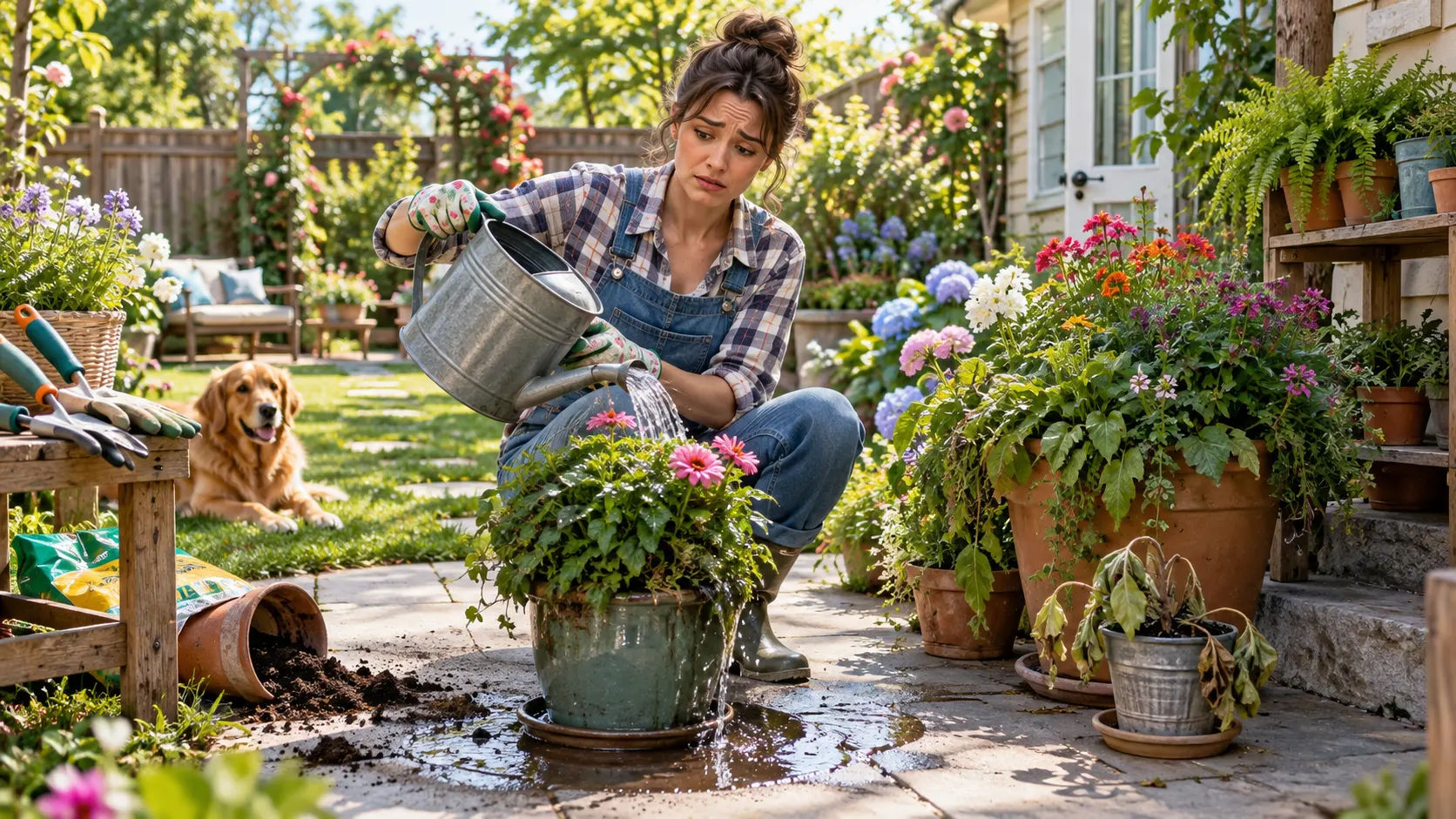
Overwatering is one of the most common beginner gardening mistakes because new gardeners often believe more water means better care. Constantly wet soil can reduce oxygen around roots and create unhealthy growing conditions. Instead of watering every day automatically, check the soil first. If the upper layer still feels moist, many plants may not need more water.
When watering is necessary, aim for a deeper soak rather than frequent light sprinkling. Deep watering encourages roots to grow farther into the soil, where moisture remains available longer. Shallow watering may encourage roots to remain near the surface. Stronger root systems generally help plants tolerate heat and short dry periods more effectively.
Weather should also affect how often you water. Hot, windy conditions may increase moisture loss, while cool or rainy periods can reduce watering needs. Container plants may dry faster than garden beds. Learning to check actual soil moisture is more reliable than using one fixed schedule throughout the entire season.
Underwatering During Hot or Dry Conditions
Underwatering can be just as damaging as giving plants too much moisture. During hot or dry periods, soil can lose water quickly, especially in containers or sandy growing areas. Beginners sometimes wait until plants are severely wilted before watering. Regular soil checks can help you respond before plants experience significant stress.
Pay attention to environmental conditions instead of relying only on plant appearance. Wind, high temperatures, direct sunlight, and small containers can all increase moisture loss. Water deeply enough to reach the root zone when the soil begins drying. This encourages more stable moisture conditions and supports stronger root development.
Mulch can help slow evaporation during warm weather. Organic materials such as bark, straw, shredded leaves, or compost cover exposed soil and help retain moisture. A moderate layer can reduce the frequency of watering without keeping the soil constantly wet. Combining soil checks with mulch makes moisture management much easier.
Planting Too Close Together
Young seedlings often look small, which can make beginners feel they should place them close together. As plants mature, however, roots, stems, and leaves expand significantly. Crowded plants compete for sunlight, water, nutrients, and space. Limited airflow can also make some pest and disease problems more difficult to manage.
Follow recommended spacing on seed packets or nursery labels whenever possible. These distances are usually based on mature plant size rather than how a seedling looks at planting time. Giving plants enough room also makes watering, pruning, weeding, and harvesting easier. Proper spacing supports both plant health and everyday maintenance.
Think about plant height as well as width. Tall vegetables or flowers can shade shorter varieties if placed incorrectly. Climbing plants may require trellises or stakes. Planning mature size before planting helps prevent overcrowding and reduces the need to move established plants later.
Using Too Much Fertilizer
Fertilizer can support plant growth, but beginners sometimes assume that applying more will produce faster or healthier results. Excess nutrients can damage roots or encourage weak, excessive leafy growth. Start with healthy soil, proper watering, and suitable sunlight before reaching for fertilizer. These basic growing conditions often have a greater impact on plant performance.
Different plants also have different feeding requirements. Fruiting vegetables may need more nutritional support than many herbs, shrubs, or ornamental plants. Always follow product instructions rather than guessing the amount to apply. Applying extra fertilizer rarely improves results and can create nutrient imbalances in the soil.
Before feeding a struggling plant, check for other causes. Yellow leaves or slow growth can result from poor drainage, overwatering, insufficient light, or pests. A soil test may be helpful if problems continue. Feeding based on actual needs is much smarter than treating fertilizer as the solution to every gardening issue.
Ignoring Weeds Until They Take Over
Weeds are easiest to manage while they are still small. Beginners sometimes ignore a few unwanted plants until they develop deep roots or begin producing seeds. At that point, removal becomes more difficult. Regularly checking beds and pulling young weeds prevents them from competing heavily with garden plants for resources.
Weeding is often easier after rain or watering because moist soil allows roots to release more readily. Try to remove as much of the root system as possible, particularly with persistent weeds. Avoid excessive digging around established plants. Disturbing too much soil can bring buried weed seeds closer to the surface.
Mulching can help reduce new weed growth by blocking sunlight from reaching the soil surface. It will not eliminate every weed, but it can reduce the workload significantly. Keeping weeds under control also makes garden beds look cleaner and helps you notice other plant health problems more quickly.
Treating Every Insect as a Pest
Not every insect in the garden is harmful, yet beginners sometimes react to any bug by reaching for a treatment. Gardens naturally attract bees, butterflies, ladybirds, and other beneficial insects. Some help with pollination, while others feed on pest populations. Learning to identify insects prevents unnecessary interference with helpful garden life.
Inspect plants carefully before deciding action is needed. Look for holes, eggs, sticky residue, discoloration, or other clear signs of damage. An insect sitting on a leaf does not automatically mean it is harming the plant. Correct identification makes pest management more effective and reduces unnecessary treatments.
When a genuine problem appears, start with the least disruptive solution. Hand removal, pruning damaged leaves, or improving plant health may be enough in minor cases. Avoid automatically treating the entire garden. A balanced outdoor ecosystem is often healthier when beneficial insects are allowed to remain.
Pruning Plants Incorrectly
Pruning can improve plant health, but poor timing or excessive cutting can weaken growth. Beginners sometimes remove too much foliage because they want plants to look tidy. Leaves are essential for photosynthesis, so heavy pruning without a clear reason can reduce plant energy. Learn the growth habit of each plant before making major cuts.
Start by removing dead, broken, or clearly damaged growth. Use clean, sharp pruning tools to create smoother cuts and reduce unnecessary injury. Different shrubs, flowers, fruiting plants, and vines may require pruning at different times. Understanding these differences helps you avoid removing flower buds or productive stems.
Deadheading spent flowers can benefit some plants, but it is not necessary for every species. Some gardeners may also want to leave seed heads for wildlife or seasonal interest. Pruning should support plant health and shape rather than become a constant task. Thoughtful cuts are more useful than aggressive trimming.
Neglecting Regular Garden Maintenance
Another common mistake is waiting until the garden looks neglected before doing any maintenance. Weeds, pests, dry soil, and damaged growth are easier to manage when noticed early. Spending a few minutes several times each week can prevent much larger jobs later. Consistency is more useful than occasional intensive cleanup.
Create a simple routine that includes checking soil moisture, inspecting leaves, removing weeds, and cleaning up damaged plant material. You do not need to perform every task daily. Adjust your routine according to the season and current conditions. Flexible maintenance helps plants receive attention when they genuinely need it.
Regular care also improves the appearance of your outdoor space. If you want simple ways to make your landscape more attractive while keeping plant health in mind, these natural garden ideas can help. A beautiful garden usually begins with healthy, consistently maintained plants rather than decorative additions alone.
Expecting Perfect Results Immediately
Gardening is a learning process, and expecting every plant to thrive can create unnecessary frustration. Seeds may fail to germinate, weather can change unexpectedly, and some plants may simply be unsuitable for your conditions. These setbacks are normal. Treat them as useful information rather than evidence that you are doing everything wrong.
Keep basic notes about planting dates, varieties, watering patterns, pest issues, and results. Over time, these records can reveal which plants perform well in your garden and which areas cause recurring problems. You do not need a detailed daily journal. Even short observations can improve future decisions significantly.
Avoid changing several things at once whenever a problem appears. Adjust one factor, observe the result, and continue gradually. This makes it easier to understand what actually helped. Patience and steady improvement usually lead to better gardening skills than chasing quick fixes every time a plant looks imperfect.
Conclusion
Avoiding common gardening mistakes can make your first growing seasons much easier. Start small, choose the right location, prepare healthy soil, water according to actual conditions, and leave enough space between plants. These simple habits prevent many problems before they develop. Strong fundamentals are more valuable than expensive products or complicated techniques.
Regular observation is equally important. Check for weeds, pests, moisture problems, and damaged growth before they become severe. Fertilize and prune with a clear purpose rather than doing either automatically. A few thoughtful decisions throughout the week can help plants remain healthier and make garden maintenance much more manageable.
Most importantly, give yourself time to learn from experience. Every garden has different soil, sunlight, weather, and plant varieties, so mistakes are part of the process. Keep what works, adjust what does not, and expand gradually. With patience and consistent care, beginners can build strong gardening skills and healthier outdoor spaces.
FAQs
What is the most common gardening mistake beginners make?
Overwatering is one of the most common mistakes because beginners often water on a fixed schedule. Checking soil moisture first can help prevent constantly wet conditions and support healthier roots.
How can beginners avoid overcrowding plants?
Follow spacing recommendations based on mature plant size rather than seedling size. Leave enough room for roots, leaves, airflow, watering, and maintenance as plants become larger.
Should beginners use fertilizer often?
Not necessarily. Start with healthy soil, compost, correct watering, and appropriate sunlight. Use fertilizer only when plants or soil conditions indicate a real need, and follow product directions carefully.
Why do beginner plants sometimes die even with regular care?
Plants can struggle because of unsuitable sunlight, poor drainage, overwatering, pests, incorrect timing, or climate conditions. Regular care helps, but it must match the specific needs of each plant.
How can I become a better gardener faster?
Start small, observe plants regularly, keep simple notes, and learn from each growing season. Making gradual changes based on real results helps build practical gardening skills more quickly.