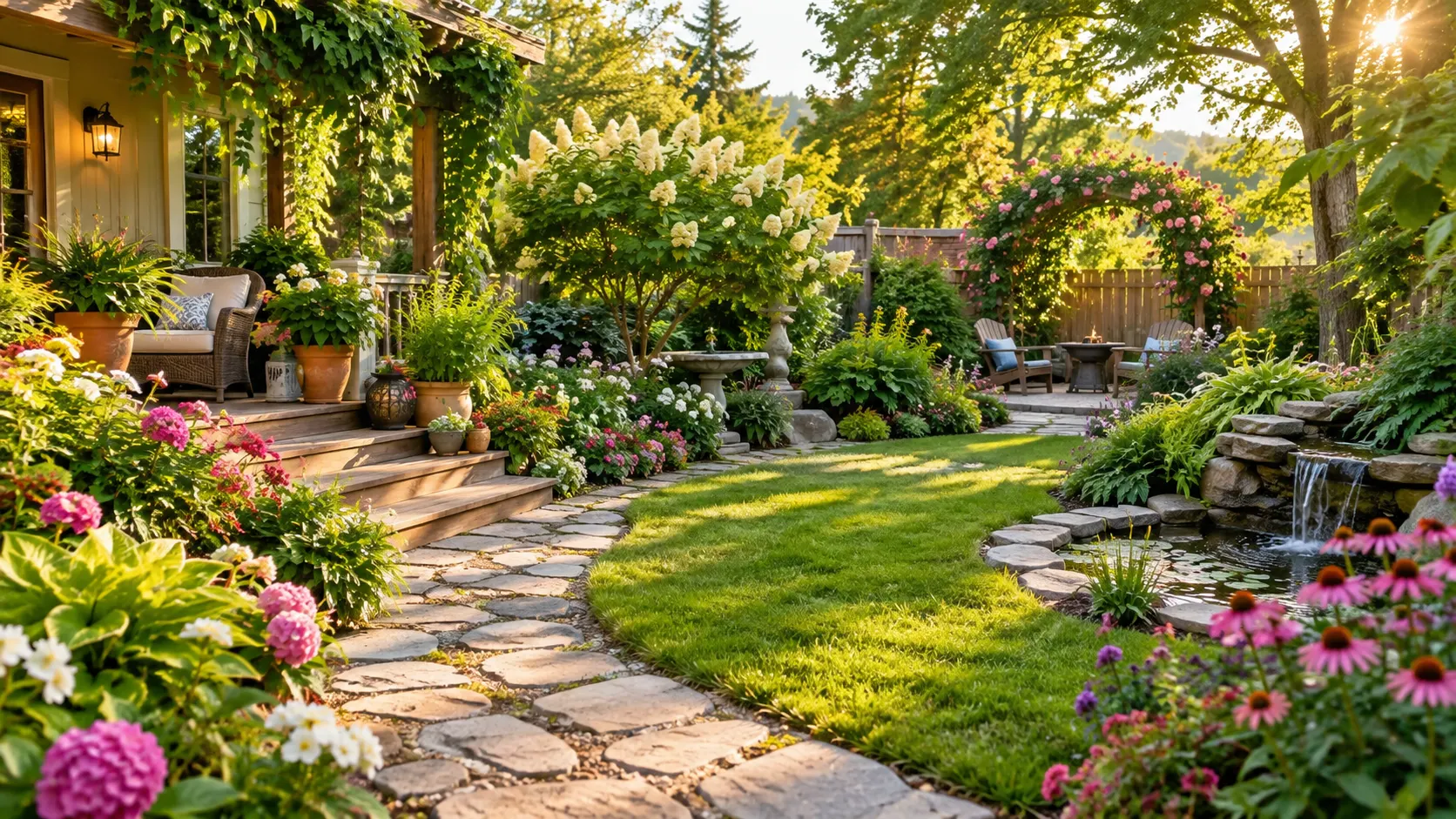
Start With a Simple and Balanced Garden Layout
A naturally beautiful garden begins with a layout that feels open, balanced, and easy to maintain. Before adding new plants, look at your existing space and decide which areas should remain open and which can become planting zones. Avoid filling every empty corner. Leaving breathing room between features can make your garden look calmer, cleaner, and more thoughtfully designed.
Use existing features such as trees, fences, walls, pathways, and patios as part of the overall design. A mature tree can become a natural focal point, while a fence can support climbing plants. Working with what is already present often creates a more organic appearance. It can also reduce unnecessary construction and help the landscape feel connected to its surroundings.
Think about how you move through the garden as well. Keep pathways clear and make sure important areas are easy to reach for watering, pruning, and maintenance. A practical layout usually looks better because plants remain healthier and beds stay organized. Simple planning gives the garden structure without making it appear overly formal or artificial.
Choose Plants That Suit Your Natural Conditions
Plants look their best when they grow in conditions that naturally suit them. Consider your garden’s sunlight, soil type, moisture levels, and seasonal temperatures before choosing new varieties. A plant that thrives in your environment usually develops stronger foliage and flowers. This creates a healthier appearance without requiring constant fertilizer, watering adjustments, or corrective treatments.
Locally adapted plants can be especially useful for creating a natural-looking garden. They are often better suited to regional weather patterns and may require less intervention once established. Choosing plants that tolerate your existing conditions also makes maintenance easier. Healthy plants naturally contribute more beauty than varieties that constantly struggle against unsuitable soil or climate.
Read nursery labels or seed packets before planting so you understand mature size, sunlight needs, and spacing requirements. Avoid selecting plants only because they look attractive at the garden center. Think about how they will perform several months or years later. Good plant selection creates a garden that becomes more attractive as it matures rather than increasingly difficult to manage.
Use a Mix of Plant Heights and Textures
A garden can feel flat when every plant has a similar height or leaf shape. Mixing tall grasses, medium shrubs, flowering plants, and low-growing ground covers adds natural layers. Different heights guide the eye through the landscape and create depth. This approach also makes planting beds appear fuller without requiring an excessive number of individual plant varieties.
Texture is just as important as height when creating visual interest. Broad leaves can contrast with fine grasses, while soft foliage can balance stronger architectural plants. Glossy leaves reflect light differently from matte foliage, helping green areas appear more varied. Combining these textures gives your garden character even when fewer flowers are blooming.
Try to repeat certain plant shapes or textures in different parts of the garden. Repetition creates unity and prevents the landscape from feeling random. You do not need dozens of species to create a rich, natural appearance. A smaller selection of plants arranged thoughtfully can often look more harmonious than a crowded collection of unrelated varieties.
Add Seasonal Flowers for Natural Color
Flowers are an easy way to bring natural color into your garden without relying on artificial decorations. Choose varieties that bloom at different times so the landscape changes gradually throughout the year. Combining annuals and perennials can provide immediate color along with long-term structure. Seasonal variety keeps your outdoor space fresh while allowing nature to guide the overall appearance.
Use colors that complement rather than compete with each other. Repeating two or three main shades across different beds can create a calmer and more coordinated effect. You can still include occasional contrasting flowers for interest. A limited palette often feels more natural because the colors blend into the surrounding foliage instead of dominating the entire landscape.
Plant flowers in small groups instead of scattering individual plants everywhere. Clusters are usually easier to notice and can create a stronger visual impact while still feeling organic. Leave appropriate spacing so plants have room to mature. Healthy, well-spaced flowers will fill the area naturally and create a more attractive display over time.
Let Foliage Play a Bigger Role
A beautiful garden does not need to depend entirely on flowers. Foliage provides color, structure, and texture throughout much of the year, even when blooming plants are resting. Green leaves come in many shades, from deep emerald to soft silver or bright lime. Using these variations can create a rich landscape without relying on constant seasonal replanting.
Evergreen shrubs can provide structure during quieter seasons, while ornamental grasses add movement when wind passes through the garden. Variegated foliage can brighten shaded corners, and broad leaves can create a tropical feeling in suitable climates. Choosing plants for their leaves as well as their flowers helps your garden remain attractive for longer periods.
Think about how foliage changes throughout the year when making plant choices. Some plants develop new colors as temperatures change, while others maintain a consistent appearance. Combining permanent structure with seasonal foliage creates a garden that evolves naturally. This makes the landscape feel interesting without requiring frequent decorative updates.
Use Natural Mulch to Improve Garden Beds
Mulch can improve both the health and appearance of garden beds. Organic materials such as bark, shredded leaves, compost, or straw cover exposed soil and create a more finished look. They also help slow moisture loss and reduce weed growth. Using natural materials supports the overall garden design without adding artificial-looking surfaces.
Apply mulch in a moderate layer around established plants while keeping some space around stems and trunks. Piling mulch directly against plant bases can trap excess moisture and reduce airflow. A neat, even layer helps define beds while allowing water to reach the soil. Refresh it when the material becomes thin or heavily decomposed.
As organic mulch breaks down, it gradually contributes more material to the soil. This can support soil structure while keeping planting areas visually consistent. Mulch also reduces soil splashing during rain or watering. With one simple technique, you can make beds look cleaner while supporting healthier and more stable growing conditions.
Create Natural-Looking Garden Paths
Garden paths can add structure without making an outdoor space feel overly designed. Materials such as gravel, stepping stones, wood chips, or natural stone often blend easily with surrounding plants. Curved paths can create a relaxed appearance, while simple straight routes work well in smaller spaces. Choose a style that fits both your home and landscape.
Allow plants to soften the edges of pathways without letting them completely cover the walking surface. Low-growing herbs, flowers, or ground covers can create a gentle transition between paths and beds. Avoid varieties that spread aggressively and become difficult to control. A slightly softened edge usually looks more natural than a sharply separated boundary.
Paths should also serve a practical purpose by connecting areas you regularly use. Create routes toward seating, vegetable beds, patios, or garden entrances rather than adding unnecessary pathways. Functional design often feels more natural because every feature has a reason to exist. Clear access also makes regular maintenance easier and helps preserve surrounding plants.
Encourage Birds and Beneficial Insects
Wildlife can make a garden feel more alive and naturally beautiful. Flowers that provide nectar can attract bees and butterflies, while shrubs and small trees may offer shelter for birds. A diverse selection of plants creates more opportunities for wildlife to visit. This movement and activity can make your outdoor space feel vibrant without adding decorative objects.
Avoid treating every insect as a pest because many garden visitors are beneficial. Pollinators support flowers and food crops, while predatory insects can help keep certain pest populations under control. Identify insects before deciding whether action is necessary. A balanced garden ecosystem often supports healthier plants and reduces the need for unnecessary chemical treatments.
You can also provide simple water sources or sheltered spaces when appropriate. Keep water clean and avoid allowing it to become stagnant. Dense shrubs, flowering herbs, and mixed planting can provide food and cover. Supporting wildlife adds another layer of natural interest while helping your garden function as a more balanced outdoor environment.
Keep Plants Healthy With Regular Maintenance
A naturally beautiful garden still needs regular care to stay healthy and organized. Remove weeds before they become established, prune damaged growth, and check soil moisture regularly. Small maintenance tasks performed consistently can prevent larger problems later. Healthy plants naturally look better than stressed plants, so plant care should always come before decorative improvements.
Avoid excessive pruning that forces every shrub or plant into a rigid shape. Allow suitable plants to maintain their natural growth habit while removing dead, broken, or overcrowded branches when necessary. This creates a softer appearance and usually requires less work. Natural forms also blend more easily with surrounding flowers, grasses, and ground covers.
If you want a practical maintenance routine, these garden maintenance tips explain simple ways to keep plants, beds, and outdoor areas healthy. Regular attention to watering, weeds, pruning, and soil can help your garden remain naturally attractive without depending on constant redesign.
Use Containers Without Making the Garden Feel Cluttered
Containers can add flexibility and color while still supporting a natural garden style. Use them near entrances, patios, seating areas, or places where planting directly in the soil is difficult. Large pots can hold shrubs or statement plants, while smaller containers are useful for herbs and seasonal flowers. Thoughtful placement is more effective than scattering pots everywhere.
Choose container materials and colors that blend with your outdoor space. Terracotta, wood, stone-look pots, and simple neutral finishes often work well in natural garden designs. Grouping containers in different sizes can create a more relaxed appearance. Repeating similar materials helps the arrangement feel connected rather than looking like unrelated individual pieces.
Make sure every container has proper drainage and suitable potting mix. Potted plants often need more frequent watering because they dry faster than garden beds. Healthy plants are essential if containers are being used as visual features. Regular care keeps them looking fresh while preventing faded or stressed plants from reducing the overall garden appeal.
Create a Relaxing Natural Seating Area
A comfortable seating area can help you enjoy the garden rather than only work in it. A simple bench, pair of chairs, or small table can create a peaceful place to relax. Position furniture where you can look toward attractive plants or enjoy pleasant shade. Natural surroundings usually provide more atmosphere than excessive outdoor decoration.
Use nearby plants to soften the seating area. Ornamental grasses, flowering shrubs, herbs, or climbing vines can provide texture and privacy without creating a solid barrier. Leave enough room around furniture for easy movement. A slightly open design allows air, light, and views to move naturally through the space.
Materials such as wood, stone, rattan-style furniture, or neutral outdoor fabrics often blend comfortably with garden settings. Choose practical items that can handle local weather and regular outdoor use. The goal is not to make the garden look like an indoor room. Instead, allow furniture to support the landscape while plants remain the main visual feature.
Allow Your Garden to Develop Naturally Over Time
Beautiful gardens rarely appear complete in one season. Plants need time to establish roots, expand, flower, and fill available spaces. Avoid constantly changing the layout simply because new beds initially look sparse. Giving plants time to mature often creates a fuller and more natural appearance than repeatedly adding more material.
Observe how different parts of the garden change throughout the seasons. You may notice one area needs more shade-tolerant plants or another becomes crowded after shrubs mature. Use these observations to make gradual adjustments. Slow improvements help preserve the natural character of the space while reducing unnecessary planting and replacement costs.
Keep simple notes about which plants grow well and which require too much attention. Over time, remove varieties that consistently struggle and replace them with plants better suited to the environment. This creates a healthier, easier garden. A landscape that works with its conditions will usually become more beautiful as it ages.
Conclusion
Making your garden look beautiful naturally starts with healthy plants and thoughtful design. Choose suitable varieties, combine different heights and textures, add seasonal flowers, and use foliage to create lasting interest. Natural mulch, simple paths, and carefully placed containers can enhance the space without making it feel overly decorated or artificial.
Regular maintenance helps preserve that beauty. Remove weeds early, water according to plant needs, prune thoughtfully, and allow plants enough space to grow naturally. Supporting birds and beneficial insects can add movement and life as well. The healthiest gardens often look attractive because every element works together rather than competing for attention.
Most importantly, give your garden time to develop. Natural landscapes improve as plants mature and you learn which combinations work best in your space. Make gradual changes instead of chasing instant perfection. With patience, suitable plants, and consistent care, your garden can become a fresh, welcoming, and naturally beautiful outdoor retreat.
FAQs
How can I make my garden look beautiful without spending much money?
Use existing plants, divide healthy perennials, add homemade compost, refresh mulch, and grow flowers from seed. Focus on improving one visible area at a time instead of purchasing many new decorations.
What makes a garden look naturally beautiful?
Healthy plants, varied foliage, seasonal flowers, natural materials, and balanced spacing create a relaxed appearance. Allowing plants to keep some of their natural shape also helps the garden feel less artificial.
How can I add natural color to my garden?
Plant flowers with different blooming periods and choose foliage in varied shades of green, silver, or burgundy. Repeating a limited color palette can create visual interest without making the garden feel overly busy.
How do I make my garden attractive all year?
Combine evergreen plants, seasonal flowers, ornamental grasses, textured foliage, and attractive shrubs. Regular mulching, pruning, and cleanup also help maintain structure and visual interest when fewer plants are blooming.
Should a natural garden still be maintained regularly?
Yes. Natural-looking does not mean neglected. Regular watering checks, weed removal, thoughtful pruning, soil care, and pest monitoring keep plants healthy while allowing the garden to retain a relaxed, organic appearance.