Plan Your Patio Before Adding Plants
A beautiful patio garden starts with understanding the space you actually have. Measure the area and note doors, windows, walls, railings, and the amount of sunlight each section receives. Think about how people move through the patio during the day. A simple layout helps you avoid overcrowding and makes future watering, pruning, and maintenance much easier.
Decide what you want the patio to provide before purchasing anything. You may want a relaxing seating area, herbs for cooking, colorful flowers, privacy, or a combination of several purposes. Giving each section a clear function keeps the space organized. It also helps you spend money on plants and features that genuinely improve how you use the area.
Leave some open floor space instead of placing pots in every available corner. A little breathing room can make a small patio feel larger and more comfortable. You can always add another container later if the design feels too empty. Starting with fewer well-positioned elements usually produces a cleaner and more attractive result.
Build a Layered Container Garden
Containers are ideal for patios because they allow you to grow plants without permanent garden beds. Use a mixture of large, medium, and smaller pots to create different levels of greenery. Larger containers can hold compact shrubs or statement plants, while smaller pots work well for herbs and flowers. Grouping them together creates a fuller, more intentional display.
Try to repeat similar materials or colors across your containers. Terracotta, neutral ceramic pots, wood-look planters, or simple modern finishes can all work when used consistently. Avoid collecting too many unrelated styles because a small patio can quickly feel cluttered. A coordinated container arrangement allows the plants themselves to become the main visual feature.
Always select containers with drainage holes and enough room for mature roots. Use an appropriate potting mix instead of heavy soil taken directly from the garden. Patio containers may dry faster during warm or windy weather, so check moisture regularly. Healthy plants will make even simple containers look more attractive and professionally arranged.
Use Vertical Gardening to Save Floor Space
Vertical gardening is one of the smartest ways to add greenery to a limited patio. Trellises, wall-mounted planters, hanging containers, and tall plant stands use height instead of valuable floor area. Climbing flowers, herbs, and suitable vines can transform plain walls into productive garden features. This approach leaves more room for furniture and comfortable movement.
A slim trellis can be placed against a wall or beside a railing to support climbing plants. Choose a support strong enough for the mature weight of the variety you plan to grow. Lightweight flowers may need only a simple frame, while vigorous vines require stronger structures. Vertical features should look attractive while remaining practical and secure.
Wall-mounted pots are especially useful for compact herbs or trailing plants. Position them where watering and pruning remain easy because elevated containers can dry quickly. If you want more ways to maximize limited areas, these small garden ideas offer useful inspiration. Keep vertical displays selective so the patio still feels open.
Create a Small Herb Garden
A patio herb garden can add fragrance, greenery, and useful ingredients without requiring much space. Basil, parsley, thyme, chives, mint, and rosemary can work well in suitable containers when their growing needs are met. Group herbs near a kitchen door or outdoor cooking area. Convenient placement makes harvesting and regular care much easier.
Do not assume every herb prefers the same conditions. Some varieties enjoy consistently moist soil, while others perform better when the growing medium dries slightly between waterings. Group plants with similar moisture and sunlight requirements whenever possible. This makes maintenance simpler and reduces the chance of overwatering one herb while another remains too dry.
Herbs can also contribute to the appearance of a patio garden. Different leaf shapes, shades of green, and seasonal flowers add texture without requiring purely ornamental plants. Attractive pots can further improve the display. A well-planned herb collection gives a small patio practical value while maintaining a fresh and inviting garden atmosphere.
Add Color With Compact Flowering Plants
Flowers can instantly brighten a patio and make a small outdoor area feel more welcoming. Choose compact varieties that provide plenty of color without growing too wide or tall for the space. Seasonal annuals can offer quick impact, while suitable perennials may return for multiple years. Always match flowers with the amount of sunlight your patio receives.
Use a limited color palette rather than mixing every shade available. Repeating two or three main colors across several containers can create a more coordinated appearance. You can still include a contrasting flower occasionally for extra interest. A simple palette often makes a small patio look more polished and less visually crowded.
Consider bloom timing when selecting flowering plants. Combining varieties that flower at different times can keep the patio attractive for longer periods. Foliage should also be considered because leaves remain visible when flowers fade. Plants with interesting textures or variegated foliage can provide visual appeal between major blooming periods.
Create a Cozy Seating Corner
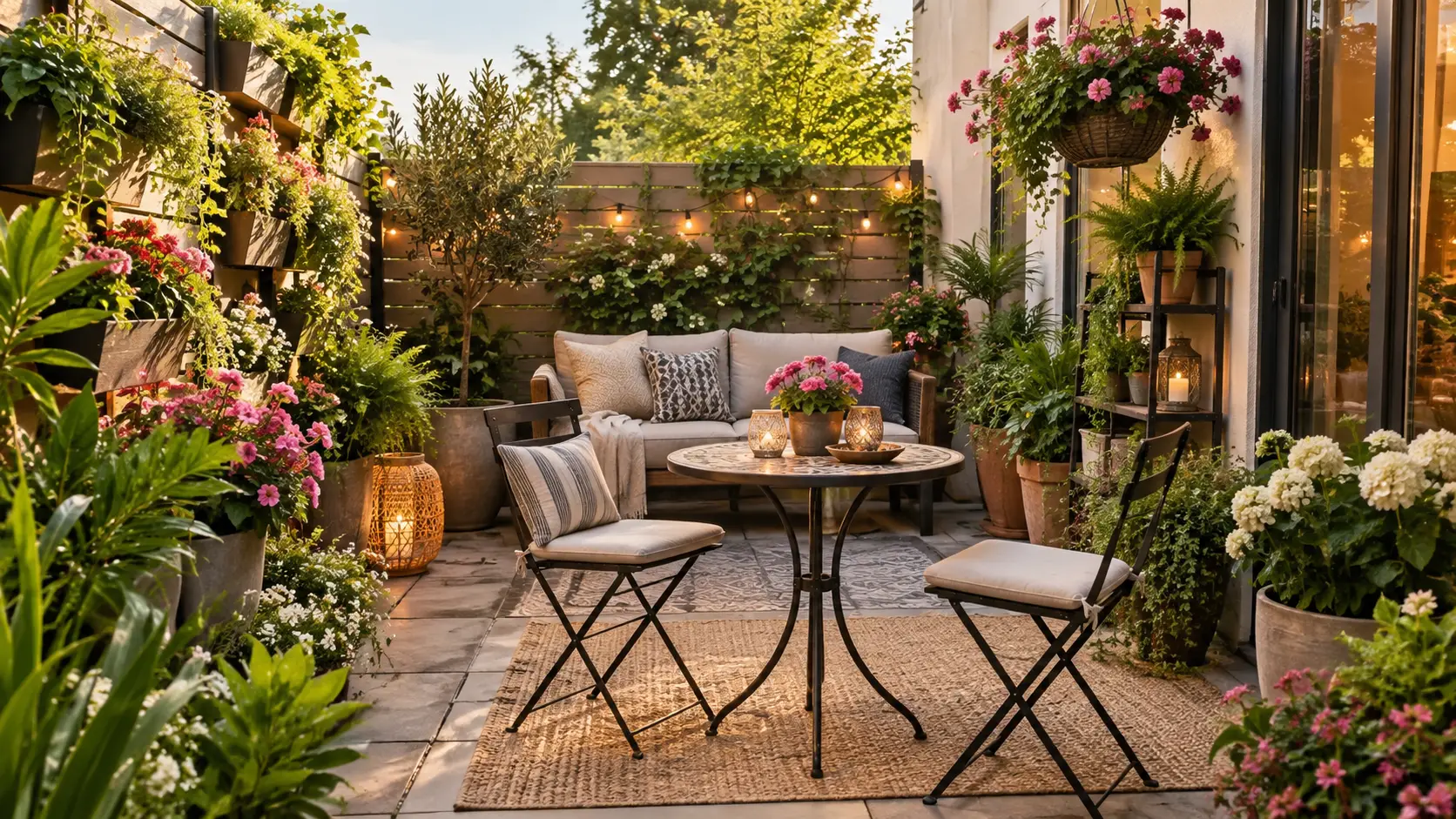
A patio garden should provide somewhere comfortable to enjoy the plants you are growing. Choose compact furniture such as a narrow bench, folding chairs, or a small bistro table. Position seating where it does not block doors or important walking routes. Keeping furniture proportional to the space helps the patio remain open and easy to use.
Surround the seating area with a few containers rather than completely enclosing it with plants. Ornamental grasses, flowering pots, herbs, or a climbing plant can soften the furniture and create a relaxed atmosphere. Leave enough room for movement and maintenance. Plants should make the area feel inviting without becoming obstacles around chairs or tables.
Multipurpose furniture can be particularly useful on small patios. A bench with hidden storage can hold cushions, tools, or watering supplies, while folding furniture can be moved when extra space is needed. This flexibility allows the patio to support different activities. Practical pieces help you enjoy the garden without sacrificing valuable floor area.
Add Privacy With Plants and Screens
Privacy can make a patio feel more comfortable, especially when neighboring properties or shared outdoor spaces are close by. Instead of installing a heavy solid barrier, consider narrow trellises, slatted screens, tall planters, or climbing plants. These options can block specific views while allowing air and natural light to move through the area.
Climbing plants can gradually soften a privacy screen and make it feel like part of the garden. Choose manageable varieties that match your maintenance time and growing conditions. Extremely vigorous plants may require frequent pruning to prevent them from overwhelming a small patio. Controlled growth usually works better in limited spaces.
Tall, narrow containers can also provide targeted screening around seating areas. Place them only where privacy is needed rather than surrounding the entire patio. Leaving some open views helps the space feel larger and brighter. A balanced combination of screening and openness creates privacy without making your outdoor area feel closed in.
Use Hanging Baskets for Extra Greenery
Hanging baskets add flowers and trailing foliage without using any floor space. They can be suspended from secure hooks, pergolas, balcony structures, or suitable wall brackets. A few carefully positioned baskets can add color at eye level and create vertical layers. This helps a patio garden feel richer without overcrowding the ground.
Choose plants that suit the sunlight and wind exposure of the hanging location. Baskets contain relatively little soil, so they can dry faster than larger containers. Check moisture frequently during warm periods and avoid placing them where watering becomes difficult. Healthy hanging plants will look much better than numerous baskets that receive inconsistent care.
Avoid covering every available overhead area with baskets. Too many can make a compact patio feel visually busy and may interfere with movement. Repeat similar container styles or flower colors to maintain consistency. A small number of well-maintained hanging displays can create more impact than a crowded collection of unrelated plants.
Use Lighting to Improve Evening Appeal
Outdoor lighting can make a patio garden enjoyable after sunset. Soft wall lights, small lantern-style fixtures, or subtle string lights can create a welcoming atmosphere without taking up much physical space. Focus on seating areas, pathways, and attractive plants. A few well-positioned lights usually produce a calmer effect than extremely bright illumination.
Solar-powered lights can be convenient if the patio receives enough daylight to charge them. They work well around containers or along the edge of a walkway. String lights can add warmth around a pergola, railing, or wall. Choose outdoor-rated products designed to handle changing weather conditions and regular exposure to moisture.
Avoid directing strong lights toward windows or seating because glare can make the area uncomfortable. Use shadows to create depth around foliage and textured walls. Highlighting one or two plants can give the patio a more finished appearance. Thoughtful lighting extends the usefulness of the garden while adding evening character.
Choose Multipurpose Plants for More Value
Small patios benefit from plants that offer more than one advantage. Herbs can provide fragrance and ingredients, flowering plants can support pollinators, and evergreen foliage can add structure throughout the year. Choosing multipurpose varieties reduces the number of containers you need. This keeps the design more manageable while giving every plant a useful role.
Compact fruiting or edible plants can also work when the growing conditions are suitable. Certain tomatoes, peppers, leafy greens, and strawberries can grow successfully in containers without needing traditional garden beds. Choose varieties developed for smaller spaces whenever possible. Appropriate container size and sunlight remain essential for productive growth.
Think about seasonal value as well. A plant with attractive leaves may still contribute to the patio after flowering ends. Combining foliage, flowers, fragrance, and edible plants creates a richer environment without excessive planting. Smart selection helps a limited outdoor area feel more diverse while keeping maintenance realistic.
Keep the Patio Garden Easy to Maintain
A beautiful patio garden should match the amount of time you can realistically spend maintaining it. Choose plants suited to your light conditions and climate instead of varieties that constantly require correction. Group plants with similar water requirements whenever possible. This makes routine watering more efficient and reduces unnecessary plant stress.
Remove dead leaves, faded flowers, and weeds before they accumulate. Clean containers occasionally and check drainage holes to make sure excess water can escape. Regular small maintenance sessions usually take less effort than waiting until the whole patio looks neglected. A tidy garden also makes it easier to notice pest or watering problems early.
Keep basic tools and supplies organized in a compact storage area. A hand trowel, pruning shears, gloves, and watering equipment are enough for many patio tasks. Avoid storing unnecessary materials where they reduce usable space. A simple maintenance system helps your outdoor area stay healthy, attractive, and comfortable throughout the growing season.
Refresh the Patio With Seasonal Changes
Seasonal updates can keep a small patio garden looking fresh throughout the year. Replace tired annual flowers, adjust containers when sunlight patterns change, and remove plants that have finished their growing cycle. Small seasonal changes can create a noticeable difference. You do not need to redesign the entire area every few months.
Use foliage and evergreen plants to provide structure when fewer flowers are blooming. Seasonal herbs, flowering plants, or decorative containers can then add temporary color around those permanent elements. This approach reduces the amount of replanting required. A strong base makes it easier to update the patio without starting over.
Review your layout at the end of each growing period. A container may need moving, a plant may have become too large, or one section may no longer serve a useful purpose. Small patios benefit from regular editing. Removing unnecessary items helps preserve valuable space and keeps the garden visually balanced.
Conclusion
Small patio garden ideas work best when greenery, comfort, and practicality are balanced carefully. Containers, vertical planting, herbs, flowers, hanging baskets, and targeted privacy features can transform a limited outdoor area. Start with a simple layout and choose plants that fit your light, climate, and available maintenance time.
Use compact furniture, consistent container styles, and soft lighting to make the patio more inviting without adding clutter. Multipurpose plants can provide flowers, food, fragrance, and structure from the same limited space. Leaving some floor area open is equally important because it helps the patio remain comfortable and visually spacious.
Most importantly, allow your patio garden to develop gradually. Watch how plants respond to sunlight, watering, and changing seasons, then adjust the layout when necessary. A small patio does not need dozens of plants to feel beautiful. Thoughtful choices and consistent care can create a fresh, relaxing, and attractive outdoor retreat.
FAQs
What are the best plants for a small patio garden?
Compact herbs, flowering perennials, ornamental grasses, trailing plants, and dwarf vegetables can work well. Choose varieties according to your available sunlight, climate, container size, and maintenance preferences.
How can I make a small patio look greener?
Use vertical planters, hanging baskets, grouped containers, and climbing plants. Growing at several heights adds more greenery without filling all the available floor space.
Can I grow vegetables on a small patio?
Yes. Compact tomatoes, peppers, leafy greens, herbs, and strawberries can grow well in suitable containers. Make sure each plant receives enough sunlight, root space, drainage, and water.
How can I create privacy on a small patio?
Use narrow trellises, tall planters, slatted screens, or manageable climbing plants around specific areas. Targeted screening creates privacy without making the entire patio feel enclosed.
How do I keep a patio garden low maintenance?
Choose plants suited to your conditions, group varieties with similar watering needs, remove damaged growth regularly, and keep the layout simple. Consistent small maintenance tasks prevent larger problems.