Plan the Space Around How You Actually Use It
A limited garden space works best when every area has a clear purpose. Before buying plants or furniture, measure the available space and note doors, walls, fences, sunlight, and existing pathways. Decide whether you want more room for plants, seating, herbs, or storage. A simple plan prevents overcrowding and helps you use every section more effectively.
Think about how you normally move through the area during the day. Keep frequently used routes clear so watering, pruning, and general maintenance remain easy. Avoid placing large containers or furniture where they create unnecessary obstacles. Good circulation can make a very small garden feel more comfortable while protecting plants from accidental damage.
Leave a little open space instead of filling every empty corner immediately. Negative space can make a compact garden feel calmer, brighter, and visually larger. You can always add another plant or feature later if the area feels unfinished. Gradual improvements usually create a more balanced result than trying to complete everything at once.
Grow Upward With Vertical Gardening
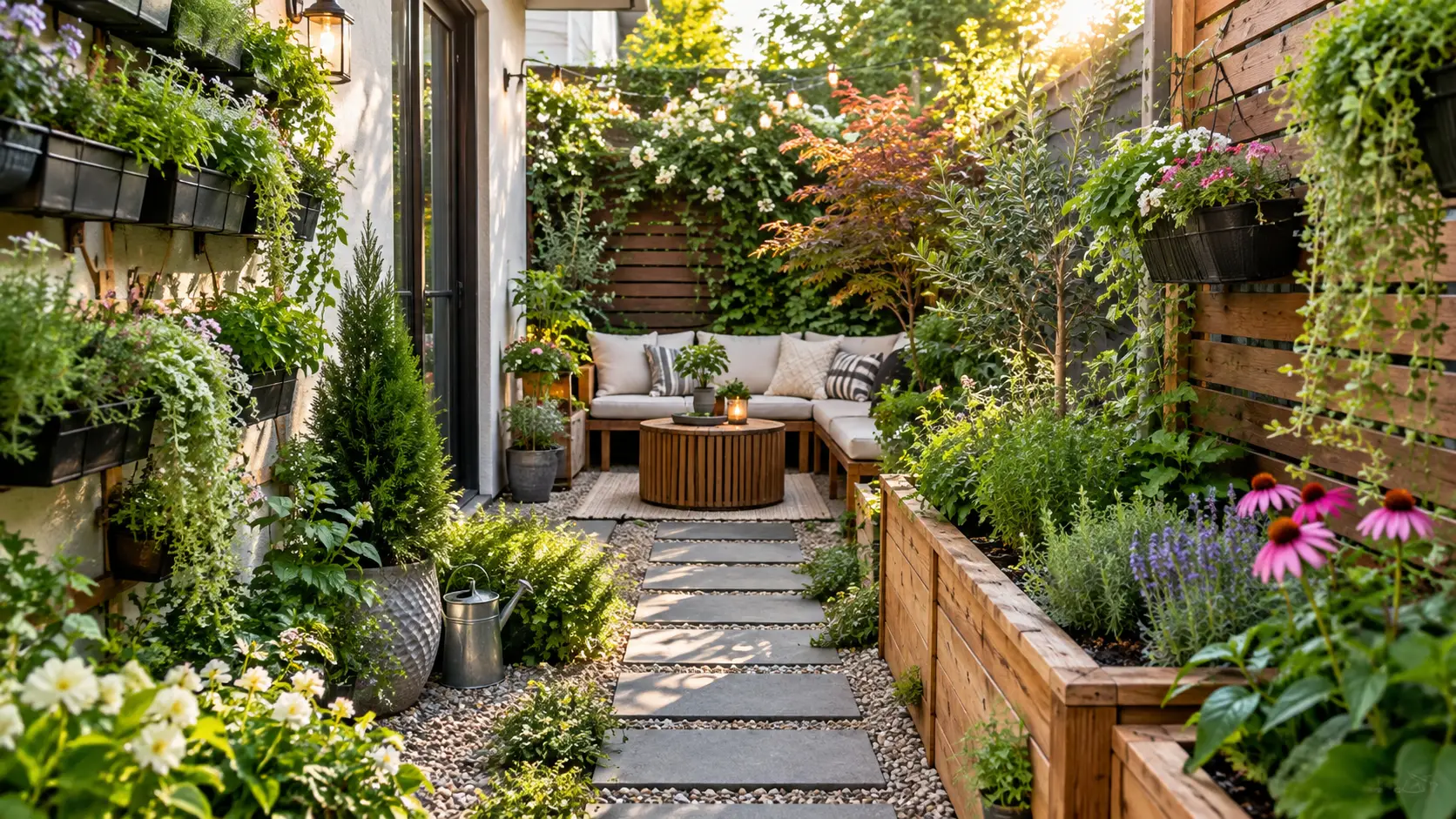
Vertical gardening is one of the most creative ways to add greenery when ground space is limited. Trellises, wall planters, hanging baskets, and tall plant stands allow you to grow plants upward. Climbing flowers, herbs, and suitable vegetables can transform plain walls into useful growing areas. This approach keeps valuable floor space available for movement or seating.
Use fences and walls as natural supports for a vertical display. A simple trellis can hold climbing plants while adding height and texture to the garden. Choose a structure strong enough for the mature weight of the plant. Lightweight decorative frames may work for delicate flowers, but heavier vines or crops often require stronger support.
Wall-mounted planters can hold compact herbs, flowers, or trailing plants without using much space. Place them where watering and pruning remain convenient because elevated containers can dry quickly. Avoid covering every vertical surface with greenery. A few carefully arranged sections often look more attractive and are much easier to maintain over time.
Create a Layered Container Garden
Containers provide flexibility because you can rearrange them as your garden changes. Pots can fit on patios, balconies, steps, and paved corners where traditional planting beds are not practical. Flowers, herbs, compact vegetables, and small shrubs can all grow successfully in suitable containers. This makes container gardening especially useful for renters or anyone working with a temporary space.
Group containers in several heights rather than scattering them randomly. A large pot can create structure, while medium and smaller containers add supporting foliage, flowers, or herbs. Repeating similar materials or colors helps the collection feel connected. A layered container display can look lush without requiring a large number of individual pots.
Always choose containers with drainage holes and enough room for mature roots. Use a suitable potting mix rather than heavy garden soil. Potted plants may dry more quickly than those in the ground, especially during warm or windy conditions. Regular moisture checks keep the display healthy and prevent a flexible garden from becoming high maintenance.
Turn Corners Into Useful Garden Features
Corners are often overlooked even though they can become some of the most valuable areas in a small garden. A tall planter, slim trellis, compact shrub, or small herb station can transform an unused corner. Using these spaces wisely keeps the center open. This creates more room for movement and makes the entire garden feel better organized.
You can also turn a corner into a focal point. One attractive pot, vertical plant display, or flowering feature can draw the eye deeper into the garden. Avoid adding several competing items to the same small area. A single strong feature often creates more impact than a crowded collection of decorations.
Make sure the corner remains accessible for watering and maintenance. Large spreading plants can become difficult to reach once they mature, especially beside fences or walls. Choose upright or compact varieties instead. A creative design should improve the usefulness of the space rather than creating a hidden area that becomes difficult to manage.
Use Narrow Raised Beds
Raised beds can provide organized growing space without taking over a limited garden. Narrow beds placed along fences or boundaries can hold herbs, vegetables, flowers, or mixed planting. They also make it easier to control soil quality. This is useful when the existing ground is compacted, poorly drained, or unsuitable for healthy root development.
Keep the bed narrow enough that you can comfortably reach the center. Easy access allows you to plant, weed, harvest, and water without stepping on the soil. Choose simple materials that fit your style and budget. Wood, stone, or durable blocks can all work when the bed is proportioned properly for the available space.
Mixing ornamental and edible plants can make a raised bed more useful. Herbs, leafy greens, flowers, and compact vegetables can share the same area when their growing needs are compatible. If you are also trying to control costs, this guide to budget garden design offers practical ideas for creating attractive compact gardens without overspending.
Add a Small Multipurpose Seating Area
A limited garden can still include a comfortable place to relax. Choose compact furniture such as folding chairs, a slim bench, or a small bistro table. Place the furniture against a wall or near a corner so it does not dominate the center. Proportion matters because oversized seating can quickly make a small garden feel cramped.
Multipurpose furniture is especially useful when space is tight. A bench with hidden storage can hold gardening tools, cushions, or small outdoor accessories while also providing seating. Folding chairs can be stored when more floor space is needed. Choosing flexible furniture allows the garden to serve several purposes without requiring additional room.
Surround the seating area with a few carefully selected plants. Containers, herbs, ornamental grasses, or climbing vines can soften the edges and create a more relaxing atmosphere. Avoid surrounding furniture with large plants that restrict movement. The best small seating areas feel connected to the garden while remaining easy to use.
Add Greenery With Hanging Baskets
Hanging baskets are a practical way to introduce flowers and trailing plants without using floor space. They can be suspended from suitable walls, pergolas, balconies, or other secure structures. Used selectively, they add color at eye level and help create vertical layers. This can make a compact garden feel fuller without crowding pathways.
Choose plants that match the sunlight and exposure of the hanging location. Elevated baskets can dry out more quickly because they receive more air movement and have limited soil volume. Check moisture frequently during warm weather. Selecting appropriate plants reduces maintenance and keeps hanging displays looking healthy rather than dry or stressed.
Avoid using too many hanging baskets in one small area. A few carefully positioned displays can create stronger visual interest than numerous baskets competing for attention. Repeat similar plant colors or container styles for a coordinated look. This keeps the garden creative and colorful without making the upper space feel cluttered.
Create Depth With Mirrors and Visual Tricks
Garden mirrors can create the impression of greater depth when used carefully. A mirror placed against a wall or fence can reflect greenery and make a narrow space appear more open. Position it where it reflects plants rather than unwanted clutter. The surrounding frame can also be softened with climbing foliage or nearby containers.
Light-colored walls and pale surfaces can make compact gardens feel brighter. Neutral containers, light paving, and reflective materials help bounce natural light around shaded areas. You do not need to make every surface white. Using a few lighter elements is often enough to reduce the heavy feeling that dark enclosed spaces can create.
Long sightlines can also make a small garden feel larger. Keep a clear view toward an attractive plant, decorative pot, or seating area at the far end. Avoid blocking every perspective with large furniture or dense shrubs. Simple visual planning can change how spacious the garden feels without changing its actual dimensions.
Make the Most of Fences and Walls
Fences and walls can provide valuable gardening space when the ground is already full. Add trellises, slim shelves, hanging containers, or secure wall-mounted planters to create additional growing areas. These surfaces can support flowers, herbs, or trailing foliage. Turning boundaries into productive spaces helps every part of the garden work harder.
A fence can also become an attractive background rather than simply a boundary. Painting it a simple neutral shade or allowing a controlled climbing plant to cover part of it can improve the overall design. Avoid combining too many different decorative treatments. Consistency usually makes a limited garden feel more organized and visually spacious.
Use wall storage carefully if you need somewhere to keep tools or watering equipment. Narrow shelves or hooks can free up ground space, but they should remain practical and secure. Keep frequently used items within easy reach. Good vertical storage reduces clutter and allows more of the limited area to remain available for plants.
Use Compact Plants With Big Visual Impact
Small gardens benefit from plants that provide strong color, texture, or structure without occupying too much space. Look for dwarf shrubs, compact perennials, narrow grasses, and smaller vegetable varieties. These plants can create a full appearance while leaving room for other features. Mature size should always guide your choices.
Choose plants that offer more than one season of interest whenever possible. Evergreen foliage can provide year-round structure, while flowering perennials add seasonal color. Herbs can contribute fragrance, texture, and edible leaves at the same time. Multipurpose plants help you create a richer garden without needing a large number of separate varieties.
Repeat a small selection of plants instead of choosing a completely different variety for every corner. Repetition can make the garden feel cohesive and less cluttered. You can still create variety by combining different heights, leaf shapes, and textures. A limited planting palette often makes a compact space look more professionally designed.
Add Privacy Without Losing Valuable Space
Privacy can be challenging in small gardens because traditional hedges may take up too much room. Use narrow trellises, tall containers, or slim upright plants to screen specific views instead. Targeted privacy works better than surrounding the whole garden with dense planting. It also preserves more natural light and airflow.
Climbing plants can soften privacy screens while using very little ground space. Choose manageable varieties and provide suitable support from the beginning. Avoid extremely vigorous climbers if you do not have time for frequent pruning. Controlled vertical growth can create privacy without making the space feel enclosed or difficult to maintain.
Place privacy features around seating or other areas where screening matters most. Leave some open views elsewhere to create visual depth. A garden that is completely enclosed can feel smaller than it actually is. Balancing privacy with openness creates a more comfortable and spacious atmosphere.
Keep the Design Flexible and Easy to Change
Flexibility is valuable when working with a limited garden because your needs may change over time. Movable pots, lightweight furniture, modular planters, and removable trellises can all be rearranged easily. This allows you to experiment with different layouts. You can improve the design without rebuilding permanent garden features every time.
Seasonal changes may also require different arrangements. A container that needs full summer sun may perform better in another position during cooler months. Furniture may need moving when plants become larger. Flexible design lets you respond to changing conditions while keeping the garden practical and visually balanced.
Review the garden periodically and remove anything that no longer serves a purpose. Small spaces can become cluttered quickly when unused pots, tools, or oversized plants accumulate. Regular editing keeps the design fresh. A limited garden often looks more attractive when it contains fewer well-chosen features rather than too many competing elements.
Conclusion
Creative small garden ideas are about using limited space in smarter ways rather than trying to fit a full-size landscape into a compact area. Vertical planting, containers, narrow raised beds, hanging baskets, and useful corners can provide plenty of greenery. Thoughtful planning allows each feature to serve a clear purpose.
Visual tricks and flexible design can also make limited spaces feel much larger. Use walls and fences, maintain clear sightlines, choose compact plants, and keep privacy features targeted. Furniture and planters that can move give you more control over the layout. These simple choices create a garden that feels open rather than overcrowded.
Most importantly, keep the design practical enough to maintain. Choose plants suited to your conditions, leave room for movement, and avoid adding features simply because space is available. With creativity and careful organization, even the smallest garden can become attractive, functional, relaxing, and full of personality.
FAQs
What is the best way to use limited garden space?
Use vertical surfaces, compact plants, containers, and narrow raised beds. Keeping pathways clear and choosing multipurpose features can also help you get more value from every part of the space.
How can I make a very small garden look bigger?
Use clear sightlines, light-colored surfaces, vertical planting, and a limited plant palette. Leaving some open space instead of filling every corner can also make the garden feel larger.
What plants are suitable for limited spaces?
Dwarf shrubs, compact perennials, herbs, ornamental grasses, climbing plants, and smaller vegetable varieties work well. Always check mature size and sunlight requirements before planting.
Are containers good for small gardens?
Yes. Containers are flexible, movable, and suitable for areas without permanent beds. They can hold flowers, herbs, vegetables, or compact shrubs while helping you change the layout easily.
How can I create privacy in a small garden?
Use narrow trellises, climbing plants, tall containers, or upright plants around specific areas. Targeted screening provides privacy without using the ground space required by wide hedges.