A small garden can feel surprisingly spacious when the layout, planting, and decorative details work together. You do not need a large backyard to create an open, relaxing outdoor area. With smart design choices, even a narrow yard, tiny patio, compact courtyard, or city garden can appear deeper, wider, and more inviting.
The secret is not simply adding more plants or decorations. In fact, too many features can make a limited space feel crowded and visually confusing. Using clear pathways, layered planting, vertical elements, simple colors, and carefully positioned focal points can create the illusion of extra space without changing the actual size of your garden.
Whether you are working with a tiny backyard or an urban outdoor area, small changes can make a noticeable difference. The following ideas explain how to make a small garden look bigger while keeping it practical and comfortable. Each strategy focuses on improving visual depth, organization, and the overall feeling of openness.
Start With a Simple Garden Layout
A clear garden layout is one of the most important steps when trying to make a small space feel larger. Avoid placing plants, furniture, and decorative objects randomly throughout the area. Instead, divide the garden into simple zones for planting, walking, sitting, and relaxing so every part of the space has a purpose.
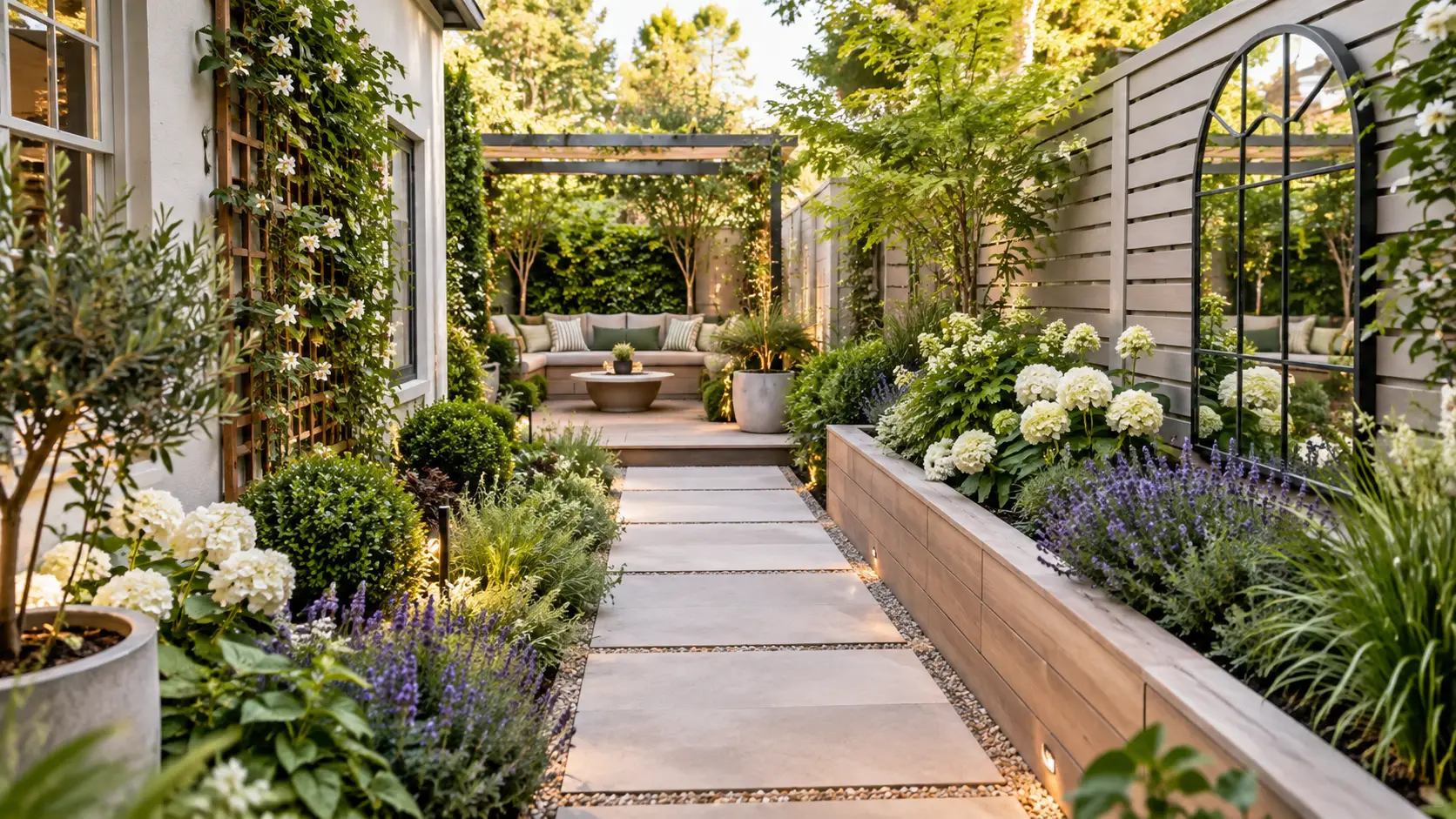
Keep pathways open enough to move comfortably without brushing against pots, branches, or furniture. A cluttered walkway immediately makes a garden feel tighter, while a clear route creates visual flow. Curved or slightly angled paths can also encourage the eye to travel through the garden, making the space appear deeper than it actually is.
Before making major changes, sketch a basic plan and identify which features are truly necessary. Remove unused furniture, oversized containers, or decorative items that take up valuable space without adding much function. A simple garden design generally feels more spacious because the eye can move naturally without being interrupted by too many competing elements.
Use Vertical Space Instead of Filling the Ground
Growing upward is one of the easiest ways to free valuable floor space in a compact garden. Trellises, climbing plants, wall planters, hanging baskets, and vertical shelves can add greenery without occupying large areas of soil. Vertical gardening also draws the eye upward, which can make the entire garden feel taller and more open.
Climbing plants can be trained along fences, walls, pergolas, or freestanding supports. Depending on your climate, flowering vines, climbing roses, beans, or other suitable plants can create height while maintaining a relatively small footprint. Avoid using too many dense climbers, however, because excessive foliage can block light and make a small garden feel enclosed.
Wall-mounted planters and shelves can hold herbs, flowers, succulents, and compact ornamental plants. Keeping smaller plants off the ground creates more visible floor area and reduces clutter. This technique works especially well in courtyards, patios, balconies, and city gardens where usable horizontal space may already be extremely limited.
Choose Smaller and Well-Proportioned Plants
Plant size has a major influence on how spacious a garden feels. Oversized shrubs, wide-growing trees, and large plants can quickly dominate a compact area. Choosing dwarf, compact, columnar, or slow-growing varieties can provide greenery and structure without overwhelming pathways, seating areas, or neighboring plants.
Always consider the mature size of a plant rather than how small it looks at the nursery. A young shrub may fit perfectly today but could spread several feet after a few growing seasons. Understanding mature height and width allows you to maintain better spacing and prevent overcrowding as your garden develops.
You do not have to use only tiny plants. One carefully positioned taller plant can create a strong focal point while several compact varieties fill the surrounding area. The goal is balance rather than simply reducing plant size, allowing the garden to feel lush without becoming visually heavy or difficult to maintain.
Create Depth With Layered Planting
Layered planting can make a small garden appear deeper because plants are arranged at different heights rather than sitting on one flat visual level. Place low-growing flowers or ground covers near the front, medium-height plants behind them, and taller varieties toward the back. This creates natural progression and encourages the eye to move through the entire space.
Layering can also help soften hard boundaries such as fences and walls. Instead of placing one row of identical plants directly against a boundary, combine varieties with different heights, textures, and leaf shapes. The changing levels create visual depth while making the garden boundary less obvious, which can contribute to a greater sense of space.
Be careful not to overcrowd each planting layer. Leave enough room for plants to reach their mature size and for air to circulate between them. A few well-chosen varieties arranged thoughtfully will usually create a stronger spacious effect than filling every available section with numerous unrelated plants.
Keep the Color Palette Simple
Color can strongly influence how large or small an outdoor area feels. Using too many bright colors in a limited space may create visual clutter, particularly when flowers, furniture, pots, and decorations all compete for attention. A more controlled palette can create continuity and make the garden feel calmer and more spacious.
Cool colors such as blues, soft purples, whites, and certain greens can visually recede, which may help distant parts of the garden feel farther away. Warmer colors such as bright reds, oranges, and yellows naturally attract attention and appear closer. You can use this effect by keeping stronger colors near focal points and softer tones toward the boundaries.
Repeating a small number of colors throughout the garden also creates a sense of connection. Similar flower colors, containers, and materials can make separate sections feel like parts of one larger design. This visual consistency reduces distraction and helps the eye move smoothly from one area to another.
Make Garden Paths Work Harder
Paths are not only practical features; they can also influence how large a garden appears. A straight path that ends immediately at a fence may emphasize the limited length of the space. Curved, diagonal, or partially hidden paths can create curiosity and make it harder to see the entire garden at once.
Using narrower paving or stepping stones toward the far end can create a subtle perspective effect. This technique makes the distance appear longer because the path seems to gradually recede. Keep the transition gentle so it feels natural rather than obviously designed to create an illusion.
Avoid using too many different paving materials in one small garden. Mixing several types of stone, gravel, brick, and concrete can visually divide the area into smaller pieces. Using one primary material or a consistent combination helps create continuity, making the available ground space feel more unified and expansive.
Use Mirrors Carefully to Create the Illusion of Space
Garden mirrors can create the impression that a small outdoor area continues beyond its actual boundaries. When positioned against a wall or fence, a mirror reflects greenery, light, and surrounding features. This can add depth to narrow courtyards, patios, and enclosed gardens where solid boundaries make the space feel particularly small.
Place mirrors where they reflect attractive plants or open areas rather than bins, storage equipment, or neighboring windows. Partially surrounding a mirror with climbing plants can help it blend naturally into the garden. The reflection then becomes part of the landscape instead of looking like a decorative object attached to a wall.
Safety and placement are important when using outdoor mirrors. Choose materials designed for outdoor conditions and install them securely. Also consider how sunlight reflects from the surface throughout the day, avoiding positions where intense reflected light could create excessive glare or heat in unwanted areas.
Keep Boundaries Light and Green
Dark, heavy fences can make the edges of a small garden feel very obvious. Painting fences in softer or more natural tones can help them blend into surrounding plants rather than dominate the view. Greens, muted neutrals, or subtle shades can reduce visual contrast and create a softer background for planting.
Plants can also help disguise garden boundaries. Climbers, narrow shrubs, trellises, and layered planting can partially hide fences without completely covering them. When the exact edge of the garden becomes less noticeable, the space can feel deeper because the eye focuses on greenery rather than a solid stopping point.
Avoid placing tall, dense barriers around every side of a compact garden unless privacy requires them. Too much enclosure can reduce light and create a boxed-in feeling. Combining privacy planting with lighter open areas often provides a better balance between seclusion, airflow, sunlight, and visual spaciousness.
Choose Furniture That Fits the Space
Oversized outdoor furniture can make a small garden feel cramped even when the planting layout is carefully planned. Choose compact chairs, narrow benches, folding tables, or multifunctional furniture that provides comfort without dominating the available floor area. Furniture with slimmer frames can also allow more of the garden to remain visible.
Position seating against walls, fences, or corners when possible instead of placing large pieces directly in the center. Built-in benches can be particularly useful because they provide seating while using space efficiently. Some designs also include storage underneath, reducing the need for additional boxes or outdoor cabinets.
Avoid adding more seating than you realistically need. Two comfortable chairs in a small garden may create a more inviting atmosphere than a full dining set that leaves little room to move. Selecting furniture according to everyday use keeps the garden functional while preserving an open and uncluttered appearance.
Reduce Clutter and Hide Garden Storage
Clutter is one of the fastest ways to make any outdoor space feel smaller. Tools, watering cans, bags of compost, empty pots, toys, hoses, and maintenance equipment can easily accumulate in compact gardens. Keeping these items organized allows the visible garden area to remain calm and attractive.
Use a narrow storage bench, compact outdoor cabinet, or hidden storage container where space allows. Wall-mounted hooks can hold lightweight tools without taking up valuable floor area. Grouping garden essentials in one designated location prevents them from spreading across patios, pathways, and planting areas.
Regularly remove damaged pots, unused decorations, dead plants, and items that no longer serve a purpose. Small gardens benefit greatly from thoughtful editing because every object has a noticeable visual impact. Fewer items generally make a compact outdoor area easier to maintain and more comfortable to spend time in.
Create One Strong Focal Point
A focal point gives the eye somewhere specific to rest, preventing attention from jumping randomly between many small features. In a compact garden, this could be a beautiful container plant, small fountain, decorative bench, sculpture, or flowering tree. Choose one feature that complements the overall garden style rather than competing with everything around it.
Position the focal point toward the middle or far end of the garden when appropriate. Drawing attention deeper into the space encourages the eye to travel farther, helping the garden appear longer. Framing the focal feature with plants can make it feel integrated into the design while strengthening the sense of depth.
Avoid adding multiple bold focal points in a tiny area. Several large ornaments, statement plants, and decorative features can compete for attention and make the garden feel visually crowded. One memorable feature surrounded by simpler supporting elements usually creates a stronger and more spacious-looking design.
Use Repetition to Connect Different Areas
Repeating plants, colors, containers, or materials throughout a small garden can create visual continuity. When the same elements appear in several locations, the eye naturally connects them and views the garden as one cohesive space. This can prevent small planting zones from feeling like separate, disconnected areas.
For example, you might repeat the same flowering plant along a pathway or use matching containers in different corners. Repeating one type of foliage plant can also establish rhythm without making the garden feel overly formal. The repetition should be noticeable enough to create connection but varied enough to keep the design interesting.
This approach works particularly well in compact city spaces where the garden may include balconies, patios, or narrow outdoor sections. You can also explore these small urban garden ideas for practical ways to organize limited spaces while keeping them visually balanced and inviting.
Let More Light Into the Garden
A bright garden generally feels more spacious than a dark, heavily shaded area. Trim overgrown branches and dense shrubs when appropriate to allow more natural light to reach pathways, seating areas, and smaller plants. Removing unnecessary visual barriers can immediately make a compact garden feel less enclosed.
Use light-colored paving, containers, walls, or decorative materials to reflect available daylight. Pale surfaces can brighten shaded corners and make narrow spaces feel more open. You do not need to make everything white; soft neutral shades can achieve a similar effect while maintaining a warm and natural atmosphere.
At night, subtle outdoor lighting can maintain a sense of depth instead of allowing the garden boundaries to disappear into darkness. Position small lights near pathways, plants, or focal points rather than flooding the entire space with strong illumination. Layered lighting creates visual interest while helping different parts of the garden remain visible.
Avoid Overcrowding With Too Many Plants
A lush garden does not need to contain a large number of plant varieties. Too many plants competing for limited space can make beds look chaotic and reduce the visual gaps that create openness. Selecting fewer varieties and repeating them throughout the garden often creates a more spacious and professionally designed appearance.
Give plants sufficient room to grow to their expected mature size. Crowded planting can block pathways, reduce airflow, and force you to prune constantly just to maintain usable space. Proper spacing also allows the shape, texture, and color of individual plants to be appreciated more clearly.
When adding new plants, ask whether they improve the overall layout or simply fill an empty gap. Leaving some visible soil, paving, gravel, or lawn can actually make surrounding greenery stand out more. Strategic empty space is an important design tool that prevents a small garden from becoming visually overwhelming.
Conclusion
Making a small garden look bigger is mainly about creating visual flow, reducing clutter, and using available space intelligently. Vertical planting, layered greenery, clear pathways, proportional furniture, and carefully chosen colors can all create a stronger feeling of openness. You do not need to completely redesign your garden to achieve noticeable improvements.
Focus on creating continuity instead of filling every corner with plants and decorations. Repeating materials, keeping boundaries subtle, and placing one strong focal point deeper in the garden can encourage the eye to travel through the space. These simple design techniques can make even a narrow backyard or compact patio appear more balanced and spacious.
Most importantly, keep your garden practical for the way you actually use it. A small space that feels comfortable, organized, and easy to maintain will usually appear more inviting than an overcrowded garden packed with features. With thoughtful planning and a few strategic changes, a limited outdoor area can feel surprisingly large.
FAQs
What colors make a small garden look bigger?
Cool and light colors such as soft blues, whites, pale purples, and natural greens can help create a sense of distance. Repeating a simple color palette also reduces visual clutter.
Do mirrors really make a small garden look larger?
Yes. Outdoor mirrors can reflect plants, light, and open areas, creating the illusion of extra depth. Position them carefully so they reflect attractive parts of the garden rather than unwanted views.
What plants are best for a small garden?
Compact shrubs, dwarf varieties, climbing plants, ornamental grasses, herbs, and narrow-growing plants are useful choices. Always check mature plant size before planting to prevent overcrowding later.
How should I arrange plants in a small garden?
Place shorter plants toward the front, medium-height varieties in the middle, and taller plants toward the back. This layered arrangement creates depth while allowing more individual plants to remain visible.
Should I use large or small pots in a tiny garden?
A combination usually works best. A few well-proportioned larger containers can look less cluttered than many tiny pots, while smaller containers can be used selectively on shelves or vertical displays.