Living in a city does not mean you have to give up the idea of growing plants, herbs, flowers, or even vegetables at home. Small balconies, rooftops, patios, windowsills, and narrow outdoor corners can all become attractive green spaces with the right planning. Urban gardening is mainly about using limited space intelligently while choosing plants that suit your light, climate, and lifestyle.
A small urban garden can make a city home feel calmer, fresher, and more personal. It can also give you a practical place to grow herbs for cooking, colorful flowers for visual appeal, or compact vegetables for home use. You do not need a large backyard or expensive landscaping to create something useful and beautiful.
The best small urban garden ideas focus on vertical space, flexible containers, compact plants, and easy maintenance. By working with the space you already have, you can create a garden that feels organized rather than crowded. Start with a few simple elements, then expand gradually as you learn which plants and layouts work best in your home.
Start by Understanding Your Available Urban Space
Before buying plants, look carefully at the areas around your home that could support a small garden. A balcony, rooftop, terrace, front step, narrow side area, or sunny window may provide more growing potential than you expect. Measure the usable space and note any walls, railings, doors, air-conditioning units, or pathways that need to remain clear.
Pay close attention to sunlight throughout the day because city buildings often create changing patterns of shade. Some balconies receive strong morning light but become shaded in the afternoon, while others may experience intense heat for several hours. Knowing how much direct sunlight reaches each area makes it easier to choose plants that can actually thrive there.
Also consider practical factors such as water access, wind exposure, and drainage. Rooftops and higher balconies can be much windier than gardens at ground level, which may dry soil quickly or damage delicate plants. Planning for these conditions early will help you avoid choosing plants or containers that become difficult to maintain later.
Use Containers for Flexible Urban Gardening
Container gardening is one of the easiest ways to create a small urban garden because pots can be placed almost anywhere. They work well on balconies, patios, rooftops, stairs, and even wide windowsills. Containers also give you more control over soil quality, drainage, and plant placement than you may have when planting directly into urban ground.
Choose containers based on the mature size and root depth of the plants you want to grow. Small herbs can survive in relatively compact pots, while tomatoes, peppers, shrubs, and larger ornamentals need more soil volume. Always select containers with drainage holes so excess water can escape rather than remaining around the roots.
Mix different container shapes and heights to make a small area feel more layered and visually interesting. Tall pots can hold statement plants, medium containers can support herbs or flowers, and smaller pots can fill empty corners. If you are new to gardening, these easy small garden ideas can help you start with simple, manageable planting arrangements.
Make the Most of Vertical Space
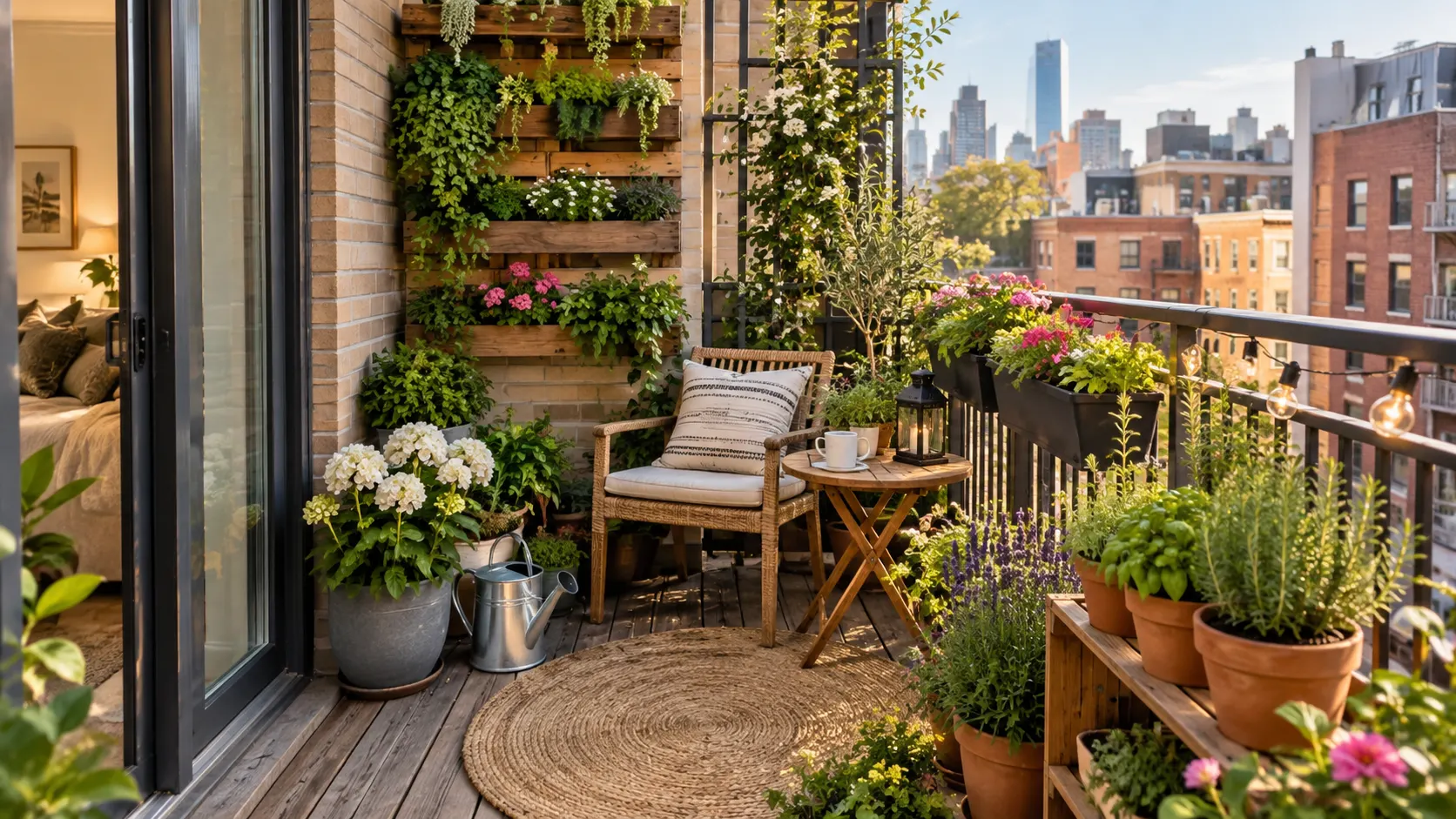
Vertical gardening is especially useful in city homes because wall space is often easier to find than open floor space. Trellises, wall planters, hanging baskets, ladder shelves, and railing-mounted containers allow you to grow more plants without blocking walkways. Growing upward can also make a tiny balcony or patio appear greener and more complete.
Climbing plants such as peas, beans, cucumbers, and some flowering vines can grow along suitable supports. Training plants vertically improves organization and can help keep leaves and fruit away from crowded floor areas. Install trellises and supports early so young plants can naturally grow upward instead of becoming tangled or difficult to manage.
Shelving is another practical vertical solution for herbs, succulents, flowers, and small vegetables. Place sun-loving plants on the brightest levels and more shade-tolerant varieties lower down when appropriate. Make sure every shelf or wall-mounted planter is securely attached, especially on exposed balconies where strong winds can create safety concerns.
Create a Balcony Garden That Feels Spacious
Balconies are among the most common places for urban gardening, but they can quickly become cluttered if every inch is filled with pots. Instead of covering the entire floor, leave enough open space to move comfortably and enjoy the area. A balanced layout usually looks more attractive than trying to fit the maximum number of plants into a limited space.
Place larger containers near walls or corners and keep smaller pots along railings or shelves. Grouping plants together can create a fuller visual effect while keeping the center of the balcony relatively open. Repeating similar containers or plant types can also make the space feel coordinated rather than random and overcrowded.
If the balcony is large enough, consider adding a small folding chair or narrow bench among the greenery. Urban gardens become more valuable when they are spaces you can actually use and enjoy. Choose furniture that can be folded, moved, or stored easily so your garden remains practical for everyday city living.
Grow Herbs Close to Your Kitchen
Herbs are excellent choices for small city gardens because many varieties grow well in containers and do not require large amounts of space. Basil, parsley, chives, mint, thyme, rosemary, and oregano can all be useful additions depending on your climate. Keeping them near the kitchen also makes fresh leaves easy to harvest while preparing meals.
Choose the location according to the herb’s sunlight and moisture needs. Rosemary, thyme, and oregano often prefer bright light and well-drained soil, while parsley and mint can tolerate somewhat different conditions. Avoid placing every herb in one container unless they share similar growing requirements, because different watering needs can make maintenance unnecessarily difficult.
Mint is usually best grown separately because it spreads quickly and can compete with other plants. Regular harvesting can encourage healthy growth in many herbs while preventing them from becoming overly large. Even a simple collection of three or four herbs can make a small urban garden feel productive and useful.
Add Compact Vegetables to Your City Garden
Growing vegetables in a city home is possible even when space is limited. Cherry tomatoes, peppers, radishes, lettuce, spinach, green onions, and compact bean varieties can grow successfully in suitable containers. The key is choosing vegetables that match your available sunlight, container size, and local growing season.
Look for plant varieties described as compact, patio, bush, or dwarf when shopping for seeds or young plants. These varieties are often better suited to balconies and small urban gardens than large traditional types. They can produce useful harvests without spreading across the entire growing area or requiring oversized supports.
Start with two or three vegetables rather than trying to grow everything at once. Each crop has different watering, feeding, temperature, and harvesting requirements, which can be difficult for beginners to manage. Once you understand how a few vegetables perform in your urban environment, you can gradually add more varieties in future growing seasons.
Use Railing Planters and Hanging Baskets
Railing planters are excellent for balconies because they make use of space that would otherwise remain empty. They can hold herbs, trailing flowers, strawberries, leafy greens, or other compact plants. When installed correctly, railing containers can add color and greenery without taking up valuable floor space needed for movement or seating.
Hanging baskets offer similar advantages and are especially useful for trailing plants. Flowers, small herbs, and decorative foliage can create an attractive layered effect when suspended above lower containers. Avoid hanging baskets where people regularly walk underneath them, and always use secure hooks or mounting systems designed to support the full weight of wet soil.
Both railing planters and hanging baskets tend to dry faster than larger ground-level containers. Check their soil regularly during warm weather, especially in sunny or windy locations. Using appropriately sized containers and quality potting mix can help retain enough moisture while still providing the drainage necessary for healthy roots.
Create Privacy With Plants
Plants can help create privacy in city homes where neighboring windows, balconies, or buildings are close together. Tall container plants, climbing vines, bamboo screens, and trellises can soften direct views without making the garden feel completely enclosed. The goal is to create a sense of separation while still allowing useful light and airflow.
Choose privacy plants according to their mature size and maintenance needs. Tall ornamental grasses, compact shrubs, or climbing plants may work well depending on your climate and available sunlight. Avoid varieties that become extremely heavy, invasive, or difficult to control, especially on balconies where structural load and limited space are important considerations.
A trellis covered with greenery can provide privacy without using as much floor space as a row of large containers. Place it where it blocks the most exposed view while maintaining access to doors and windows. Combining several medium-height plants can also create a softer, more natural privacy screen than one large solid barrier.
Design a Small Rooftop Garden
Rooftops can provide excellent sunlight and valuable outdoor growing space in dense urban areas. However, they also require more planning because of wind, heat, weight, and drainage considerations. Before creating a rooftop garden, confirm that the space is suitable for containers, furniture, and additional loads, especially if you plan to use large planters.
Choose lightweight containers and avoid placing extremely heavy soil-filled planters in one concentrated area. Wind-resistant plants and sturdy containers are usually better choices for exposed rooftops. You may also need wind screens or strategic plant placement to protect tender varieties from strong gusts that can damage leaves or overturn lightweight pots.
Rooftop gardens can become comfortable outdoor retreats when greenery is combined with practical seating and shade. Use containers to create defined growing areas while keeping pathways open and easy to navigate. A few larger plants, combined with herbs and seasonal flowers, can make an otherwise empty roof feel welcoming without creating unnecessary maintenance.
Improve Small Spaces With Smart Plant Placement
Thoughtful plant placement can make a small urban garden feel larger and more organized. Position taller plants toward the back or against walls, medium plants in the center, and low-growing varieties toward the front. This layered approach allows more plants to remain visible and reduces the chance of larger varieties completely shading smaller ones.
Use repetition to create visual consistency. Instead of choosing fifteen unrelated plant varieties, repeat several favorites across different containers or areas. Similar foliage, pot styles, or flower colors can help a compact space feel intentional and calm rather than visually busy.
Leave some empty areas between plants so each variety has room to grow and the overall design can breathe. Plants bought from nurseries are often small but can expand significantly over time. Planning for their mature size reduces overcrowding, improves airflow, and prevents you from constantly moving or replacing plants later.
Choose Low-Maintenance Plants for Busy City Life
Urban lifestyles can be busy, so choosing plants that fit your available time is important. If you travel frequently or cannot water every day, avoid filling your garden with varieties that require constant attention. Hardy herbs, succulents, certain ornamental grasses, and climate-appropriate native plants may offer easier maintenance than delicate species.
Native or locally adapted plants can be particularly useful because they are already suited to regional weather conditions. They may cope better with seasonal temperature changes, rainfall patterns, and local pests once established. Choosing plants based on actual growing conditions usually leads to better results than selecting varieties only because they look attractive online.
Keep your first urban garden simple enough that routine care remains enjoyable. A small collection of healthy plants is often more satisfying than a crowded space filled with struggling varieties. You can always expand later after learning how frequently your plants need watering, pruning, feeding, and seasonal maintenance.
Make Watering Easier in a Small Urban Garden
Watering can become challenging when many small pots are spread across balconies, rooftops, and shelves. Grouping plants with similar moisture needs together can make your routine faster and more consistent. It also reduces the chance of overwatering drought-tolerant plants while underwatering varieties that need more regular moisture.
Check the soil instead of relying entirely on a fixed watering schedule. Weather, sunlight, wind, container size, and plant type all influence how quickly soil dries. During hot summer conditions, some containers may need more frequent watering, while the same plants may require much less water during cooler or cloudy periods.
Water plants thoroughly so moisture reaches the root zone, then allow excess water to drain. Avoid letting water continuously collect beneath containers because consistently saturated soil can damage roots. On balconies, use saucers carefully to prevent water from dripping into unwanted areas while still ensuring plants have adequate drainage.
Add Simple Decorative Details
Small decorative details can make an urban garden feel more inviting without taking up much additional space. Solar lights, compact lanterns, decorative pots, outdoor cushions, or a small weather-resistant rug can help turn a balcony or patio into a comfortable retreat. Choose only a few features so the garden remains functional rather than cluttered.
Natural materials such as wood, stone, terracotta, and woven planters can complement greenery and soften hard city surfaces. You can also use consistent container styles to create a more polished appearance. Even inexpensive pots can look coordinated when their shapes, finishes, or overall design follow a simple visual theme.
Flowers provide another easy decorative layer while supporting the overall garden design. Choose seasonal blooms that match your sunlight conditions and combine them with foliage plants for longer-lasting interest. Keeping the color palette relatively simple can make a compact garden feel larger, calmer, and more visually connected.
Conclusion
Small urban gardens prove that limited space does not have to limit your ability to grow plants at home. Containers, vertical planters, railing boxes, rooftop beds, herbs, and compact vegetables can all help transform unused city spaces into practical green areas. The most successful designs work with the available sunlight, space, and maintenance time instead of trying to imitate a large backyard.
Start with a few manageable plants and gradually improve the garden as you understand your home’s conditions. Pay attention to sunlight, wind, watering, drainage, mature plant size, and safe container placement. These simple factors usually have a greater impact on gardening success than expensive decorations or complicated landscaping techniques.
Most importantly, design an urban garden that fits your everyday life. Whether your goal is growing herbs, creating privacy, adding color, or simply enjoying more greenery, a thoughtful small-space garden can make city living feel more comfortable. With smart planning and consistent care, even the smallest balcony or rooftop can become a rewarding outdoor retreat.
FAQs
What is the easiest urban garden to create?
A small container garden with herbs, flowers, or compact vegetables is usually the easiest option. Containers are flexible, affordable, and suitable for balconies, patios, rooftops, and other limited city spaces.
What vegetables grow well in small urban gardens?
Lettuce, radishes, spinach, peppers, cherry tomatoes, green onions, and compact beans can grow well in containers. Choose varieties that match your available sunlight, climate, and pot size.
How can I garden if my city home has no backyard?
Use balconies, windowsills, rooftops, patios, railing planters, hanging baskets, or vertical wall systems. Even small sunny areas can support herbs, flowers, and compact edible plants.
How can I make an urban garden look bigger?
Use vertical planting, layered plant heights, consistent container styles, and a simple color palette. Keeping pathways clear and avoiding overcrowding can also make a small garden appear more spacious.
How do I maintain a small city garden?
Check soil moisture regularly, remove damaged leaves, prune when necessary, and keep plants suited to your available light. Choosing low-maintenance varieties makes routine urban gardening much easier.