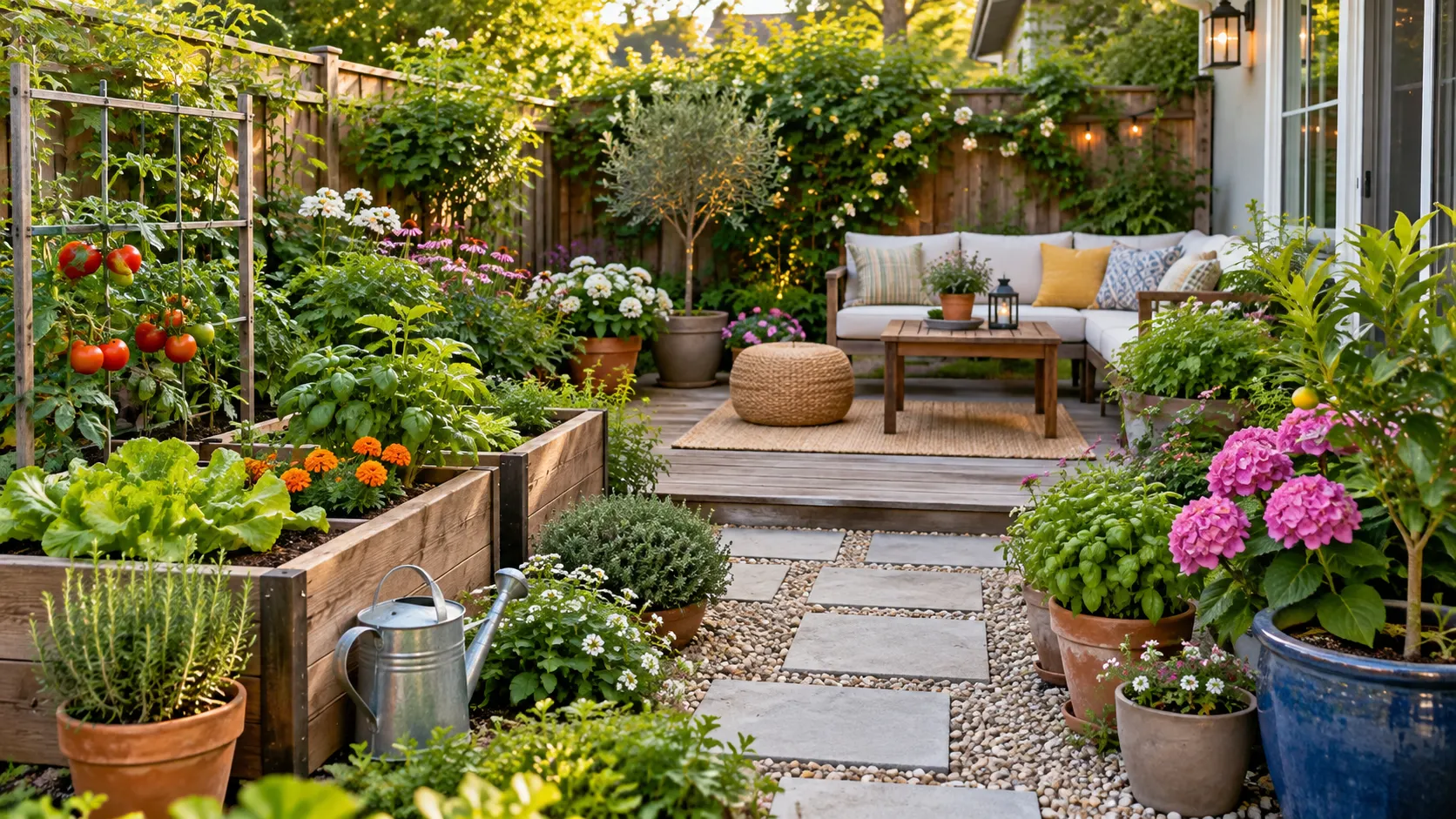
Starting a garden does not require a large backyard, professional tools, or years of gardening experience. Even a small patio, balcony, side yard, or compact outdoor corner can become a beautiful and productive garden. The key is to start with simple ideas that match your available space, sunlight, and the amount of time you can realistically spend caring for plants.
For beginners, a small garden can actually be easier to manage than a large landscape. You can focus on a few healthy plants, learn basic watering and soil techniques, and gradually build confidence without feeling overwhelmed. Simple containers, raised beds, herbs, flowers, and compact vegetables are all excellent starting points.
These easy small garden ideas for beginners will help you create an attractive outdoor space without making gardening complicated. Instead of trying to copy elaborate garden designs, focus on practical layouts, beginner-friendly plants, and low-maintenance techniques. With a little planning, even the smallest space can become green, colorful, and enjoyable.
Why Small Gardens Are Great for Beginners
Small gardens are ideal for new gardeners because they are easier to maintain and require fewer plants, materials, and tools. You can quickly notice when a plant needs water, more sunlight, or basic care. Because the growing area is limited, everyday gardening tasks such as watering, pruning, weeding, and checking plant health usually take much less time.
A compact garden also allows beginners to experiment without spending too much money. Instead of purchasing dozens of plants, you can begin with several reliable varieties and see how they perform. If something does not grow well, replacing one container or changing a small section is much easier than redesigning a large garden.
Another advantage is that small-space gardening encourages better planning. Every plant and feature needs a useful location, helping beginners understand sunlight, drainage, spacing, and plant combinations. These basic gardening skills can later be applied to larger flower beds, vegetable gardens, and backyard landscapes as your experience and confidence increase.
Start With a Simple Garden Plan
Before purchasing plants, spend some time observing your available space throughout the day. Notice which areas receive full sun, partial shade, or very little direct light. Most vegetables and flowering plants prefer several hours of sunlight, while many leafy greens, herbs, and shade-tolerant ornamentals can grow successfully with less intense sun.
Next, decide how you want to use your garden. Some beginners mainly want colorful flowers, while others prefer fresh herbs, vegetables, or a relaxing outdoor seating area surrounded by greenery. Having one clear purpose makes it easier to choose appropriate plants and prevents you from filling limited garden space with varieties that do not support your goals.
Sketching a basic layout can also prevent common gardening mistakes. Mark pathways, walls, fences, containers, sunny areas, and places where larger plants could block smaller ones. Your plan does not need professional landscape-design software; even a simple drawing on paper can help you visualize plant placement before spending money or moving heavy pots.
Choose Beginner-Friendly Plants
Selecting easy-to-grow plants is one of the best ways to make your first gardening experience enjoyable. Hardy plants are generally more forgiving when watering, sunlight, or soil conditions are not perfect. Herbs such as mint, basil, parsley, rosemary, and chives can be good options, while marigolds, zinnias, and petunias add easy seasonal color.
Vegetable gardeners can begin with crops that grow relatively quickly and do not require complicated care. Lettuce, radishes, green onions, spinach, cherry tomatoes, and bush beans are commonly suitable for compact gardens. Choose varieties recommended for containers or small spaces because they usually stay manageable without taking over surrounding plants.
Avoid buying too many different plants during your first season. Maintaining five healthy plants is usually more rewarding than struggling with twenty unfamiliar varieties. Once you understand how plants respond to your garden’s sunlight, weather, watering schedule, and soil conditions, you can confidently introduce new flowers, herbs, vegetables, or ornamental plants.
Use Containers to Make Gardening Easier
Container gardening is one of the easiest small garden ideas for beginners because pots can be placed almost anywhere. Balconies, patios, porches, steps, and narrow outdoor spaces can all support container plants. Pots also allow you to move plants when seasonal sunlight changes or when a particular variety needs protection from intense heat or heavy rain.
Choose containers with drainage holes so excess water can escape instead of collecting around plant roots. Pots are available in plastic, terracotta, ceramic, metal, wood, and fabric, but beginners do not need expensive decorative containers. Simple nursery pots or recycled containers can work well when they provide sufficient growing space and reliable drainage.
Group containers of different heights to make your small garden look fuller without taking up much floor space. Place taller pots toward the back and smaller flowers or herbs near the front. For additional inspiration, explore these creative small garden ideas for practical ways to use compact outdoor areas effectively.
Create a Small Raised Garden Bed
A raised garden bed can provide beginners with a clearly defined growing area that feels easier to manage. Instead of improving an entire yard, you can concentrate healthy soil, compost, water, and plants inside one compact bed. Raised beds are especially useful for vegetables, herbs, flowers, and mixed edible gardens where organized spacing is important.
Keep your first raised bed relatively small so you can comfortably reach the center without stepping on the soil. Walking on growing soil can compact it, reducing airflow and making it harder for plant roots to develop. A narrow rectangular or square bed positioned near a pathway can make planting, watering, harvesting, and weeding much more convenient.
Raised beds also allow greater control over soil quality when existing ground conditions are poor. You can fill the bed with a suitable garden-soil mixture and add organic matter when necessary. Good soil structure encourages drainage while still holding enough moisture for roots, helping new gardeners avoid some of the challenges associated with compacted or unsuitable native soil.
Make the Most of Vertical Space
When garden floor space is limited, growing upward can dramatically increase your planting area. Walls, fences, trellises, shelves, railing planters, and hanging baskets can hold plants without using valuable ground space. Vertical gardening also creates visual height, making small gardens feel greener and more thoughtfully designed rather than crowded with containers at floor level.
Climbing vegetables such as peas, pole beans, cucumbers, and certain compact tomato varieties can be trained on suitable supports. Flowering vines can also soften fences and bare walls when the growing conditions match their needs. Install supports early so plants can be guided upward before stems become large, tangled, or difficult to manage.
Beginners can also create simple vertical displays using shelves filled with herbs or small flowering plants. Arrange sun-loving plants where they receive the strongest light and avoid placing large pots where they shade everything underneath. Always make sure shelves, hanging baskets, and wall-mounted planters are securely supported, especially in areas exposed to wind.
Grow Herbs Near the Kitchen
A small herb garden is practical, affordable, and relatively easy for beginners to maintain. Many popular culinary herbs grow successfully in pots, window boxes, or compact raised beds. Keeping herbs close to the kitchen makes it convenient to harvest fresh leaves while cooking, encouraging you to actually use the plants instead of simply treating them as decorations.
Basil, parsley, chives, thyme, oregano, rosemary, and mint are common choices, but their growing requirements can differ. Mediterranean herbs such as rosemary and thyme generally prefer good drainage and plenty of sunlight. Mint usually appreciates more consistent moisture and grows aggressively, so keeping it in a separate container can prevent it from spreading throughout the garden.
Regular harvesting can help many herbs stay productive and encourage fresh growth. Remove only what you need and avoid cutting too much from a young plant at once. Watching herbs respond to watering, sunlight, pruning, and seasonal changes is also a simple way for beginners to learn important gardening principles before trying more demanding plants.
Add Easy Vegetables to Your Small Garden
You do not need a large vegetable plot to grow useful food at home. Many vegetables can thrive in containers, raised beds, and narrow sunny spaces when they receive sufficient soil depth and water. Cherry tomatoes, lettuce, radishes, spinach, peppers, green onions, and compact bean varieties can all fit naturally into a beginner-friendly small garden.
Choose vegetables based on your climate, growing season, and available sunlight rather than selecting plants only because you enjoy eating them. Warm-season crops and cool-season vegetables have different temperature preferences. Understanding the appropriate planting season improves your chances of success and reduces frustration caused by trying to grow plants under unsuitable weather conditions.
Begin with two or three vegetables rather than attempting to create a complete kitchen garden immediately. Learn how often each crop needs watering, feeding, harvesting, and pruning before adding more varieties. Keeping your first edible garden simple makes it easier to identify problems and understand which vegetables perform best in your specific growing space.
Keep Watering Simple and Consistent
Incorrect watering is one of the most common problems beginners experience. Plants need enough moisture to support healthy growth, but constantly wet soil can damage roots and encourage disease. Instead of watering according to a rigid daily schedule, check the soil and consider the weather, container size, plant type, and amount of sunlight before adding more water.
Containers often dry faster than plants growing directly in the ground because they hold a limited amount of soil. During warm or windy weather, some pots may require more frequent attention. Larger containers generally retain moisture longer than tiny pots, which can make them easier for beginners who cannot check their garden several times throughout the day.
Water near the base of plants so moisture reaches the root zone rather than simply wetting the leaves. Deep, thorough watering is generally more useful than repeatedly adding very small amounts of water. As you spend time with your garden, you will become better at recognizing signs of dry soil, excessive moisture, and normal plant behavior.
Improve Your Garden Soil Without Complication
Healthy soil provides plants with physical support, moisture, air, and access to important nutrients. Beginners do not need to understand complicated soil science before growing their first plants, but they should avoid using poor, heavily compacted soil. For containers, use a suitable potting mix rather than filling pots with dense soil taken directly from the yard.
Adding organic matter can gradually improve many garden soils. Compost supports soil structure and contributes nutrients as organic materials continue breaking down. Apply reasonable amounts instead of assuming that adding more fertilizer or compost will always produce faster growth, because excessive nutrients can also create plant problems.
Mulching exposed soil can help reduce moisture loss and slow weed growth in raised beds and garden borders. Organic materials such as shredded leaves, bark, or suitable compost can create a protective surface layer. Keep heavy mulch away from the main stems of plants so moisture does not remain trapped directly against sensitive plant tissue.
Add Easy Decorative Touches
A beginner garden should feel enjoyable as well as functional. Simple decorative features such as matching pots, stepping stones, a small bench, garden edging, or solar lighting can make a compact space feel intentional. You do not need expensive landscaping materials because even a few coordinated elements can create visual consistency across a small outdoor area.
Flowers are another easy way to introduce color and seasonal interest. Choose several complementary flowering plants instead of mixing every available color into a tiny area. Repeating the same plant or flower in multiple containers can make the garden look organized while reducing the number of different varieties you need to learn how to maintain.
Natural materials can also help small gardens feel comfortable and welcoming. Wooden planters, stone borders, gravel pathways, and simple trellises often blend easily with greenery. Leave some open space between decorative features because filling every corner can make a compact garden feel smaller, while a balanced layout allows individual plants to stand out.
Create a Low-Maintenance Gardening Routine
Consistency is more important than spending hours in the garden once every few weeks. A short routine allows beginners to identify problems before they become difficult to manage. Check soil moisture, remove obvious weeds, inspect leaves, harvest mature herbs or vegetables, and remove damaged plant material whenever you spend time in your garden.
Try to observe your plants rather than immediately reacting to every small change. A yellow leaf does not always mean a plant needs fertilizer, and temporary wilting does not automatically mean it requires large amounts of water. Consider soil moisture, recent weather, sunlight, and the condition of the entire plant before changing your normal care routine.
Keep basic gardening tools nearby so routine tasks remain convenient. Beginners usually need only a small hand trowel, pruning scissors, gardening gloves, and a watering can or hose attachment. Starting with essential equipment saves money and prevents your storage area from becoming filled with specialized tools that you may rarely need.
Avoid Common Beginner Gardening Mistakes
One common mistake is purchasing plants without checking their mature size. A small nursery plant can eventually spread far beyond the space you originally planned for it. Read plant labels or basic growing information so trees, shrubs, vegetables, flowers, and herbs have enough room for healthy growth without constantly competing with neighboring plants.
Another mistake is placing plants according to appearance rather than sunlight requirements. A decorative arrangement may look attractive initially, but shade-loving plants can struggle in intense afternoon sun while sun-loving vegetables may grow poorly in dark corners. Matching plants to your existing growing conditions is usually easier than constantly trying to change the environment around them.
Finally, avoid comparing your new garden with polished gardens you see online. Established landscapes often represent years of planting, replacement, pruning, experimentation, and seasonal maintenance. Focus on learning what grows successfully in your space, and allow your garden to develop gradually as your skills, plant collection, and understanding of local conditions improve.
Conclusion
Creating a small garden does not need to be complicated, expensive, or time-consuming. Beginners can achieve impressive results by starting with a simple plan, choosing manageable plants, and using containers, raised beds, and vertical growing techniques wisely. Focusing on a small number of healthy plants makes gardening easier to understand and much more enjoyable.
Pay attention to sunlight, soil quality, drainage, plant spacing, and watering instead of trying every gardening technique at once. Small improvements made consistently can have a greater impact than major changes performed occasionally. As you observe how plants respond throughout the season, your confidence and ability to solve basic gardening problems will naturally increase.
Most importantly, allow your first garden to evolve gradually. You can add new vegetables, herbs, flowers, containers, and decorative features after learning what works best in your available space. With realistic expectations and regular care, even a balcony, tiny patio, narrow yard, or compact garden bed can become a healthy and rewarding outdoor space.
FAQs
What is the easiest small garden for a beginner?
A container garden with a few herbs, flowers, or easy vegetables is one of the simplest options. Containers are manageable, flexible, and easy to reposition when plants need different sunlight conditions.
What should I plant first in a small garden?
Beginners can start with herbs, lettuce, radishes, marigolds, green onions, or other easy-growing plants suited to their local climate. Choose only a few varieties until you become comfortable with regular plant care.
How can I make a small garden look bigger?
Use vertical planters, repeat similar plants, keep pathways clear, and avoid overcrowding the space with too many decorations. Layering plants by height can also create depth while using available growing space efficiently.
Can I grow vegetables in a very small garden?
Yes. Many vegetables grow well in containers and raised beds, including lettuce, cherry tomatoes, peppers, radishes, spinach, and green onions. Choose compact varieties and provide appropriate sunlight, soil depth, and water.
How often should beginners water a small garden?
Watering frequency depends on weather, plant type, soil, sunlight, and container size. Instead of automatically watering every day, check the soil regularly and water thoroughly when plants actually need additional moisture.