A small front garden can make a surprisingly big difference to how your home looks from the street. Even a narrow entrance, compact lawn, or tiny planting area can feel polished when plants, pathways, lighting, and decorative features are arranged thoughtfully. The goal is to create a welcoming first impression without overcrowding the limited space.
Improving curb appeal does not necessarily require expensive landscaping or a complete garden makeover. Simple changes such as adding colorful flowers, defining borders, refreshing containers, or improving the walkway can immediately make the front of your home look more cared for. Choosing low-maintenance plants can also keep the space attractive without creating hours of weekly gardening work.
The best small front garden ideas combine beauty, function, and proportion. Every plant and feature should support the entrance rather than compete with it. By using vertical space, keeping pathways clear, repeating colors, and choosing plants suitable for your conditions, you can create an attractive front garden that enhances your home’s exterior throughout the year.
Start With a Clear and Simple Front Garden Layout
A simple layout makes a small front garden feel organized and inviting rather than crowded. Begin by identifying the main route from the street or driveway to your front door, then keep that pathway visually clear. Plants, containers, and decorations should frame the entrance instead of making visitors navigate around unnecessary obstacles.
Divide the remaining garden space into a few clear planting zones rather than creating many tiny areas. One defined flower bed, a pair of containers, or a narrow border can create more visual impact than several disconnected features. Repeating similar shapes and materials also helps the garden look intentional and professionally planned.
Consider how your front garden looks from both the sidewalk and inside your home. Taller plants should not completely block windows, house numbers, or important architectural details. Keeping the overall layout balanced allows the garden to complement your property while making the limited outdoor space appear cleaner, more spacious, and easier to maintain.
Make the Front Door the Main Focal Point
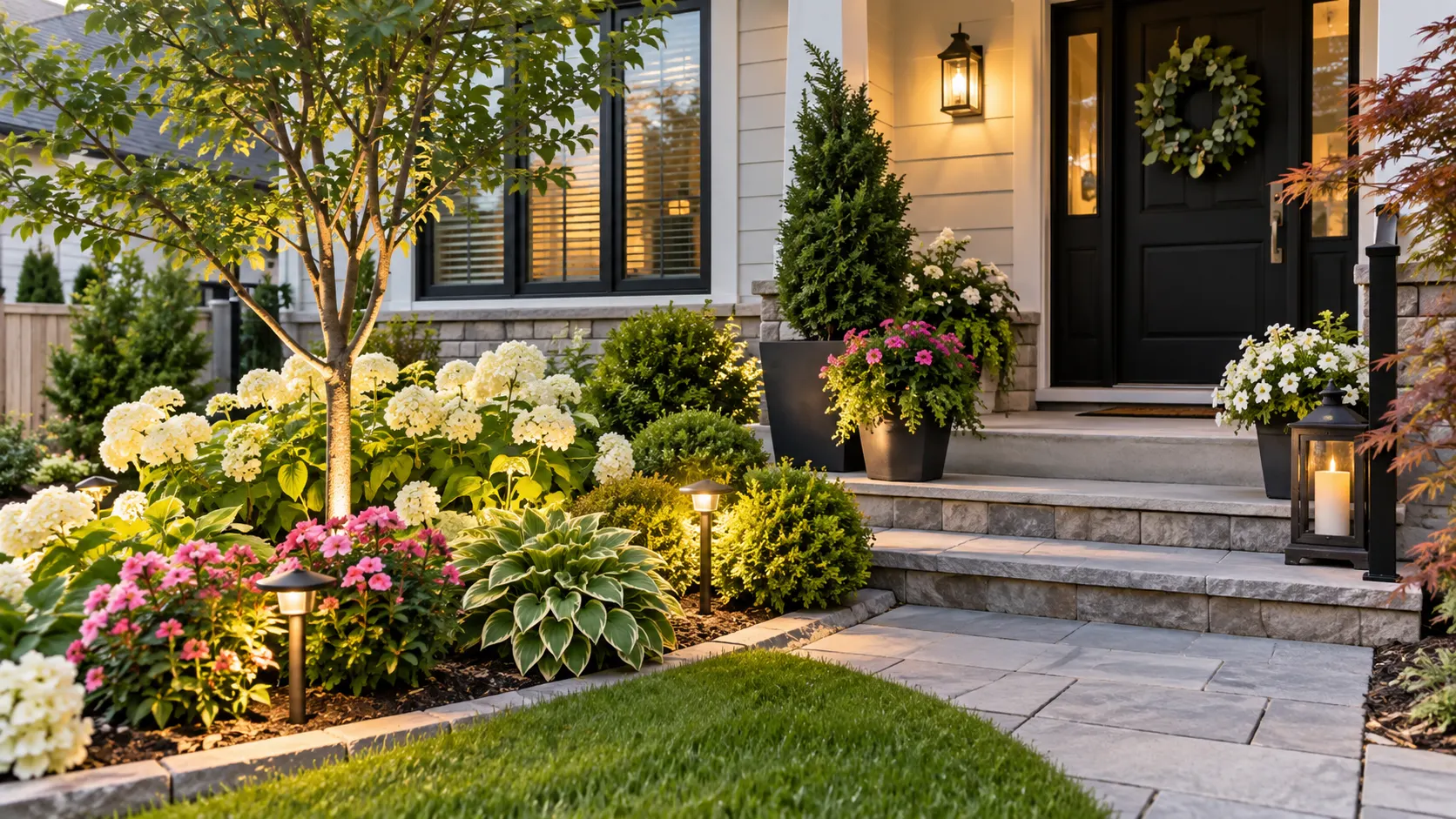
The front door is usually the natural focal point of a home’s exterior, so your landscaping should gently direct attention toward it. Use matching pots, symmetrical planting, or a clearly defined path to guide the eye. Keeping the entrance visible creates a stronger sense of arrival and can instantly improve overall curb appeal.
Two containers placed on either side of the doorway can create balance without requiring much ground space. Choose plants that suit the amount of sunlight around the entrance and remain proportional to the doorway. Evergreen shrubs, flowering plants, or seasonal displays can all work well when containers are large enough to support healthy roots.
Avoid placing too many bold ornaments near the front door because they may compete for attention. A stylish planter, simple welcome mat, or small decorative light may be enough to add personality. The entrance should remain the strongest visual feature while the surrounding garden supports it through coordinated colors, textures, and planting.
Define Pathways for a More Polished Look
A clear walkway immediately makes a front garden feel more structured. Whether you use paving stones, gravel, brick, or concrete, the pathway should provide an obvious and comfortable route to the entrance. Keeping edges neat prevents surrounding plants from spilling too far into the walking area and creating an untidy appearance.
If the existing path feels narrow or plain, consider adding low planting along one or both sides. Small flowers, compact grasses, or low-growing evergreen plants can soften hard surfaces without reducing usable walking space. Repeating the same plants along the route can create rhythm and naturally draw attention toward the front door.
Curved pathways can add character where space allows, while straight paths often suit compact and modern homes. Choose a shape that works naturally with your property’s existing layout rather than forcing an elaborate design into a limited area. A clean, well-maintained path usually adds more curb appeal than complicated paving patterns that make a small garden feel busy.
Use Low-Maintenance Plants for Lasting Curb Appeal
Low-maintenance plants are especially useful in front gardens because they help the entrance remain attractive with less regular work. Choose varieties suited to your local climate, sunlight, soil conditions, and available space. Plants that naturally perform well in your environment usually require less watering, pruning, replacement, and additional care.
Evergreen shrubs can provide structure throughout the year, while flowering perennials add seasonal color without needing to be replanted constantly. Ornamental grasses, compact shrubs, and hardy ground covers can also create texture and movement. Combining a few dependable plant types often produces a more polished result than filling the garden with many demanding varieties.
Always check the mature height and width before planting near pathways, windows, or doors. A shrub that looks small at the nursery may eventually become too large for a narrow front bed. Selecting compact or dwarf varieties reduces future maintenance while helping the garden stay proportional to the available space.
Add Color Without Making the Garden Look Busy
Color can make a small front garden feel cheerful and welcoming, but too many competing shades may create visual clutter. Choose two or three main flower colors that complement your home’s exterior. Repeating these colors throughout containers and planting beds creates consistency and makes the overall landscape feel more carefully designed.
Seasonal flowers are useful when you want quick bursts of color around the entrance. Place them in containers or small sections where they can easily be replaced when the season changes. Combining seasonal blooms with permanent evergreen plants ensures that the garden still has structure after colorful flowers have finished blooming.
Consider the color of your front door, walls, brickwork, and paving when selecting plants. White and soft pastel flowers can brighten darker entrances, while stronger colors may stand out beautifully against neutral backgrounds. Keeping the palette coordinated allows individual plants to attract attention without making a small garden feel visually overwhelming.
Use Containers to Add Style and Flexibility
Containers are one of the easiest ways to improve a small front garden because they can add plants without requiring permanent landscaping changes. Place them beside steps, near the doorway, or in empty corners that need visual interest. Pots can also be moved or replanted whenever you want to refresh the exterior.
Choose containers that match the scale and style of your home. A few medium or large pots often look more organized than a collection of many tiny containers. Using similar materials, shapes, or colors can create a coordinated appearance while allowing the plants themselves to provide variety through different foliage and seasonal flowers.
Make sure every container has suitable drainage and enough space for the selected plant’s roots. Pots exposed to strong sunlight may dry quickly, so soil moisture should be checked regularly during warm weather. With thoughtful placement and basic maintenance, container gardening can deliver strong curb appeal even when ground planting space is extremely limited.
Create Neat Borders Around Planting Areas
Defined garden borders make small front yards appear cleaner and easier to understand visually. Edging separates flower beds from lawns, gravel, driveways, and pathways while preventing soil or mulch from spreading into unwanted areas. Even inexpensive edging can create a noticeable improvement when installed neatly and consistently.
Materials such as stone, brick, metal, timber, or simple landscape edging can all work depending on the style of your property. Try to repeat materials already present around the house for a more unified design. Using too many different edging styles may break the small garden into separate visual sections and make it feel less spacious.
Keep borders simple rather than creating complicated curves in very limited areas. Clean lines are generally easier to maintain and can make planting zones feel more intentional. Regularly removing weeds and trimming plants along the edges will preserve the crisp appearance and help the entire front garden look well maintained.
Make a Small Front Garden Appear More Spacious
Visual design techniques can help a compact front garden feel larger than its actual dimensions. Keeping the center relatively open, limiting clutter, and using vertical planting can create more visible space. Planting taller varieties toward the back and smaller plants near pathways also produces depth without taking over the entire garden.
Repeating similar plants and materials prevents the eye from stopping at too many competing features. A limited color palette, clean pathway, and clearly defined planting areas can make the whole landscape feel more connected. You can also explore practical ways to make a small garden look bigger when planning a compact front-yard layout.
Avoid filling every empty corner simply because space is available. Some open ground, gravel, lawn, or paving can provide important visual breathing room between plants. This balance allows individual features to stand out more clearly while keeping a small front garden from feeling crowded or difficult to navigate.
Add Vertical Interest Without Blocking the House
Vertical elements allow you to add greenery without using much ground space. Narrow trellises, wall-mounted planters, climbing plants, or tall containers can create height near blank walls and fences. Drawing the eye upward may also make a compact front garden feel more layered and visually interesting.
Choose climbers carefully because vigorous varieties can require frequent pruning or spread into windows, roofs, and gutters. Compact climbing plants or trained flowering vines may be more suitable for limited front gardens. Always provide a secure support and maintain enough distance from surfaces that could be damaged by aggressive growth.
Vertical planting is particularly effective beside entrances, garages, or narrow side sections where traditional flower beds may not fit. Keep the arrangement balanced so greenery enhances rather than hides your home’s architecture. A single trellis covered with attractive foliage can often create more impact than multiple ground-level decorations.
Improve Curb Appeal With Outdoor Lighting
Outdoor lighting can make a small front garden look welcoming after sunset while also improving visibility around paths and steps. Solar pathway lights, wall-mounted fixtures, and subtle accent lighting can highlight important areas without overwhelming the landscape. Focus primarily on entrances, changes in level, and commonly used walkways.
Use a small number of carefully positioned lights instead of illuminating every plant. Soft lighting around a feature tree, container, or front door can create depth and highlight attractive landscaping details. Excessively bright lights may produce glare and reduce the comfortable, welcoming atmosphere you are trying to achieve.
Choose fixtures that complement the style and finish of your home’s exterior. Modern homes may suit simple streamlined lighting, while traditional properties can work well with classic lantern-style designs. Whatever style you choose, consistent lighting fixtures help the front garden feel connected to the architecture rather than appearing like a separate decorative feature.
Keep the Lawn Small and Well Maintained
A small lawn can provide valuable open space and visual contrast between planting areas. However, an unhealthy or patchy lawn may reduce curb appeal more than having no lawn at all. If grass struggles because of shade, heavy foot traffic, or limited growing conditions, consider reducing the lawn rather than constantly repairing it.
Regular mowing, neat edges, and basic lawn care can make even a tiny patch of grass look attractive. Keep planting borders clearly separated so the lawn maintains a defined shape. Simple rectangular or gently curved lawns are often easier to maintain and visually stronger than irregular patches squeezed between multiple flower beds.
If maintaining grass is impractical, gravel, paving, ground-cover plants, or other suitable landscaping materials can create a clean alternative. Choose a surface that fits your climate and home’s style. Reducing lawn area can also provide more room for attractive planting while simplifying routine maintenance in a compact front garden.
Add Year-Round Structure With Evergreen Plants
Evergreen plants help front gardens stay attractive during seasons when many flowers and deciduous plants are not performing. Compact evergreen shrubs can frame entrances, define borders, and provide reliable color throughout the year. Their consistent structure gives the garden a finished appearance even during quieter growing periods.
Combine evergreens with seasonal flowers and perennials rather than relying entirely on one type of plant. The evergreen foliage provides a permanent background while temporary blooms introduce changing colors and textures. This layered approach creates interest throughout the year without requiring a complete redesign every season.
Avoid choosing evergreen shrubs that will eventually overwhelm windows, paths, or small beds. Look for naturally compact varieties whenever possible and prune only as needed to maintain their shape. Well-proportioned evergreen plants can provide long-lasting curb appeal while keeping routine garden maintenance relatively simple.
Keep the Garden Clean and Clutter-Free
Even beautifully selected plants can lose their impact if the front garden is filled with unused pots, tools, hoses, weeds, and damaged decorations. Regularly remove items that do not contribute to the appearance or function of the space. A clean garden often looks larger, more intentional, and better maintained.
Hide practical equipment whenever possible using compact storage solutions or an area that is not visible from the street. Keep bins, gardening supplies, and hoses organized so they do not become the main features visitors notice. Small front gardens are particularly sensitive to clutter because every item occupies a noticeable portion of the available space.
Routine maintenance does not have to take hours each week. Sweeping the pathway, removing weeds, trimming untidy growth, and clearing dead flowers can quickly improve the garden’s appearance. Frequent small tasks are usually easier than allowing maintenance problems to accumulate until the entire front garden requires significant work.
Conclusion
Improving curb appeal in a small front garden is less about adding more features and more about choosing the right ones. Clear pathways, neat borders, attractive plants, coordinated containers, and a visible entrance can transform even a very limited outdoor space. Keeping everything proportional helps the landscaping support your home rather than compete with it.
Focus on plants and materials that remain practical for your lifestyle and growing conditions. Low-maintenance shrubs, seasonal flowers, vertical greenery, and thoughtful lighting can provide color and structure without demanding constant attention. Repeating similar elements throughout the garden can also create a polished and visually connected appearance.
Most importantly, keep the design clean, welcoming, and easy to maintain. A simple front garden that receives regular care will often create stronger curb appeal than an elaborate landscape that becomes cluttered or overgrown. With thoughtful planning, even the smallest entrance can become an attractive introduction to your home.
FAQs
What is the easiest way to improve a small front garden?
Start by clearing clutter, defining the pathway, trimming overgrown plants, and adding a few coordinated containers. These simple changes can quickly make the entrance look cleaner and more welcoming.
Which plants are best for a small front garden?
Compact evergreen shrubs, flowering perennials, ornamental grasses, herbs, and dwarf plant varieties work well. Choose plants suited to your sunlight, climate, and available space to reduce maintenance.
How can I make my front garden look more expensive?
Use clean borders, coordinated containers, repeated plant varieties, tidy pathways, and subtle outdoor lighting. A limited, consistent design often looks more polished than using many unrelated decorative elements.
How can I add curb appeal without a lawn?
Use gravel, paving, containers, raised planting beds, evergreen shrubs, and seasonal flowers. A well-designed lawn-free front garden can still look attractive while often requiring less routine maintenance.
How do I make a tiny front garden look bigger?
Keep pathways clear, reduce clutter, use vertical planting, repeat similar colors, and avoid overcrowding. Leaving some open space between features helps the garden feel more balanced and visually spacious.