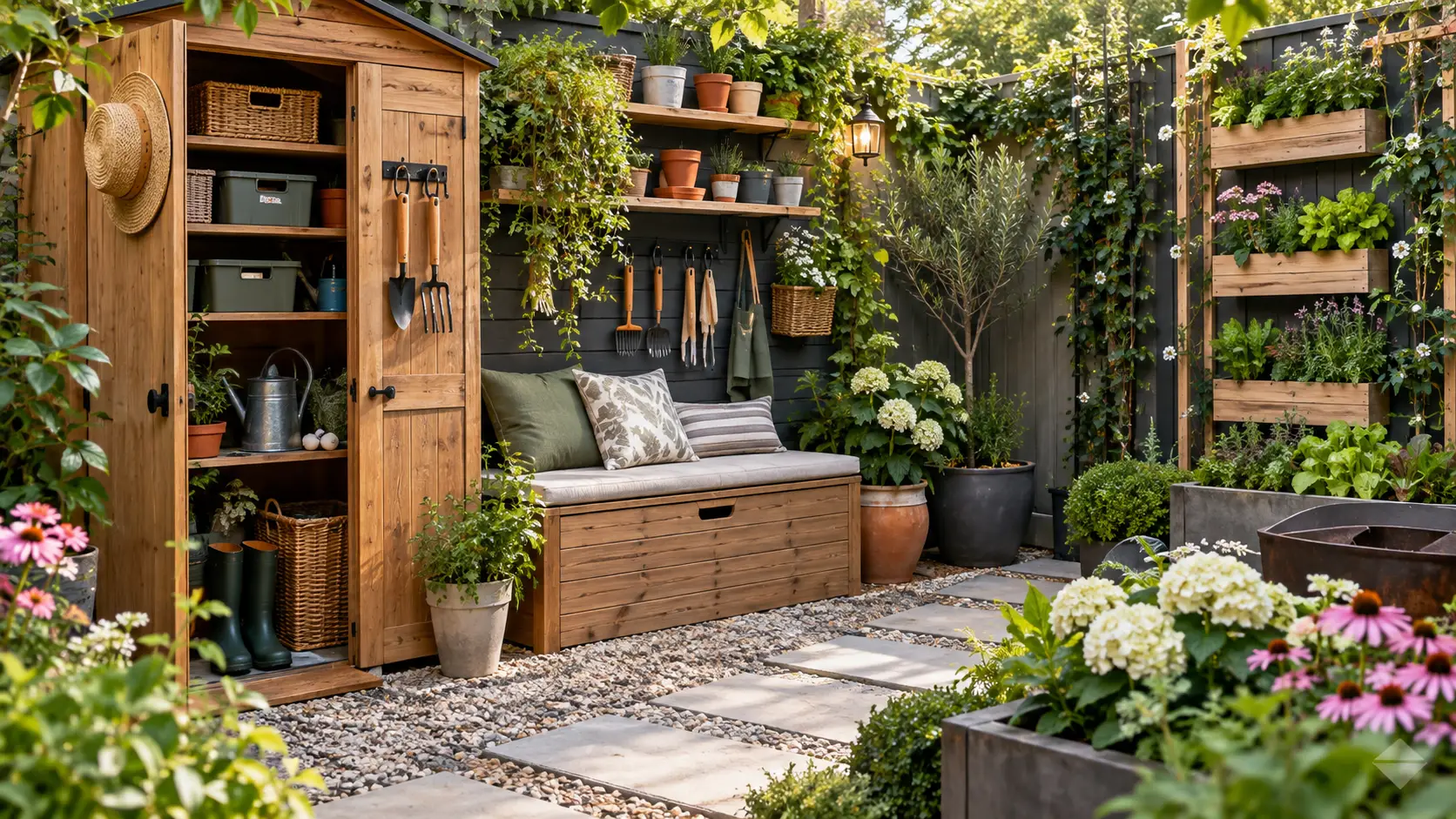
A small garden can quickly feel crowded when tools, plant pots, watering cans, cushions, hoses, and gardening supplies have nowhere to go. Limited outdoor space makes organization especially important because even a few misplaced items can block pathways or distract from attractive planting. Smart garden storage helps you keep essentials close without allowing practical equipment to dominate the space.
The best small garden storage ideas use areas that might otherwise remain empty. Walls, fences, corners, benches, narrow gaps, and vertical surfaces can all provide useful storage without taking away valuable planting or seating space. Choosing compact and multifunctional solutions can make a tiny backyard, patio, courtyard, or balcony feel noticeably cleaner and easier to use.
Good storage should also fit naturally into the overall garden design. Instead of adding oversized sheds or random plastic boxes, choose storage that matches your furniture, containers, and landscaping style. With a thoughtful approach, you can organize gardening essentials while maintaining an outdoor space that still feels attractive, comfortable, and spacious.
Start by Decluttering Your Small Garden
Before buying new storage, remove everything that no longer needs to remain in the garden. Broken pots, damaged tools, empty compost bags, old decorations, and unused furniture can occupy valuable space unnecessarily. Clearing these items helps you understand exactly what needs storing and prevents you from purchasing a larger storage solution than your garden actually requires.
Group the remaining items into useful categories such as hand tools, larger equipment, plant care products, cushions, watering accessories, and spare containers. Once you know what you regularly use, you can choose storage based on actual needs. Frequently used items should remain easy to reach, while seasonal supplies can be stored in less accessible areas.
Decluttering also improves the visual size of a compact outdoor area. If you are looking for more ways to use limited space effectively, these tiny garden ideas can help you organize planting, furniture, and decorative elements without overcrowding. Starting with less clutter makes every later storage improvement more effective.
Choose a Slim Garden Storage Cabinet
A narrow outdoor cabinet can provide useful storage without occupying as much floor space as a traditional garden shed. Tall cabinets work particularly well against fences, exterior walls, garages, or unused side areas. Because storage extends upward rather than outward, you can keep tools and supplies organized while preserving more valuable garden space.
Look for adjustable shelves if you need to store items of different sizes. Smaller shelves can hold gloves, pruning tools, plant food, and accessories, while the lower section may accommodate watering cans or larger equipment. A cabinet with internal hooks can provide additional storage for lightweight tools without requiring another piece of outdoor furniture.
Choose materials designed to tolerate your local outdoor conditions. Weather-resistant resin, treated wood, or suitable metal can work depending on the garden style and level of exposure. Keep the cabinet proportional to the surrounding space so it provides enough storage without becoming the most visually dominant feature in a small garden.
Use Walls and Fences for Vertical Storage
Vertical storage is one of the most effective solutions when ground space is limited. Hooks, rails, pegboards, shelves, and wall-mounted tool organizers can turn a blank fence or exterior wall into practical storage. Keeping equipment off the ground also makes pathways easier to clean and prevents tools from becoming scattered around planting areas.
Use strong hooks for lightweight hand tools, watering accessories, small baskets, or coiled hoses. Shelves can hold empty pots, gardening gloves, labels, and frequently used supplies. Position commonly used items within comfortable reach so you do not need to climb or move furniture every time you want to perform a simple garden task.
Avoid covering an entire wall with storage equipment if the garden is extremely compact. Leaving some open space prevents the area from feeling enclosed and visually cluttered. Choose one designated storage wall and keep the arrangement neat, allowing other vertical surfaces to remain available for plants or decorative garden features.
Add a Storage Bench to Your Seating Area
A storage bench gives you two useful functions within one piece of furniture. It provides comfortable seating while creating hidden space underneath for cushions, small gardening tools, toys, or outdoor accessories. Multifunctional furniture is especially valuable in small gardens because it reduces the need for separate storage boxes and additional seating.
Position the bench against a wall, fence, or garden boundary to keep the central area open. This arrangement creates an organized seating zone without interfering with pathways or planting beds. Add a few removable outdoor cushions for comfort, but make sure they can be stored easily inside the bench during poor weather when necessary.
Check that the internal compartment is suitable for the items you plan to store. Moisture-sensitive cushions may require more weather protection than plastic gardening equipment. Choosing a bench with a secure lid and appropriate outdoor construction will help protect stored items while keeping your small garden looking clean and coordinated.
Make Use of Awkward Garden Corners
Small gardens often contain corners that are difficult to use for planting or seating. These spaces can become practical storage areas with a narrow shelving unit, triangular cabinet, vertical rack, or compact storage box. Converting an awkward corner prevents useful equipment from spreading into more visible and frequently used parts of the garden.
Before adding storage, measure the corner carefully and check that doors, gates, and pathways will still open comfortably. An oversized cabinet squeezed into a tight location can create more problems than it solves. Choose a design that fits naturally and leaves enough space to access everything stored inside.
You can soften corner storage by placing a tall container or climbing plant nearby. This helps practical equipment blend into the surrounding garden instead of looking purely functional. Avoid completely hiding storage behind dense plants, however, because you still need convenient access for regular gardening and cleaning tasks.
Organize Garden Tools With Simple Racks
Garden tools become difficult to manage when they are leaned randomly against fences or left across the ground. A simple rack can hold spades, rakes, brushes, hand tools, and other equipment vertically. Keeping tools in one dedicated location also makes it much easier to notice when something is missing or needs maintenance.
Wall-mounted racks are useful when you have a shed, cabinet, garage wall, or sturdy fence available. If wall installation is not practical, a freestanding tool organizer can keep equipment upright in a small footprint. Place heavier tools lower down and avoid storing sharp items where children or pets could easily reach them.
Clean soil and moisture from tools before returning them to storage. Regular cleaning can help keep both the equipment and storage area tidier while making tools more pleasant to use. A well-organized rack also saves time because you can quickly find the item you need rather than searching through boxes or garden corners.
Use Stackable Boxes and Storage Bins
Stackable containers can help organize small gardening supplies while making good use of vertical space inside cabinets or covered areas. Separate items such as plant labels, gloves, irrigation fittings, seeds, hand tools, and spare accessories into individual boxes. Clear containers can make contents easier to identify without opening every box.
Use labels if you have several similar containers. Simple categories such as planting, pruning, watering, and repairs can make everyday garden tasks more efficient. Avoid creating too many highly specific categories, because an overly complicated storage system may become difficult to maintain and eventually turn back into clutter.
Outdoor storage boxes should be selected according to where they will be placed. Containers exposed directly to weather need better protection than those stored inside a cabinet or sheltered patio. Keep items that can be damaged by moisture in suitably protected storage rather than assuming every plastic box is completely waterproof.
Create a Compact Potting Station
A small potting station can organize soil, hand tools, pots, and planting supplies in one convenient location. You do not need a large professional bench; a narrow table or compact outdoor workstation can provide enough surface area for basic planting tasks. Shelves underneath can store containers and other frequently used materials.
Position the potting station near your main planting area or water source if possible. This reduces the need to carry heavy materials across the garden every time you repot a plant. Keeping commonly used tools in hooks or small containers above the work surface also allows the station to remain organized.
Avoid turning the potting bench into permanent open storage for every gardening item you own. Keep the working surface mostly clear so it remains useful for actual planting and maintenance. Store larger bags of compost or seasonal equipment elsewhere if they make the station look crowded or interfere with everyday tasks.
Store Hoses and Watering Equipment Neatly
Garden hoses can easily become one of the messiest features in a small outdoor space. A wall-mounted reel or compact hose holder keeps the hose off pathways and prevents it from becoming tangled around plants or furniture. Position it close to the water connection so you do not need unnecessary lengths of hose crossing the garden.
Watering cans can be stored on a low shelf, inside a cabinet, or neatly beside the water source. If you use several cans, consider whether all of them are necessary. Keeping only the sizes you actually use reduces clutter while still ensuring you have suitable watering equipment for containers and planting beds.
Drip irrigation accessories, hose connectors, and small fittings can be stored together in a labeled container. These small items are easy to lose when left loose inside a large cabinet. Keeping watering equipment organized in one area makes routine plant care faster and prevents unnecessary purchases of replacement parts you already own.
Hide Storage Within the Garden Design
Storage does not always need to look like storage. A bench, planter box, screen, or decorative cabinet can provide useful space while blending with the surrounding landscape. Choosing materials and colors that match existing garden furniture, fencing, or containers helps practical features become part of the overall design.
For example, a wooden storage bench can complement timber fencing, while a dark slim cabinet may suit a contemporary garden with similar planters. Repetition creates visual continuity and stops storage from looking like an afterthought. This is particularly important in small areas where every feature is easily visible.
You can also use plants strategically to soften the appearance of storage units. Containers with ornamental grasses or compact shrubs can partially screen hard edges without blocking access. Keep enough clearance around doors and lids so you can open storage comfortably without constantly moving pots or damaging nearby plants.
Keep Outdoor Storage Weather-Ready
Outdoor storage needs to protect your belongings from rain, sunlight, wind, and changing temperatures. Before choosing a cabinet, box, or bench, consider exactly what will be stored inside and how exposed the location will be. Garden tools generally tolerate different conditions than cushions, seeds, electrical equipment, or delicate plant care products.
Raise suitable storage slightly above persistently wet ground when necessary to reduce moisture exposure. Check lids, hinges, doors, and seals occasionally so minor damage can be repaired before water enters the storage compartment. Ventilation may also be helpful for certain storage setups where trapped moisture could encourage unpleasant odors or deterioration.
Do not store chemicals, fuels, or potentially hazardous garden products carelessly just because a container can be locked. Follow the product’s storage instructions and keep inappropriate materials away from heat, children, pets, and food-growing areas. Practical garden organization should always consider safety alongside convenience and appearance.
Build a Simple Storage Routine
Even the best storage system will stop working if tools and supplies are never returned to their designated places. Develop a simple habit of putting items away after gardening instead of leaving everything to organize later. A few minutes of tidying can prevent a compact garden from quickly becoming cluttered again.
Review stored supplies occasionally and remove empty packaging, broken equipment, and items you no longer use. Small cabinets can become surprisingly crowded when unnecessary objects accumulate over several seasons. Keeping only useful items creates more room for the tools and accessories you genuinely need.
Adjust the storage layout if your gardening habits change. You may need more space for containers, fewer hand tools, or easier access to watering equipment as the garden develops. A flexible organization system allows storage to support your outdoor lifestyle rather than forcing you to work around an arrangement that no longer makes sense.
Conclusion
Small garden storage works best when it uses space efficiently without making the outdoor area feel crowded. Slim cabinets, storage benches, wall racks, corner units, and stackable containers can keep everyday equipment organized while preserving valuable planting and seating space. Choosing multifunctional solutions is particularly useful when every square foot matters.
Focus on storing frequently used items where they are easy to reach and keeping less important supplies out of the main garden view. Vertical storage can free floor space, while coordinated materials help cabinets and boxes blend naturally into the landscape. Regular decluttering also prevents your storage areas from becoming another source of outdoor mess.
Most importantly, choose a storage system that matches the way you actually use your garden. A simple setup that is easy to maintain will usually work better than a complicated arrangement with too many containers and categories. With thoughtful organization, even a tiny garden can stay practical, attractive, and comfortably clutter-free.
FAQs
What is the best storage option for a very small garden?
A slim vertical cabinet or multifunctional storage bench is often useful because it provides significant storage without taking up excessive floor space. Wall-mounted racks can add even more capacity.
How can I store garden tools without a shed?
Use wall hooks, vertical tool racks, outdoor cabinets, or freestanding organizers. Choose a sheltered or weather-resistant setup and keep sharp tools securely stored where children and pets cannot easily reach them.
What can I store inside a garden storage bench?
A suitable storage bench can hold cushions, lightweight tools, toys, watering accessories, or other outdoor items. Check the bench’s weather protection before storing anything that could be damaged by moisture.
How can I hide storage in a small garden?
Choose cabinets and benches that match your furniture or fencing, then soften them with nearby containers or plants. Avoid blocking doors and lids so the storage remains convenient to access.
How do I stop my garden storage from becoming cluttered?
Group similar items, use labeled containers, and return tools after every use. Review stored supplies regularly and remove damaged, duplicated, empty, or unnecessary items before they take over limited storage space.