A small garden can feel completely different when the right decorative details are added. You do not need a large yard, expensive landscaping, or complicated features to create an outdoor space that feels stylish and inviting. Simple additions such as planters, lighting, seating, wall decor, and natural materials can bring personality to even the most compact garden.
The key to decorating a small garden is choosing features that improve the space without making it feel crowded. Every pot, ornament, light, and piece of furniture should have a clear purpose. A thoughtful approach helps you create visual interest while keeping pathways open and allowing plants to remain the main focus.
Whether you want a cozy cottage atmosphere, a modern outdoor retreat, or a colorful family garden, small changes can make a noticeable difference. These small garden decor ideas will help you transform your yard using practical, attractive, and space-conscious features that work well in limited outdoor areas.
Start With a Simple Garden Decor Theme
Choosing a clear decorating style before purchasing anything can make a small garden feel much more organized. Decide whether you prefer modern, rustic, cottage-inspired, minimalist, or natural garden decor. A consistent direction makes it easier to select pots, furniture, lighting, and accessories that work together rather than competing for attention.
Pay attention to your home’s exterior when choosing the theme. A modern property may suit clean lines, neutral planters, and simple lighting, while a traditional home may look better with terracotta, wood, and softer planting. Connecting the garden decor with the architecture creates a more polished and intentional overall appearance.
Avoid trying to combine every style you like into one compact space. Small gardens can quickly become visually busy when too many colors, materials, and decorative themes are introduced. Limiting your choices helps individual features stand out and creates a calmer outdoor environment that feels easier to enjoy.
Use Decorative Pots and Planters
Pots are one of the easiest ways to combine plants and decoration in a small garden. Stylish containers can introduce color, texture, and structure even before the plants begin flowering. Position them near entrances, patios, seating areas, or unused corners where they can create visual interest without taking over valuable walking space.
Choose a few coordinated container styles rather than scattering many unrelated pots throughout the yard. Similar colors, finishes, or shapes help create continuity while different sizes provide variation. Larger containers can work as focal points, while smaller pots can hold herbs, seasonal flowers, or trailing plants.
Think about the plants as part of the decorative design as well. Architectural foliage can create a modern appearance, while colorful flowers provide a softer and more cheerful effect. Always make sure containers have suitable drainage and enough space for roots so attractive decor does not come at the expense of healthy plants.
Add Outdoor Lighting for Evening Style
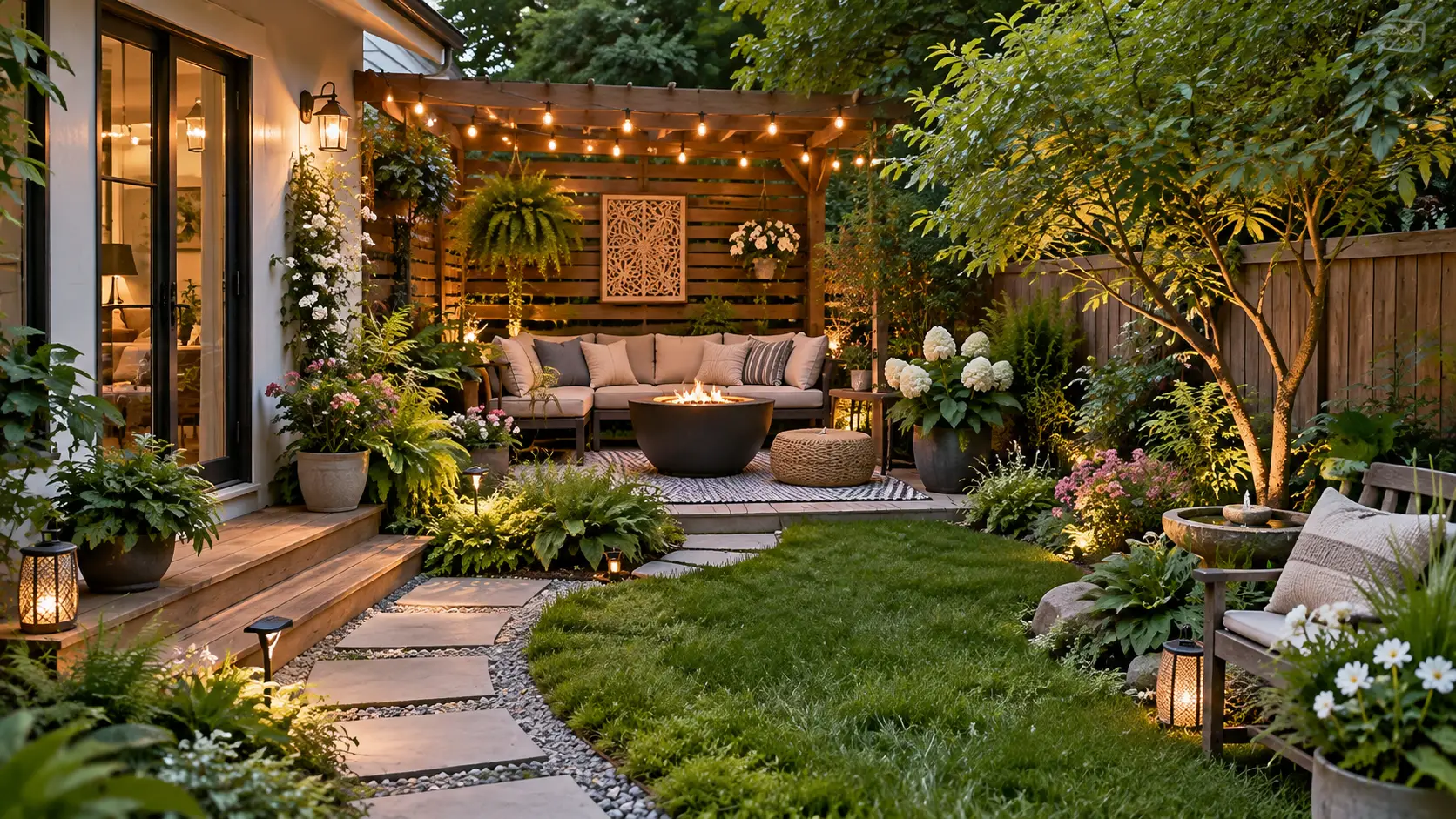
Outdoor lighting can completely change the atmosphere of a small garden after sunset. String lights, pathway lights, lanterns, and subtle wall fixtures can make patios and seating areas feel warmer and more welcoming. Good lighting also helps you enjoy the garden for longer during evenings without relying on harsh overhead illumination.
Use light to highlight the garden’s best features rather than illuminating everything equally. A small spotlight can emphasize a decorative tree, statement planter, textured wall, or sculpture. Layering several gentle sources of light creates more depth and can make a compact space feel larger at night.
Keep practical safety in mind when choosing decorative lighting. Steps, pathways, and entrances should remain easy to see, especially in areas regularly used after dark. Select outdoor-rated fixtures suited to weather exposure, and avoid overcrowding a small garden with too many lights competing for attention.
Decorate Garden Walls and Fences
Walls and fences provide valuable decorating space without reducing the usable ground area. Outdoor artwork, trellises, hanging pots, mirrors, and decorative panels can transform plain boundaries into attractive features. Vertical decor is particularly helpful in compact yards where every square foot of floor space matters.
Keep wall arrangements relatively simple so the garden does not begin to feel enclosed. One feature panel or a small collection of coordinated planters can often create enough visual impact. If you use climbing plants, combine them with decorative supports that complement your overall garden style.
Outdoor mirrors can also create the illusion of additional depth when positioned carefully. Place them where they reflect greenery or an attractive section of the garden rather than clutter or neighboring windows. Secure wall decor properly and choose materials designed to tolerate changing outdoor conditions.
Create a Cozy Seating Corner
A comfortable seating area can make a small garden feel like an extension of your home. You do not need a large dining set; a compact bench, two chairs, or a small bistro table may be enough. Position furniture against a wall or fence to preserve more open space in the center.
Outdoor cushions can introduce color and pattern without permanently changing the garden design. Choose a limited palette that complements flowers, containers, or surrounding materials. Weather-resistant textiles are usually easier to maintain, especially when the seating area is exposed to sun, moisture, or changing seasonal conditions.
Surround seating with several plants to make the space feel integrated into the garden. A tall container, fragrant herbs, or small flowering pots can soften furniture edges and create a more relaxing atmosphere. Avoid enclosing the area completely, as some open space will keep the garden comfortable and easy to move through.
Add One Eye-Catching Focal Point
A focal point can immediately give a small garden more personality and direction. This might be a decorative planter, small fountain, sculpture, feature tree, birdbath, or attractive bench. One memorable object often has more visual impact than several unrelated decorations placed around the yard.
Position your focal point where it can be seen from important viewing areas, such as a patio door, kitchen window, or seating area. Placing it toward the far end of the garden can also draw the eye deeper into the space. Keep nearby decor relatively understated so the main feature remains noticeable.
Avoid turning every corner into a focal point. Too many statement pieces can make a limited yard feel crowded and reduce the impact of each individual feature. Choosing one primary element and several quieter supporting details usually creates a more balanced and professionally styled outdoor space.
Use Natural Materials for Warmth
Natural materials can make a small garden feel relaxed and connected to its surroundings. Wood, stone, terracotta, gravel, and woven textures work well alongside plants because they complement greenery rather than competing with it. These materials can be introduced through planters, furniture, pathways, edging, or decorative accessories.
Wooden crates, small benches, or simple plant stands can add warmth to patios and garden corners. Stone edging or gravel can create texture around flower beds while defining different areas. Repeating the same natural materials throughout the garden helps create continuity and makes the space feel thoughtfully designed.
Choose materials that are suitable for outdoor conditions and your maintenance preferences. Some wood may need periodic treatment, while certain decorative surfaces may weather naturally over time. Selecting durable options allows you to enjoy the aesthetic benefits without turning garden decor into a constant maintenance project.
Add Vertical Decor to Save Space
Vertical decorating is one of the best approaches for small yards because it adds character without using much ground space. Wall shelves, hanging baskets, vertical planters, and narrow trellises can display plants and decorative pieces at different heights. This also encourages the eye to move upward, making the garden feel more layered.
A vertical plant display can be both functional and decorative. Herbs, flowers, succulents, or compact foliage plants can be arranged on wall-mounted shelves or ladder-style stands. Keep enough distance between levels so plants receive suitable light and remain accessible for watering and regular maintenance.
Make sure vertical features are safely secured before adding heavy containers or decorative items. Wind, wet soil, and mature plants can create more weight than expected. A limited number of well-positioned vertical elements usually looks better than covering every wall with shelves, baskets, and hanging decorations.
Use Color Without Overcrowding the Space
Color can make a small garden more lively, but too many competing shades can create visual clutter. Choose two or three main colors and repeat them through flowers, cushions, containers, and decorative accessories. A simple palette gives the space personality while keeping the overall design cohesive.
Neutral tones such as white, gray, beige, or natural wood can provide a calm base. Brighter colors can then be introduced through seasonal flowers or smaller accessories that are easy to replace. This approach lets you refresh the garden throughout the year without redesigning the entire space.
If you prefer a cleaner contemporary look, explore these modern small garden ideas for inspiration on combining simple colors, streamlined planting, and stylish outdoor features. Keeping colors connected across the garden can make separate areas feel like one larger, unified space.
Add Simple Water Features
A small water feature can create a calming focal point without requiring a large pond or complicated landscape construction. Compact fountains, water bowls, or wall-mounted features can introduce gentle movement and sound. They work particularly well near seating areas where the effect can be appreciated while relaxing outdoors.
Choose a design that fits the scale of your garden. A large fountain can overwhelm a tiny courtyard, while a small feature can add interest without reducing useful space. Position it where maintenance access is easy and where splashing water will not constantly wet furniture or pathways.
Water features still require regular cleaning and basic care, so select one that suits the amount of maintenance you are willing to provide. Keep the surrounding decor simple and let the feature become a focal point. Combining water with nearby greenery can create a peaceful and natural atmosphere.
Decorate With Garden-Friendly Accessories
Small accessories can personalize an outdoor space without requiring structural changes. Lanterns, plant stands, weather-resistant sculptures, decorative stakes, and small birdbaths can add character when used selectively. The best accessories should complement the garden rather than distract attention from healthy plants and landscaping.
Group small decorative items instead of spreading them randomly around the yard. A lantern beside a planter or a decorative object near a seating area can create an intentional arrangement. Leaving other sections relatively simple ensures the garden still feels open and prevents the design from becoming overly busy.
Think about durability before purchasing outdoor accessories. Items exposed to rain, sunlight, or wind should be designed for exterior use or easy to store when conditions change. Choosing fewer high-impact decorations can also reduce cleaning and maintenance while creating a stronger overall look.
Make Pathways More Decorative
Paths provide an opportunity to combine function and visual appeal. Stepping stones, gravel, brick, or simple paving can guide movement while adding texture to the garden. A clearly defined pathway can also help organize a small yard by separating planting, seating, and other functional areas.
Decorative edging can improve the appearance of paths without requiring a complete redesign. Stone, brick, metal, or timber can create clean boundaries and keep gravel or soil from spreading. Repeating the same edging material elsewhere in the garden creates a more consistent and coordinated appearance.
Avoid using too many paving materials in a limited space. Combining several stone colors, brick patterns, and gravel types can make the garden feel fragmented. One primary material supported by simple planting usually creates a cleaner result while allowing decorative details to stand out.
Keep Garden Decor Balanced and Clutter-Free
The most important rule when decorating a small garden is knowing when to stop. Every decorative object takes up visual space, even when it does not occupy much ground. Leaving some areas open allows plants, furniture, and focal features to stand out more clearly and makes the entire yard feel larger.
Review the garden occasionally and remove accessories that no longer contribute to the overall design. Broken pots, faded decorations, unnecessary plant stands, and unused furniture can gradually build up. Editing the space is often just as effective as adding something new when you want to refresh the garden.
Store tools, hoses, and gardening supplies somewhere discreet whenever possible. A compact storage bench or outdoor cabinet can keep practical items nearby without making them part of the visible decor. Keeping the garden organized helps maintain the stylish appearance you created and makes routine maintenance much easier.
Conclusion
Small garden decor can transform a basic yard into a more attractive and enjoyable outdoor space. Containers, lighting, seating, wall features, natural materials, and carefully selected accessories can add personality without requiring major landscaping work. The best results come from choosing features that fit the scale and purpose of your garden.
Focus on consistency when selecting colors, materials, and decorative elements. A limited palette, repeated textures, and one strong focal point can make a compact garden feel more polished than a space filled with many unrelated objects. Vertical decor can also help you introduce style without sacrificing valuable ground area.
Most importantly, keep the garden comfortable and practical for everyday use. Decorative features should enhance your plants, pathways, and seating rather than make movement or maintenance more difficult. With thoughtful choices and a little creativity, even the smallest yard can become a stylish, welcoming, and personal outdoor retreat.
FAQs
What is the easiest way to decorate a small garden?
Start with coordinated pots, simple outdoor lighting, and one comfortable seating area. These features create an immediate visual improvement without taking up too much space or requiring major landscaping work.
How can I decorate a small garden on a budget?
Reuse containers, add inexpensive string lights, refresh existing furniture, and create simple DIY plant stands or borders. Working with materials you already own can significantly reduce decorating costs.
What decorations make a small garden look bigger?
Mirrors, vertical planters, light-colored containers, clear pathways, and simple coordinated decor can create more visual depth. Avoid overcrowding because open space is equally important for making the garden feel larger.
How many decorative features should a small garden have?
There is no fixed number, but fewer coordinated pieces usually create a stronger design. Start with one focal point and several smaller supporting elements, then stop before the space begins to feel crowded.
Can I mix modern and rustic garden decor?
Yes, but connect the styles through similar colors, materials, or plant choices. Keeping one style dominant and using the other as an accent usually creates a more cohesive look than mixing both equally.