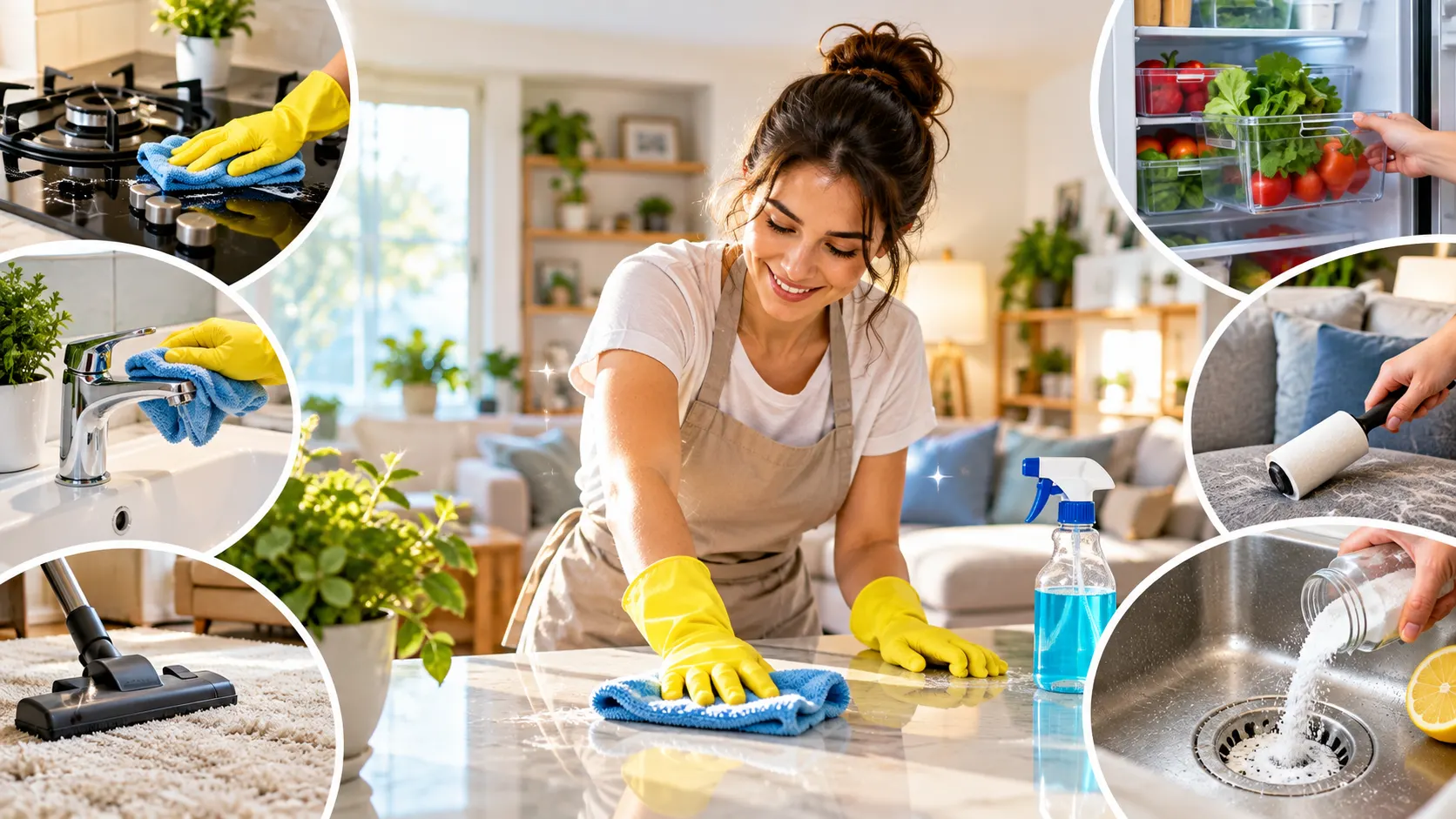
Keeping the kitchen clean can feel like a never-ending task. Between meal preparation, dirty dishes, grease, crumbs, spills, and food storage, mess can return almost immediately after you finish cleaning. Fortunately, a few practical kitchen cleaning hacks can help you maintain a fresher space without spending hours scrubbing every day.
The smartest cleaning methods focus on preventing buildup and making routine tasks easier. Simple habits such as cleaning while food cooks, steaming stubborn residue, and keeping essential supplies close by can significantly reduce your workload. When small messes are handled early, they rarely become difficult deep-cleaning projects.
These kitchen cleaning hacks are designed for busy households that want faster, more efficient routines. They use straightforward techniques to tackle common problems such as greasy surfaces, dirty appliances, stained sinks, cluttered counters, and messy floors. Always follow appliance and surface care instructions before using unfamiliar products or methods.
1. Clean as You Cook to Prevent a Big Mess
One of the easiest ways to save time in the kitchen is to clean during natural pauses in cooking. While water boils, food simmers, or something bakes in the oven, put away ingredients, rinse utensils, or load used dishes into the dishwasher. These small tasks prevent preparation mess from accumulating around you.
Keep a small container or bowl nearby for packaging, vegetable scraps, and other waste while preparing food. Instead of repeatedly walking to the trash bin, collect everything in one place and dispose of it afterward. This simple cooking habit keeps countertops clearer and makes the entire preparation area easier to wipe.
By the time dinner is ready, most cooking tools and ingredients can already be put away. After the meal, you only need to deal with serving dishes, plates, and final surface cleaning. Cleaning as you cook can turn a stressful kitchen cleanup into a much shorter and more manageable routine.
2. Steam Your Microwave Before Wiping It Down
Microwave splatters can become extremely stubborn when food dries and is reheated repeatedly. Instead of immediately scrubbing the interior, place a microwave-safe bowl of water inside and heat it until steam develops. Allow the steam to remain inside briefly so it can soften dried food residue.
Carefully remove the hot bowl and wipe the walls, ceiling, and interior door with a soft damp cloth. Loosened food should come away much more easily than it would from a completely dry surface. Remove the microwave turntable separately and wash it according to the appliance manufacturer’s instructions.
Try wiping new spills soon after they happen so heavy residue never gets a chance to develop. A quick maintenance wipe usually takes less than a minute. Combining regular cleaning with occasional steaming can keep your microwave fresher while reducing the amount of effort required for deeper cleaning.
3. Use Dish Soap to Break Down Fresh Grease
Dish soap is designed to remove grease from cookware, making it useful for many compatible kitchen surfaces as well. A small amount mixed with warm water can help remove fresh cooking grease from backsplashes, counters, cabinet fronts, and certain appliance exteriors. Always check the surface care instructions before cleaning.
Apply the solution using a soft microfiber cloth or non-abrasive sponge. Allow particularly greasy areas a short moment to soften, then wipe them gently instead of scrubbing aggressively. Follow with a clean damp cloth if necessary to remove any remaining soap residue from the surface.
The real time-saving trick is dealing with grease while it is fresh. Sticky buildup becomes harder to remove after several days or weeks of cooking. Wiping nearby surfaces after preparing oily foods can dramatically reduce the amount of heavy degreasing needed during your weekly kitchen cleaning routine.
4. Keep Counters Clear With a Dedicated Storage Tray
Kitchen countertops become difficult to clean when they are crowded with oils, spices, utensils, appliances, and miscellaneous items. Group frequently used products together on a washable tray instead of allowing them to spread across the entire counter. This creates a cleaner, more organized preparation area.
When it is time to wipe the surface, you can lift one tray instead of moving several individual bottles and containers. The tray also catches small oil drips, seasoning spills, and crumbs that would otherwise reach the countertop. Simply clean the tray periodically along with your normal kitchen routine.
Avoid using this hack as an excuse to keep unnecessary products permanently displayed. Store items you rarely use inside cabinets and leave only everyday essentials within easy reach. Fewer objects on your counters mean faster cleaning, less visual clutter, and more usable space for preparing meals.
5. Clean the Stovetop Before Grease Hardens
Stovetop spills become much easier to handle when they are cleaned soon after cooking. Once the surface has safely cooled, remove loose crumbs and wipe fresh splashes with an appropriate cleaner. Waiting several days allows oil and food residue to harden, turning a simple wipe into a demanding scrubbing job.
For removable components such as compatible burner grates or covers, follow the manufacturer’s instructions before washing or soaking them. Different stovetops require different methods, particularly glass, ceramic, gas, and induction models. Using unsuitable abrasives can cause scratches or permanent damage to certain finishes.
Build a quick stovetop check into your post-dinner routine. Even if you do not complete a detailed clean every evening, wiping visible spills can prevent major buildup. Regular maintenance keeps the cooking area looking better and can dramatically shorten the time needed for weekly kitchen cleaning.
6. Use an Old Toothbrush for Kitchen Crevices
Kitchen grime frequently hides in places that standard cleaning cloths cannot reach. An old toothbrush is useful for cleaning around taps, sink edges, appliance seams, cabinet hardware, tile grout, and other narrow areas. Its compact shape allows you to target buildup without purchasing a specialized detailing brush.
Apply a cleaner appropriate for the surface and gently scrub the affected area using small movements. Avoid excessive force, especially around painted finishes, soft grout, or delicate metal surfaces. Giving the cleaning product a little time to loosen stubborn residue can reduce the need for aggressive scrubbing.
Keep repurposed toothbrushes clearly labeled and store them separately from personal hygiene items. You may want one brush exclusively for kitchen cleaning so it never gets used in bathrooms or other areas. This inexpensive tool can make detailed cleaning faster while helping overlooked spaces look noticeably fresher.
7. Line or Organize Refrigerator Shelves for Easier Cleaning
Refrigerator spills become frustrating when liquids spread beneath containers and dry onto shelves. Organizing foods inside washable bins or trays can help contain smaller leaks and crumbs. Instead of removing an entire shelf of individual products, you can simply lift out one container when cleaning is necessary.
Group foods into practical categories such as snacks, condiments, breakfast ingredients, produce, or items that should be eaten soon. Better organization helps you spot spills faster and reduces the chance of forgotten food sitting at the back. It can also make grocery planning easier because you can see what you already have.
Wipe refrigerator spills as soon as you notice them instead of waiting for a full appliance clean. Fresh residue is usually much easier to remove. Regularly checking shelves and discarding spoiled food can keep the refrigerator cleaner while making occasional deep-cleaning sessions significantly faster.
8. Clean Your Sink at the End of the Day
The kitchen sink handles food residue, dirty dishes, cooking tools, and constant water throughout the day. Giving it a quick clean each evening can prevent grime and residue from accumulating. After the final dishes are handled, rinse away debris and wash the sink using a method appropriate for its material.
Pay attention to the faucet, drain area, and edges where water spots and food particles tend to collect. Use a soft cloth or non-abrasive sponge to avoid scratching delicate sink finishes. Stainless steel, ceramic, composite, and other materials may have different cleaning requirements, so follow manufacturer guidance.
A clean sink can immediately make the entire kitchen look more polished. It also gives you a fresher starting point the next morning. Turning sink cleaning into a short nightly habit helps prevent buildup and reduces the effort needed during more thorough kitchen cleaning sessions.
9. Sweep High-Crumb Areas Instead of the Entire Floor
Kitchen floors collect crumbs quickly, particularly around counters, dining areas, and food preparation zones. You do not necessarily need to deep clean the entire floor every time a few crumbs appear. A quick targeted sweep or vacuum can keep the most visible mess under control in just a few minutes.
Focus on the areas beneath preparation counters, around the dining table, and near frequently used cabinets. Removing food debris promptly also prevents it from being tracked into other rooms. Homes with children or pets may benefit from quick floor maintenance more than once during especially busy days.
Schedule full vacuuming and mopping separately based on your household needs. Daily floor care should remain quick enough to repeat consistently. Concentrating on high-mess zones gives you the largest visual improvement while saving the more detailed cleaning for your regular weekly routine.
10. Finish With a Five-Minute Kitchen Reset
A short kitchen reset after dinner can prevent mess from carrying into the next day. Set a timer for five minutes and focus on high-impact tasks such as clearing counters, loading dishes, putting away ingredients, wiping visible spills, and straightening items around the sink.
Do not use this routine for detailed appliance cleaning or difficult scrubbing. The purpose is simply to return the kitchen to a functional state before bedtime. Prioritize whatever would make tomorrow morning easier, particularly dishes and clutter covering important preparation surfaces.
If several family members are available, divide the jobs so the reset finishes even faster. One person can manage dishes while another wipes counters or sweeps crumbs. A consistent five-minute routine can prevent everyday kitchen mess from turning into an exhausting weekend cleaning project.
How to Organize Kitchen Cleaning Supplies for Faster Cleaning
Keeping the right supplies nearby can eliminate unnecessary trips around the house. Store basic kitchen cleaning tools together in a convenient but secure location, such as beneath the sink or inside a nearby utility cabinet. Microfiber cloths, gloves, sponges, and appropriate surface cleaners will cover many everyday jobs.
Avoid keeping dozens of products when only a handful are regularly used. Too many bottles can create clutter and make it difficult to find the cleaner you actually need. Reserve specialty products for surfaces or appliances that specifically require them and keep everyday essentials easy to access.
If children live in the home, always store cleaning chemicals securely according to label instructions. Convenience should never come before safe storage. A simple, well-organized supply area makes spontaneous cleaning easier and helps you immediately notice when something genuinely needs replacing.
Common Kitchen Cleaning Mistakes That Waste Time
Allowing spills and grease to sit for too long is one of the biggest time-wasting habits. Fresh residue often wipes away quickly, while dried food and hardened grease may require repeated cleaning. Addressing obvious messes shortly after cooking usually saves considerable effort later.
Another mistake is cleaning around unnecessary countertop clutter. Moving several bottles, appliances, and containers every time you wipe creates extra work. Store rarely used items inside cabinets and keep visible surfaces as simple as possible so routine cleaning can be completed quickly.
Using unsuitable cleaning products can also create bigger problems than the original mess. Abrasives, excessive moisture, or harsh chemicals may damage stone, wood, appliance finishes, and other specialty materials. Check care guidance before experimenting with popular cleaning hacks that may not be appropriate for your kitchen surfaces.
How to Build a Faster Weekly Kitchen Cleaning Routine
Daily maintenance should handle crumbs, dishes, counters, spills, and fresh grease, while your weekly routine can focus on more detailed tasks. Choose one convenient time to clean cabinet fronts, appliance exteriors, the stovetop, sink, refrigerator shelves, and floors more thoroughly.
Work in an efficient order by decluttering first and cleaning higher surfaces before the floor. Apply suitable cleaners to stubborn areas and allow them to work while you complete easier nearby tasks. Grouping related jobs reduces unnecessary movement and keeps the cleaning process organized.
Reserve appliance interiors and other deeper jobs for a rotating schedule rather than cleaning everything every week. The oven, refrigerator interior, dishwasher filter, range hood, and pantry can each receive attention periodically. Rotating these tasks prevents kitchen cleaning from consuming an entire day.
Conclusion
Kitchen cleaning becomes much easier when you prevent small messes from turning into stubborn buildup. Cleaning while you cook, wiping fresh grease, organizing refrigerator items, and dealing with crumbs quickly can dramatically reduce the amount of time spent scrubbing later.
Simple systems also make a major difference. Clear counters, organized cleaning supplies, a nightly sink routine, and a short kitchen reset can keep the room functional without requiring constant deep cleaning. The goal is to reduce unnecessary steps and deal with mess at the easiest possible stage.
Choose cleaning habits that suit your cooking routine, kitchen surfaces, and household schedule. With a few consistent techniques, you can maintain a cleaner, more comfortable kitchen while spending less time and effort on everyday chores.
FAQs
What is the fastest way to clean a messy kitchen?
Start by putting away food and clutter, then handle dishes, wipe counters and the stovetop, clean the sink, and quickly sweep visible crumbs from high-traffic floor areas.
How can I prevent kitchen grease buildup?
Wipe cooking splashes once surfaces have safely cooled and clean nearby counters and backsplashes regularly. Fresh grease is usually much easier to remove than residue left for several days.
How often should kitchen counters be cleaned?
Counters used for food preparation should be cleaned regularly and whenever spills or food residue appear. Always use cleaning methods suitable for the specific countertop material in your kitchen.
How can I keep my kitchen clean while cooking?
Put ingredients away as you finish with them, collect food scraps in one container, rinse tools during downtime, and load used dishes whenever you have a free moment.
What kitchen areas should be deep cleaned regularly?
Appliance interiors, cabinet fronts, refrigerator shelves, range hoods, detailed stovetop areas, sink fixtures, and spaces behind appliances can be placed on a rotating deep-cleaning schedule.