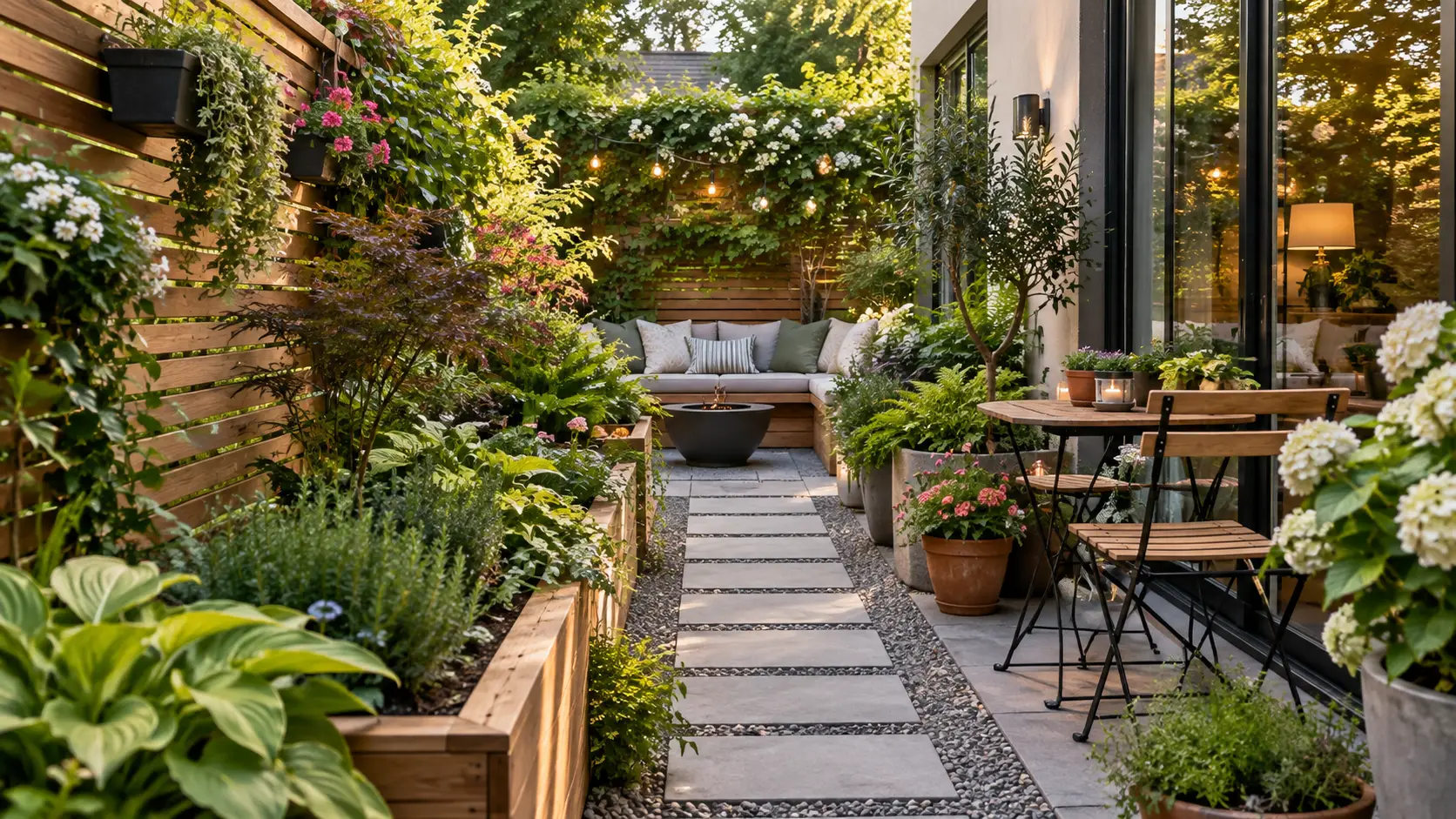
Start With a Clear Small Garden Layout
A small garden feels more spacious when every area has a clear purpose. Before planting, measure the available space and note doors, fences, walls, pathways, and permanent structures. Identify where you want plants, seating, storage, or open space. A simple layout prevents overcrowding and helps you make better use of every corner without making the garden difficult to maintain.
Observe how you naturally move through the outdoor area before placing beds or containers. Frequently used routes should remain clear enough for walking, watering, pruning, and carrying garden supplies. Avoid positioning large pots in narrow access points. Good circulation makes a compact garden feel more comfortable while protecting plants from accidental damage caused by regular foot traffic.
Do not assume every empty area needs to be filled. Leaving some open ground or paving creates visual breathing room and can make the entire garden appear larger. Start with the most important features and add others gradually. A carefully edited garden layout usually feels more attractive than a space packed with plants and decorations.
Divide the Garden Into Functional Zones
Creating simple zones can make a small garden more organized and easier to use. You might dedicate one corner to seating, another to herbs, and a narrow border to flowers or vegetables. Clear zones prevent different features from competing for limited space. They also help you understand where each gardening activity should happen.
Use subtle boundaries rather than building large dividers. Different paving materials, containers, raised beds, or changes in plant height can visually separate areas without blocking views. Keeping sightlines open helps the garden feel larger. Small spaces usually benefit from gentle transitions rather than solid walls between every functional zone.
Make sure each zone earns its place in the layout. If you rarely use outdoor dining furniture, a large table may not deserve valuable space that could hold plants or flexible seating. Design around your real habits rather than an idealized garden. Functional planning makes limited areas more useful while reducing clutter.
Use Vertical Space Along Walls and Fences
Walls and fences provide valuable growing space that is often overlooked in compact gardens. Trellises, wall planters, hanging containers, and slim plant supports allow greenery to grow upward instead of spreading across the ground. Climbing plants can also soften hard boundaries. Vertical gardening leaves more floor area available for pathways, seating, or additional containers.
Place taller vertical features toward the edges of the garden so they do not block important movement routes. Choose supports that are strong enough for mature vines or climbing vegetables. Lightweight flowers may only need a simple trellis, while heavier plants require stronger frames. Planning support early prevents root disturbance later.
Avoid covering every wall with dense growth because too much vertical planting can make a small garden feel enclosed. Use greenery to highlight selected areas instead. A few strong vertical features create height and depth while keeping the layout open. Balance upward growth with lower plants to prevent the design from feeling visually top-heavy.
Create Narrow Raised Beds
Narrow raised beds are useful when you want organized planting areas without using too much floor space. Beds positioned along walls or fences can hold herbs, vegetables, flowers, or mixed planting. They also allow better control over soil quality. This makes them practical where existing ground conditions are difficult to improve.
Keep beds narrow enough that you can comfortably reach the center from one side or both sides. Easy access prevents you from stepping into the growing soil and makes weeding, planting, and harvesting simpler. Long rectangular beds are often more space-efficient than wide square beds. Their clean shape can also create a more organized appearance.
Use vertical supports inside raised beds when growing climbing plants. Beans, peas, cucumbers, or suitable flowering vines can move upward while smaller crops grow below. Combining horizontal and vertical space increases productivity. Thoughtful plant placement allows one compact bed to support several varieties without becoming unnecessarily crowded.
Arrange Containers in Layers
Container gardening gives you flexibility because pots can be moved whenever the layout needs adjustment. Rather than scattering containers randomly, group them in layers according to height. Place larger pots toward the back and smaller ones toward the front. This arrangement keeps more plants visible while creating depth in a limited area.
Use plant stands or sturdy raised surfaces to create additional levels without taking up more ground space. A few elevated pots can transform an ordinary corner into a layered display. Keep watering access in mind when arranging containers. Designs that look attractive but are difficult to maintain may quickly become inconvenient.
Repeat similar container materials or colors to keep the layout visually calm. Too many unrelated pots can make a small garden appear cluttered even when the actual plant count is reasonable. A coordinated container arrangement creates structure. It also makes seasonal changes easier because individual pots can be replaced or moved without redesigning the whole garden.
Make Corners Work Harder
Garden corners often remain unused because they can feel awkward to design. However, they are ideal locations for tall planters, compact trees, vertical trellises, or grouped pots. Using corners effectively keeps central areas open. This creates more room for movement while adding greenery to places that might otherwise look unfinished.
One corner can also become a small focal point. A statement container, flowering shrub, or vertical plant feature can draw attention toward the edge of the garden and create greater visual depth. Avoid filling the same corner with several competing decorations. One strong feature usually creates a more polished effect.
Consider maintenance before planting in tight corners. Large spreading shrubs may become difficult to prune once surrounded by walls or fences. Compact and upright varieties are usually easier to manage. Make sure you can still reach the plant for watering and routine care. Space-saving design should never make maintenance unnecessarily difficult.
Design a Compact Seating Area
A small garden can still include comfortable seating without sacrificing most of the available growing space. Choose a slim bench, folding chairs, or a compact bistro set instead of oversized furniture. Position seating near a wall, fence, or corner whenever possible. This keeps the center more open and improves circulation.
Furniture that serves more than one purpose is especially valuable. A storage bench can provide seating while holding cushions, gardening tools, or watering supplies. Folding chairs can be removed when you need additional room. Flexible pieces make it easier to adapt the garden for relaxing, entertaining, or maintenance.
Surround seating with a limited number of containers rather than dense planting on every side. A few well-placed flowers or ornamental grasses can soften the space while preserving comfortable movement. If you need more inspiration for compact outdoor areas, these patio garden ideas offer practical ways to combine greenery and seating efficiently.
Use Pathways Without Wasting Space
Paths are necessary for movement, but they should not consume more garden space than needed. Use narrow stepping stones, compact pavers, gravel, or another practical surface suitable for regular walking. Keep the route direct where possible. Every pathway should connect useful areas rather than existing purely as decoration.
A slightly curved route can sometimes create the impression of a longer garden, but excessive curves waste valuable growing space. In very small yards, straight paths are often more practical. Keep edges clean so grass or spreading plants do not gradually reduce the walking width. Defined paths make the layout appear more organized.
Think about how tools and watering equipment will move through the garden. If you regularly carry large pots or use a garden cart, paths need enough width for those tasks. Practical access prevents plants from being stepped on. A space-efficient path should support maintenance while contributing to the overall garden design.
Layer Plants by Height and Growth Habit
Layering allows you to fit more visual interest into a compact garden without simply adding more plants. Place taller varieties near boundaries, medium plants in the middle, and lower-growing species near pathways or bed edges. This arrangement keeps each layer visible. It also creates depth and prevents one group from hiding everything behind it.
Use climbing varieties where appropriate to add another growing layer. Vertical plants can share space with lower herbs, flowers, or vegetables if their needs are compatible. Pay attention to sunlight so tall plants do not block smaller ones unnecessarily. Smart layering increases the usefulness of a small planting area without encouraging overcrowding.
Repeat some plants instead of choosing a completely different variety for every position. Repetition creates visual continuity and makes the garden look more intentional. You can still add interest through leaf shape, height, and texture. A limited plant palette often makes a compact garden feel larger and less visually busy.
Add Privacy With Space-Saving Screens
Privacy does not require wide hedges or large trees that consume valuable ground space. Narrow trellises, slatted screens, climbing plants, and tall planters can block specific views with a much smaller footprint. Target privacy around seating or exposed boundaries. This keeps other areas open and allows more natural light into the garden.
Choose vertical screens that still allow some air and light to pass through. Completely solid barriers can make a tiny garden feel enclosed and dark. Slatted structures combined with controlled climbing plants often provide a softer result. They create separation without visually shrinking the entire outdoor area.
Avoid placing screening around every boundary unless it is genuinely necessary. Leaving selected views open creates greater depth and prevents the garden from feeling boxed in. Privacy should improve comfort without becoming the dominant feature. Strategic placement usually works better than surrounding the whole garden with dense vegetation.
Keep Storage Built Into the Layout
Garden tools, watering cans, soil bags, and outdoor accessories can quickly clutter a small space. Build storage into the layout from the beginning rather than finding space for it later. A storage bench, narrow cabinet, or wall hooks can keep essential items organized. Keeping supplies off the ground preserves valuable planting and walking space.
Use vertical storage on suitable walls or fences when possible. Hooks can hold lightweight tools, while narrow shelves can organize smaller items. Keep frequently used equipment easy to reach so routine maintenance remains convenient. Avoid storing more supplies than you realistically need because excess equipment can overwhelm compact outdoor spaces.
Try to hide practical storage within useful garden features. Seating with built-in storage is a good example because one object performs two functions. Multipurpose design is especially valuable when space is limited. The fewer separate objects you need, the easier it becomes to maintain an uncluttered garden layout.
Keep the Layout Flexible as Plants Grow
A small garden should be able to change as plants mature and your needs evolve. Movable containers, folding furniture, and removable supports give you flexibility without requiring permanent reconstruction. Avoid fixing every feature in place from the beginning. A flexible layout makes seasonal adjustments easier and helps you respond to real growing conditions.
Review the space several times during the growing season. A plant may become wider than expected, a container may receive too much shade, or a seating area may block an important path. Moving one or two elements can solve these problems quickly. Small gardens benefit from regular adjustments because minor changes have a noticeable impact.
Remove features that no longer serve a purpose. Empty pots, unused decorations, or oversized plants can consume valuable room and make the garden feel cluttered. Keep only what contributes to beauty, function, or plant health. Regular editing helps a compact garden remain comfortable and efficient as it develops.
Conclusion
Small garden layout ideas work best when every feature has a clear purpose. Vertical planting, narrow raised beds, layered containers, useful corners, and compact seating can maximize limited space without making the garden feel crowded. Planning before planting also helps preserve clear paths and practical access for everyday maintenance.
Think vertically as well as horizontally when organizing the garden. Walls, fences, plant supports, and multi-level container arrangements can greatly increase growing capacity. At the same time, leave some areas open so the layout has breathing room. Good space planning is about balance rather than fitting the maximum possible number of plants.
Most importantly, keep your layout flexible. Plants mature, sunlight changes, and the way you use your outdoor area may evolve over time. Review what works and adjust containers, furniture, or planting areas when necessary. With thoughtful organization, even a very small garden can feel spacious, productive, attractive, and easy to enjoy.
FAQs
What is the best layout for a very small garden?
Use planting along boundaries, vertical growing surfaces, narrow beds, and a clear central path. Keeping larger features near walls or corners can preserve more usable open space.
How can I fit more plants into a small garden?
Grow vertically, layer plants by height, use containers, and choose compact varieties. Avoid overcrowding by considering mature plant size and grouping plants with compatible growing requirements.
Should a small garden have a pathway?
Yes. A clear path protects planting areas and makes watering, pruning, and maintenance easier. Keep it narrow but comfortable so it does not consume unnecessary growing space.
How can I include seating without losing garden space?
Choose folding chairs, a slim bench, or multipurpose furniture with built-in storage. Position seating near a wall or corner to keep central areas open for movement and plants.
How can I make a small garden layout look bigger?
Keep sightlines open, use vertical features, repeat a limited plant palette, and leave some open space. Avoid oversized furniture, wide hedges, and too many unrelated decorative elements.