A small flower garden can completely transform the appearance of your home without requiring a large yard or complicated landscaping. Even a narrow border, compact patio, balcony, front entrance, or tiny backyard can become colorful and inviting with the right combination of flowers. The key is choosing plants that suit your sunlight, available space, climate, and maintenance preferences.
Small flower gardens are often easier to design because every plant can have a clear purpose. You can combine seasonal blooms, flowering perennials, containers, and vertical planting to create color without overcrowding the space. Thoughtful plant placement also helps a compact garden feel organized, balanced, and visually connected to the surrounding home.
Whether you prefer a romantic cottage look, clean modern planting, or an easy low-maintenance flower bed, there are plenty of ways to work with limited space. These small flower garden ideas focus on practical layouts, attractive plant combinations, and simple techniques that can help make any home feel more welcoming.
Start With a Simple Flower Garden Plan
Before buying flowers, study the size and shape of the area you want to transform. Measure available beds, corners, walls, pathways, and patio edges so you understand exactly how much planting space you have. A simple plan prevents impulse purchases and helps you choose flowers that will remain proportional as they mature.
Observe how much direct sunlight reaches different sections throughout the day. Some flowering plants perform best in full sun, while others prefer partial shade or protection from intense afternoon heat. Matching flowers to existing light conditions is much easier than constantly trying to help unsuitable plants survive in the wrong location.
Decide whether your main goal is seasonal color, year-round structure, fragrance, pollinator-friendly planting, or a combination of these features. Having a clear direction makes plant selection easier and creates a more cohesive garden. You can always introduce additional varieties later after understanding which flowers perform best in your space.
Create Colorful Flower Beds Along Borders
Narrow flower beds along fences, pathways, walls, or lawns can provide strong visual impact without using much garden space. These borders work particularly well in small front yards and compact back gardens. Keeping the planting area relatively narrow also makes flowers easier to reach when watering, pruning, or removing faded blooms.
Arrange flowers by height so shorter varieties remain visible near the front while taller plants create structure behind them. This layered approach adds depth and helps the flower bed appear fuller without becoming chaotic. Repeating several varieties along the border creates rhythm and gives the garden a more polished appearance.
Avoid filling the border with too many unrelated colors and plant types. Choose a simple palette and repeat favorite flowers in several places instead of planting a different variety every few inches. This creates visual continuity and allows individual blooms to stand out rather than competing with one another.
Use Containers for Flexible Flower Displays
Containers are ideal for small flower gardens because they can bring color to patios, balconies, doorways, steps, and paved areas. They are also easy to move when you want to refresh the layout or adjust plants to changing sunlight. This flexibility makes pots particularly useful for renters and homeowners with limited permanent planting space.
Choose containers large enough to support the mature size and root systems of your flowers. Very small pots may dry quickly and require frequent watering, especially during warm weather. A few larger containers can often create a stronger design statement while making everyday maintenance easier than managing dozens of tiny pots.
Group containers of different heights to create a layered display. Place taller flowers or foliage plants toward the back and use trailing varieties near the edges where they can soften the pots. Repeating similar container materials or colors can connect the arrangement and prevent a compact patio from feeling cluttered.
Add Vertical Flowers to Save Ground Space
Vertical gardening allows you to add more flowers without filling valuable floor or planting space. Trellises, wall planters, railing containers, hanging baskets, and narrow shelves can introduce color at different heights. Drawing the eye upward can also make a small garden feel larger and more visually interesting.
Climbing flowering plants can soften fences and bare walls while adding height to the garden. Choose varieties suitable for your climate and provide strong supports that can handle their mature growth. Avoid overly aggressive climbers in very confined spaces unless you are prepared to prune and guide them regularly.
Hanging baskets are another easy way to introduce seasonal blooms without reducing walking space. Position them where they receive appropriate light and can be watered safely. Because hanging containers often dry faster than ground-level pots, choose suitable flowers and check soil moisture more frequently during hot or windy conditions.
Mix Annuals and Perennials for Lasting Color
Annual flowers are useful for quickly adding bright seasonal color to a small garden. They can fill gaps, refresh containers, and allow you to experiment with different color combinations each year. Because many annuals bloom heavily for one growing season, they can create noticeable impact without requiring permanent changes to the garden layout.
Perennials can return for multiple seasons and provide a more stable planting framework. Choose compact varieties that fit your available space and suit your climate, soil, and light conditions. Once established, suitable perennials can reduce the amount of replanting needed while providing reliable flowers and foliage.
Combining annuals and perennials gives you flexibility and structure at the same time. Use perennials as the foundation, then add annual flowers where extra color is needed. This balanced approach keeps the garden interesting across seasons without requiring you to replace every plant each year.
Choose Flowers That Fit Small Spaces
Compact flower varieties are especially useful in limited gardens because they provide color without overwhelming pathways, seating areas, or neighboring plants. Look for dwarf, miniature, or naturally compact varieties when shopping. Checking mature plant dimensions can prevent the common mistake of choosing flowers that eventually become too large for the available bed.
Think about flower shape and foliage as well as bloom color. A mixture of rounded flowers, upright spikes, soft foliage, and trailing forms can create interest even when the overall plant selection remains simple. Contrasting textures often make a small garden look richer without requiring a large number of different species.
Choose plants according to the maintenance level you can realistically provide. Some flowers need regular deadheading, feeding, staking, or watering, while others require relatively little attention once established. A successful flower garden should remain enjoyable instead of becoming a collection of demanding plants that constantly need care.
Create a Small Cottage-Style Flower Garden
Cottage-style gardens can work beautifully in compact spaces because they combine flowers, herbs, and soft planting in an informal way. The style often includes layered blooms, winding edges, and plants that appear naturally connected. However, small cottage gardens still benefit from planning so the result feels charming rather than overcrowded.
Use several repeating flowering plants to create consistency while allowing softer varieties to spill gently toward paths or borders. Roses, lavender, daisies, salvias, and other suitable flowers can create a traditional feeling depending on your climate. Choose compact forms when possible to prevent vigorous plants from taking over limited space.
Keep paths and seating areas clearly defined so the relaxed planting does not make the garden difficult to use. A small bench, stone path, or decorative pot can provide structure among the flowers. Combining organized hard landscaping with informal planting creates the relaxed cottage look while maintaining practical access.
Make a Front Flower Garden More Welcoming
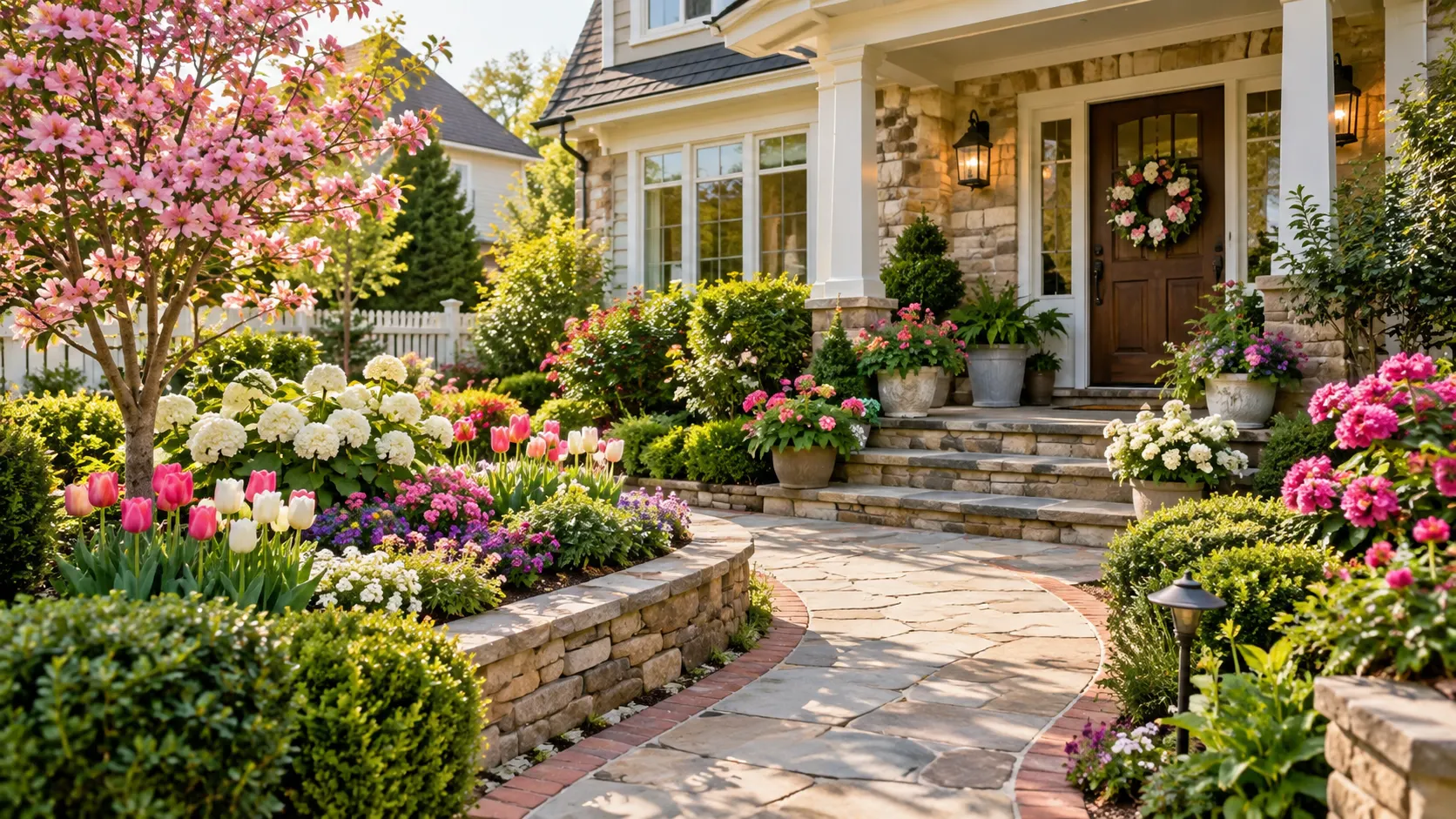
Flowers around the front of a home can immediately improve curb appeal and create a welcoming entrance. Planting along pathways, beneath windows, or around the front door can soften hard architecture and introduce seasonal color. Keep important features such as steps, house numbers, and entrances clearly visible rather than hiding them behind tall plants.
Use symmetrical containers near the doorway when you want a neat, traditional appearance. For a more relaxed look, combine a narrow flower border with one or two statement pots. Repeating flower colors from the garden in containers can connect the entrance with the surrounding landscaping and create a polished overall design.
Consider how the flowers coordinate with your home’s exterior colors. White, purple, pink, blue, yellow, or other tones can look very different against brick, stone, painted walls, and front doors. A limited color palette generally creates stronger curb appeal than mixing every available flower color into one compact area.
Combine Flowers With Herbs and Edible Plants
A flower garden does not need to contain only ornamental plants. Herbs and compact edible crops can add useful greenery while blending naturally with flowering varieties. Basil, chives, parsley, thyme, and other suitable herbs can fit into containers or garden edges without requiring a separate growing area.
Mixing edible and ornamental planting can be especially practical when space is extremely limited. A sunny container might hold herbs alongside attractive flowers, while a small raised bed can include blooms around compact vegetables. If you want to explore edible gardening further, these small vegetable garden ideas offer practical ways to make better use of limited outdoor areas.
Keep plant requirements in mind when combining different varieties. Flowers and edible plants sharing one container or bed should have reasonably similar sunlight, soil, and watering needs. Thoughtful combinations make maintenance easier while allowing your small garden to provide both visual beauty and useful homegrown ingredients.
Use Repetition to Create a More Beautiful Design
Repeating the same flower in several locations can make a small garden feel more connected and thoughtfully designed. Instead of buying one plant from many unrelated varieties, choose a few favorites and repeat them across beds or containers. This simple technique creates rhythm and helps the eye move naturally through the space.
Repetition can also apply to colors, foliage shapes, containers, and landscaping materials. Using the same flower color near the front door and again farther into the garden creates visual continuity. Similar pots or edging materials can reinforce the effect and prevent limited outdoor areas from looking divided into many unrelated sections.
You do not need perfect symmetry for repetition to work. Plants can appear in slightly different combinations while still sharing key colors or textures. The goal is to create enough consistency that the garden feels intentional while maintaining sufficient variety to stay interesting throughout the growing season.
Keep Your Flower Garden Easy to Maintain
A beautiful flower garden will be easier to enjoy when maintenance fits naturally into your routine. Choose flowers suited to your conditions, group plants with similar watering needs, and avoid overcrowding. Healthy plants growing in appropriate locations generally require less intervention than varieties struggling with unsuitable sunlight or soil.
Mulching around established flowers can help retain soil moisture and reduce weed growth. Keep mulch away from plant stems and maintain an appropriate layer rather than piling it excessively. Regularly removing weeds while they are small can also prevent them from competing with your flowers and becoming more difficult to control.
Spend a few minutes each week checking soil moisture, removing faded flowers when appropriate, and looking for damaged growth. Consistent small tasks are usually easier than allowing maintenance to build up for weeks. Keeping basic gardening tools close by can make these routine jobs faster and more convenient.
Add Simple Decorative Touches
Decorative elements can enhance a flower garden, but small spaces benefit from restraint. A simple birdbath, decorative container, narrow bench, or garden light may provide enough personality without competing with the flowers. Choose one or two focal features rather than filling every open section with ornaments.
Pathways and edging can also serve a decorative purpose while keeping the garden organized. Brick, stone, gravel, or simple metal edging can clearly separate flower beds from lawns and paved areas. Using materials that complement your home’s exterior helps the garden feel like a natural extension of the property.
Outdoor lighting can highlight flowers and pathways after sunset. Soft lighting around a container display or along a walkway can add atmosphere without overpowering the garden. Keep fixtures simple and proportional so the flowers remain the main visual focus during both daytime and evening hours.
Conclusion
A small flower garden can bring color, texture, and personality to almost any home. Thoughtful beds, containers, vertical planting, compact flowers, and simple decorative features can create a beautiful landscape without requiring a large outdoor area. Working with the space you already have is more important than trying to fit too many plants into it.
Focus on flowers that suit your climate, available sunlight, and realistic maintenance routine. Combine perennials with seasonal annuals, repeat several favorite colors, and leave enough room for plants to mature. These simple choices help the garden stay attractive while reducing overcrowding and unnecessary maintenance.
Most importantly, design a flower garden that reflects how you want your outdoor space to feel. Whether you prefer soft cottage planting, bright containers, or clean modern borders, a consistent plan will help everything work together. Even the smallest yard, patio, or balcony can become a colorful and welcoming part of your home.
FAQs
What flowers are best for a small garden?
Compact perennials, seasonal annuals, dwarf flowering shrubs, and container-friendly varieties are good choices. Select flowers according to your climate, sunlight, soil conditions, and the mature size of each plant.
How can I make a small flower garden look bigger?
Use layered planting, repeat similar colors, keep pathways clear, and grow suitable flowers vertically. Avoid overcrowding and leave some open space between major features to create greater visual depth.
Can I create a flower garden without a lawn?
Yes. Containers, raised beds, gravel, paving, border gardens, and vertical planters can all support beautiful flower displays. A lawn is not necessary for creating a colorful and attractive outdoor space.
How do I keep flowers blooming longer?
Choose varieties with different bloom periods and provide suitable light, water, and growing conditions. Removing faded flowers from plants that benefit from deadheading may also encourage continued blooming.
How many flower varieties should I use in a small garden?
There is no fixed number, but keeping the selection relatively simple usually creates a stronger design. Repeating a few compatible varieties can make a small garden feel more cohesive and less cluttered.