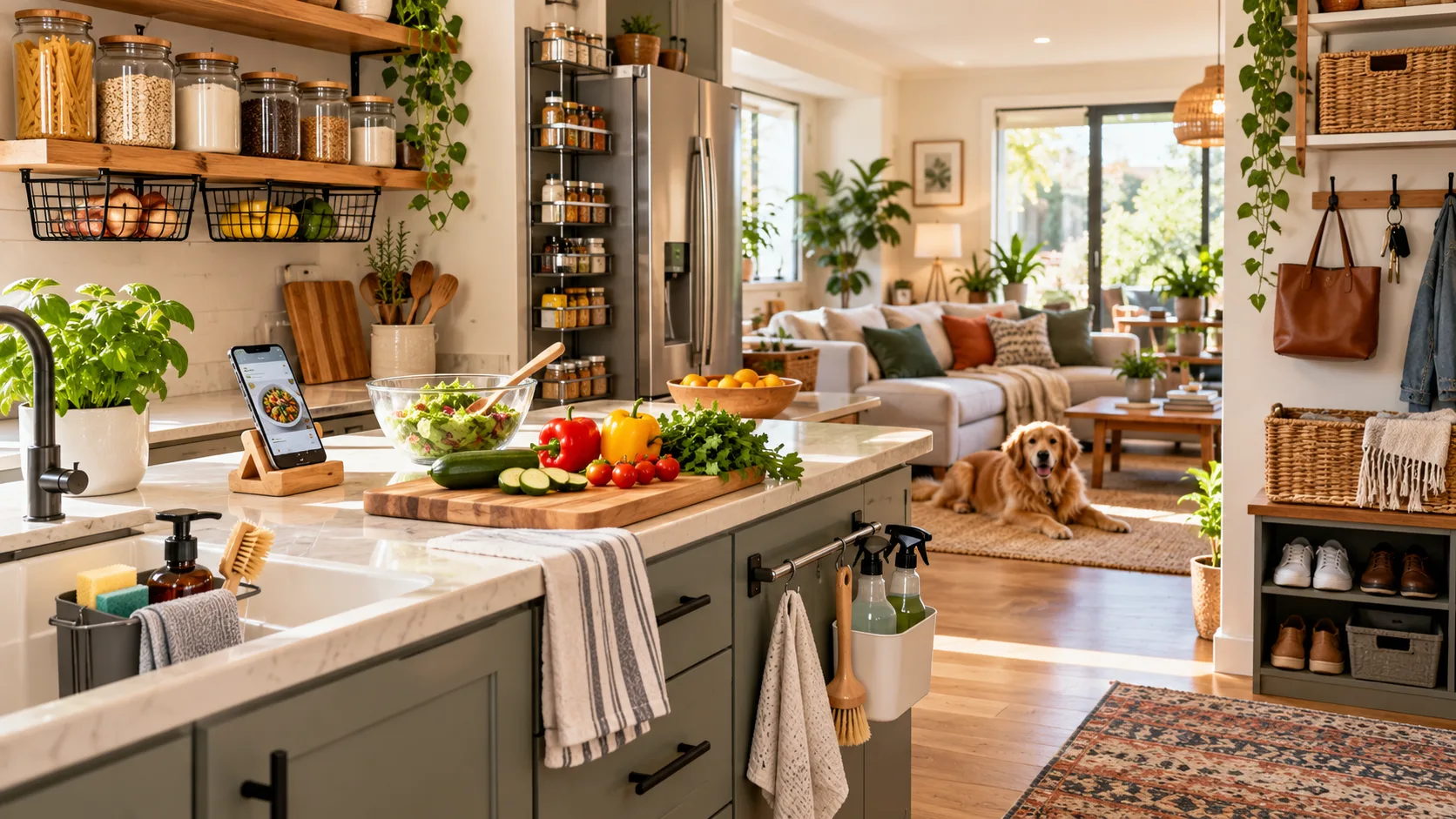
Small problems around the house can quietly steal time from your day. A cluttered drawer, messy cables, stubborn odors, hard-to-clean surfaces, or poorly organized storage may seem minor, but dealing with them repeatedly becomes frustrating. Fortunately, a few practical home hacks can make everyday routines faster, cleaner, and far more convenient.
The best household tips do not require expensive tools or major renovations. Many clever solutions use items you already have, helping you organize rooms, simplify cleaning, reduce waste, and keep frequently used belongings within easy reach. Small improvements can create noticeable changes in how smoothly your home functions.
These genius home hacks focus on simple problems almost every household experiences. Whether you want a cleaner kitchen, better storage, easier laundry, or fewer tangled cords, these practical ideas can help you build a more organized and comfortable living space without adding complicated routines.
1. Use Tension Rods to Create Extra Storage Space
Tension rods are inexpensive organizing tools that can instantly create additional storage in unused areas. Place one horizontally inside the cabinet beneath your kitchen sink and hang spray bottles by their trigger handles. This keeps cleaning products elevated, organized, and easier to reach while leaving valuable cabinet space underneath available for baskets, cloths, and other household supplies.
You can also use tension rods inside wardrobes to organize scarves, belts, handbags, or lightweight accessories. Installing one vertically inside a cabinet may help separate baking trays, chopping boards, pan lids, and serving platters. Instead of stacking everything together, the rod creates individual sections that make items easier to remove without disturbing everything around them.
Another useful location is inside bathroom cabinets where space often becomes crowded quickly. A small tension rod can hold spray cleaners, microfiber cloths, or lightweight baskets containing personal care products. Because tension rods generally require no drilling or permanent installation, they are especially useful for renters or anyone looking for flexible home organization ideas.
2. Organize Messy Cables With Simple Household Items
Charging cables, computer cords, and appliance wires easily become tangled when several devices are used in the same area. One simple solution is to attach binder clips along the edge of a desk and thread charging cables through the metal handles. This prevents cords from falling behind furniture while keeping each cable accessible whenever you need to connect a device.
Empty toilet paper rolls can also become surprisingly useful cable organizers. Coil extension cords, charging wires, or small appliance cables neatly and slide each one inside a cardboard roll. You can label the rolls according to the device if necessary, making it easier to identify the correct cable without searching through a tangled drawer filled with similar wires.
For areas containing multiple electronic devices, reusable hook-and-loop cable ties are another practical option. Group related wires together and run them neatly behind desks, televisions, or entertainment units. Keeping cables properly organized not only improves the appearance of your home but also makes cleaning easier and reduces the chance of accidentally pulling or damaging important connections.
3. Make Cleaning Easier With a Portable Cleaning Caddy
Cleaning often feels more tiring when you repeatedly walk between rooms looking for sprays, cloths, brushes, and other supplies. A portable cleaning caddy solves this problem by keeping essential products together in one lightweight container. Include multipurpose cleaner, microfiber cloths, gloves, sponges, disinfectant, and any frequently used tools you normally need during routine household cleaning.
Carry the caddy from room to room instead of storing every product in different cabinets. This small change can make quick cleaning sessions much more efficient because everything remains within reach. It also helps family members know exactly where cleaning supplies belong, reducing clutter and preventing half-empty bottles from accumulating in multiple locations.
You can create separate cleaning kits for different areas if your home is larger. For example, keep one small bathroom caddy upstairs and another general cleaning kit near the kitchen. Organizing supplies according to where they are used saves time and makes everyday cleaning feel like a manageable routine rather than a large household chore.
4. Keep Your Refrigerator Organized With Clear Containers
A disorganized refrigerator makes it easy to forget what food you already have, which often leads to unnecessary purchases and food waste. Clear storage containers help group similar items together while allowing you to see everything at a glance. Use separate containers for snacks, condiments, fruits, dairy products, leftovers, or ingredients that should be consumed soon.
Creating an “eat first” container can be especially helpful for reducing waste. Place foods approaching their expiration date inside one clearly visible bin so family members know what should be consumed before opening newer products. This simple food organization hack encourages better meal planning and prevents small leftovers from disappearing behind larger containers until they are forgotten.
Keeping refrigerator shelves organized also makes weekly cleaning much easier. Instead of moving dozens of individual jars and packages, you can remove one container at a time, wipe the shelf, and return everything quickly. A simple organization system can therefore save money, reduce food waste, and help your kitchen stay cleaner with less effort.
5. Use Baking Soda to Control Everyday Household Odors
Baking soda is one of the most useful household products for neutralizing unwanted smells. Place an open container inside the refrigerator to help absorb food odors that can build up over time. Replace it periodically to keep the refrigerator smelling fresher, particularly if you regularly store strongly scented leftovers, vegetables, sauces, or cooked meals.
You can also sprinkle a small amount of baking soda onto carpets, rugs, or fabric-covered furniture before vacuuming. Allow it to sit briefly so it can absorb some unpleasant odors, then vacuum the area thoroughly. Always check manufacturer care instructions first, particularly when treating delicate fabrics, specialty carpets, or materials that require specific cleaning products.
Another practical use involves trash cans and shoe storage areas. Adding a small amount of baking soda to the bottom of a clean trash bin or placing an open container inside a shoe cabinet can help manage persistent smells. Simple odor-control habits like these help rooms feel fresher without relying constantly on heavily scented air fresheners.
6. Create a Drop Zone Near Your Entrance
Keys, wallets, sunglasses, mail, and other everyday essentials often disappear because they do not have a dedicated storage location. Creating a small drop zone near your main entrance gives these commonly used items a consistent place to go. A narrow console table, wall-mounted shelf, decorative tray, or small basket can work perfectly depending on your available space.
Add hooks for keys, handbags, reusable shopping bags, umbrellas, or lightweight jackets. A small container can hold loose change, earbuds, and other pocket-sized items that frequently end up scattered across kitchen counters. When everything has a designated location, leaving the house becomes easier because you spend less time searching for essential belongings.
The most effective drop zones remain simple rather than overloaded with decorative objects. Choose only the storage features your household actually needs and periodically remove unnecessary papers or clutter. This small organization hack can significantly reduce visual mess while helping everyone establish a convenient routine when entering or leaving the home.
7. Make Bed Sheet Storage More Organized
Keeping matching bedding sets together can become surprisingly difficult when sheets, pillowcases, and covers are stored separately. One genius storage trick is to fold the entire sheet set and place everything inside one matching pillowcase. Each bundle then contains the fitted sheet, flat sheet, and remaining pillowcases, making it easy to grab a complete set when changing bedding.
This method also keeps linen shelves looking cleaner because individual pieces cannot easily unfold or become mixed with other sets. Stack bundles according to bed size, room, or season so you can quickly find the bedding you need. Families with several bedrooms may save considerable time by assigning separate shelves or storage baskets to different bed sizes.
For seasonal blankets and less frequently used linens, breathable storage bags can provide additional organization. Avoid packing damp textiles because trapped moisture may cause unpleasant odors or mildew. Washing, fully drying, and properly folding bedding before storage helps protect fabrics while keeping your linen cupboard tidy and easier to manage throughout the year.
8. Use Ice Cube Trays for Small-Item Organization
Ice cube trays are useful for far more than freezing water. Their small compartments make excellent organizers for tiny household items that frequently disappear inside drawers. Use them to separate batteries, screws, nails, buttons, paper clips, safety pins, craft supplies, jewelry, or other small objects that would otherwise become mixed together.
In a home office, an unused tray can organize push pins, USB adapters, memory cards, binder clips, and other small accessories. Inside a craft area, the individual sections can hold beads, sewing accessories, decorative pieces, or art supplies. Because each item has its own compartment, you can quickly see what you have before purchasing unnecessary replacements.
Choose sturdy trays that fit comfortably inside drawers or storage containers. If you have children or pets, keep trays containing small or sharp objects safely stored in inaccessible locations. Repurposing simple household items for storage reduces clutter while providing an inexpensive alternative to buying specialized drawer organizers for every room.
9. Speed Up Laundry With a Simple Sorting System
Laundry becomes much easier when clothes are sorted before wash day arrives. Instead of using one large hamper, consider creating separate laundry baskets for lights, darks, towels, or delicate clothing. Household members can place dirty items directly into the appropriate container, reducing the time spent separating large piles immediately before starting the washing machine.
If space is limited, use a divided hamper with multiple compartments rather than several separate baskets. Label each section if necessary so everyone understands where different clothing should go. Building the sorting process into your everyday routine transforms laundry from a large weekly task into several smaller actions that happen naturally throughout the week.
Another useful habit is keeping stain treatment products close to the laundry area. Treating stains shortly after noticing them may improve the chances of removing them successfully compared with discovering them several days later. Always follow garment labels and product instructions, particularly when working with delicate materials, colored fabrics, or clothing requiring special washing conditions.
10. Use Vertical Space to Reduce Household Clutter
Many homes have more storage potential than they appear to have because vertical wall space often remains unused. Adding floating shelves, wall hooks, pegboards, or tall shelving units allows you to store belongings without occupying additional floor space. This approach is especially valuable in compact kitchens, bathrooms, entryways, home offices, and smaller bedrooms.
In the kitchen, wall-mounted racks can hold lightweight utensils, spice containers, or frequently used cookware. Bathroom walls can support floating shelves for folded towels and personal care products, while pegboards in utility rooms can organize tools and cleaning accessories. Using vertical storage makes everyday items visible and accessible while freeing crowded drawers and countertops.
However, avoid filling every available wall with storage because excessive shelving can make smaller rooms feel visually crowded. Focus on areas where additional organization would solve a genuine problem. Thoughtfully using unused vertical space helps maximize storage capacity while maintaining a cleaner, more open, and functional home environment.
Bonus Ways to Make Everyday Home Life Easier
One helpful strategy is to keep frequently used items close to the place where you actually use them. Store cooking tools near food preparation areas, cleaning supplies near the rooms they serve, and everyday chargers close to commonly used outlets. Organizing around real household habits usually works better than creating complicated systems that look attractive but are inconvenient to maintain.
Another smart home hack is setting up small routine stations. A coffee station might include mugs, coffee, filters, sweeteners, and spoons in one location, while a morning preparation station could hold commonly used grooming products. Grouping related items together reduces unnecessary movement and makes repetitive daily tasks faster and more predictable.
Finally, regularly remove items that no longer serve a useful purpose. Even the best home organization system eventually becomes cluttered if new belongings continuously enter without anything leaving. Spending a few minutes every week clearing one drawer, shelf, or countertop can prevent clutter from building into a much larger project.
Why Simple Home Hacks Work So Well
Successful household hacks usually solve small frustrations rather than creating dramatic changes. Saving only a minute or two during a repeated task may seem insignificant, but those minutes add up over weeks and months. Easier systems can also reduce decision fatigue because you know exactly where belongings are stored and how routine tasks should be handled.
Simple solutions are easier to maintain because they require very little additional effort. A complicated organization system might look impressive initially but quickly fails if family members find it inconvenient. Practical home organization ideas should support natural behavior, allowing people to return objects easily and complete household routines without remembering complicated rules.
The goal is not to create a perfectly organized home that always looks untouched. A functional household should support normal everyday life while making common tasks easier to manage. Choosing small, realistic improvements helps create a home that feels cleaner, calmer, and more convenient without requiring constant maintenance.
Conclusion
Genius home hacks do not need to involve expensive smart devices, major renovations, or complicated DIY projects. Often, the most effective solutions involve organizing everyday objects differently, reusing simple household products, or creating better routines. Small improvements can remove repetitive frustrations while helping your living space become more practical and comfortable.
Start with one or two hacks that address problems you experience regularly. Organizing cables, creating a household drop zone, improving refrigerator storage, or developing a better laundry system may immediately make daily routines smoother. Once those improvements become habits, you can gradually introduce additional organization ideas throughout your home.
Ultimately, the best home hacks are the ones you can maintain without thinking about them constantly. A useful system should save time rather than create additional work. By focusing on convenience, accessibility, and realistic household habits, you can create a more organized home where everyday life feels noticeably easier.
FAQs
What are the easiest home hacks to start with?
Start with simple changes such as organizing charging cables, creating an entryway drop zone, sorting laundry in advance, and grouping refrigerator items inside clear containers.
How can I organize my home without spending much money?
Reuse items you already own, including jars, boxes, baskets, ice cube trays, binder clips, and cardboard rolls. Repurposing household items can provide effective storage without purchasing expensive organizers.
What is the best way to keep a house organized every day?
Give frequently used items permanent storage locations and return them immediately after use. Short daily tidying sessions usually prevent clutter more effectively than occasional large cleaning sessions.
How can I make cleaning my home faster?
Keep essential supplies together in a portable cleaning caddy and clean small messes before they become larger problems. Organizing products by location can also reduce unnecessary movement around the house.
Which home hacks work best for small spaces?
Vertical storage, multipurpose containers, wall hooks, under-sink organizers, and divided storage systems are especially useful. These solutions maximize available space without significantly increasing the amount of furniture in a room.