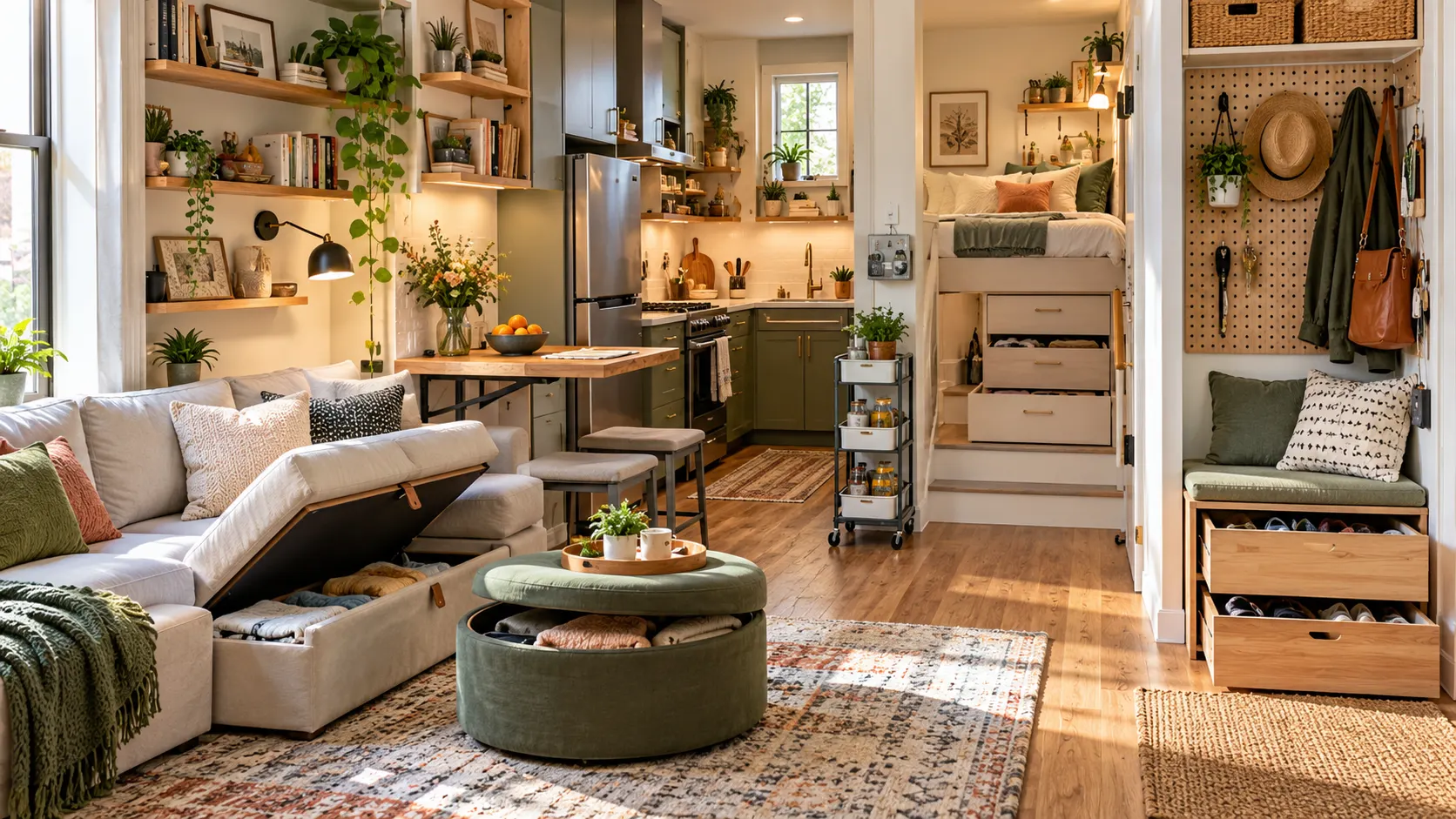
Living in a small home can be comfortable and enjoyable, but limited storage space often creates everyday challenges. When closets, cabinets, and drawers become crowded, keeping belongings organized can feel difficult. Fortunately, using smart storage hacks for small homes can help you maximize available space, reduce clutter, and create a more functional living environment without expensive renovations.
Small-space organization is not about getting rid of everything you own or filling every available corner with storage boxes. Instead, it involves finding creative ways to use overlooked spaces, choosing practical furniture, and arranging belongings so they remain accessible. With thoughtful planning, even compact apartments and tiny homes can provide convenient storage for everyday essentials.
From hidden storage compartments and floating shelves to clever kitchen organizers and space-saving bedroom solutions, there are plenty of ideas worth exploring. These 17 genius storage hacks for small homes can help you organize your living room, bedroom, kitchen, bathroom, and entryway while maintaining a stylish and welcoming interior.
1. Install Floating Shelves to Maximize Wall Space
Floating shelves are among the most effective small home storage ideas because they use vertical space without occupying valuable floor area. They work beautifully in living rooms, bedrooms, kitchens, and bathrooms where additional storage is needed. Their clean appearance also helps maintain an open and organized interior without introducing bulky furniture.
Install floating shelves above desks, sofas, or other suitable areas where they will not interfere with daily movement. Use them to display books, small plants, decorative objects, and frequently used accessories. Choosing shelves that complement your wall color or furniture can make the storage feel like a natural part of the room.
Before installation, check the wall material and select mounting hardware appropriate for the shelf’s expected weight. Heavy objects require secure support, and shelves should not obstruct walkways or doorways. When properly installed, floating shelves provide practical storage while adding attractive visual interest to compact living spaces.
2. Use Under-Bed Storage for Seasonal Items
The space beneath your bed is often overlooked, even though it can provide valuable storage in a small bedroom. Under-bed containers are useful for storing seasonal clothing, extra bedding, spare pillowcases, and other items that are not needed every day. This approach reduces pressure on closets without requiring additional furniture.
Choose low-profile storage boxes or fabric containers that fit comfortably beneath your bed frame. Containers with wheels can make accessing belongings easier, especially when the bed sits close to surrounding furniture. Transparent boxes or simple labels help identify stored items without opening every container whenever something is needed.
Keep items clean and dry before placing them into long-term storage to prevent unpleasant odors or moisture problems. Vacuum storage bags can reduce the volume of certain soft items, although delicate materials may require gentler treatment. Organizing under-bed storage by category makes this hidden space more useful and easier to maintain.
3. Choose Multifunctional Furniture With Hidden Storage
Multifunctional furniture helps small homes serve several purposes without overcrowding the floor plan. Storage ottomans, lift-top coffee tables, and benches with built-in compartments can provide seating or usable surfaces while concealing everyday belongings. These pieces are particularly valuable in apartments where separate storage cabinets would occupy too much space.
A storage ottoman can hold blankets, magazines, or board games while doubling as a comfortable footrest. Similarly, a coffee table with drawers can organize remote controls, charging cables, and other living room accessories. Choosing furniture with multiple functions reduces the need for additional pieces and creates a more streamlined interior.
When shopping for multifunctional furniture, consider durability, accessibility, and the size of its storage compartments. A practical design should meet everyday needs without becoming difficult to open or move. Selecting pieces that match your decorating style also helps the room feel coordinated rather than crowded with unrelated storage solutions.
4. Add Over-the-Door Organizers for Extra Storage
Doors offer useful storage opportunities in homes where cabinets and shelves are already full. Over-the-door organizers can hold shoes, toiletries, cleaning supplies, accessories, and other small belongings. Because these products use existing vertical surfaces, they provide extra organization without requiring permanent changes to the room.
A bedroom door organizer can store scarves, belts, or small accessories that often become tangled inside drawers. In bathrooms, pocket organizers can keep personal care products arranged and easy to reach. Pantry doors can also accommodate suitable organizers for lightweight kitchen essentials, provided the door has enough clearance.
Check that the organizer fits the door thickness and does not interfere with hinges, handles, or closing mechanisms. Avoid overloading hanging pockets with heavy items that could damage the door. When selected carefully, over-the-door storage provides a convenient way to organize frequently used belongings in otherwise unused space.
5. Organize Kitchen Cabinets With Stackable Shelves
Small kitchens often have limited cabinet space, making it difficult to arrange dishes, cookware, and pantry supplies efficiently. Stackable cabinet shelves create additional storage levels by using empty vertical space above shorter items. This simple approach can make existing cabinets more functional without requiring costly kitchen remodeling.
Place stackable shelves inside cabinets to separate plates, bowls, mugs, and packaged food items. Adjustable shelf risers are particularly useful when cabinet dimensions vary or when items require different amounts of clearance. Organizing frequently used kitchen essentials within easy reach can also make meal preparation faster and more convenient.
Measure cabinet interiors before purchasing organizers to ensure doors close properly and shelves fit securely. Choose materials suitable for the items being stored, especially when supporting heavier dishes. Keeping cabinet arrangements simple and accessible prevents storage solutions from becoming another source of clutter in a compact kitchen.
6. Use Vertical Drawer Dividers to Reduce Clutter
Drawers can become disorganized quickly when different types of belongings are stored together without clear separation. Drawer dividers create individual sections for clothing, office supplies, utensils, and personal accessories. This makes it easier to locate items while preventing everything from shifting whenever the drawer opens or closes.
Vertical organization is especially helpful for folded T-shirts, socks, and other soft clothing items. Instead of stacking everything in piles, arrange suitable garments upright so individual pieces remain visible. Adjustable dividers can also separate kitchen utensils, stationery, and small accessories according to their sizes and everyday uses.
Before adding dividers, remove unnecessary packaging and group similar belongings together. Measure drawer dimensions and choose organizers that do not interfere with closing. A well-organized drawer makes better use of its existing capacity while reducing the time spent searching for frequently used household items.
7. Install Hooks Behind Doors and on Empty Walls
Wall hooks provide an inexpensive storage solution for belongings that need to remain accessible throughout the day. They work well for jackets, bags, towels, hats, and reusable shopping bags. Installing hooks in suitable locations can reduce the amount of clothing and accessories left on chairs, countertops, and other surfaces.
Entryways benefit from a small arrangement of hooks where family members can hang everyday essentials after returning home. Bathrooms can use hooks for towels and bathrobes, while bedrooms may benefit from dedicated spaces for bags or frequently worn accessories. Matching hook styles can create a tidy appearance across different rooms.
Choose appropriate mounting methods based on wall materials and the weight of stored items. Adhesive hooks may be suitable for lightweight accessories, while heavier belongings generally require stronger fixtures. Place hooks where they remain convenient without creating obstacles or making narrow passages feel overcrowded.
8. Create Storage Space Above Cabinets and Doors
The areas above cabinets and door frames often remain unused in compact homes. When sufficient clearance exists, these locations can provide additional storage for lightweight items that are not needed regularly. Using higher spaces helps free lower shelves and cabinets for belongings that require frequent access.
Decorative baskets and labeled containers can make above-cabinet storage appear intentional rather than cluttered. Store suitable seasonal decorations, spare linens, or occasionally used household accessories in these containers. Keeping colors and container styles consistent helps the arrangement blend with the surrounding interior design.
High storage areas should remain safely accessible and must not block ventilation, electrical equipment, or required clearances. Avoid placing heavy or fragile belongings where they could fall or become difficult to retrieve. Properly planned overhead storage increases usable space without interfering with everyday movement through the home.
9. Use Rolling Storage Carts in Narrow Spaces
Rolling storage carts are excellent for making use of narrow spaces between furniture or appliances. Their slim designs can fit into areas that would otherwise remain empty, providing convenient shelves for small household essentials. Because many carts include wheels, they can be moved when items need to be accessed.
In kitchens, a narrow rolling cart can organize cooking utensils, packaged ingredients, or suitable pantry supplies. Bathrooms may use similar carts for toiletries, towels, and grooming accessories. A small cart beside a desk can also provide flexible storage for notebooks, stationery, and other work materials.
Measure the intended location carefully and consider how easily the cart can move when fully loaded. Choose stable models with suitable weight limits, and use wheel locks where appropriate. Rolling carts work best when they remain accessible and do not obstruct walkways, appliances, or doors.
10. Add Storage Baskets Under Coffee Tables
Coffee tables often have unused space beneath their surfaces that can accommodate attractive storage baskets. This area is ideal for organizing blankets, magazines, books, and entertainment accessories. Using coordinated containers can make everyday items easier to find while keeping the living room visually calm and comfortable.
Choose baskets that fit beneath the coffee table without extending into surrounding walkways. Woven baskets add natural texture, while fabric containers can create a softer appearance. Open baskets work well for frequently used objects, whereas covered containers may be better for accessories that create visual clutter.
Avoid filling every basket completely, since overcrowding makes belongings difficult to retrieve and organize. Group similar objects together and return them to their designated places after use. This straightforward storage hack allows the living room to remain functional while maintaining an inviting appearance.
11. Organize Bathroom Essentials With Wall-Mounted Shelves
Bathrooms in small homes often have limited countertop and cabinet space. Wall-mounted shelves can help store toiletries, folded towels, and everyday personal care products without crowding the sink. Using vertical bathroom storage creates more usable surfaces while keeping frequently needed items visible and easy to reach.
Install suitable shelves above the toilet, beside the vanity, or along an available wall where they will not interfere with movement. Use baskets or small containers to group products and prevent them from falling. Moisture-resistant materials are especially important in bathrooms because humidity can damage unsuitable shelving and storage accessories.
Keep heavy objects securely supported and position shelves away from areas where they could cause accidental contact. Regularly review stored products and remove empty containers or expired items according to their disposal instructions. A simple shelving arrangement can make even a compact bathroom feel more organized and comfortable.
12. Install a Pegboard for Flexible Wall Storage
Pegboards are versatile storage systems that allow hooks, shelves, and holders to be rearranged according to changing needs. They work particularly well in home offices, craft areas, kitchens, and utility spaces. Their customizable design makes them practical for storing small items without occupying additional floor space.
In a home office, a pegboard can organize headphones, stationery, notebooks, and lightweight accessories. Craft enthusiasts can use it to arrange ribbons, scissors, and frequently needed materials. Kitchen pegboards may hold suitable utensils or lightweight cookware when securely mounted and designed for the intended weight.
Choose a pegboard size that matches the available wall space and the items you plan to store. Install it using appropriate hardware and follow the manufacturer’s weight recommendations. Its adjustable layout allows you to modify the arrangement as your organizational requirements change over time.
13. Use Vacuum Storage Bags for Bulky Bedding
Bulky bedding, winter jackets, and spare blankets can occupy a large amount of closet space. Vacuum storage bags compress suitable soft materials by removing excess air, creating more room inside storage cabinets or under beds. This method can be particularly helpful in homes where seasonal items compete with everyday belongings.
Fold clean, completely dry items before placing them inside storage bags and sealing them according to the instructions. After removing the air, store the compressed bags in a clean location away from moisture and sharp objects. Labeling each bag makes it easier to identify the contents without opening everything.
Vacuum compression is not appropriate for every material because some delicate fabrics or insulated products may lose their shape. Check garment care instructions before using this method. For suitable belongings, vacuum bags provide a practical way to reduce storage volume and organize seasonal household textiles.
14. Turn Awkward Corners Into Functional Storage Areas
Empty corners often become overlooked spaces because standard furniture does not fit them comfortably. Corner shelves, narrow cabinets, and triangular storage units can transform these awkward areas into useful organizational features. This approach helps maximize available space while maintaining a practical room layout.
A corner shelf in the living room can display books, small decorative pieces, or indoor plants. Bedroom corners may accommodate a compact storage unit for personal accessories, while kitchen corners can benefit from appropriately sized organizers. Choosing furniture that follows the shape of the space prevents unnecessary obstruction.
Before installing corner storage, consider nearby doors, windows, and walking routes. Avoid using oversized furniture that makes the room feel cramped or restricts access to other belongings. A carefully selected corner solution can provide additional capacity while preserving a balanced and comfortable interior.
15. Create a Compact Entryway Storage Station
Small entryways often collect shoes, jackets, keys, bags, and other belongings used throughout the day. Without designated storage, these items can quickly create clutter near the front door. A compact entryway station helps organize daily essentials while making departures and arrivals more convenient.
Combine a narrow shoe rack, wall hooks, and a small shelf to create a practical arrangement. A storage bench can provide seating while concealing suitable accessories underneath. Adding a tray for keys and other frequently used belongings can also reduce the time spent searching for important items.
Keep the arrangement proportional to the available space so the entrance remains comfortable and accessible. Store only regularly used items nearby and move seasonal belongings to other locations when practical. Maintaining a clear entryway creates a welcoming first impression while improving everyday household organization.
16. Use Hanging Closet Organizers for Extra Clothing Space
Hanging closet organizers can increase usable storage by creating additional compartments beneath existing clothing rods. These organizers are useful for folded sweaters, accessories, bags, and lightweight household textiles. Their vertical design allows smaller closets to accommodate more items without requiring major changes to the wardrobe structure.
Choose a hanging organizer with compartments sized appropriately for the belongings you want to store. Fabric models are convenient for soft clothing, while reinforced options can provide additional stability for heavier accessories. Group similar items together so you can quickly identify where everything belongs.
Review the closet’s available hanging height before installing an organizer, especially if you store long dresses or coats. Avoid overloading fabric compartments or placing excessive weight on clothing rods. A balanced arrangement preserves access to hanging garments while providing additional organization for smaller belongings.
17. Use Storage Zones to Keep Every Room Organized
Creating storage zones is one of the simplest ways to maintain organization throughout a small home. Instead of placing belongings wherever space happens to be available, assign specific locations according to how frequently items are used. This approach reduces searching time and makes everyday cleaning more manageable.
For example, establish a dedicated area for cleaning supplies, another for electronic accessories, and separate spaces for seasonal household items. Keep frequently used objects near the activities they support. Clear containers, labels, and consistent storage habits can help everyone in the household understand where belongings should be returned.
Review storage zones occasionally as household needs change. An arrangement that worked previously may become less practical when routines, belongings, or furniture change. Making small adjustments helps maintain organization without requiring a complete redesign of your home storage system.
Conclusion
Making the most of a small home requires creativity, thoughtful planning, and practical storage solutions. Floating shelves, under-bed containers, multifunctional furniture, and vertical organizers can help create additional storage without major renovations. These ideas make everyday belongings easier to manage while preserving valuable living space.
The most effective storage hacks focus on using available areas efficiently rather than filling every empty space with containers. Hidden compartments, narrow rolling carts, closet organizers, and dedicated storage zones provide different ways to improve organization. Choosing solutions that match your household needs helps maintain a comfortable and visually appealing environment.
You do not need a large house or expensive furniture to create an organized living space. Start by identifying the areas that cause the most frustration and introduce a few storage improvements at a time. With these 17 genius storage hacks for small homes, even limited spaces can become functional, welcoming, and easier to maintain.
Frequently Asked Questions (FAQs)
1. What are the best storage hacks for small homes?
The best storage hacks include floating shelves, under-bed containers, multifunctional furniture, over-the-door organizers, and wall hooks. These solutions make use of vertical and hidden spaces without requiring extensive renovations.
2. How can I create more storage without buying new furniture?
Use existing spaces beneath beds, above cabinets, and behind doors. Adding drawer dividers, storage baskets, and suitable wall hooks can also improve organization without purchasing large furniture pieces.
3. How do I organize a small bedroom with limited closet space?
Use under-bed storage, hanging closet organizers, vertical folding methods, and wall-mounted shelves. Group similar belongings together and keep frequently used items accessible to make the room easier to manage.
4. What furniture works best for small spaces?
Multifunctional furniture such as storage ottomans, lift-top coffee tables, storage benches, and beds with drawers works well in compact rooms. These pieces provide useful storage while serving everyday purposes.
5. How can I keep a small home organized long-term?
Assign designated storage spaces for everyday belongings, use clear labels, and regularly review household organization. Returning items to their proper places and adjusting storage arrangements as needed helps prevent clutter.