Plan Your Small Garden Before You Start
A small garden benefits from careful planning because every section of space matters. Before buying plants or containers, measure the area and notice where sunlight, shade, doors, and pathways are located. Think about how you want to use the garden as well. A simple plan can help you balance planting areas with seating, storage, and comfortable movement.
Avoid filling every empty corner immediately. Leaving some open space can make a compact garden feel larger, calmer, and easier to maintain. Decide which areas should become focal points and which should remain clear. Thoughtful spacing also gives plants enough room to mature without making the garden feel crowded after a few months.
Sketching a basic layout can help you visualize different ideas before spending money. Mark walls, fences, containers, raised beds, and any existing plants you want to keep. You do not need professional landscape software for this step. A simple drawing helps you use limited garden space more efficiently and prevents unnecessary changes later.
Use Vertical Gardening to Save Ground Space
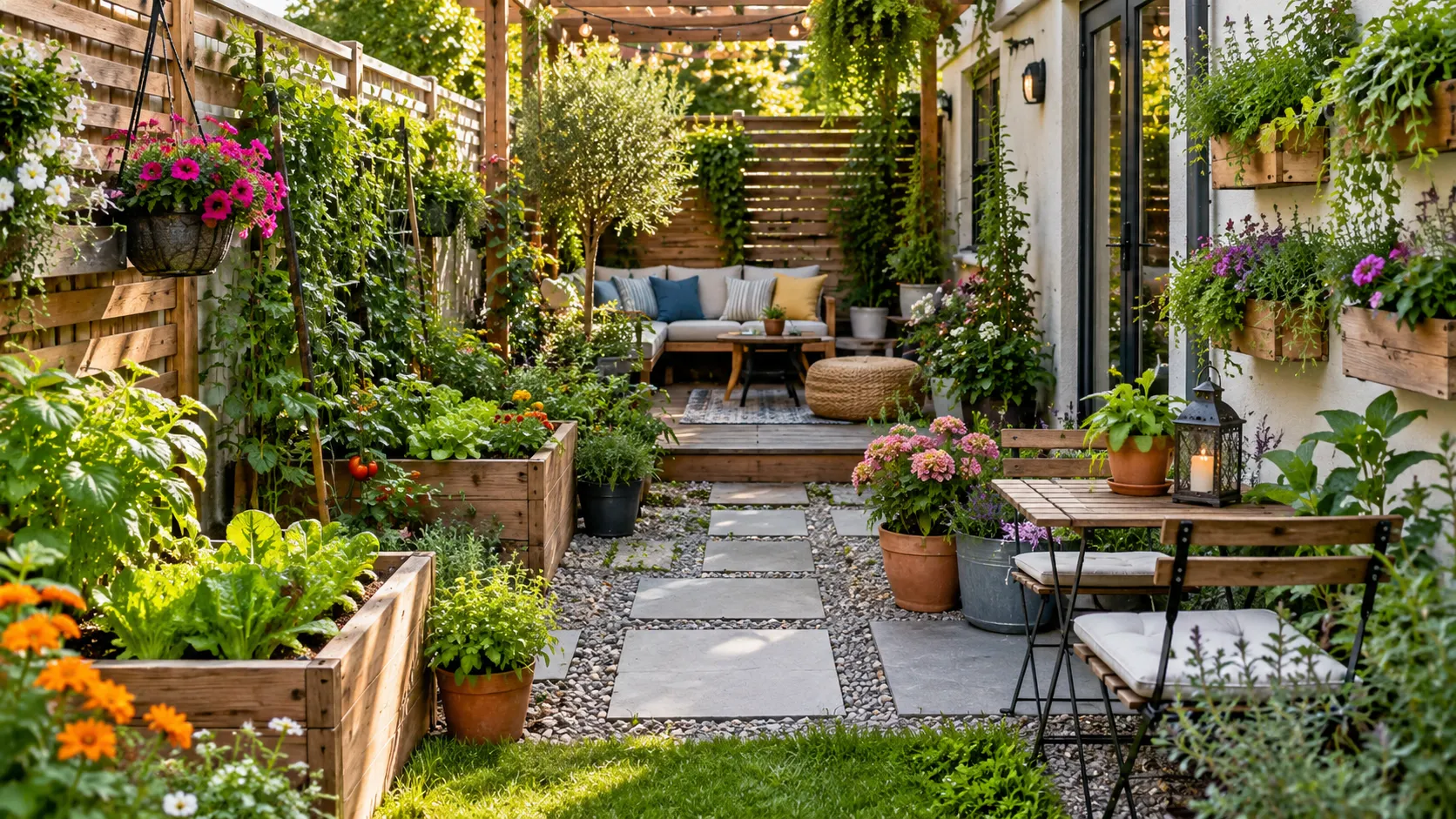
Vertical gardening is one of the most effective ideas for a small outdoor area. Instead of relying only on the ground, use walls, fences, trellises, hanging baskets, and plant stands. Climbing flowers, herbs, and certain vegetables can grow upward while leaving valuable floor space available. This creates more greenery without making the garden difficult to walk through.
Trellises can also turn plain fences or walls into attractive garden features. Climbing plants add height, color, and texture while helping soften hard surfaces. Choose supports strong enough for the mature weight of the plant. Lightweight flowers may need only a simple frame, while heavier vines or vegetables can require more secure structures.
Wall-mounted planters and hanging pots are useful for herbs, compact flowers, and trailing plants. Place them where watering and pruning remain convenient because elevated containers can dry quickly. Avoid covering every wall with plants. A few carefully positioned vertical displays usually create a stronger visual effect than an overcrowded arrangement.
Choose Compact Plants for Small Spaces
Plant selection becomes especially important when garden space is limited. Look for compact, dwarf, or naturally narrow varieties that provide attractive growth without spreading excessively. Many vegetables, flowers, shrubs, and fruiting plants are available in smaller forms. Choosing the right size allows you to include more variety without creating constant pruning or overcrowding problems.
Always check mature plant dimensions rather than judging a variety by its size at the garden center. A small shrub can eventually become much wider than expected and dominate a narrow bed. Read plant labels for height, spread, sunlight, and spacing requirements. Planning for mature growth protects your limited space and keeps maintenance manageable.
Plants that offer more than one benefit can be especially valuable. Herbs can provide fragrance and cooking ingredients, while flowering plants may add color and support pollinators. Compact evergreen plants can provide structure throughout the year. Selecting useful, attractive plants helps every part of a small garden contribute more to the overall space.
Create a Container Garden
Containers are ideal for small gardens because they allow you to grow plants almost anywhere. Pots can be placed on patios, balconies, steps, or narrow paved areas where traditional beds are not possible. They also give you the flexibility to change your layout easily. Moving a few containers can completely refresh a compact outdoor space.
Group containers in different heights and sizes to create a layered display. A large pot can become a focal point, while smaller ones can hold herbs, flowers, or trailing plants. Repeating similar materials or colors helps the arrangement feel organized. Too many unrelated container styles can make a limited space look busier than it actually is.
Make sure every container has adequate drainage and suitable potting mix. Potted plants often dry faster than those growing directly in garden soil, especially during hot or windy weather. Check moisture regularly and choose containers large enough for mature roots. Healthy, well-positioned pots can make a small garden feel lush without using permanent planting space.
Add Raised Beds for an Organized Layout
Raised beds can make a small garden feel cleaner and more structured. They create defined growing areas for vegetables, herbs, or flowers while keeping paths and planting zones clearly separated. Raised beds also allow you to control soil quality more easily. This can be useful when the existing ground is compacted or unsuitable for healthy plant growth.
Choose narrow beds that allow you to reach the center without stepping onto the soil. This makes planting, watering, and harvesting easier while preventing compaction. Beds can be built from suitable wood, stone, blocks, or other durable materials. Keeping the design simple helps the space look organized rather than crowded with too many structures.
You can combine edible and ornamental plants within one raised bed to make better use of limited space. Herbs, compact vegetables, and colorful flowers can create an attractive mixed display. If you are new to growing plants, this home gardening guide can help you understand soil, watering, spacing, and basic maintenance before expanding your setup.
Use Corners and Narrow Areas Wisely
Small gardens often contain corners or narrow strips that are easy to overlook. These areas can become useful planting zones when you choose appropriately sized plants or containers. A slim planter, compact shrub, vertical trellis, or group of herbs can transform an unused section. Working with awkward spaces helps you increase greenery without reducing comfortable walking room.
Corner areas can also become attractive focal points. A tall pot, small tree, decorative planter, or climbing plant can draw attention and give the garden more depth. Keep the surrounding area relatively simple so the feature stands out. One strong focal point often works better in a small garden than several competing decorative elements.
Narrow spaces beside walls or pathways are suitable for upright plants that do not spread widely. Avoid large shrubs with broad branches that may block movement as they mature. Consider maintenance access before planting. Even the smallest area should remain easy to water, prune, and clean if you want the garden to stay practical.
Create a Small Seating Area
A compact garden can still include a comfortable place to relax. Choose furniture that matches the scale of the space, such as a small bench, folding chairs, or a narrow bistro table. Position seating where it will not block pathways or important planting areas. Keeping furniture proportional prevents the garden from feeling overcrowded.
Use plants around the seating area to create a softer, more inviting atmosphere. Containers, ornamental grasses, flowering plants, or climbing vines can provide texture and privacy without taking up too much room. Leave enough open space for easy movement. A carefully arranged seating corner can make even a tiny garden feel more useful.
Multipurpose furniture can be especially helpful in compact gardens. Benches with built-in storage or folding furniture can reduce clutter when items are not in use. Keep the overall arrangement simple rather than adding too many accessories. A small, comfortable seating area often makes the garden feel larger because it gives the space a clear function.
Use Light Colors and Simple Materials
Color can influence how spacious a small garden feels. Light-colored walls, containers, paving, or furniture can reflect more light and make darker corners appear brighter. Neutral tones also create a calm background that allows flowers and foliage to stand out. You do not need to make everything white; a limited palette is usually enough.
Try to repeat similar materials across different areas of the garden. Using the same type of paving, edging, or container finish creates visual consistency and reduces clutter. Too many unrelated textures can make a small space feel fragmented. A simple material palette helps different garden features connect and makes the overall layout appear more intentional.
Plants can provide most of the color and natural variation. Use flowers, foliage, and seasonal containers to introduce brighter shades while keeping permanent features relatively simple. This makes it easier to update the garden over time. Balanced colors and materials can create visual depth without physically increasing the size of the outdoor area.
Make Paths Work Harder
Even a small garden needs clear movement routes, but paths should not consume more space than necessary. Use narrow stepping stones, compact pavers, gravel, or another practical surface that matches the style of the garden. A clear path protects growing areas from foot traffic. It also helps the layout feel organized and easier to navigate.
Curved pathways can sometimes create the impression of greater depth because the entire route is not visible at once. However, the design should remain functional rather than using unnecessary curves in extremely tight areas. Make sure pathways lead somewhere useful, such as a seating zone, doorway, or planting area. Every feature should earn its space.
Keep path edges neat so plants do not gradually reduce the walking width. Low-growing flowers or herbs can soften the edges without becoming an obstacle. Regularly remove weeds and fallen debris. A clean, simple pathway can make a compact garden feel more spacious while providing easy access for watering and maintenance.
Layer Plants to Create More Depth
Layering plants at different heights can make a small garden appear fuller and more interesting. Use taller plants toward walls or boundaries, medium varieties in the middle, and low-growing plants along the front. This arrangement allows more plants to remain visible. It also creates depth without requiring a large horizontal planting area.
Mixing different foliage textures can increase visual interest even when flower color is limited. Broad leaves, fine grasses, compact shrubs, and trailing plants create contrast and prevent the garden from looking flat. Choose plants that share compatible light and watering requirements. Attractive combinations work best when the plants can remain healthy in the same conditions.
Avoid using too many unrelated varieties simply to create diversity. Repeating a few plants across different areas helps the garden feel connected. A limited plant palette can actually make a small space look larger because the design appears less cluttered. Use height and texture for variety while maintaining some visual repetition.
Add Privacy Without Closing the Space
Privacy can be challenging in small gardens because large screens or dense hedges may make the area feel enclosed. Instead, use targeted screening around places where privacy matters most, such as seating areas. A narrow trellis, climbing plant, or tall container can block specific views. This provides comfort without surrounding the entire space with heavy barriers.
Open-style trellises are useful because they allow some light and air to pass through. Climbing plants can gradually soften the structure and create a more natural screen. Choose varieties that remain manageable in your available space. Extremely vigorous vines may require frequent pruning and can overwhelm a compact garden if left unchecked.
Tall, narrow plants can also create privacy without using too much ground space. Position them strategically rather than planting a continuous wall around the garden. Leaving some open views helps the area feel larger. A balance between screening and openness usually creates a more comfortable small outdoor environment.
Keep Maintenance Simple
A small garden can still become difficult to manage if it contains too many demanding plants. Choose varieties suited to your sunlight, climate, and soil so they require less corrective care. Hardy perennials, compact shrubs, and suitable ground covers can help reduce maintenance. A healthy, manageable garden will usually look better than a complicated one that receives inconsistent care.
Use mulch where appropriate to reduce weeds and slow soil moisture loss. Group plants with similar watering needs so irrigation becomes easier and more efficient. Keep pruning tools and watering equipment nearby. Small practical decisions can significantly reduce the time required to keep your garden neat and healthy.
Review your space every season and remove anything that no longer works. A container may need relocating, an overgrown plant may require dividing, or a decorative feature may be taking up unnecessary room. Small gardens benefit from regular editing. Keeping only useful, healthy, and attractive elements prevents clutter from gradually taking over the space.
Conclusion
Making the most of a small garden is about using space thoughtfully rather than trying to fit everything into it. Vertical planting, compact varieties, containers, raised beds, and layered planting can provide plenty of greenery without overcrowding. Planning around mature plant size helps every feature remain practical as the garden develops.
Simple design choices can also make the space feel larger. Keep materials consistent, maintain clear paths, use targeted privacy screens, and leave some open areas between features. A compact seating zone can make the garden more enjoyable without requiring much room. Every element should add either beauty, function, or both.
Most importantly, choose a garden design you can comfortably maintain. Small spaces can be extremely rewarding when plants receive suitable light, water, soil, and spacing. Review the layout as plants mature and adjust gradually. With careful planning, even a modest garden can become attractive, productive, and surprisingly spacious.
FAQs
How can I make a small garden look bigger?
Use vertical planting, light colors, clear pathways, and a limited plant palette. Leaving some open space and avoiding oversized furniture can also make a compact garden feel more spacious.
What plants are best for a small garden?
Compact shrubs, dwarf varieties, herbs, ornamental grasses, climbing plants, and small flowering perennials work well. Choose plants according to your sunlight, climate, and available maintenance time.
Are raised beds good for small gardens?
Yes. Raised beds create organized planting zones and allow better control over soil. Choose narrow beds that are easy to reach so they do not consume unnecessary space.
How can I grow more plants in a limited space?
Use walls, trellises, hanging baskets, containers, and layered planting. Growing upward and choosing compact varieties lets you increase plant numbers without overcrowding the ground.
How do I keep a small garden low maintenance?
Choose suitable plants, use mulch, group plants with similar needs, control weeds early, and avoid overcrowding. A simple layout with fewer demanding varieties is generally easier to maintain.