A small garden can become one of the most enjoyable parts of your home when every inch is planned with purpose. You do not need a large backyard to create an attractive landscape filled with plants, pathways, seating, and decorative details. Smart landscaping can make even a compact outdoor space feel organized, welcoming, and surprisingly spacious.
The best small garden landscaping ideas focus on balance rather than trying to fit too much into a limited area. Well-placed plants, layered greenery, clear paths, and carefully chosen materials can completely change how the garden looks and feels. Simple design choices often produce better results than complicated layouts that require constant maintenance.
Whether you have a narrow backyard, small patio, tiny courtyard, or compact city garden, there are many ways to improve the space. By combining practical landscaping techniques with your personal style, you can create an outdoor area that feels beautiful without becoming difficult to manage. The following ideas can help you get started.
Create a Simple Landscaping Plan First
Before buying plants or landscaping materials, spend some time understanding your available garden space. Measure the area and identify existing features such as walls, fences, pathways, trees, doors, and drainage points. A simple plan helps you determine where plants, seating, and decorative features can fit without making the garden feel crowded.
Pay attention to how sunlight moves through the garden during different parts of the day. Some areas may receive strong afternoon sun while others remain shaded by buildings or fences. Matching plants to these existing conditions will usually produce better results than trying to force sun-loving varieties into dark corners or shade plants into intense heat.
Think about how you want to use the garden before choosing the final layout. You may want a relaxing seating area, colorful flower garden, vegetable section, or low-maintenance outdoor retreat. Establishing one or two main purposes makes it easier to create a landscape that feels connected instead of filling the space with unrelated features.
Use Layered Planting to Add Depth
Layering plants at different heights can make a small garden appear deeper and more visually interesting. Place low-growing flowers or ground covers near pathways, medium-height plants behind them, and taller shrubs or ornamental grasses toward the back. This arrangement creates natural progression and allows more greenery to remain visible within a limited area.
Choose plants with different leaf shapes, textures, and seasonal characteristics while keeping the overall selection relatively simple. Broad leaves can contrast beautifully with fine ornamental grasses, while evergreen plants can provide structure when seasonal flowers disappear. Repeating several plant varieties across the garden keeps the layered design cohesive rather than visually chaotic.
Always leave enough room for plants to reach their mature size. Overcrowding may look lush initially, but it can quickly make a small garden difficult to maintain. Proper spacing improves airflow, reduces competition between plants, and allows each layer to remain visible instead of merging into one dense mass of uncontrolled growth.
Add Clear and Attractive Garden Pathways
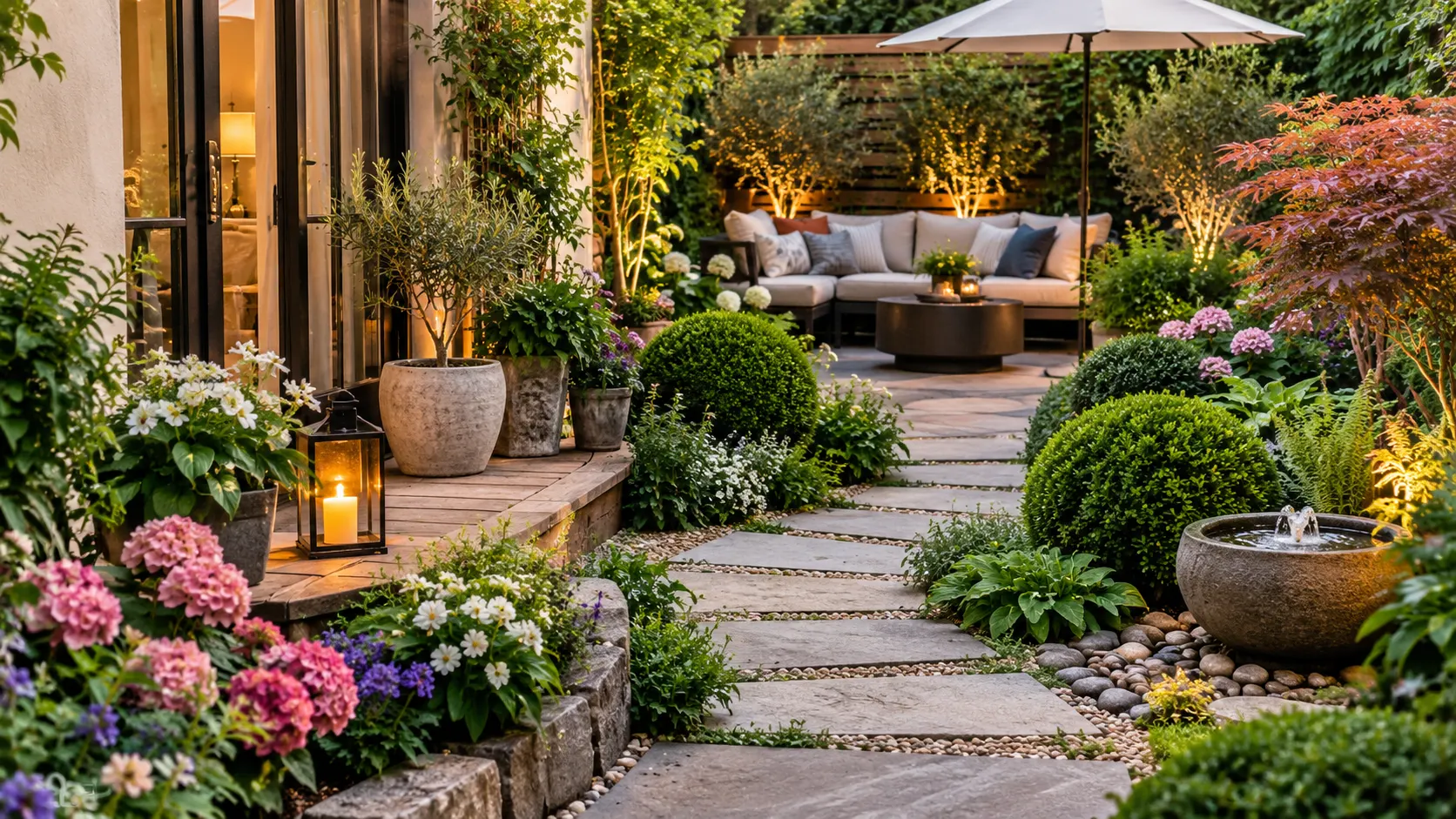
A well-designed pathway can give structure to a small garden while making it easier to move between different areas. Materials such as stepping stones, gravel, brick, or simple paving can create an attractive route without taking up excessive space. The best option depends on your home’s style, garden conditions, and maintenance preferences.
Straight pathways can create a clean, modern appearance, while gently curved paths can make the garden feel more relaxed. In narrow spaces, a path that disappears slightly behind plants can also create a sense of curiosity and depth. Avoid overly complicated patterns that divide the limited ground area into too many visually separate sections.
Keep pathway edges neat by using low plants, gravel borders, or simple landscape edging. Plants should soften the route without spreading so far that they make walking uncomfortable. A clear, uncluttered path makes the entire landscape look more polished and can help guide attention toward important features such as seating or planting displays.
Make Better Use of Vertical Space
Vertical landscaping allows you to add more greenery without using valuable ground space. Trellises, wall planters, hanging baskets, shelves, and climbing plants can transform blank walls or fences into attractive garden features. Drawing the eye upward can also make a small garden feel taller and more interesting.
Climbing plants can be trained along fences, pergolas, or narrow supports depending on their growth habit. Flowering vines can provide color, while edible climbers such as beans or cucumbers can make the area productive. Choose manageable varieties so the plants do not overwhelm windows, gutters, or neighboring garden features as they mature.
Vertical techniques are particularly valuable when you are landscaping compact urban spaces. You can find additional inspiration from these small urban garden ideas when planning balconies, courtyards, and narrow outdoor areas. Combining wall planting with a few ground-level containers can create abundant greenery while maintaining plenty of usable floor space.
Use Containers for Flexible Landscaping
Containers provide an easy way to introduce flowers, shrubs, herbs, and decorative foliage into a small garden. Unlike permanent flower beds, pots can be moved whenever you want to change the layout or respond to seasonal sunlight. This flexibility makes container gardening especially useful for patios, courtyards, and rented homes.
A few larger containers often create a cleaner appearance than dozens of tiny pots scattered around the garden. Choose container sizes that suit the mature plants and provide enough room for healthy root development. Using similar materials or colors can also connect different parts of the landscape and make the overall design feel more intentional.
Group containers at different heights to create a layered display without taking up too much space. You can position taller plants at the back, flowering varieties in the middle, and trailing plants near the edges. Remember to choose pots with drainage holes and check soil moisture regularly, especially during warm or windy weather.
Create a Comfortable Small Seating Area
Even a compact garden can include somewhere comfortable to sit and enjoy the outdoor space. A narrow bench, two small chairs, or a compact bistro set may be enough to create a relaxing corner. Positioning seating against a wall or fence can preserve more open space in the center of the garden.
Built-in benches can be particularly useful because they make efficient use of awkward corners. Some designs include storage underneath for cushions, tools, or gardening supplies, reducing the need for additional outdoor cabinets. Choose furniture that is proportional to the garden instead of purchasing oversized pieces that dominate the entire landscape.
Surround the seating area with plants without completely enclosing it. Fragrant herbs, flowering containers, or ornamental grasses can soften the edges and create a comfortable atmosphere. Leaving enough open space for movement keeps the area practical while allowing the garden to feel relaxing rather than cramped.
Add a Small Focal Point
Every well-designed landscape benefits from a focal point that naturally attracts attention. In a small garden, this could be a beautiful container, decorative tree, sculpture, water feature, or striking flowering plant. One strong feature can give the garden personality without requiring numerous decorative objects.
Consider positioning the focal point toward the back of the garden or at the end of a pathway. Drawing attention farther into the space can create the impression of greater depth. Surrounding the feature with simpler planting allows it to stand out while still feeling connected to the overall landscape.
Avoid creating multiple competing focal points in a compact garden. Too many ornaments, statement plants, and bright decorations can create visual clutter and make the area feel smaller. Select one memorable feature and let the surrounding plants, materials, and furniture support it rather than competing for attention.
Use Low-Maintenance Landscaping Materials
Choosing practical materials can keep a small garden attractive without creating unnecessary maintenance. Gravel, mulch, paving, stone, and carefully selected ground-cover plants can reduce exposed soil and define different areas. These materials can also help create cleaner transitions between pathways, seating zones, and planting beds.
Mulch around plants can help reduce moisture loss while giving flower beds a neat, finished appearance. Gravel is useful for narrow pathways and areas where a lawn would be difficult to maintain. Paving can provide a durable surface for seating, although too much hard landscaping may make the space feel less green and inviting.
Try to limit the number of different materials used throughout the garden. Combining several paving styles, gravel colors, edging materials, and decorative stones can make a small landscape feel unnecessarily busy. Repeating one or two materials creates visual consistency and allows the plants to remain the main focus.
Choose Plants That Suit Small Gardens
The right plants can determine whether a compact landscape stays attractive or becomes overcrowded. Look for dwarf shrubs, compact perennials, narrow-growing plants, ornamental grasses, and small trees that naturally fit limited areas. Checking mature height and width before purchasing can prevent expensive changes later.
Evergreen plants can provide year-round structure, while flowering perennials and seasonal plants introduce changing color. Combining permanent greenery with a smaller number of seasonal flowers makes it easier to refresh the garden without redesigning everything. Plants with long flowering periods can also provide more visual impact from fewer varieties.
Consider your climate, soil, sunlight, and available maintenance time when making selections. Plants suited to local conditions usually require less intervention once established. Instead of choosing varieties purely for appearance, prioritize plants that can realistically thrive in your garden and remain manageable as they mature.
Make the Garden Feel Bigger With Smart Design
Small landscaping choices can create the illusion of additional space. Keeping the central area relatively open, arranging plants in layers, and reducing unnecessary clutter allows the eye to move more freely. Clear sightlines can make the garden feel less restricted, even when the actual dimensions remain unchanged.
Use repetition to connect different sections of the garden. The same plant, paving material, container style, or flower color appearing in several locations creates continuity. When individual zones feel connected, the entire outdoor area often appears larger than when every section uses completely different materials and plants.
You can also use perspective to create greater visual depth. Narrowing a pathway slightly toward the far end or placing smaller plants in the distance can subtly exaggerate length. These techniques should remain understated so the garden feels natural while still benefiting from the illusion of additional space.
Add Outdoor Lighting for Evening Appeal
Outdoor lighting can extend the time you spend in your garden while highlighting attractive landscaping features after sunset. Small pathway lights, wall-mounted fixtures, and subtle uplighting can improve visibility without making the space excessively bright. Focus on areas that need illumination rather than lighting every corner.
Positioning a small light near an attractive tree, textured wall, or container display can create depth at night. Lighting several different levels also helps the landscape feel more layered. Solar-powered fixtures can be useful where electrical access is limited, although their performance depends on receiving enough sunlight during the day.
Choose lighting that feels appropriate for the scale of your garden. Large fixtures can overwhelm a compact landscape, while too many small lights may create unnecessary visual clutter. A limited number of carefully positioned lights can provide safety, atmosphere, and additional curb appeal while keeping the overall design simple.
Keep Landscaping Clean and Easy to Maintain
Even a beautiful landscape can quickly lose its appeal when plants become overgrown and pathways fill with clutter. Regularly remove weeds, dead leaves, damaged branches, and unused containers. Small maintenance tasks performed consistently are usually much easier than allowing problems to build up over several months.
Prune plants according to their natural growth habit rather than constantly forcing them into unsuitable spaces. Choosing appropriately sized plants from the beginning reduces the amount of cutting required later. Keeping borders, paths, and planting edges neat can also make the entire garden look professionally maintained with relatively little effort.
Store tools, hoses, compost bags, and other gardening supplies somewhere discreet whenever possible. Compact storage benches or narrow outdoor cabinets can help keep practical equipment organized. Reducing visible clutter allows plants and landscaping features to stand out while making the garden feel larger, calmer, and more enjoyable.
Conclusion
Small garden landscaping works best when every feature has a clear purpose. Thoughtful planting, defined pathways, vertical greenery, practical seating, and carefully selected materials can transform a limited outdoor area without making it overcrowded. You do not need an elaborate design or expensive landscaping project to create a garden you genuinely enjoy.
Focus on proportion and consistency when choosing plants, furniture, containers, and decorative features. Repeating several materials and plant varieties creates visual flow while reducing unnecessary clutter. Leaving some open space is equally important because it gives individual landscaping elements room to stand out.
Most importantly, create a garden that fits your lifestyle and available maintenance time. A simple landscape that remains healthy and tidy will often look better than a complicated garden that becomes difficult to manage. With smart planning and gradual improvements, even the smallest outdoor space can become beautiful, practical, and welcoming.
FAQs
What is the best landscaping idea for a small garden?
Layered planting combined with clear pathways and compact plants is a practical starting point. It creates depth, keeps the garden organized, and allows you to add greenery without overwhelming the available space.
How can I landscape a small garden on a budget?
Reuse containers, grow plants from seeds or cuttings, use gravel selectively, and improve existing beds before adding expensive features. Making gradual improvements can keep costs manageable while still producing noticeable results.
What plants are best for small garden landscaping?
Dwarf shrubs, compact perennials, ornamental grasses, herbs, small trees, and vertical climbers can work well. Always choose varieties that suit your sunlight, climate, soil conditions, and available growing space.
How do I make a small landscaped garden look bigger?
Keep sightlines open, use vertical planting, repeat similar materials, and avoid overcrowding. Layering plants by height and maintaining clear pathways can also create additional visual depth.
Is gravel good for a small garden?
Yes, gravel can work well for paths, seating areas, and low-maintenance sections when used thoughtfully. Choose a consistent type and combine it with sufficient planting so the garden does not feel overly hard or bare.