Growing vegetables at home does not require a large backyard or traditional vegetable plot. With thoughtful planning, balconies, patios, rooftops, narrow side yards, and compact garden beds can produce fresh herbs and vegetables. The key is choosing crops that match your available sunlight, container depth, growing season, and the amount of maintenance you can realistically provide.
Small-space vegetable gardening is often easier to manage because every plant is within reach. You can monitor watering, identify problems quickly, and harvest produce without maintaining a large landscape. Containers, raised beds, vertical supports, and succession planting can help you produce more food from surprisingly little space.
The best small vegetable garden ideas focus on efficiency rather than simply adding more plants. Giving each crop enough room, using vertical space wisely, and selecting compact varieties can improve both productivity and appearance. Whether you have a tiny patio or a small backyard corner, you can build a useful edible garden without making the space feel overcrowded.
Start With the Sunniest Part of Your Space
Before planting vegetables, observe how sunlight moves across your available garden area during the day. Many fruiting crops, including tomatoes and peppers, generally perform best with plenty of direct light. Leafy vegetables and certain herbs can often tolerate somewhat less, making them useful for areas that receive partial sun.
Buildings, walls, fences, and nearby trees can create changing shade patterns in small gardens. A location that appears sunny in the morning may become shaded for most of the afternoon. Understanding these conditions before planting helps you position each vegetable where it has a realistic chance of healthy growth and productive harvests.
Do not worry if your entire garden does not receive equal sunlight. Place the most sun-loving crops in the brightest location and reserve less exposed areas for suitable leafy greens or herbs. Using each section according to its actual conditions is usually more successful than trying to grow the same vegetables everywhere.
Grow Vegetables in Containers
Container gardening is one of the easiest ways to grow vegetables when ground space is limited. Pots can be placed on patios, balconies, rooftops, steps, or other sunny areas. They also allow you to control soil quality and move certain plants when seasonal light or weather conditions make another location more suitable.
Choose containers according to the mature size and root system of each crop. Lettuce, radishes, and green onions can grow in relatively shallow containers, while tomatoes and larger vegetables usually need significantly more soil volume. Drainage holes are essential because waterlogged growing media can damage roots and create unnecessary plant problems.
A few larger containers may be easier to maintain than many tiny pots because they hold moisture for longer periods. Group vegetables with similar watering and sunlight needs whenever possible. Keeping containers organized also leaves more walking space and prevents a small edible garden from becoming visually cluttered or inconvenient to maintain.
Use Vertical Gardening to Grow More Food
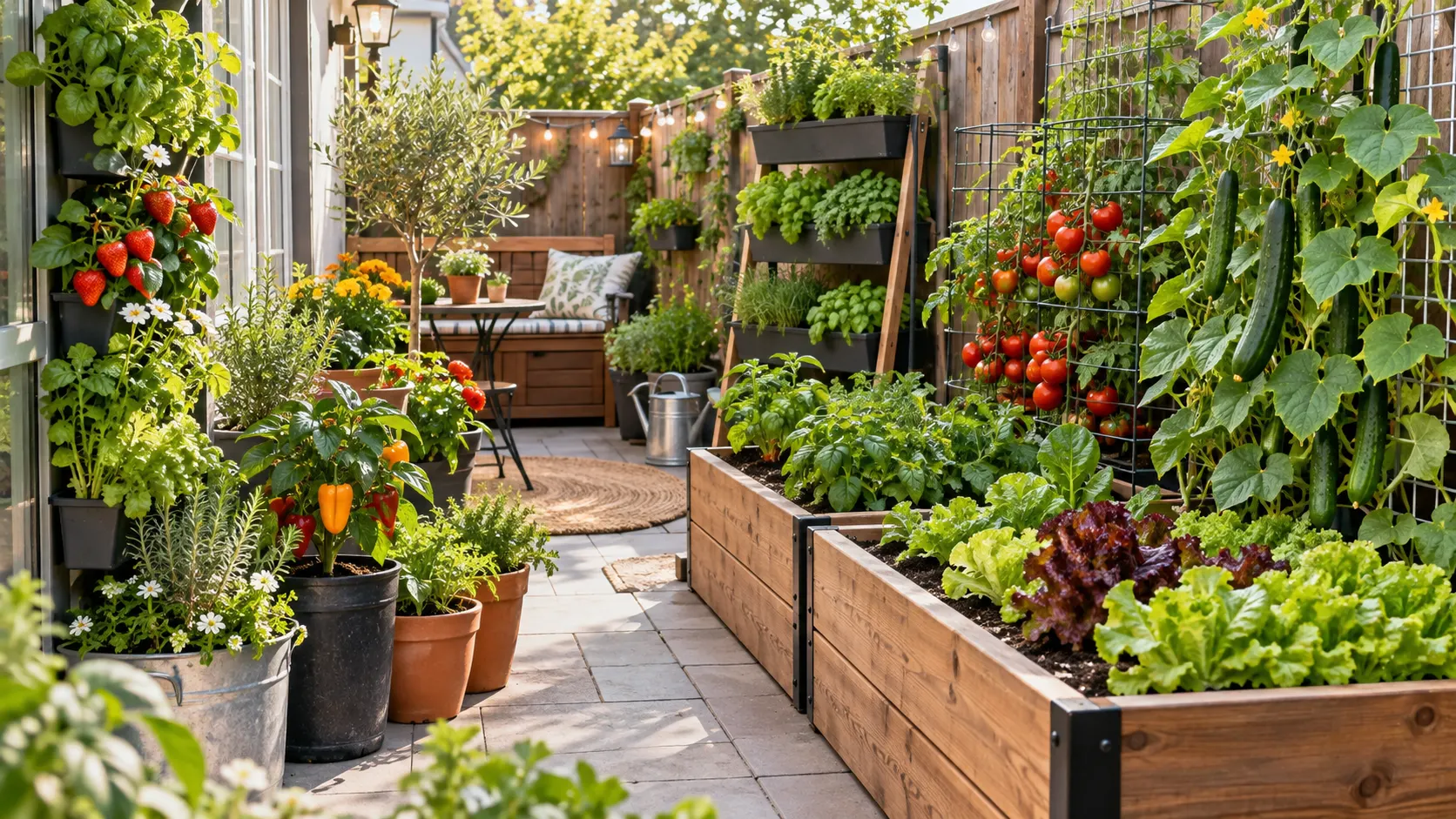
Vertical gardening allows you to increase production without sacrificing valuable ground space. Trellises, cages, stakes, wall systems, and other supports can encourage suitable vegetables to grow upward instead of spreading across pathways. This technique is particularly helpful in narrow gardens, balconies, patios, and compact raised beds.
Pole beans, peas, cucumbers, and certain tomato varieties can make effective use of vertical structures. Install supports early so young plants can be trained gradually as they grow. Waiting until vigorous vines have already spread across surrounding crops can make training difficult and may cause accidental damage to stems.
Vertical growing can also improve access to vegetables during harvesting and routine care. Keeping fruit and foliage off crowded ground areas may make plants easier to inspect and manage. Position tall structures carefully, however, so they do not cast excessive shade over smaller crops that need strong sunlight throughout the day.
Create a Compact Raised Vegetable Bed
Raised beds provide a clearly defined growing area and can be highly productive in small gardens. Because soil conditions are easier to control, you can create a suitable growing mix rather than relying entirely on existing ground soil. Raised beds also make it easier to organize vegetables into neat rows, blocks, or mixed planting areas.
Keep the bed narrow enough that you can comfortably reach the center from the surrounding path. Stepping into the growing area can compact soil and make maintenance more difficult. A compact rectangular bed positioned near a reliable water source can provide plenty of planting opportunities without taking over the entire garden.
You do not need several raised beds when space is limited. One carefully planned bed can hold leafy greens, herbs, root vegetables, and selected taller crops throughout different seasons. For an easier overall setup, these low-maintenance small garden ideas can also help you simplify planting, watering, and everyday garden care.
Choose Compact and Productive Vegetables
Not every vegetable is equally suitable for a limited growing area. Compact, bush, dwarf, patio, or container-friendly varieties can provide useful harvests without spreading excessively. Lettuce, radishes, green onions, spinach, peppers, bush beans, and smaller tomato varieties are practical options depending on your climate and season.
Check seed packets or plant labels for expected mature size before deciding what to grow. A vegetable that appears tiny as a seedling may eventually occupy much more space than expected. Understanding plant spacing helps prevent overcrowding, which can limit airflow, reduce sunlight, and make harvesting more difficult.
Prioritize vegetables you actually enjoy eating rather than growing crops simply because they are popular. Limited garden space becomes more valuable when every plant has a purpose. If your family regularly uses herbs, salad greens, peppers, or tomatoes, those crops may provide more practical value than vegetables that rarely reach your kitchen.
Try Succession Planting for Bigger Harvests
Succession planting means planting new crops as earlier vegetables are harvested, allowing the same area to remain productive for longer. Instead of planting every lettuce, radish, or leafy green at once, you can sow smaller batches at intervals. This approach can provide a steadier harvest while reducing periods when garden space sits empty.
Fast-growing vegetables are especially useful for this method because they can finish before slower crops need more room. Radishes, certain salad greens, and green onions may fit naturally into a succession plan depending on local growing conditions. Always consider temperature and seasonal changes before automatically replanting the same crop.
Keep simple notes about planting and harvesting dates so you know when space may become available. Planning two or three crops ahead can help you use limited beds and containers efficiently. However, avoid forcing continuous production when soil or weather conditions are unsuitable, because healthy growth remains more important than filling every available gap.
Combine Vegetables With Herbs
Herbs can fit naturally into a small vegetable garden because many varieties require relatively little space. Basil, parsley, chives, thyme, coriander, and other culinary herbs can be grown in containers, bed edges, or separate pots. Growing vegetables and herbs together creates a practical kitchen garden without requiring an additional planting area.
Keep in mind that herbs have different moisture and sunlight preferences. Rosemary and thyme often prefer well-drained conditions, while other herbs may appreciate more consistent moisture. Grouping plants according to similar needs makes watering easier and prevents one variety from struggling because another requires completely different conditions.
Mint is usually easier to control when grown in its own container because it can spread aggressively. Regularly harvesting herbs can help keep many varieties compact while supplying fresh ingredients for cooking. Adding herbs also gives you useful produce even when slower vegetables are still developing and not yet ready to harvest.
Make Watering Efficient in a Small Vegetable Garden
Vegetables growing in containers can dry more quickly than plants growing in open ground because they have access to a limited volume of soil. Check moisture regularly rather than watering automatically according to a fixed schedule. Hot weather, wind, container size, crop type, and plant maturity can all affect how quickly water is used.
Water thoroughly enough for moisture to reach the root zone instead of adding only a small amount to the soil surface. Deep, consistent watering encourages healthier root development and can reduce stress caused by repeated drying. Containers should still drain freely because permanently saturated soil can be just as harmful as insufficient moisture.
Grouping plants with similar water requirements can simplify your routine. You may also consider a simple drip or soaker system when several vegetables are growing close together. Whatever method you choose, monitor the soil and plants rather than assuming one schedule will remain appropriate throughout the entire growing season.
Use Space-Saving Planting Techniques
Efficient spacing can help you grow more vegetables without overcrowding the garden. Instead of relying only on traditional long rows, small raised beds can sometimes use blocks or carefully planned spacing that fits the available area. The goal is to maximize useful growing space while still giving plants enough room for healthy development.
You can also use container edges, bed corners, and spaces around taller crops for suitable smaller vegetables. Low-growing lettuce or herbs may fit where they receive enough light without interfering with larger root systems. Avoid packing plants together simply because an empty patch of soil is visible, as mature size should guide every planting decision.
Keep pathways and access areas clear even when you want maximum production. A garden becomes difficult to maintain if every inch is filled with leaves and containers. Leaving enough room to water, inspect, prune, and harvest vegetables makes the overall space more productive because plants receive better care throughout the season.
Keep Your Small Vegetable Garden Easy to Maintain
A productive garden does not need to contain dozens of different crops. Starting with four or five vegetables allows you to understand their watering, feeding, harvesting, and seasonal requirements without becoming overwhelmed. Once those crops are growing successfully, you can experiment with additional varieties in future planting cycles.
Remove weeds while they are small and regularly inspect leaves for signs of damage or stress. Harvest vegetables when they are ready rather than allowing mature produce to remain on plants unnecessarily. Short, frequent garden checks can help you notice problems early and are usually easier than performing large maintenance sessions every few weeks.
Keep basic tools such as pruning scissors, a hand trowel, gloves, and watering equipment in an accessible location. Organize seed packets and plant labels so you can remember what was planted and when. A simple routine makes small-space food gardening more enjoyable and helps you focus on healthy growth rather than complicated maintenance.
Conclusion
A small vegetable garden can produce useful amounts of fresh food when the available space is planned carefully. Containers, compact raised beds, vertical supports, herbs, and productive vegetable varieties can transform patios, balconies, and tiny backyards into practical growing areas. You do not need a large traditional garden to begin growing food at home.
Focus first on sunlight, suitable varieties, healthy soil, proper spacing, and consistent watering. These basic factors usually matter more than trying to fit the maximum number of vegetables into every available corner. Giving plants enough room to develop can ultimately produce better results than creating an overcrowded garden that becomes difficult to maintain.
Start with vegetables you regularly use and expand gradually as you learn what performs best in your conditions. Succession planting and vertical growing can help you increase productivity later without significantly increasing garden size. With thoughtful planning, even a limited outdoor area can become an attractive and rewarding source of homegrown vegetables.
FAQs
What vegetables grow best in a small garden?
Lettuce, radishes, green onions, peppers, spinach, bush beans, herbs, and compact tomato varieties are useful options. Choose crops according to your sunlight, climate, season, and available container depth.
Can I grow vegetables on a small balcony?
Yes. Containers, railing planters, and vertical supports can make balconies suitable for many vegetables and herbs. Check sunlight, wind exposure, drainage, available space, and safe container placement before planting.
How can I maximize space in a small vegetable garden?
Use vertical trellises, compact varieties, containers, succession planting, and carefully planned raised beds. Keep access routes clear and consider mature plant size before filling additional spaces with new vegetables.
What size containers should I use for vegetables?
Container size depends on the vegetable’s root system and mature size. Leafy greens may tolerate shallower pots, while tomatoes, peppers, and larger crops usually perform better with deeper containers and more soil volume.
How often should I water a small vegetable garden?
There is no single schedule for every garden. Check soil moisture regularly and consider weather, plant type, container size, and sunlight before watering thoroughly enough to reach the root zone.