Creating a beautiful small garden does not require a large lawn, deep flower beds, or complicated landscaping. Pots and containers can transform balconies, patios, courtyards, narrow entrances, and tiny backyards into attractive green spaces. The flexibility of container gardening makes it especially useful when you want maximum visual impact without making permanent changes to your outdoor area.
Containers allow you to grow flowers, herbs, vegetables, shrubs, and decorative foliage in spaces where traditional planting may not be possible. They can be moved whenever sunlight changes, rearranged when you want a fresh look, and replaced easily when seasonal plants finish blooming. This makes pots an excellent choice for beginners, renters, and homeowners with limited outdoor space.
The most successful small garden ideas with pots and containers focus on good plant selection, thoughtful placement, and consistent design. Instead of filling every available corner, use containers strategically to create height, color, texture, and structure. With a few simple techniques, you can make a compact garden feel organized, welcoming, and much more visually interesting.
Start With a Simple Container Garden Plan
Before buying pots, study the size and shape of your available garden space. Measure patios, balconies, pathways, corners, steps, and entrance areas where containers could be positioned safely. Planning first prevents you from purchasing oversized pots or filling important walking areas with plants that make the garden uncomfortable to use.
Observe sunlight throughout the day and identify bright, partially shaded, and shaded areas. Different plants require different light conditions, so your container placement should be based on what will actually grow well. A sunny patio may support flowering plants and vegetables, while a shaded corner may be better suited to foliage plants and shade-tolerant varieties.
Think about the overall style you want to create before choosing individual pots. A modern garden may look best with simple matching containers, while a relaxed cottage garden can include more varied shapes and materials. Having a clear direction helps every pot feel connected rather than making the space look like an accidental collection of unrelated plants.
Choose the Right Pots for Your Space
Container size should match both the mature plant and the available garden area. Small herbs and seasonal flowers can grow in compact pots, while shrubs, tomatoes, and larger ornamentals generally need more soil volume. Choosing a pot that is too small can restrict roots, dry quickly, and create unnecessary maintenance during warm weather.
Drainage is one of the most important features to check when selecting containers. Pots should have suitable drainage holes that allow excess water to escape instead of collecting around the root system. Decorative containers without proper drainage can sometimes be adapted, but plant health should always take priority over appearance.
Consider the weight of the container as well, especially for balconies or areas where pots may need to be moved. Lightweight materials can make seasonal rearranging much easier than extremely heavy stone containers. However, exposed or windy areas may benefit from heavier pots that are less likely to tip over.
Group Pots for a Fuller Garden Look
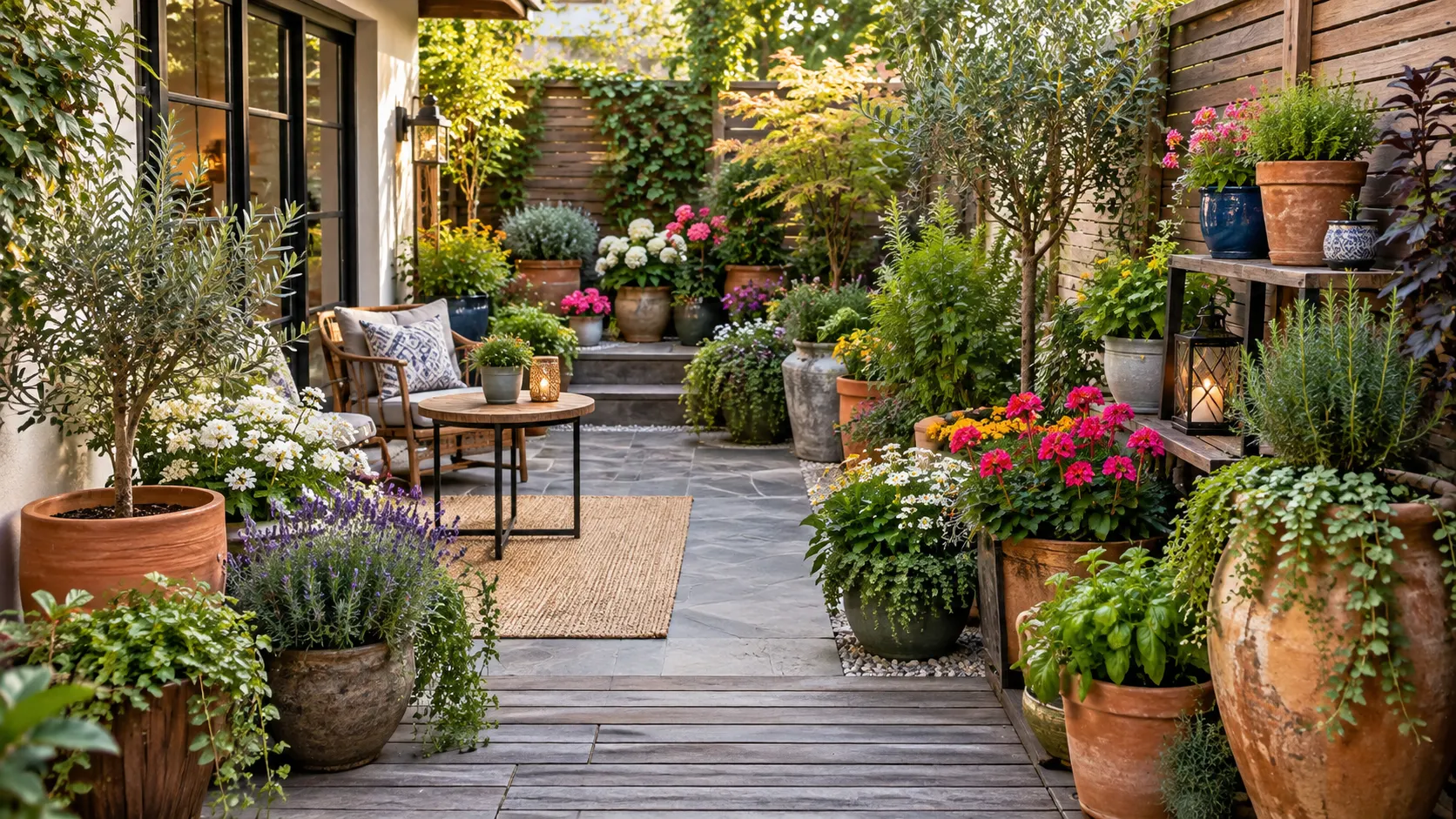
Grouping containers can make a small garden feel lush without spreading pots across every available surface. Arrange several containers together in corners, beside seating areas, or near entrances to create strong visual moments. Keeping pots grouped also makes watering and routine maintenance faster because plants are concentrated in fewer locations.
Use containers of different heights to build a layered display. Taller pots or plants can sit at the back, medium varieties can fill the center, and low or trailing plants can soften the edges. This arrangement creates depth and allows more individual plants to remain visible even when the garden area is very small.
Avoid using too many unrelated pot styles in one group. Repeating similar materials, colors, or shapes can make the arrangement feel intentional while still allowing plant variety. For example, several terracotta pots in different sizes can create interest without making the display look visually cluttered.
Add Color With Flower-Filled Containers
Flowers are one of the easiest ways to bring immediate color into a compact garden. Seasonal annuals can fill pots quickly, while flowering perennials may provide color across multiple years when conditions are suitable. Choose blooms that match your available sunlight and climate rather than selecting plants only because they look attractive at the garden center.
A limited flower color palette can make a small container garden feel more polished. Two or three complementary colors repeated across several pots often create stronger visual impact than mixing every available shade. You can use one dominant color and support it with softer tones for a balanced, coordinated appearance.
If you want more inspiration for combining blooms in compact areas, these small flower garden ideas can help you plan attractive color combinations and planting arrangements. Containers make it easy to experiment with flowers without permanently changing your overall landscape.
Use Large Pots as Statement Features
One or two large containers can make a small garden look more organized than dozens of tiny pots. Large pots create strong focal points and can hold ornamental grasses, compact shrubs, small trees, or mixed planting arrangements. They also provide more soil volume, which may help plants maintain more consistent moisture.
Position statement containers where they naturally attract attention, such as beside the front door, at the end of a pathway, or near a seating area. Avoid placing too many large pots in narrow walkways because they can quickly make the space feel cramped. The goal is to create impact without sacrificing movement.
Large containers can also help provide structure throughout the year. Evergreen shrubs or architectural foliage plants can remain attractive even when seasonal flowers are no longer blooming. Smaller pots with temporary color can then be arranged around these permanent anchor plants whenever you want to refresh the garden.
Grow Herbs in Small Pots Near the Kitchen
Herbs are ideal for container gardens because many varieties grow successfully in limited spaces. Basil, parsley, chives, rosemary, thyme, oregano, and mint can all be practical choices depending on your local climate. Keeping herb pots near the kitchen makes harvesting easier and gives your garden a useful purpose beyond decoration.
Different herbs have different watering and sunlight requirements, so avoid placing every variety in the same container automatically. Rosemary and thyme often prefer well-drained conditions, while other herbs may appreciate more consistent moisture. Matching plants with similar needs helps prevent one herb from thriving while another struggles.
Mint is usually better kept in its own pot because it can spread aggressively. Regular harvesting helps many herbs stay compact and encourages useful fresh growth. Even three or four herb containers can turn a small patio, balcony, or doorstep into a productive mini kitchen garden.
Grow Vegetables in Containers
Vegetables can also become part of a small container garden when you choose compact varieties and suitable pots. Cherry tomatoes, peppers, lettuce, radishes, green onions, herbs, and bush beans can grow well in limited spaces. Container vegetable gardening is especially practical for patios and sunny balconies without traditional planting beds.
Select pots with enough depth and soil volume for each crop. Leafy greens usually need less root space than tomatoes or peppers, which can become much larger as they mature. Always consider mature size and support needs before choosing where the container will be positioned.
Place vegetable containers in the sunniest suitable part of the garden and keep watering consistent. Containers can dry faster than ground soil, especially during hot or windy weather. Grouping vegetables with similar moisture needs can make maintenance easier while keeping your edible garden organized and productive.
Make Use of Vertical Container Gardening
Vertical container gardening helps you grow more plants without filling valuable floor space. Wall planters, stacked pots, ladder shelves, railing containers, and hanging baskets can introduce greenery at different heights. This technique is especially useful in narrow gardens, courtyards, and balconies where horizontal space is limited.
Use upper levels for compact flowers, herbs, or trailing plants, while larger containers remain closer to the ground. Make sure wall-mounted or elevated pots are securely supported and positioned where water can drain safely. Avoid placing heavy containers on weak shelves or structures that were not designed to carry them.
Vertical arrangements can also make the garden feel taller and more dynamic. Repeating the same plant or flower color at several heights creates a strong sense of continuity. Leave enough space between levels so taller plants do not completely shade smaller containers below them.
Use Hanging Baskets to Free Floor Space
Hanging baskets are useful when you want more plants without reducing walking or seating space. They work well above patios, beside entrances, on balconies, or along covered outdoor areas. Flowering and trailing plants can soften hard architecture while adding greenery at eye level.
Choose a hanging position that receives the right amount of sunlight for your selected plants. Containers placed high above the ground may experience stronger wind and can dry more quickly than larger floor pots. Check soil moisture regularly and make sure baskets remain securely attached, especially when filled with wet soil.
Avoid hanging too many baskets in a very small garden. Several containers positioned close together can make the space feel visually heavy and reduce openness. One or two well-placed baskets often provide enough height and color while keeping the overall design clean.
Combine Different Plant Heights
Plant height plays an important role in making container arrangements look natural and full. A useful approach is to combine taller structural plants, medium-height flowers or foliage, and low trailing plants. This layered effect creates depth and prevents every container from appearing visually flat.
You can apply this technique inside one large pot or across a group of separate containers. For example, a tall ornamental grass can provide height, while flowering plants add mid-level color and trailing foliage softens the base. Make sure plants sharing one pot have compatible water, soil, and light requirements.
Avoid using tall plants where they block windows, pathways, or important views. In small gardens, every vertical element has a stronger visual impact than it would in a larger landscape. Careful placement allows height to improve the design without making the space feel enclosed.
Create a Low-Maintenance Container Garden
Container gardens can be simple to maintain when the right pots and plants are selected. Larger containers generally dry more slowly than tiny pots, making them useful for busy gardeners. Hardy perennials, ornamental grasses, compact evergreens, and locally suitable plants can also reduce the need for frequent replacement.
Group plants with similar watering needs so one section can be cared for efficiently. This avoids repeatedly moving between dry-loving and moisture-loving plants during your routine. Mulching the surface of larger containers may also help reduce moisture loss and give the pots a cleaner appearance.
Keep the overall number of containers realistic for the time you have available. Fifteen healthy pots usually create a more attractive garden than forty struggling plants that are difficult to water consistently. Start with a manageable arrangement and expand later if maintaining the existing plants feels easy.
Use Pots to Improve Small Garden Corners
Unused corners can become attractive focal points with just a few carefully positioned containers. A tall pot with a structural plant, combined with two smaller flower pots, can turn an empty area into an intentional feature. This approach is useful around patios, fences, entrance steps, and awkward spaces where permanent planting is difficult.
Corner arrangements work best when plants are layered rather than lined up in a single row. Place the tallest container closest to the wall or fence and allow smaller pots to step gradually forward. This creates depth and makes the planting feel integrated rather than simply stored in an unused space.
Do not completely fill every corner of the garden. Leaving some areas open creates visual breathing room and helps your best container displays stand out. Strategic planting is often more effective than trying to place a pot wherever an empty patch of ground appears.
Match Containers With Your Home Style
Pots can contribute as much to the garden design as the plants themselves. Modern homes often pair well with simple geometric containers, while terracotta and weathered finishes can complement cottage or traditional spaces. Choosing materials that reflect your home’s exterior can make the garden feel more connected to the property.
Color also matters when selecting containers. Neutral shades allow flowers and foliage to become the main focus, while bold pots can function as decorative features themselves. In very small spaces, limiting the number of container colors usually produces a calmer and more organized look.
You do not need every pot to match exactly. Using related shapes, materials, or tones can create cohesion while maintaining enough variation to keep the garden interesting. Consistency is more important than perfect uniformity, especially when several different plant types are being displayed together.
Keep Container Plants Healthy
Healthy container plants depend on suitable soil, drainage, watering, and regular observation. Use a quality potting mixture appropriate for the plants rather than filling containers with dense garden soil. Container growing media needs to support roots while allowing excess water to drain effectively.
Check soil moisture with your fingers instead of relying entirely on a fixed watering schedule. Temperature, wind, sunlight, pot size, and plant type can change how quickly each container dries. Water thoroughly when needed, allowing moisture to reach the root zone while excess water drains away.
Remove dead or damaged growth regularly and inspect plants for signs of stress. Repot plants when they become too large for their containers or when root growth becomes severely restricted. Small amounts of consistent maintenance can keep a container garden attractive throughout the growing season.
Conclusion
Pots and containers can transform a limited outdoor area into a flexible, colorful, and useful garden. They work well on balconies, patios, narrow yards, entrances, and other places where traditional garden beds are not practical. With thoughtful placement, containers can provide height, structure, flowers, herbs, vegetables, and year-round greenery.
Focus on choosing appropriate pot sizes, reliable drainage, suitable plants, and a consistent visual style. Grouping containers, using vertical space, and combining different plant heights can make the garden feel full without becoming crowded. A few carefully planned arrangements usually have more impact than randomly filling the space with numerous small pots.
Most importantly, create a container garden that matches your available time and lifestyle. Start with a manageable number of plants and expand gradually as you learn which varieties perform well in your conditions. With simple planning and regular care, pots can help even the smallest outdoor space feel beautiful, organized, and inviting.
FAQs
What plants are best for pots in a small garden?
Herbs, seasonal flowers, compact perennials, dwarf shrubs, ornamental grasses, and container-friendly vegetables all work well. Choose plants according to your available sunlight, climate, and container size.
How many pots should I use in a small garden?
There is no fixed number, but fewer well-arranged pots usually look better than many scattered containers. Start with several coordinated groups and leave enough open space for comfortable movement.
Are large or small pots better for small gardens?
A combination works well, but larger pots often retain moisture longer and create stronger focal points. Small pots are useful for herbs and accents but may require more frequent watering.
How can I make a container garden look bigger?
Use vertical displays, group pots by height, repeat similar colors, and keep pathways open. Avoid scattering containers everywhere, as visual clutter can make a compact garden feel smaller.
How often should container plants be watered?
Watering depends on weather, plant type, sunlight, and pot size. Check the soil regularly and water thoroughly when needed rather than following the same schedule for every container.