Creating a beautiful garden does not have to cost a large amount of money. Even a small backyard, patio, balcony, or front garden can become attractive with simple plants, reused materials, affordable containers, and thoughtful planning. The key is spending money only on features that improve the space rather than buying everything at once.
Budget gardening works especially well in small spaces because you need fewer plants, materials, and decorative features. Instead of expensive landscaping, you can improve existing beds, grow plants from seeds, reuse containers, and create simple pathways with affordable materials. Small changes made gradually can produce a noticeable transformation without putting pressure on your budget.
The best budget-friendly small garden ideas combine creativity with practical choices. By working with what you already have, selecting low-cost plants, and prioritizing high-impact improvements, you can create an outdoor area that feels welcoming and personal. These ideas will help you make the most of limited space while keeping gardening costs manageable.
Start With a Simple Garden Plan
Planning before spending money is one of the easiest ways to keep garden costs under control. Measure your available space and identify areas for plants, pathways, seating, and storage. A simple layout helps you avoid buying unnecessary materials or plants that eventually become too large for your compact garden.
Pay attention to sunlight, shade, drainage, and existing features before deciding what to add. You may already have useful walls, fences, containers, stones, or healthy plants that can become part of the new design. Reusing these elements can significantly reduce costs while giving you a strong starting point for the garden.
Decide which improvements matter most instead of trying to complete everything in one weekend. You might begin with plants and containers, then add seating or decorative features later. Building the garden gradually allows you to spread expenses over time while learning which areas truly need additional investment.
Grow Flowers From Seeds
Seeds are often a more affordable way to create colorful flower displays than purchasing large numbers of mature plants. Many annual flowers can be started in small trays, recycled containers, or directly in suitable garden soil. Growing from seed also gives you access to more varieties without dramatically increasing your gardening budget.
Start with flowers that are relatively easy to establish in your climate and available growing conditions. Follow the planting depth, spacing, and seasonal guidance provided with the seeds. Starting too many varieties at once can become difficult to manage, so choose a few reliable flowers and learn how they perform in your garden.
Once established, repeated flower varieties can create a polished appearance without requiring expensive landscaping. You can explore these small flower garden ideas for inspiration on arranging blooms in compact spaces. Keeping the color palette simple can make even inexpensive plants look coordinated and intentional.
Reuse Containers You Already Own
You do not always need to purchase new decorative pots for a container garden. Buckets, wooden boxes, sturdy tubs, old plant pots, and other suitable containers can often be reused after cleaning. The most important requirement is providing enough growing space and appropriate drainage for the plants you choose.
If reused containers look mismatched, simple changes can help create a more coordinated appearance. Group similar materials together or place containers in clusters where the plants become the main visual focus. You can also position less decorative pots behind attractive foliage so they remain useful without dominating the garden design.
Make sure recycled containers are safe for the intended plants, especially when growing vegetables or herbs. Avoid containers that previously stored potentially harmful substances. Adding drainage holes where appropriate can turn many ordinary household items into practical planters without the cost of buying brand-new garden pots.
Divide and Propagate Existing Plants
Existing plants can provide free material for expanding a small garden. Some perennials can be divided when they become established, while other plants may be propagated through cuttings or offsets. Using healthy plants you already own allows you to fill empty areas without purchasing new specimens for every planting spot.
Not every plant responds to the same propagation method, so understand the variety before cutting or dividing it. Work with healthy, established plants and avoid removing too much growth at one time. Successful propagation requires patience, but it can gradually produce additional greenery while keeping your gardening expenses extremely low.
You can also exchange divisions or cuttings with friends, relatives, or neighbors who enjoy gardening. Plant swaps provide variety without requiring everyone to purchase new plants. This approach is particularly useful when you want to introduce different flowers, herbs, or foliage plants into a small garden on a limited budget.
Create Affordable Garden Borders
Garden edging can make a small landscape look cleaner without requiring expensive materials. Reused bricks, stones, timber pieces, or simple landscape edging can separate planting beds from pathways and lawns. Defined borders create structure and may make even a basic garden layout feel more organized and professionally planned.
Before buying edging, check whether suitable materials are already available around your home. Leftover bricks from another project or natural stones can often be arranged into attractive borders. Using one material consistently usually creates a stronger appearance than combining several unrelated edging styles throughout a limited garden.
Keep border shapes simple so installation and future maintenance remain easy. Straight lines or gentle curves require fewer materials than complicated designs with many corners. Clean edges also make mowing, weeding, and maintaining pathways easier, helping your low-cost improvement continue providing value long after installation.
Use Gravel for Low-Cost Pathways
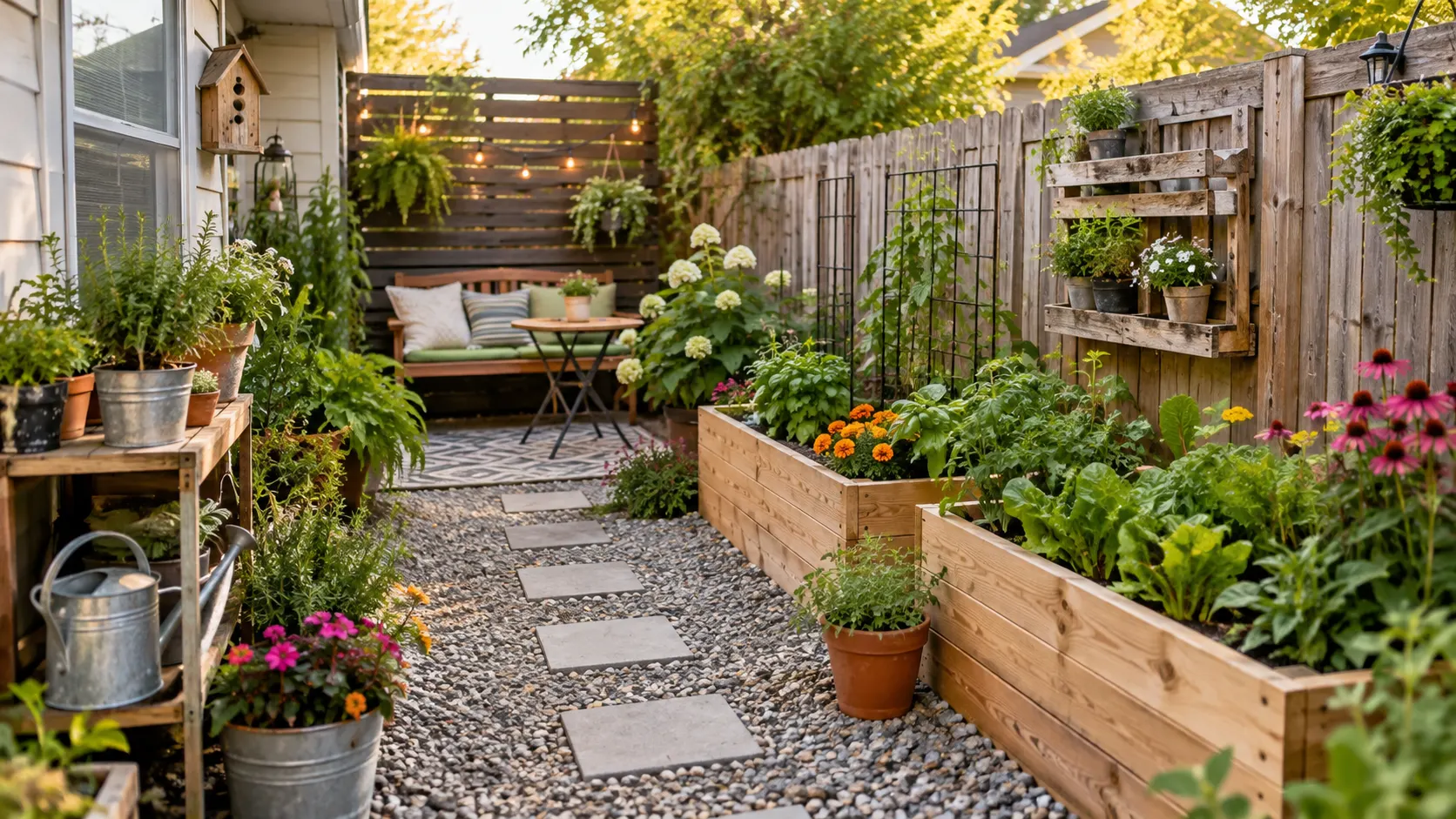
Gravel can be a practical option for creating small pathways or seating areas without the cost of extensive paving. It works particularly well in compact gardens where only a limited amount of material is required. A clearly defined gravel path can improve access while giving the landscape a more finished appearance.
Prepare the area carefully before spreading gravel because good preparation can reduce future maintenance. Define the pathway, level the ground, and consider suitable edging to prevent stones from spreading into planting beds. A simple, well-planned path often looks better than a complicated layout that requires significantly more materials.
Use gravel selectively rather than covering every available surface. Combining gravel with planting creates a softer and more welcoming garden than using hard materials everywhere. Keeping paths relatively narrow and functional can reduce both material costs and the amount of space removed from plants and greenery.
Build a Small DIY Raised Bed
Raised garden beds do not always need expensive pre-made kits. Simple timber boards, suitable reclaimed materials, or basic construction supplies can sometimes be used to build a compact growing area. A small raised bed can provide space for herbs, vegetables, or flowers while keeping soil neatly contained.
Keep the design straightforward so you do not spend unnecessary money on complicated shapes or decorative finishes. A basic rectangular bed is usually easier to build, fill, and maintain. Position it where plants receive appropriate sunlight and where you can comfortably reach the entire growing area without stepping into the soil.
Before using reclaimed materials, make sure they are appropriate for garden use and have not been treated with unsuitable substances. The bed should also be sturdy enough to contain wet soil. Building one useful raised bed is generally more budget-friendly than filling a small garden with several unnecessary structures.
Choose Affordable Low-Maintenance Plants
Cheap plants are not always economical if they constantly need replacement, fertilizer, or intensive care. Look for hardy varieties that naturally suit your local climate, sunlight, and soil. Plants that perform well in existing conditions usually require fewer resources and can provide value for several growing seasons.
Perennials can be particularly useful because suitable varieties return for multiple years rather than needing complete replacement every season. Compact evergreen plants may also provide long-term structure when chosen carefully. You can then add a limited number of inexpensive seasonal flowers when you want temporary bursts of additional color.
Avoid purchasing plants based only on their appearance at the nursery. Check mature size and maintenance requirements before buying. A small affordable plant that grows successfully can eventually provide far more value than an expensive mature specimen that struggles because your garden cannot meet its needs.
Make Simple DIY Garden Decorations
Decorative features can add personality without requiring expensive garden ornaments. Painted pots, simple plant markers, homemade trellises, reused lanterns, or carefully arranged natural stones can create attractive details. The goal is to use a few meaningful features instead of filling a compact garden with unnecessary decorations.
Old outdoor-safe items can sometimes be repurposed into useful garden features. A wooden crate may become a plant stand, while suitable leftover timber can form a simple trellis. Reusing materials keeps costs down while creating a garden that feels more individual than one built entirely from mass-produced decorative products.
Keep DIY projects consistent with the overall style of your space. Too many unrelated homemade features can make a small garden feel cluttered. Choosing one or two ideas and repeating similar materials usually creates a cleaner result while allowing you to improve the garden gradually as more reusable materials become available.
Create an Affordable Seating Corner
You do not need a large outdoor furniture set to create a comfortable place to sit. One compact bench, folding chair, or reused outdoor-safe seat may be enough for a small garden. Position seating against a fence or wall where it does not interfere with pathways or take over valuable planting space.
Look at furniture you already own before purchasing something new. Suitable pieces can sometimes be cleaned, repaired, or refreshed for outdoor use when the materials allow it. A simple cushion or small side table can make an existing seating area feel more inviting without requiring a complete replacement furniture set.
Surround the seating area with several affordable plants or containers to make it feel integrated into the garden. You do not need to create a large patio or complicated structure. A comfortable chair placed beside greenery can provide a relaxing garden experience for a fraction of the cost of extensive landscaping.
Use Mulch to Save Money Over Time
Mulch can reduce moisture loss from soil and help limit weed growth around established plants. This may reduce the amount of time and water needed for routine garden maintenance. Organic options can also contribute to soil quality gradually as they break down, providing additional long-term value.
Choose a mulching material that is readily available and appropriate for your plants. Shredded leaves, bark, or suitable compost can work depending on your garden conditions. Avoid piling mulch directly against stems or trunks because excess moisture around plant tissue can create unnecessary problems.
Applying mulch to important planting areas can also make beds appear cleaner and more finished. Instead of spending money on decorative features, a consistent layer can improve the visual appearance of the garden while serving a practical purpose. This combination makes mulch one of the more useful budget-friendly improvements.
Grow Herbs and Vegetables to Add Practical Value
An affordable garden can be decorative while also providing something useful for the kitchen. Herbs such as basil, parsley, chives, mint, rosemary, or thyme can grow in relatively small areas depending on your conditions. Growing ingredients you regularly use can make the garden feel more valuable beyond its appearance.
Compact vegetables such as leafy greens, green onions, radishes, peppers, or suitable tomato varieties can also fit into containers or small beds. Choose crops according to sunlight, climate, and available growing space. Starting with seeds can further reduce initial costs, especially for quick-growing vegetables planted during appropriate seasons.
Focus on edible plants your household actually enjoys using. Growing large amounts of unfamiliar produce may waste space, water, and gardening materials. A small collection of frequently used herbs and vegetables can provide greater practical value while blending naturally with flowering plants and other landscaping features.
Improve the Garden With Better Plant Placement
Rearranging what you already have can sometimes improve a garden without costing anything. Move portable containers into stronger groups, place tall plants behind shorter ones, and clear unnecessary items from pathways. Better organization can immediately make the space feel more intentional and visually balanced.
Use repetition to make inexpensive plants look more effective. Instead of scattering different flowers everywhere, place the same variety in several locations to create a visual connection. Repeating pot styles, foliage colors, or simple materials can also make different sections of the garden feel like one cohesive landscape.
Leave some open space rather than trying to fill every corner. Empty ground, pathways, or simple gravel areas can provide visual breathing room that allows plants to stand out. This approach costs nothing and often makes a compact garden look larger, cleaner, and more thoughtfully designed.
Improve Your Garden Gradually
Trying to complete an entire garden at once can encourage unnecessary spending. Instead, work on one section at a time and evaluate the results before moving to the next area. You may discover that a simple planting change solves a problem that you originally planned to fix with an expensive landscaping project.
Set a basic gardening budget for plants, soil, tools, and materials before shopping. Prioritize essentials such as healthy soil and appropriate plants before spending money on decorative accessories. This helps ensure your limited budget supports the parts of the garden that have the greatest impact on long-term success.
Gardens naturally change over time, so there is no need to consider your first design permanent. Plants grow, seasons change, and your preferences may develop as you use the space. Gradual improvements allow you to learn what works while preventing costly mistakes caused by making too many decisions too quickly.
Conclusion
Creating an attractive small garden on a budget is completely possible when you focus on simple, useful improvements. Growing plants from seeds, reusing containers, propagating existing plants, and building basic garden features can significantly reduce costs. Thoughtful planning also helps prevent unnecessary purchases that do not add lasting value.
Spend first on the essentials that help plants grow successfully, including suitable soil, healthy planting material, and practical watering solutions. Decorative features can be added gradually using reused or inexpensive materials. A consistent garden design can make affordable plants and simple landscaping appear much more polished than their price suggests.
Most importantly, allow your garden to develop over time instead of trying to achieve a finished look immediately. Small improvements can gradually transform even a limited outdoor space into somewhere attractive and enjoyable. With creativity and careful spending, you can build a beautiful garden without exceeding your budget.
FAQs
What is the cheapest way to start a small garden?
Begin with seeds, reused containers, existing soil improvements, and plants propagated from cuttings or divisions. Focus on one small area first instead of purchasing everything needed for a complete garden makeover.
How can I make my garden look good without spending much?
Remove clutter, improve plant placement, define borders, repeat similar colors, and reuse materials you already have. Simple organization can create a noticeable visual improvement without requiring expensive landscaping or decorations.
Are seeds cheaper than buying plants?
Seeds are often more economical when you need multiple plants, although they require more time and care. Buying a few established plants may still be practical for slow-growing varieties or immediate impact.
What inexpensive materials can I use in a small garden?
Gravel, reused bricks, suitable timber, recycled containers, mulch, and natural stones can provide affordable landscaping options. Always make sure reclaimed materials are safe and appropriate for their intended garden use.
Can I create a beautiful garden with a very small budget?
Yes. Focus on healthy plants, clean layouts, reused materials, propagation, and gradual improvements. A carefully planned small garden can look attractive without relying on expensive furniture, mature plants, or complicated landscaping features.