A tiny garden can still become one of the most attractive and enjoyable parts of your home. Limited square footage does not mean you have to settle for a plain or crowded outdoor area. With careful planning, smart planting, and a few high-impact design choices, even the smallest balcony, patio, courtyard, or backyard corner can feel stylish and full of character.
The best tiny garden ideas focus on using space efficiently rather than adding as much as possible. Vertical planting, compact furniture, layered greenery, and well-placed containers can create depth while leaving enough room to move comfortably. A few thoughtfully chosen features often make a stronger impression than a large number of plants or decorations competing for attention.
Whether you want a relaxing retreat, colorful flower display, productive herb garden, or modern outdoor space, you can achieve impressive results in a very small area. The key is choosing features that serve more than one purpose and keeping the overall design consistent. These ideas will help you make a tiny garden feel bigger, more useful, and more visually appealing.
Start With a Clear Tiny Garden Layout
A strong layout is especially important when every inch of outdoor space matters. Begin by identifying where people need to walk, sit, and access doors or storage areas. Once those practical zones are clear, you can use the remaining space for planting and decorative features without making the garden difficult to navigate.
Avoid dividing a tiny garden into too many separate sections. One seating area, one main planting zone, and a clear pathway are often enough to create structure. Keeping the layout simple allows the eye to move through the space more easily, which can make the garden feel larger and more organized.
Measure the available area before purchasing furniture, planters, or other features. Items that look compact in a store can feel oversized once placed in a tiny courtyard or patio. Planning dimensions first helps prevent expensive mistakes and allows you to maintain the open space needed for comfortable everyday use.
Use Vertical Space to Grow More
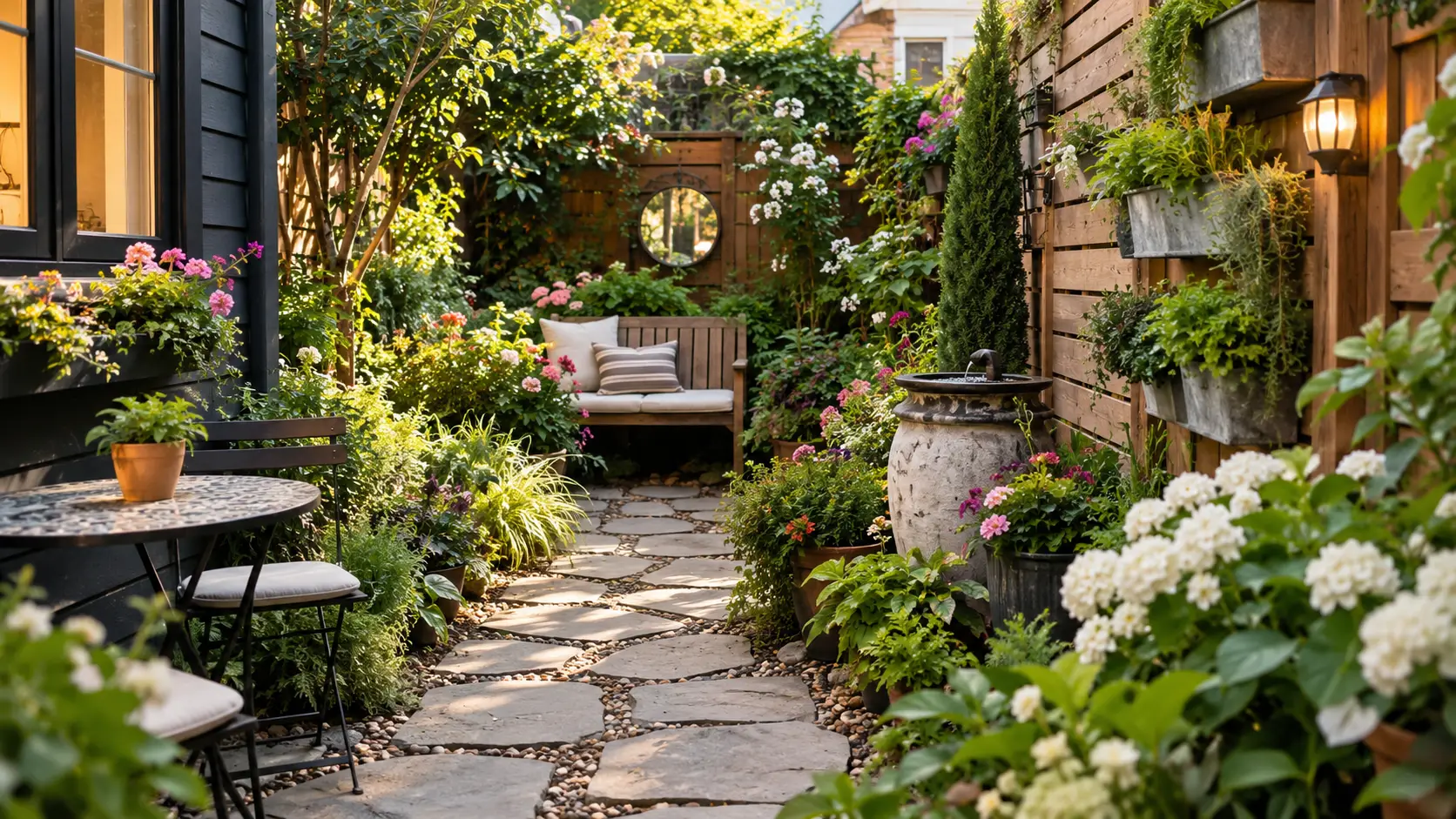
Vertical gardening is one of the most effective ways to increase planting capacity in a tiny garden. Walls, fences, trellises, hanging baskets, and railing planters can all support greenery without occupying much floor space. Growing upward also draws the eye higher, which can make a compact garden feel more layered and spacious.
Climbing plants can soften bare walls and create attractive natural features. Depending on your climate, you might use flowering vines, compact climbers, peas, beans, or other suitable plants. Choose manageable varieties and provide sturdy supports so vigorous growth does not become difficult to control in such a limited space.
Wall-mounted shelves and vertical planters can hold herbs, small flowers, and foliage plants. Arrange them carefully so taller plants do not block light from those underneath. Secure all elevated containers properly and make sure they remain easy to reach for watering, pruning, and regular maintenance.
Create Impact With a Few Large Containers
Many tiny pots can quickly make a small garden look cluttered, even when every individual plant is attractive. Using a few larger containers often creates a cleaner and more confident design. Bigger pots can also support more substantial plants and usually retain soil moisture longer than very small containers.
Choose containers that complement the style of your home and repeat similar materials or colors throughout the space. One tall planter near a doorway and another at the far end of the garden can create visual balance. You can fill them with compact shrubs, ornamental grasses, flowers, or architectural foliage depending on available sunlight.
Large containers can act as focal points while still being practical. Position them where they frame seating areas, soften corners, or direct attention deeper into the garden. Avoid placing them in narrow walkways, because even an attractive feature can become frustrating if it constantly blocks movement.
Add Layers With Different Plant Heights
Layering plants is an easy way to create more visual depth in a small outdoor area. Combine low-growing flowers or ground covers with medium-height foliage and taller structural plants. Different heights prevent the garden from looking flat while allowing more greenery to fit into a relatively compact footprint.
Place taller plants toward walls, fences, or the back of planting beds so they do not hide shorter varieties. Medium plants can create fullness in the middle, while smaller flowers or trailing plants soften front edges. This arrangement helps each plant remain visible and creates a more natural, professionally planned appearance.
Do not overcrowd each layer simply because the garden is small. Plants still need enough room to reach their mature size and receive sufficient light and airflow. Leaving small gaps between groups can actually make the planting look more intentional and allow individual textures and colors to stand out.
Create One Eye-Catching Focal Point
A strong focal point can give a tiny garden much more personality. This might be a statement planter, decorative tree, compact water feature, outdoor mirror, sculpture, or striking flowering plant. One memorable feature provides visual direction and prevents the garden from feeling like a random collection of small objects.
Position the focal point where it can be seen from inside the home or from the main seating area. Placing it toward the far end of the garden can encourage the eye to travel deeper into the space. Surround it with simpler planting so the feature remains noticeable rather than competing with several equally bold elements.
Resist the temptation to create multiple focal points in a tiny area. Too many statement objects can make the garden feel crowded and reduce the impact of each one. One carefully chosen feature supported by quieter plants and materials usually produces a stronger overall design.
Choose Compact Furniture That Works Harder
Furniture can easily dominate a tiny garden, so choose pieces that match the actual scale of the space. Slim benches, folding chairs, compact bistro sets, and narrow tables can provide comfort without blocking important pathways. Furniture with open frames may also feel visually lighter than bulky solid pieces.
Multifunctional furniture can be particularly valuable when storage is limited. A bench with hidden storage can hold cushions, gardening supplies, or small tools while providing seating. Folding pieces can be stored or moved when you need more open floor space for entertaining, gardening, or other activities.
Position furniture against walls or in corners where possible. Keeping the center of the garden relatively open often creates a greater sense of space. Surround seating with just enough greenery to make it feel cozy without enclosing it so tightly that the area becomes difficult to use.
Use Mirrors to Create the Illusion of Space
A well-positioned outdoor mirror can make a tiny garden appear deeper than it really is. By reflecting plants, light, and attractive features, a mirror can visually extend a boundary wall or fence. This technique works especially well in enclosed courtyards where solid surfaces make the garden feel smaller.
Place the mirror where it reflects greenery rather than storage areas, neighboring windows, or other unwanted views. Partially framing it with plants can help the reflective surface blend into the landscape. The goal is to create subtle depth rather than make the mirror itself the most obvious object in the garden.
Choose a mirror or reflective material suitable for outdoor conditions and install it securely. Consider how sunlight moves across the surface during the day to avoid uncomfortable glare. Used carefully, a single mirror can provide a surprisingly strong effect without taking up any valuable planting or seating space.
Add Color Without Creating Visual Clutter
Color can make a tiny garden feel cheerful and personal, but too many competing shades may reduce the sense of space. Select two or three main colors and repeat them across flowers, pots, cushions, and accessories. A consistent palette helps separate elements feel connected and makes the whole area appear more organized.
Cool shades such as soft blues, purples, whites, and greens can create a calm atmosphere. Brighter colors such as orange, yellow, or red can be used as smaller accents to attract attention. Keeping bold colors concentrated in one or two locations prevents the garden from becoming visually overwhelming.
You can also change seasonal color through inexpensive flowers, cushions, or small accessories. This allows you to refresh the garden without replacing major features. A neutral base combined with a few changing accents gives you flexibility while preserving a clean and spacious overall design.
Decorate Without Taking Up Too Much Room
Decorative details can add character to a tiny garden, but they need to be selected carefully. Wall art, lanterns, hanging pots, small sculptures, and decorative planters can provide personality without using much floor space. Prioritize features that add visual interest while supporting the garden’s overall style.
If you need inspiration, these small garden decor ideas can help you add personality without overwhelming a limited outdoor area. Wall-mounted decor and vertical features are particularly useful when you want to preserve pathways and seating space.
Avoid filling every empty corner simply because it appears available. Decorative breathing room allows your best features to stand out more clearly. Review the garden occasionally and remove items that no longer contribute to the design, because editing can be just as important as adding something new.
Make Lighting Part of the Design
Lighting can make a tiny garden feel more atmospheric and visually interesting after sunset. String lights, small lanterns, wall fixtures, and low-level pathway lights can add warmth while improving usability. Instead of flooding the entire garden with brightness, focus on a few important features or areas.
Highlighting a statement plant, textured wall, or focal point can create depth at night. Light and shadow can make a compact space feel more layered than uniform illumination. Position lights carefully so they enhance the garden without creating glare near seating areas or neighboring properties.
Choose outdoor-rated fixtures designed for the conditions where they will be installed. Solar lights may work well in sunny spots, while wired lighting can offer consistent performance where installation is practical. A small number of thoughtfully placed lights is usually enough to make a tiny garden feel welcoming.
Grow Useful Herbs and Edible Plants
A tiny garden can be attractive while also producing useful ingredients. Herbs such as basil, parsley, chives, thyme, rosemary, and mint can grow in small pots or vertical planters. Keeping them near the kitchen or seating area makes harvesting convenient and adds fragrance and texture to the garden.
Compact vegetables can also work when sunlight and container size are suitable. Lettuce, radishes, green onions, peppers, and smaller tomato varieties can fit into limited spaces. Choose only the crops you regularly use so valuable growing space is not occupied by plants that rarely make it into your kitchen.
Mixing edible plants with ornamentals can make a tiny garden more productive without requiring a separate vegetable area. Herbs can sit beside flowers, while attractive leafy vegetables can become part of container displays. Group plants with similar watering and sunlight needs to keep routine care simple.
Keep the Garden Easy to Maintain
A tiny garden should be easy to enjoy rather than becoming a constant maintenance project. Choose plants suited to your light, climate, and available time. Compact perennials, hardy foliage plants, and manageable shrubs generally require less work than varieties that constantly need pruning, replacing, or special care.
Group plants with similar watering needs so maintenance takes less time. A few larger containers can also be easier to manage than numerous tiny pots that dry quickly. Mulching suitable planting beds or containers may help reduce moisture loss and keep exposed soil looking neat.
Spend a few minutes regularly removing weeds, dead leaves, and unnecessary clutter. Small spaces show untidiness quickly, but they can also be cleaned up quickly when maintenance is consistent. Keeping tools and supplies organized in hidden storage helps the garden stay visually calm and inviting.
Conclusion
Tiny gardens can make a surprisingly big impression when each feature is chosen carefully. Vertical planting, layered greenery, compact furniture, statement containers, and thoughtful lighting can transform a limited outdoor area without making it feel crowded. The goal is to use space efficiently while maintaining enough openness for comfortable movement.
Focus on a small number of plants, colors, and materials that work well together. One strong focal point, repeated design elements, and strategically placed decorations can create far more impact than filling every available corner. Choosing multifunctional features can also make the garden more practical while keeping the layout simple.
Most importantly, design the space around how you want to use it. Whether you want somewhere to relax, grow herbs, enjoy flowers, or entertain one or two guests, your garden should support that purpose. With creative planning, even the tiniest outdoor area can become stylish, useful, and memorable.
FAQs
How can I make a tiny garden look bigger?
Use vertical planting, clear pathways, mirrors, layered plant heights, and a limited color palette. Keeping the layout uncluttered and leaving some open space can also create greater visual depth.
What plants work best in a tiny garden?
Compact perennials, dwarf shrubs, ornamental grasses, herbs, climbers, and container-friendly flowers work well. Always consider mature plant size, sunlight, climate, and maintenance needs before making a selection.
Can I grow vegetables in a tiny garden?
Yes. Compact vegetables such as lettuce, radishes, peppers, green onions, and smaller tomato varieties can grow in containers. Vertical supports can also help suitable climbing crops use less ground space.
What furniture is best for a tiny garden?
Folding chairs, slim benches, compact bistro sets, and multifunctional storage seating work well. Choose pieces that fit the scale of the garden and leave important pathways open.
How do I decorate a tiny garden without clutter?
Use one focal point, vertical decor, coordinated containers, and a limited number of accessories. Keeping decorative colors and materials consistent can add personality while preserving an open and organized appearance.