A small garden can become one of the most comfortable areas of your home when the seating is planned carefully. You do not need a large patio or expensive outdoor furniture to create a relaxing place to sit. Compact benches, folding chairs, built-in seating, and smart furniture placement can transform even a tiny yard, balcony, or courtyard.
The best small garden seating ideas combine comfort with efficient use of space. Furniture should provide somewhere enjoyable to relax without blocking pathways, overwhelming plants, or making the garden feel crowded. Choosing pieces that match the scale of your outdoor area can create a cozy atmosphere while keeping the layout practical for everyday living.
Whether you want a peaceful reading corner, a place for morning coffee, or seating for a few guests, there are plenty of options for limited spaces. By using corners, walls, multifunctional furniture, and thoughtful planting, you can create an inviting outdoor seating area that feels connected to the rest of your garden.
Start With the Right Seating Location
Before buying outdoor furniture, identify the most comfortable and practical location for your seating area. Look at sunlight, shade, privacy, nearby plants, and the views you want to enjoy. A corner that receives gentle morning sun may be perfect for breakfast, while a shaded area can provide a cooler retreat during warmer afternoons.
Consider how people will move through the garden once furniture is added. Seating should not block doors, pathways, storage areas, or frequently maintained plants. Leaving enough space around chairs and tables makes the garden easier to use and prevents a compact outdoor area from feeling unnecessarily cramped.
Think about the view from inside your home as well. A well-positioned bench surrounded by greenery can look attractive through a window even when nobody is sitting outside. Choosing the location carefully allows the seating area to improve both the functionality and visual appearance of the garden.
Choose a Compact Garden Bench
A simple bench is one of the most practical seating options for a small garden. It can accommodate more than one person without requiring the space needed for several separate chairs. Placing a bench against a wall, fence, or garden boundary also keeps the central area relatively open.
Choose a bench that matches the width and style of your garden. Slim wooden designs can suit natural or traditional spaces, while simple metal or modern composite benches may work better in contemporary landscapes. Avoid oversized models that extend too far into pathways or dominate nearby planting areas.
Add one or two outdoor cushions if you want the bench to feel softer and more welcoming. Choose weather-resistant materials or store cushions indoors when conditions require it. Keeping accessories relatively simple maintains a clean appearance while still creating a comfortable place for relaxing outdoors.
Use Built-In Seating to Save Space
Built-in benches can make excellent use of garden boundaries and awkward corners. Because they sit directly against walls or raised beds, they often require less floor space than freestanding furniture. They can also be designed specifically for your garden dimensions, helping every available section serve a clear purpose.
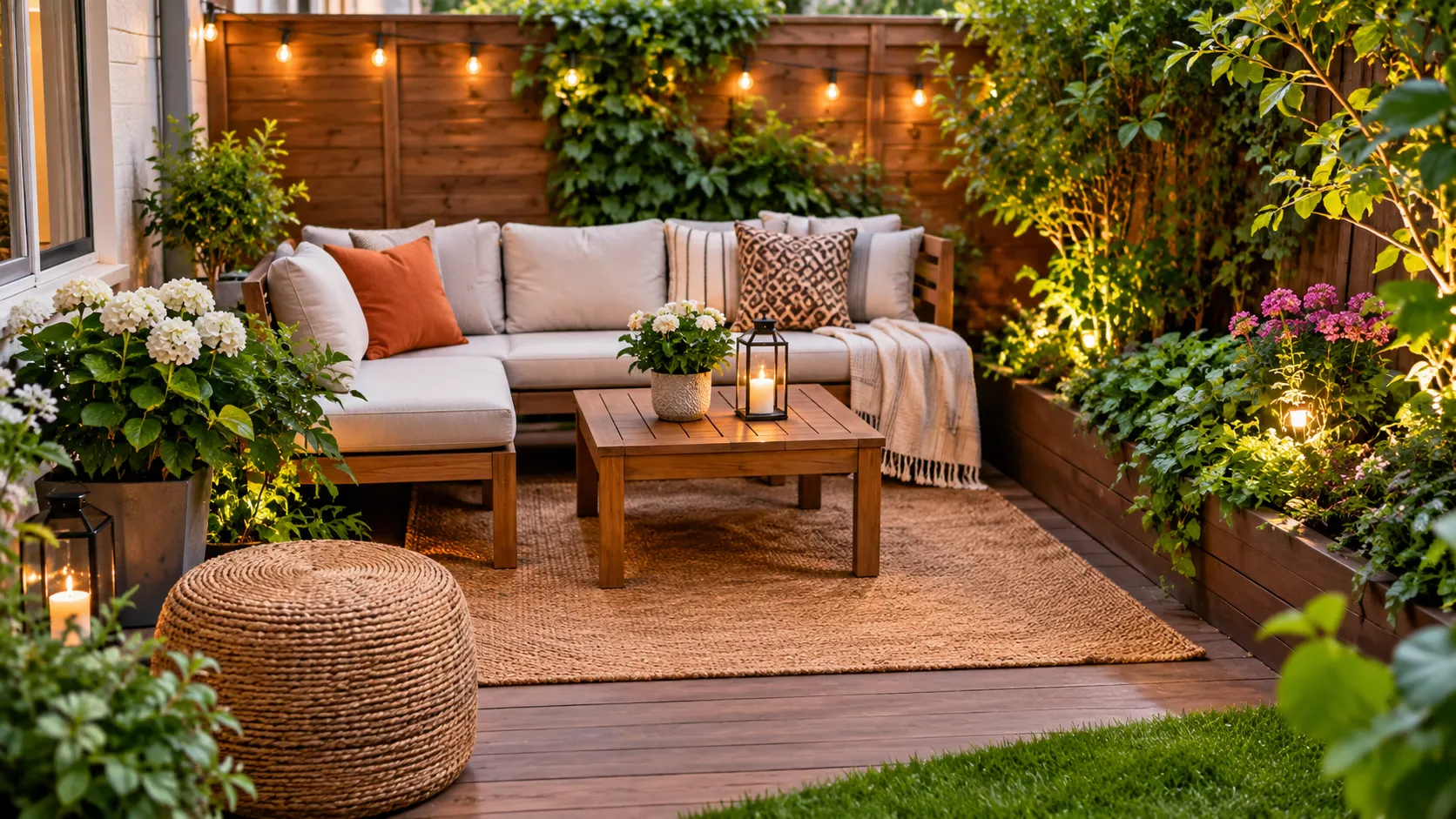
Consider creating seating along one side of a patio or around the edge of a small courtyard. A simple L-shaped bench can provide enough room for several people while leaving the center open for a compact table. Adding cushions can soften the structure and introduce color without requiring additional furniture.
Built-in seating can also incorporate storage underneath, which is particularly useful in compact gardens. Cushions, gardening accessories, and small outdoor items can stay hidden rather than occupying visible space. For more organization inspiration, these small garden storage ideas can help you combine practical storage with an uncluttered outdoor layout.
Add a Small Bistro Set
A compact bistro set is ideal for gardens where you want somewhere to eat, drink coffee, or work outdoors. A small round or square table with two chairs usually requires much less space than a traditional dining set. It can fit naturally on patios, balconies, and narrow paved areas.
Choose lightweight furniture if you regularly need to rearrange the garden. Foldable bistro tables and chairs are particularly useful because they can be stored or moved when you want additional floor space. This flexibility allows one small area to support dining, entertaining, gardening, and other outdoor activities.
Position the table where chairs can be pulled out comfortably without blocking movement. Avoid squeezing the set into a corner where sitting becomes difficult. A few nearby container plants or herbs can soften the furniture and make the area feel connected to the surrounding garden.
Create a Cozy Garden Corner
Unused corners can become some of the most inviting areas in a small garden. A single chair, compact bench, or pair of seats can turn an overlooked section into a peaceful retreat. Corners naturally provide a sense of enclosure, making them ideal for reading, relaxing, or enjoying a quiet drink.
Use plants around the seating to create privacy and softness. Tall containers, ornamental grasses, compact shrubs, or climbing plants can define the corner without completely closing it off. Leave enough space around the furniture so the area still receives airflow and feels comfortable rather than tightly enclosed.
Add a small side table if space allows. It provides somewhere to place a book, cup, or lantern without requiring a full dining table. Keeping the arrangement simple ensures the seating remains the main purpose of the corner instead of becoming surrounded by unnecessary decorative objects.
Try Folding and Stackable Furniture
Folding furniture is useful when your garden needs to perform several different functions. Chairs and tables can be opened when required and stored against a wall or inside a storage area afterward. This makes them particularly suitable for balconies, narrow patios, and compact gardens used for both relaxing and gardening.
Stackable chairs offer similar flexibility when you occasionally need extra seating for visitors. Several chairs can be stored in a relatively small footprint instead of remaining spread across the garden every day. Choose durable outdoor materials that are comfortable enough for regular use while still being easy to move.
Avoid purchasing more chairs than you realistically need. A small garden can quickly feel crowded when extra furniture remains permanently visible. Keeping only everyday seating outside and storing additional pieces until required preserves more space for plants, pathways, and other outdoor activities.
Surround Seating With Greenery
Plants can make an outdoor seating area feel more relaxing and connected to nature. Position containers, flower beds, or small shrubs around the edges rather than placing furniture in an empty paved space. The goal is to soften hard surfaces while keeping enough room for people to sit and move comfortably.
Fragrant herbs and flowers can be especially enjoyable around seating areas. Lavender, rosemary, mint, jasmine, or other suitable plants can introduce scent depending on your climate and growing conditions. Choose plants that will not become overly large, thorny, or difficult to maintain beside frequently used chairs.
Use different plant heights to create a layered background. Taller greenery can provide privacy, medium plants can add fullness, and smaller flowers can soften the base of containers or furniture. Repeating several varieties helps the seating area feel intentionally designed instead of surrounded by a random mixture of plants.
Add Shade for More Comfortable Seating
Shade can make garden seating much more comfortable during warm or sunny weather. Small umbrellas, retractable awnings, pergolas, or shade sails can provide protection without requiring a fully covered outdoor structure. Choose an option that fits the size of the space and does not visually overwhelm nearby planting.
A compact umbrella can work well with a bistro table because it can be folded when not needed. Shade sails may suit modern patios where attaching points are available, while climbing plants can eventually provide more natural coverage over suitable structures. Each option has different installation and maintenance requirements.
Observe the sun before deciding where permanent shade should be added. An area that seems exposed in the morning may naturally become shaded later in the day. Understanding how sunlight moves through the garden helps you avoid adding unnecessary structures that could make a small space feel more enclosed.
Use Cushions and Textiles for a Cozy Feel
Outdoor cushions can make simple garden furniture feel much more comfortable without taking up additional floor space. They also provide an easy way to introduce color, pattern, and texture. Choose a limited palette that complements your flowers, planters, or home exterior so the seating area feels coordinated.
A small outdoor rug can help visually define a seating zone on a patio or covered area. It can make basic furniture feel more intentional while introducing warmth underfoot. Select materials designed for outdoor conditions and choose a size that fits comfortably beneath the furniture without blocking important pathways.
Do not add more textiles than you can realistically maintain. Cushions and rugs exposed to weather may need cleaning, drying, or storage depending on their materials. A few carefully chosen accessories can create a cozy atmosphere without turning the seating area into another complicated maintenance task.
Add Lighting Around the Seating Area
Good lighting allows you to enjoy garden seating after sunset. String lights, wall fixtures, lanterns, or subtle low-level lights can create a warm atmosphere without requiring bright overhead illumination. Position light where it helps people move safely while keeping the seating area comfortable and relaxing.
Use lighting to highlight surrounding plants or architectural details as well. A softly illuminated tree, wall, or group of containers can add depth and make the seating area feel more connected to the garden. Avoid directing intense light toward eye level because glare can quickly make an otherwise comfortable space unpleasant.
Choose fixtures designed for outdoor exposure and install them securely. Solar options can be convenient where sufficient sunlight is available, while wired lighting may provide more consistent performance. A few strategically placed lights are usually more effective than filling a small garden with numerous competing fixtures.
Keep the Seating Area Flexible and Clutter-Free
Small gardens benefit from furniture arrangements that can adapt when your needs change. Keep enough open space to move chairs, access plants, or temporarily rearrange seating when guests visit. Lightweight furniture and multifunctional pieces make these changes easier without requiring a complete garden redesign.
Limit decorative objects around the seating area so the space remains visually calm. One lantern, attractive container, or side table may provide enough personality. Too many plant stands, ornaments, and accessories can reduce usable space and make a cozy corner feel cluttered rather than relaxing.
Review the area occasionally and remove items that are rarely used. Outdoor spaces naturally collect unused pots, cushions, tools, and decorations over time. Regular editing keeps the seating area comfortable and allows plants, furniture, and important design features to remain clearly visible.
Conclusion
Small garden seating can create a comfortable outdoor living area without requiring a large patio or backyard. Compact benches, bistro sets, folding chairs, and built-in seating can all work well when selected according to the scale of the space. Thoughtful placement helps maintain clear pathways while providing somewhere enjoyable to relax.
Surround seating with greenery, soft lighting, and a few carefully chosen accessories to create a welcoming atmosphere. Shade, cushions, and multifunctional furniture can improve comfort without overcrowding the garden. Keeping the design simple also makes the seating area easier to clean, maintain, and adapt over time.
Most importantly, choose seating that fits how you actually use your outdoor space. A single comfortable chair may be enough for quiet mornings, while a bench or compact dining set may better suit entertaining. With smart planning, even the smallest garden can become a cozy extension of your home.
FAQs
What seating is best for a very small garden?
Compact benches, folding chairs, and small bistro sets are practical choices because they provide comfort without using excessive floor space. Multifunctional seating with built-in storage can offer even more value.
How can I make a small garden seating area feel cozy?
Add outdoor cushions, surrounding plants, soft lighting, and one or two warm decorative details. Keep the arrangement uncluttered so the space feels comfortable rather than crowded with accessories.
Where should I place seating in a small garden?
Choose a location with comfortable sunlight, useful shade, privacy, and clear access. Positioning seating against a wall, fence, or corner can preserve more open space in the center.
Can I add seating to a garden without a patio?
Yes. A stable area of gravel, decking, paving stones, or another suitable surface can support garden seating. Make sure the furniture sits securely and does not damage nearby planting areas.
How can I provide extra seating for guests in a tiny garden?
Use folding or stackable chairs that can be stored when not required. A storage bench can also provide permanent everyday seating while reducing the need for additional outdoor furniture.