Metal fence panels are a popular choice for homeowners who want durable, attractive, and practical fencing around their properties. Available in materials such as aluminum, steel, and wrought iron, these panels offer different levels of strength, privacy, and decorative appeal. Whether you need a backyard privacy fence, a decorative garden border, or a modern front yard enclosure, metal fencing provides numerous design possibilities.
Choosing the right metal fence panels involves comparing materials, styles, sizes, installation requirements, and overall project costs. Some products feature simple vertical bars, while others use solid panels, decorative patterns, or contemporary horizontal designs. This guide explains metal fence panel types, estimated prices, benefits, installation considerations, and creative ideas to help homeowners select suitable fencing for their outdoor spaces.
What Are Metal Fence Panels and How Do They Work?
Metal fence panels are prefabricated or custom-made sections used to create boundaries around residential, commercial, and other properties. They generally consist of metal bars, sheets, mesh, or decorative components supported by posts. Individual panels connect to suitable mounting hardware, forming a continuous fence that defines outdoor spaces and provides varying levels of privacy.
Most metal fencing systems use materials such as aluminum, galvanized steel, or wrought iron because of their strength and durability. Protective finishes, including powder coating and galvanization, can improve resistance to corrosion. The appropriate material depends on environmental exposure, design preferences, required fence height, and the level of maintenance homeowners are willing to perform.
Metal fence panels can be installed along property boundaries, around gardens, beside walkways, or near outdoor living areas. Some designs allow open visibility, while solid panels create greater visual separation. Proper installation requires suitable posts, foundations, and connections that support the fence under expected weather conditions and everyday use.
Benefits of Installing Metal Fence Panels
Durability is one of the main advantages of metal fence panels compared with several traditional fencing alternatives. Quality metal systems can withstand ordinary weather exposure and regular outdoor use when appropriately finished and installed. Different metals offer different performance characteristics, allowing homeowners to choose products that match their local climate and property requirements.
Metal fencing also provides considerable design flexibility, with options ranging from ornamental railings to solid privacy panels. Homeowners can coordinate fence colors and patterns with exterior walls, landscaping, and architectural features. Many metal fencing products are available in black, white, bronze, gray, and other finishes that complement modern and traditional residential properties.
Another benefit is the relatively modest maintenance required by certain metal fencing systems, particularly powder-coated aluminum. Unlike untreated wood, metal does not require regular wood staining or sealing. However, protective coatings, connections, and fastening components still need occasional inspection to maintain their appearance and reduce long-term deterioration.
Different Types of Metal Fence Panels Explained
Metal fence panels are available in several categories based on their construction, material, and intended use. Common options include aluminum panels, steel fencing, wrought iron designs, corrugated metal sheets, and welded wire mesh. Each type provides a different combination of appearance, strength, cost, privacy, and maintenance requirements.
Open-style metal fencing typically features vertical pickets or decorative bars that allow visibility through the boundary. Solid panels offer greater privacy by limiting direct views into outdoor spaces. Mesh designs provide an alternative for gardens and other areas where airflow and visibility are desirable without requiring large decorative components.
Choosing the appropriate type begins with identifying the main purpose of the fence. A front yard may benefit from ornamental aluminum panels, while a backyard might require taller privacy fencing. Homeowners should also consider local regulations, soil conditions, and the surrounding environment before selecting a particular metal fencing system.
Aluminum Fence Panels for Low-Maintenance Homes
Aluminum fence panels are widely used in residential settings because they combine corrosion resistance with relatively lightweight construction. Unlike ordinary unprotected steel, aluminum does not develop traditional red rust. This makes it particularly appealing in humid environments and locations where homeowners prefer fencing that requires relatively little maintenance.
Aluminum fencing is available in ornamental, picket, horizontal, and privacy-oriented designs. Powder-coated finishes provide different color options and help protect the surface from everyday weather exposure. Homeowners often choose aluminum for front yards, landscaped areas, and certain pool enclosures where an attractive appearance and suitable code compliance are important.
Professionally installed aluminum fencing commonly costs approximately $25 to $75 per linear foot in the United States. Prices depend on panel height, design complexity, finish, and installation conditions. Although aluminum is durable, it may dent or deform under strong impacts, so buyers should evaluate panel construction and intended use.
Steel Fence Panels for Strength and Durability
Steel fence panels are popular when homeowners need fencing with substantial strength and a solid structural appearance. The material is commonly used for vertical picket fences, privacy panels, and decorative systems. Properly designed steel fencing can provide durable boundaries when the selected posts, foundations, and connectors match the system’s requirements.
Galvanized steel products feature a protective zinc coating that helps reduce corrosion. Powder-coated finishes may provide additional protection and decorative color options. However, scratches, damaged coatings, and certain environmental conditions can still create rust-related problems, making regular inspection important for maintaining steel fence panels.
Steel fencing generally costs approximately $20 to $80 per linear foot installed, depending on the design and material specifications. Premium finishes, taller panels, and complicated installations may increase the price. Homeowners should compare coating quality, panel thickness, and manufacturer warranties before choosing steel fencing for long-term outdoor use.
Wrought Iron Fence Panels for Traditional Designs
Wrought iron fence panels are associated with classic architectural styles and distinctive decorative details. Traditional designs often feature vertical bars, ornamental curves, and carefully crafted patterns. These characteristics make iron fencing particularly attractive around historic homes, landscaped front yards, and properties featuring traditional exterior architecture.
Many products marketed as wrought iron fencing are actually manufactured using ornamental steel rather than traditional wrought iron. Buyers should confirm the material before purchasing because construction methods, protective finishes, and maintenance requirements differ. Both traditional iron and ornamental steel can provide attractive results when appropriately selected and maintained.
Wrought iron fencing commonly costs approximately $50 to $85 per linear foot professionally installed for standard residential heights. Custom decorative work can increase expenses considerably. Regular maintenance may involve inspecting protective finishes and addressing corrosion before it spreads, particularly in locations exposed to frequent moisture.
Corrugated Metal Fence Panels for Backyard Privacy
Corrugated metal fence panels use sheets with raised ridges or grooves that create a distinctive industrial appearance. These panels are often selected for backyard privacy fencing because solid metal surfaces block direct views. The ribbed construction can also provide stiffness, although overall performance depends on sheet thickness and supporting frame design.
Corrugated steel fencing works well with several contemporary and rustic exterior styles. Homeowners sometimes combine metal sheets with compatible wooden or metal frames to create visual contrast. Available finishes range from galvanized metallic surfaces to painted panels in black, charcoal, brown, and other decorative colors.
Corrugated metal fencing may cost approximately $20 to $55 per linear foot installed, depending on height and construction. Additional expenses can arise from framing, protective coatings, and challenging site conditions. Solid panels also experience wind pressure, making appropriately engineered posts and foundations especially important for reliable installation.
Metal Privacy Fence Panels for Outdoor Spaces
Metal privacy fence panels are designed to reduce visibility into yards, patios, and other outdoor areas. Unlike open picket fencing, these products use solid or closely spaced components to create greater visual separation. They are especially useful near outdoor seating areas, property boundaries, and locations where neighboring buildings overlook private spaces.
Privacy panels are available in aluminum, steel, and decorative composite-metal combinations. Horizontal slats create a modern appearance, while vertical arrangements offer a more traditional style. Some designs include small gaps for airflow, allowing homeowners to balance visual privacy with ventilation and outdoor comfort.
When selecting privacy fencing, homeowners should consider panel height, wind exposure, and applicable local restrictions. Taller solid fences may require stronger foundations because they resist more wind than open designs. Professional evaluation can help ensure that the finished fence provides suitable privacy without compromising stability or violating local building requirements.
Modern Metal Fence Panel Design Ideas
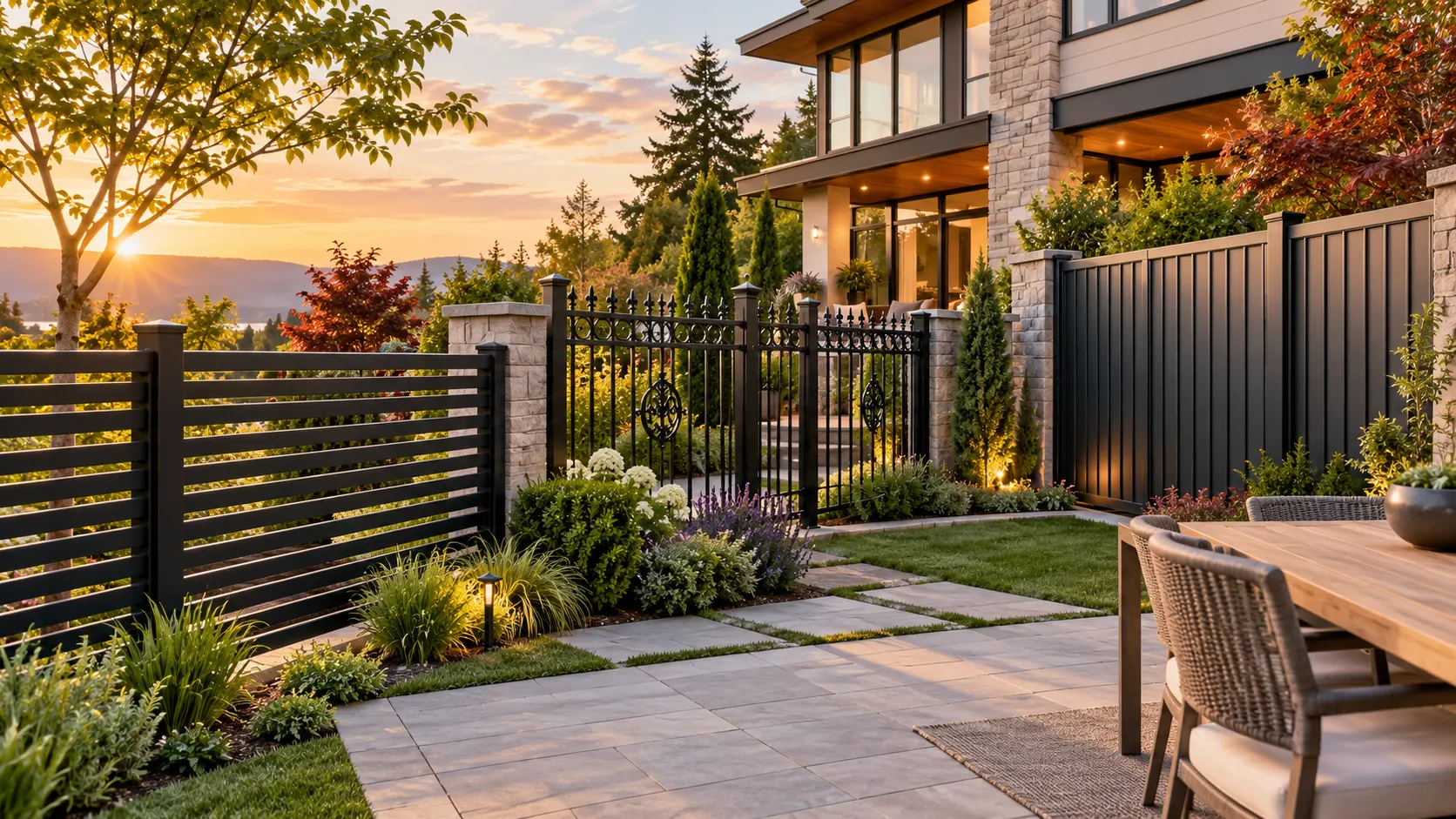
Modern metal fencing often emphasizes clean lines, simple geometric patterns, and understated colors. Horizontal aluminum slats are particularly popular for contemporary homes because they create an organized appearance that complements minimalist architecture. Black or charcoal finishes can provide contrast against light exterior walls, natural stone, and landscaped gardens.
Vertical metal panels offer another modern option, especially when homeowners prefer a balanced appearance with consistent spacing. Narrow pickets can create a sleek design while maintaining visibility across the property. Decorative screens with geometric cutouts may also serve as attractive features in selected outdoor areas.
Combining different materials can help create a more personalized fence design without relying on complicated ornamentation. Metal panels framed by compatible masonry posts provide a substantial architectural appearance. Homeowners should coordinate panel proportions, gate designs, and surrounding landscaping to create a finished fence that feels consistent with the property’s exterior style.
Metal Fence Panels for Gardens and Front Yards
Metal fence panels are suitable for gardens because they help define planting areas, walkways, and landscaped boundaries. Open designs allow sunlight and airflow to reach surrounding vegetation while maintaining an organized appearance. Decorative metal edging and low fence panels can also complement flower beds, shrubs, and other garden features.
Front yard fencing often prioritizes appearance and clear property boundaries rather than complete privacy. Ornamental aluminum or steel panels can provide attractive separation without blocking views of the house. Choosing a suitable height and finish helps maintain visual balance between the fencing, entryway, and nearby landscaping.
Garden and front yard projects should account for soil conditions, irrigation systems, and plant growth. Fence posts must be positioned carefully to avoid unnecessary damage to underground utilities and established landscaping. Selecting corrosion-resistant materials and allowing enough space for maintenance helps ensure that the fence remains practical as the garden develops.
Standard Metal Fence Panel Sizes and Heights
Metal fence panels are manufactured in different dimensions to suit residential and commercial applications. Common residential panel widths include approximately six and eight feet, although manufacturers offer other measurements. Standard heights frequently include three, four, five, and six feet, with taller options available for specialized projects.
Shorter metal panels are commonly used around decorative gardens and front yards where visibility is important. Taller panels are often selected for backyard privacy or property boundaries. However, local zoning regulations, neighborhood rules, and specific safety requirements may limit acceptable fence heights in certain locations.
Accurate measurements are important because the spacing between posts must match the selected panels and installation system. Sloping terrain may require stepped sections, adjustable connections, or custom panel arrangements. Homeowners should compare actual manufacturer dimensions rather than assuming all products with similar advertised sizes will fit existing posts.
How Much Do Metal Fence Panels Cost in 2026?
Metal fence prices depend on material, panel design, fence height, and installation complexity. In the United States, many professionally installed metal fences cost approximately $20 to $85 per linear foot in 2026. This broad range includes common steel, aluminum, and ornamental iron options, although specialized systems may exceed these estimates.
For a property requiring 100 linear feet of metal fencing, a typical installed budget may range from approximately $2,000 to $8,500. A 200-linear-foot project could cost roughly $4,000 to $17,000. These figures are planning estimates and do not guarantee that every project will fall within the same range.
Material-only prices may be considerably lower than the complete installation cost. Posts, gates, mounting brackets, concrete foundations, permits, and labor can increase total expenses. Homeowners should obtain detailed local estimates and confirm whether each quotation includes the complete fence system rather than only the decorative panels.
Factors That Affect Metal Fence Installation Costs
Fence length is one of the main factors influencing project expenses because longer boundaries require additional materials and labor. Fence height also affects pricing, particularly when taller panels need stronger supporting components. Decorative patterns, custom colors, and specialized finishes can further increase costs compared with standard fencing products.
Installation conditions play an equally important role in determining the final price. Uneven ground, rocky soil, existing concrete, and limited equipment access may increase labor requirements. Properties requiring removal of old fencing or adjustments around landscaping and underground utilities may involve additional preparation expenses.
Gates can also influence the project budget because they require compatible frames, hinges, latches, and supporting posts. Wide or custom-designed gates are often more expensive than standard pedestrian entrances. Reviewing these details before installation helps homeowners understand the complete project scope and avoid unexpected charges.
Metal Fence Panels vs. Wood and Vinyl Fencing
Metal fencing differs from wood and vinyl in appearance, maintenance requirements, and environmental performance. Aluminum and properly protected steel can provide durable outdoor boundaries with relatively modest maintenance. Wood offers a natural appearance but may require regular finishing, while vinyl resists many moisture-related problems without needing traditional wood treatments.
Wooden fences often provide flexible design options and can be relatively affordable depending on the selected timber. Vinyl fencing is available in privacy and decorative styles but may respond differently to impacts and temperature changes. Metal systems offer distinct aesthetic options, particularly when homeowners prefer narrow pickets or contemporary architectural designs.
The most suitable material depends on budget, privacy needs, local climate, and maintenance expectations. Metal is not automatically superior in every application, especially where specialized installation increases costs. Comparing the complete lifespan, appearance, and upkeep of each fencing option helps homeowners make a balanced purchasing decision.
Metal Fence Panel Installation: What to Expect
Professional metal fence installation usually begins with measuring the property boundary and evaluating site conditions. The contractor identifies suitable post locations, confirms the planned fence layout, and reviews relevant permit requirements. Property boundaries should be verified before work begins to reduce the likelihood of disputes or installation on neighboring land.
Installation generally involves preparing post foundations, positioning support posts, and attaching the selected metal panels using compatible hardware. The exact construction method depends on soil conditions, fence height, material, and manufacturer requirements. Gates and specialized sections may require additional adjustments to ensure reliable operation and suitable clearance.
After installation, the contractor should inspect panel alignment, connections, gate operation, and visible protective finishes. Homeowners should also receive information about maintenance and warranty coverage. Because post stability is critical for long-term performance, installation should follow applicable structural requirements rather than relying solely on the appearance of the finished fence.
How to Maintain Metal Fence Panels
Regular maintenance helps metal fence panels retain their appearance and structural performance over time. Homeowners should inspect visible surfaces for damaged coatings, loose connections, and signs of corrosion. Removing accumulated dirt and organic debris can also help prevent moisture from remaining against vulnerable components for extended periods.
Cleaning methods depend on the metal type and protective finish. Powder-coated aluminum panels may require only gentle washing with suitable products, while steel fencing needs attention when scratches expose unprotected metal. Harsh chemicals or abrasive cleaning tools can damage certain finishes, so manufacturer recommendations should guide routine maintenance.
Fence posts, gates, hinges, and mounting hardware should also be checked periodically. Movement caused by soil conditions or loose fittings may affect alignment and operation. Addressing minor problems early can reduce the likelihood of expensive repairs and help maintain a reliable fence around the property.
Common Mistakes to Avoid When Buying Metal Fence Panels
One common mistake is selecting fence panels without considering local weather conditions and material compatibility. Basic unprotected steel may deteriorate quickly in demanding environments, while some lightweight panels may not suit exposed locations. Comparing material specifications and protective finishes helps homeowners select fencing appropriate for their property.
Another mistake is purchasing panels based only on advertised dimensions without checking post spacing and mounting requirements. Differences between manufacturers can create installation problems even when panels appear similar. Accurate measurements and compatibility checks are particularly important when replacing sections of an existing metal fence.
Homeowners should also avoid focusing exclusively on the lowest initial price without considering durability, maintenance, and installation quality. Inadequate foundations or poorly secured panels can create problems regardless of material quality. Evaluating written estimates, contractor experience, and warranty conditions helps reduce the risk of costly repairs.
Conclusion
Metal fence panels provide homeowners with durable and attractive options for defining property boundaries, improving outdoor privacy, and complementing landscaping. Aluminum, steel, wrought iron, and corrugated metal offer different characteristics suited to various design preferences and practical needs. Understanding these materials helps homeowners select fencing that matches their property and environmental conditions.
Installation costs vary according to material quality, fence dimensions, labor requirements, and site preparation. Standard metal fencing can be relatively affordable, while premium ornamental designs and customized privacy panels require larger budgets. Accurate measurements, suitable hardware, and properly installed posts are essential for maintaining stability and long-term performance.
The best metal fence panels combine attractive design with suitable construction, realistic maintenance requirements, and a manageable project budget. Whether upgrading a front yard, enclosing a garden, or creating backyard privacy, thoughtful planning can make a significant difference. With appropriate materials and regular care, metal fencing can remain a practical and appealing feature for many years.
Frequently Asked Questions (FAQs)
1. What Are the Best Metal Fence Panels for Residential Properties?
Aluminum panels are popular for low-maintenance residential fencing, while galvanized steel offers strength and durability. The best choice depends on privacy requirements, weather conditions, budget, and preferred design.
2. How Much Do Metal Fence Panels Cost per Foot?
Professionally installed metal fencing commonly costs $20 to $85 per linear foot in the United States. Material, height, decorative features, and installation conditions can significantly influence the final project price.
3. Are Metal Fence Panels Better Than Wooden Fences?
Metal fences often require less routine finishing than wood and can provide excellent durability. However, wooden fencing may offer different privacy, design, and cost advantages depending on the project.
4. How Long Do Metal Fence Panels Last?
Quality metal fencing can last several decades when appropriately installed and maintained. Actual lifespan depends on the metal, protective coatings, local environment, and exposure to physical damage or corrosion.
5. Can Metal Fence Panels Be Used for Privacy?
Yes, solid corrugated steel panels and closely spaced aluminum designs can provide substantial visual privacy. Open picket and ornamental metal fencing generally allow greater visibility through the fence.