

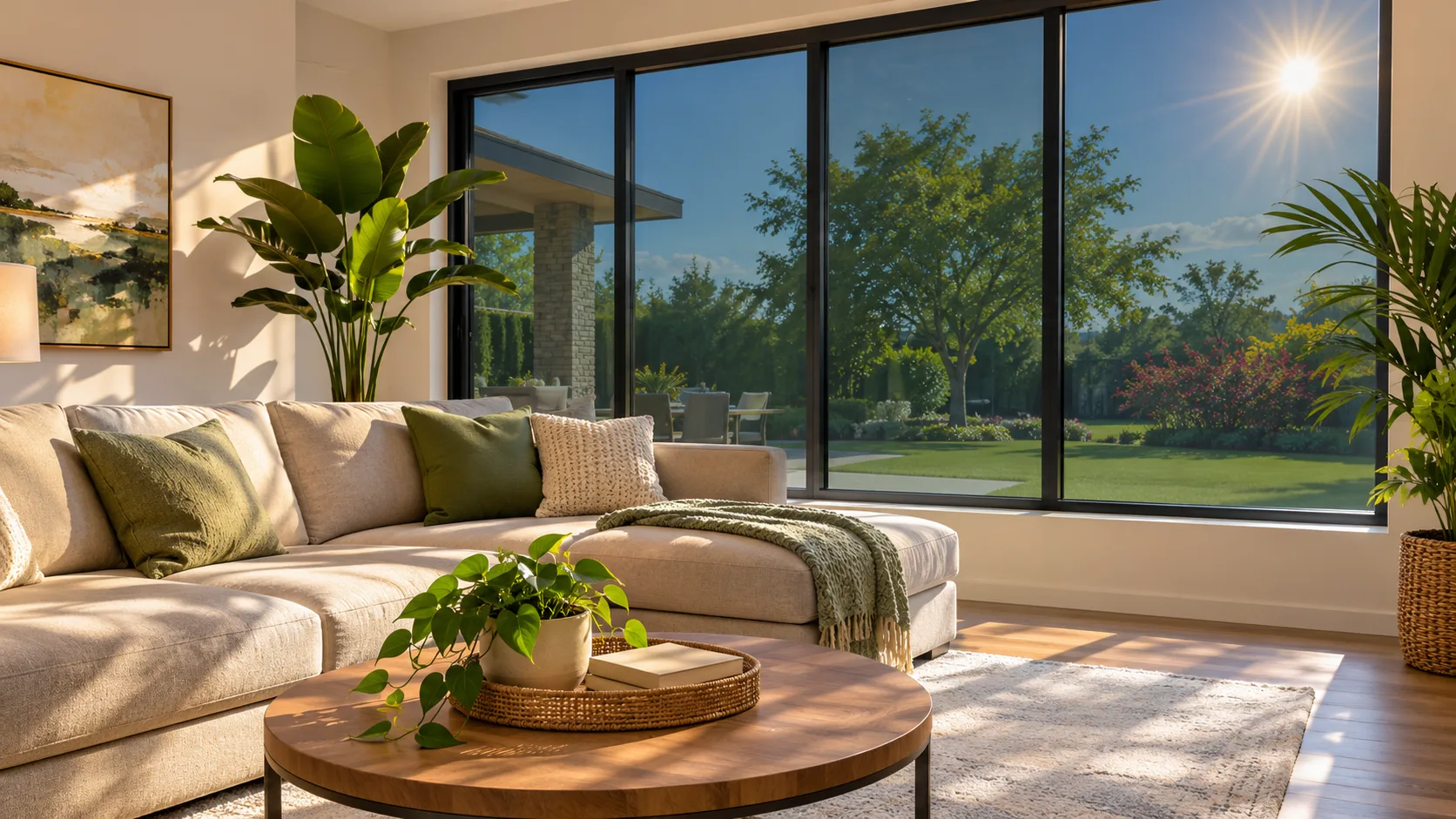
Home window tint offers a practical way to reduce unwanted solar heat, control glare, and improve privacy without replacing your existing windows. The right window film can make your living space more comfortable while allowing natural light to enter.
However, not every window film provides the same benefits. Choosing the wrong product could waste money and create additional problems. This guide explains how residential window tinting works, which options are available, and how to achieve better indoor comfort within your budget.
What Is Home Window Tint?
Home window tint is a thin film designed to improve the performance or appearance of residential glass windows. Depending on its construction, it can reduce solar heat, control visible light, or provide additional privacy. Most residential films are applied directly to existing glass surfaces.
Think of window tint as sunglasses for your home. Just as sunglasses help reduce bright light, certain window films control the amount of sunlight entering your rooms. However, specialized solar films can also reduce unwanted heat.
Homeowners often choose window tinting because it provides an alternative to replacing otherwise functional windows. Different films address different concerns, including heat, glare, fading, and privacy. Understanding your primary problem helps you select a suitable product.
How Does Home Window Tinting Work?
Sunlight entering through windows can increase indoor temperatures and make certain rooms uncomfortable. Large glass surfaces may expose furniture and flooring to prolonged sunlight. Ordinary glass alone may not provide enough solar control for your needs.
Residential window films work by reflecting, absorbing, and transmitting different portions of incoming solar energy. Specialized films can reduce the amount of solar heat entering your living space. Their performance depends on their materials, construction, and compatibility with the existing glass.
For example, a living room receiving strong afternoon sunlight may benefit from a suitable solar control film. The film can reduce unwanted solar heat while maintaining some natural daylight. This can improve comfort without requiring major changes to your home.
What Are the Different Types of Home Window Tint?
Choosing window film becomes confusing when every product promises better comfort and privacy. Some films focus on appearance, while others are designed for heat reduction. Understanding their differences helps prevent unnecessary spending.
Solar Control Window Film
Solar control film is designed to reduce unwanted heat from sunlight entering your home. It can also help control glare and ultraviolet exposure, depending on the product. This makes it useful for rooms that receive considerable direct sunlight.
Ceramic Window Film
Ceramic window films use specialized materials to manage solar energy while offering different levels of visible light transmission. Some products provide effective heat reduction without creating a heavily tinted appearance. However, they may cost more than basic alternatives.
Reflective Window Film
Reflective window film creates a mirror-like appearance under suitable lighting conditions. It can help reduce solar heat and improve daytime privacy. However, its privacy effect generally decreases when indoor lighting becomes brighter than outdoor lighting.
Frosted Window Film
Frosted film creates a translucent appearance that makes it difficult to see clearly through the glass. It allows diffused natural light to enter while providing visual privacy. This makes it particularly useful for bathrooms and windows facing nearby properties.
Decorative Window Film
Decorative window films are available in different patterns, textures, and finishes. They help change the appearance of existing glass without requiring replacement. Their heat reduction and privacy capabilities vary according to the particular design.
Low-E Window Film
Low-emissivity window film is designed to reduce certain types of heat transfer through glass. Depending on its construction, it may help improve insulation as well as solar control. Homeowners should evaluate its performance according to their local climate.
Which Window Tint Is Best for Your Home?
Purchasing the most expensive window film does not guarantee the best results. A product designed for maximum privacy may not provide the heat reduction you need. Matching the film to your specific problem is a smarter approach.
| Window Film Type | Best For | Relative Cost |
|---|---|---|
| Solar control film | Reducing solar heat and glare | Moderate |
| Ceramic film | Heat control with natural daylight | Higher |
| Reflective film | Daytime privacy and solar control | Low to moderate |
| Frosted film | Bathroom and bedroom privacy | Low to moderate |
| Decorative film | Improving window appearance | Varies |
| Low-E film | Managing heat transfer | Moderate to higher |
Consider how each room is used before choosing a particular film. A home office may need glare reduction, while a bathroom requires dependable privacy. Different rooms can benefit from different window treatments rather than one uniform solution.
Benefits of Home Window Tinting
Uncomfortable indoor temperatures can affect how much you enjoy spending time at home. Constantly adjusting curtains and air conditioning can also become inconvenient. Suitable residential window tinting offers several potential benefits.
Reduces Indoor Heat
Rooms receiving direct sunlight can become noticeably warmer during certain parts of the day. Solar control window films help reduce unwanted heat entering through the glass. This can make sunny rooms more comfortable during warmer weather.
Helps Manage Energy Expenses
Air conditioning systems may need to work harder when sunlight increases indoor temperatures. Reducing unwanted solar heat can help lower cooling requirements. Actual energy savings depend on your climate, insulation, windows, and household energy habits.
Improves Privacy
Windows facing busy streets or neighboring properties can make homeowners feel uncomfortable. Suitable privacy films can reduce visibility into selected rooms. Choose a product based on whether you need daytime privacy or protection throughout the day and night.
Reduces Screen Glare
Strong sunlight can make televisions, computer monitors, and other screens difficult to see. Glare-reducing window films control excessive brightness without necessarily blocking all daylight. This can improve comfort in living rooms and home offices.
Helps Protect Interior Furnishings
Prolonged sunlight exposure can contribute to fading in furniture, carpets, curtains, and flooring. Many residential films reduce ultraviolet exposure and other contributing factors. However, no window film completely prevents all fading.
Maintains Natural Daylight
Some traditional window coverings reduce heat and glare by blocking sunlight entirely. Certain window films allow considerable visible light to enter while controlling unwanted solar heat. This helps preserve a bright and welcoming indoor environment.
How Much Does Home Window Tinting Cost?
Budget concerns often prevent homeowners from exploring residential window improvements. However, window tinting costs vary considerably depending on the product and installation requirements. Understanding these expenses can help you plan a realistic budget.
In the United States, professional residential window tinting typically costs around $7 to $15 per square foot, based on 2026 industry estimates. Specialized films, complicated window designs, and local labor rates may increase the total expense.
Several factors influence home window tinting costs:
- Size and number of windows.
- Type and quality of window film.
- Professional installation charges.
- Window accessibility and design.
- Removal of previously installed film.
- Manufacturer and installation warranties.
Instead of tinting every window immediately, consider treating the rooms where sunlight causes the most discomfort. This allows you to address your main problem without committing to an expensive whole-house project.
How to Save Money on Home Window Tint
Home improvement expenses can quickly exceed expectations when homeowners purchase unnecessary materials or premium features. Window tinting does not need to become an expensive renovation project. A targeted approach can provide better value.
Consider these practical money-saving tips:
- Prioritize sunny windows: Focus on areas experiencing the greatest unwanted heat.
- Compare installation quotes: Request detailed estimates from several qualified installers.
- Avoid unnecessary upgrades: Pay for performance features that solve your actual problems.
- Request film samples: Evaluate appearance and daylight transmission before purchasing.
- Check existing warranties: Avoid products that could invalidate your window warranty.
- Complete projects gradually: Start with one room before expanding throughout your home.
For example, tinting the windows in an uncomfortable living room may be more beneficial than treating every bedroom. Targeted improvements can provide immediate comfort while keeping expenses manageable. You can expand the project later if the results meet your expectations.
Understanding Window Tint Percentages
Window film specifications can feel confusing when you encounter percentages and unfamiliar abbreviations. Choosing a film based entirely on its darkness may produce disappointing results. Understanding basic performance ratings makes comparison easier.
Visible light transmittance, commonly called VLT, describes how much visible light passes through the film or glazing system. A higher percentage generally indicates greater light transmission. Lower percentages usually produce a darker appearance.
| VLT Percentage | General Appearance |
|---|---|
| 70%–90% | Nearly clear or very light |
| 50%–69% | Light tint |
| 30%–49% | Moderate tint |
| 15%–29% | Dark tint |
| Below 15% | Very dark tint |
Remember that visible light transmission does not directly measure heat reduction. Review the solar heat gain coefficient, or SHGC, when comparing thermal performance. A lower SHGC indicates that less solar heat passes through the rated glazing system.
Home Window Tint vs. Curtains and Blinds
Many homeowners wonder whether window film is worth purchasing when curtains and blinds already provide shade. Each treatment offers different advantages and limitations. The best solution depends on your comfort, privacy, and daylight requirements.
| Feature | Window Tint | Curtains and Blinds |
|---|---|---|
| Solar heat control | Depends on film performance | Depends on material and design |
| Natural daylight | Can remain available | Often reduced when closed |
| Outdoor visibility | Maintained with suitable films | Usually restricted when closed |
| Nighttime privacy | Depends on film type | Available when closed |
| Adjustability | Generally fixed | Easily adjustable |
| Maintenance | Occasional suitable cleaning | Depends on material |
Window film is useful when homeowners want continuous solar control without constantly adjusting coverings. Curtains and blinds provide greater flexibility throughout the day. Combining both treatments can offer better control over indoor comfort and privacy.
Does Home Window Tint Work at Night?
One of the biggest misconceptions about residential window tinting is that reflective films provide complete privacy at all times. Homeowners may install a mirror film expecting the same results during the day and night. Unfortunately, lighting conditions affect its performance.
Reflective privacy film generally works best when the outdoor environment is brighter than the interior. At night, illuminated rooms may become visible from outside. The film cannot reliably maintain its daytime privacy effect under these conditions.
If nighttime privacy is important, consider suitable frosted or opaque window films, curtains, or blinds. Frosted films can obscure direct views but may still reveal silhouettes under certain lighting conditions. Choose a treatment that matches your actual privacy requirements.
DIY vs. Professional Home Window Tinting
Installing window film yourself may seem like an easy way to reduce expenses. However, incorrect product selection and poor application can result in disappointing finishes or window damage. Comparing installation options helps you decide which approach makes sense.
| Feature | DIY Tinting | Professional Tinting |
|---|---|---|
| Initial expense | Generally lower | Generally higher |
| Product selection | Homeowner responsibility | Professional guidance available |
| Installation quality | Depends on experience | Depends on installer expertise |
| Warranty coverage | May be limited | May include installation coverage |
| Complex windows | More challenging | Better suited to experienced installers |
Removable decorative films may be suitable for straightforward home improvement projects when used according to manufacturer instructions. Larger windows, difficult-to-reach glass, and specialized solar films generally benefit from professional assessment.
Always check whether the film is suitable for your particular window construction. Saving money on installation is not worthwhile if an unsuitable product damages expensive glass or invalidates an existing warranty.
Can Window Tint Damage Your Home Windows?
Many homeowners worry that applying film could damage their existing windows. Although suitable residential films can be used successfully on many glass types, compatibility remains important. Certain combinations of glass and film may increase thermal stress.
Different windows have different characteristics, including glass thickness, coatings, insulation, and heat absorption. Applying an unsuitable film can increase glass temperatures and potentially contribute to cracking or problems with insulated window units.
Before purchasing window film, identify whether your windows contain single-pane, double-pane, tempered, or low-E glass. Review the film manufacturer’s compatibility recommendations and your existing window warranty. Consult a qualified installer when you are uncertain about the glass type.
Best Rooms for Residential Window Tinting
Tinting every room in your home may not be necessary. Some spaces receive considerably more sunlight than others, while certain windows create privacy concerns. Identifying these areas helps you spend your budget more effectively.
Living Room
Living rooms with large windows often receive considerable sunlight throughout the day. Solar control film can help reduce unwanted heat and television glare. Choose a suitable film that preserves the natural brightness you enjoy.
Bedroom
Bedroom windows may require a combination of privacy and temperature management. Suitable frosted films, curtains, or blinds can help address different privacy needs. Consider how much daylight you want during the morning.
Home Office
Sunlight reflecting from computer screens can make working from home uncomfortable. Glare-reducing window film may help create a more convenient working environment. Avoid unnecessarily dark films that increase dependence on artificial lighting.
Bathroom
Bathroom windows often require privacy without completely eliminating daylight. Frosted or opaque films provide alternatives to clear glass. Select products designed for the particular window and environmental conditions.
Kitchen
Kitchens receiving direct sunlight can become uncomfortable, particularly during cooking. Suitable solar films can reduce additional heat entering through windows. Maintaining enough natural light also supports a pleasant and functional kitchen environment.
Common Home Window Tinting Mistakes to Avoid
Homeowners sometimes rush into purchasing window film without researching its performance or installation requirements. This can lead to poor results and unnecessary replacement expenses. Avoiding common mistakes helps protect your investment.
Watch out for these problems:
- Choosing film based only on its appearance.
- Assuming darker films always provide better heat reduction.
- Ignoring glass compatibility and manufacturer recommendations.
- Expecting reflective films to provide nighttime privacy.
- Purchasing products without checking warranty coverage.
- Tinting windows that do not require solar control.
- Using unsuitable cleaning products on installed film.
Take time to evaluate your home’s actual requirements before making a purchase. Request product specifications and compare suitable options rather than relying entirely on marketing claims. Informed decisions can help you achieve better long-term value.
How to Maintain Tinted Home Windows
After investing in window tinting, you naturally want the film to remain attractive and functional. Incorrect cleaning products and rough treatment can damage certain film surfaces. Appropriate maintenance helps preserve their appearance.
Follow these general maintenance tips:
- Allow newly installed film to cure according to manufacturer guidance.
- Use soft, nonabrasive cleaning materials.
- Select cleaning solutions approved for the film.
- Avoid scratching or rubbing the surface aggressively.
- Check occasionally for peeling or other signs of deterioration.
Different window films have different cleaning and maintenance requirements. Always follow the instructions provided by the manufacturer or installer. Proper care can help prevent avoidable damage and premature replacement.
Is Home Window Tinting Worth the Investment?
Spending money on window improvements can feel risky when you are uncertain about the results. Window tinting can offer good value when it addresses a genuine comfort or privacy problem. However, its benefits vary between homes.
Properties receiving strong sunlight may benefit from appropriate solar control films. Homes in colder climates should consider whether reducing solar heat could increase winter heating requirements. Existing insulation, window condition, and seasonal temperatures also influence the results.
Before making a decision, compare window film with alternatives such as exterior shading, cellular blinds, and curtains. If your windows are structurally damaged or poorly sealed, repairs may deserve priority. Choose the solution that addresses your biggest concern at a reasonable cost.
Frequently Asked Questions
1. Does home window tint really reduce heat?
Yes, suitable solar control window films can reduce unwanted heat entering through glass. The amount of heat reduction depends on the film’s performance, window construction, sunlight exposure, and local climate.
2. How much does it cost to tint house windows?
Professional home window tinting typically costs around $7 to $15 per square foot in the United States. Actual prices depend on window dimensions, film quality, installation complexity, and local labor rates.
3. Can you see through tinted house windows at night?
Many reflective window films lose their privacy effect at night when indoor lights are on. Suitable frosted films, opaque treatments, curtains, or blinds can provide more dependable nighttime privacy.
4. How long does home window tint last?
Quality residential window films can last many years when correctly installed and maintained. Their lifespan depends on product construction, sunlight exposure, installation quality, environmental conditions, and manufacturer specifications.
5. Is home window tint safe for double-pane windows?
Some residential window films are compatible with double-pane windows, but not every product is suitable. Always check manufacturer recommendations and existing glass warranties before installing any window film.
Conclusion
Home window tint provides a practical way to improve indoor comfort, manage excessive sunlight, and enhance privacy without undertaking an expensive window replacement project. Choosing the right film can help create a more enjoyable living environment.
The most important step is understanding your home’s specific needs. Rather than purchasing the darkest or most expensive film, compare solar performance, daylight transmission, privacy features, glass compatibility, and installation costs. Focus on improvements that provide meaningful everyday benefits.
Start by identifying the two or three windows that cause the greatest discomfort in your home. Compare suitable window films, request professional estimates, and establish a realistic budget. With thoughtful planning, you can enjoy a more comfortable home without overspending.