
What Is a Macrame Plant Hanger?
A macrame plant hanger is a decorative holder made from knotted cords that supports a plant pot while hanging from a hook or other secure fixture. It combines practical plant storage with handmade-inspired decoration. These hangers are popular in homes, balconies, and covered outdoor spaces. Their woven patterns add texture and character without requiring additional shelves or floor space.
Macrame is a traditional textile technique that uses knots to create decorative patterns without knitting or weaving equipment. Plant hangers made with this method often feature braided cords, loops, and decorative tassels. Different knot patterns create designs ranging from simple to detailed. The finished hanger forms a supportive cradle that holds a suitable plant pot in place.
Macrame plant hangers are available in many lengths, materials, colors, and styles to suit different decorating preferences. Some are designed for small pots, while others support larger containers when properly rated. Choosing the right hanger involves more than selecting an attractive design. Pot dimensions, overall weight, hanging height, and material durability all affect how well it works.
Why Choose Macrame Plant Hangers for Your Home?
One of the biggest advantages of macrame plant hangers is their ability to save valuable floor and shelf space. Instead of placing every plant on furniture, you can display selected pots vertically. This makes hanging planters especially useful in apartments and smaller rooms. They allow homeowners to enjoy greenery without overcrowding tables, countertops, or other frequently used surfaces.
Macrame hangers also add a soft, natural appearance to different interior design styles. Their textured cords complement wooden furniture, neutral walls, and decorative indoor plants. They work particularly well in bohemian, farmhouse, Scandinavian, and relaxed modern spaces. However, simple macrame designs can also blend with more traditional interiors when their colors and proportions match the room.
Another benefit is the flexibility to change your plant display without replacing major furniture pieces. A suitable hanger can create an attractive feature near a window or in a quiet corner. Different lengths allow plants to appear at varying heights. This makes it easier to create a layered arrangement that feels organized rather than cluttered.
Popular Macrame Plant Hanger Styles and Designs
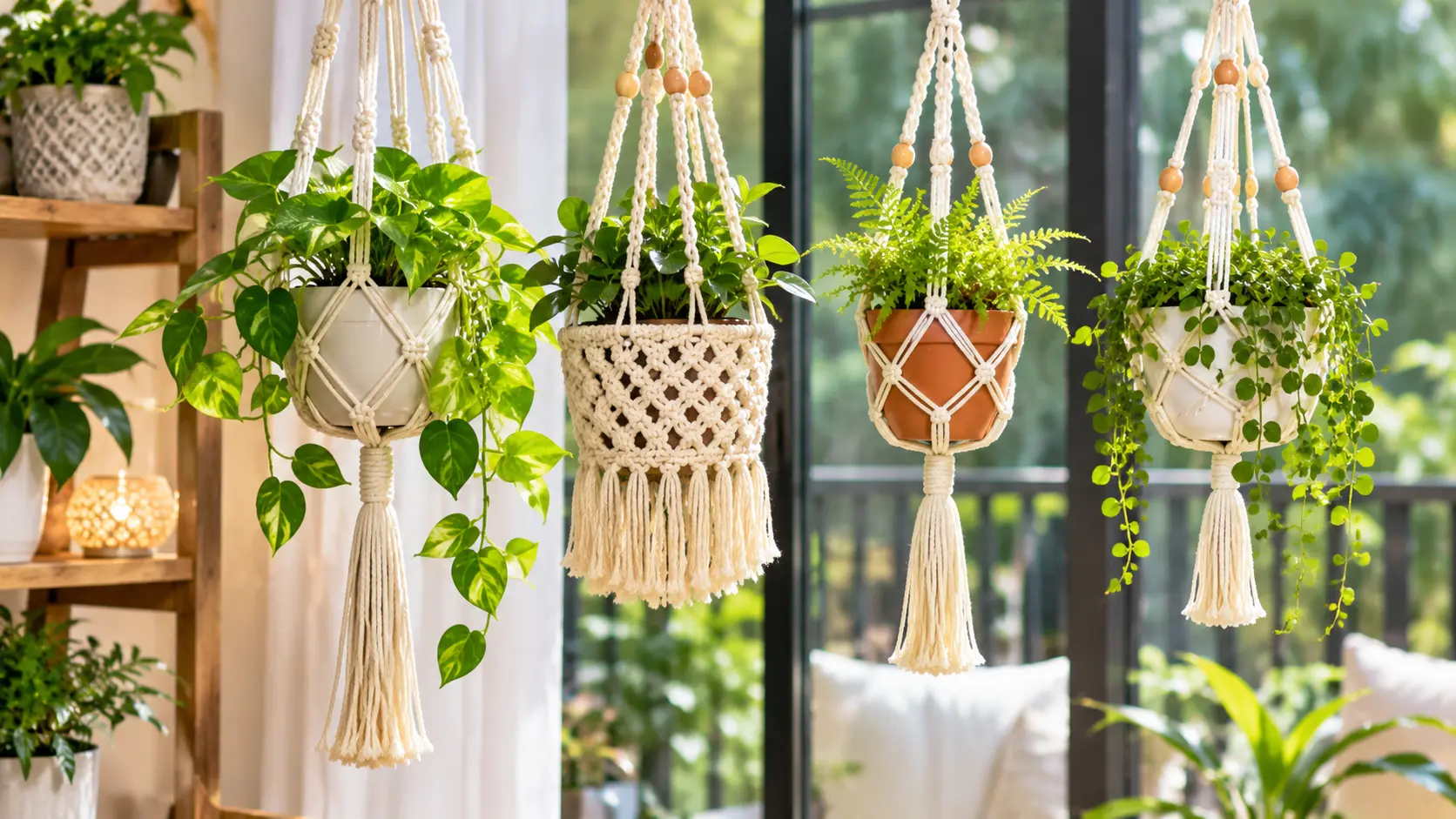
Classic macrame plant hangers feature symmetrical knot patterns and a simple hanging loop at the top. Many include long cords that form a basket around the plant pot. Decorative tassels often hang below the container for added texture. These traditional designs are versatile because they coordinate with different plant shapes, pot colors, and room arrangements.
Modern macrame hangers often use fewer knots and cleaner lines to create a more minimal appearance. Some feature wooden beads, metal rings, or geometric details that add subtle decoration. Neutral cotton cords are common, although darker colors can create a stronger contrast. These designs work well in modern apartments where homeowners prefer simple but interesting decorative accents.
Double and tiered macrame plant hangers provide space for displaying more than one container vertically. They can create an attractive arrangement when the pots and plants are appropriately sized. However, additional containers increase the total weight supported by the hanger and mounting point. Buyers should check the product’s stated capacity rather than assuming every tiered design supports heavy pots.
Best Materials for Macrame Plant Hangers
Cotton is one of the most popular materials used for macrame plant hangers because it feels soft and creates attractive knots. It is available in natural, dyed, and recycled varieties. Cotton cords often suit indoor spaces with a relaxed decorating style. However, prolonged exposure to moisture and strong sunlight can affect their appearance and durability over time.
Jute and other natural plant-based fibers provide a more rustic appearance. Their earthy colors and textured surfaces work well with wooden furniture, terracotta pots, and natural decorations. Jute can be useful in suitable dry indoor environments. However, natural fibers may deteriorate when repeatedly exposed to rain or persistent dampness, making placement an important consideration.
Synthetic cords, including polyester and certain outdoor-rated materials, may offer better resistance to moisture and weather exposure. Their durability depends on the specific product and manufacturer specifications. Some hangers also combine different fibers for appearance and strength. Before buying, check the material description, recommended location, and cleaning instructions to ensure the hanger suits your needs.
How to Choose the Right Macrame Plant Hanger Size
Selecting the correct size begins with measuring the plant pot rather than judging the hanger by appearance alone. Pay attention to the pot’s width, height, and overall shape. A hanger that is too narrow may not hold the container properly. Meanwhile, an oversized design may allow a small pot to sit unevenly or appear poorly balanced.
Many macrame hangers are described as suitable for small, medium, or large pots. Small designs may accommodate containers around four to six inches wide, while medium options often suit pots around six to eight inches. Larger designs may accommodate wider containers when specifically rated. These ranges are only general examples because actual compatibility depends on the individual product.
Always compare your pot measurements with the seller’s recommended dimensions before purchasing. Some flexible hangers accommodate several pot sizes, while tightly knotted designs offer less adjustment. Pot shape also influences how securely the container sits within the cords. Checking both dimensions and weight capacity helps prevent purchasing a hanger that looks attractive but does not function properly.
Match Your Macrame Hanger to the Plant and Pot
Different plants have different growth habits, making plant shape an important consideration when choosing a hanger. Trailing plants often look attractive because their stems extend naturally below the container. Pothos, spider plants, and certain trailing philodendrons are popular examples. However, every plant should receive the lighting and care conditions appropriate for its particular species.
The plant pot also affects how the hanging arrangement looks and functions. Lightweight plastic containers are often easier to suspend than heavy ceramic or stone pots. Terracotta can create a natural appearance but may contribute additional weight. Whatever material you choose, the hanger must safely support the container, plant, growing medium, and water.
Drainage is another practical factor because excess water can drip onto furniture or flooring. Consider using a suitable saucer or removing the container for watering when necessary. Decorative pots without drainage holes require careful watering to avoid waterlogged soil. Choosing a practical pot and watering method helps keep both the plant and surrounding space in good condition.
How to Measure Hanging Length and Available Space
Macrame plant hangers are available in different lengths, making it important to measure the intended display area. The listed length may include the top loop, knotted section, and decorative tassel. Some sellers measure the hanger before a pot is inserted, while others provide an approximate hanging length. Always read the product description to understand how measurements are taken.
A long hanger may look beautiful in a room with high ceilings but feel crowded in a smaller space. Shorter designs are often easier to position near shelves or in areas with limited overhead clearance. The plant itself also adds height and width to the arrangement. Measuring the complete display helps prevent unwanted contact with furniture or nearby objects.
Before purchasing, consider where the bottom of the plant and its trailing leaves will rest. The arrangement should not obstruct doors, walkways, or frequently used work surfaces. Leave enough room to water the plant and inspect its condition comfortably. Careful placement makes hanging plants both decorative and practical without interfering with everyday movement.
Best Indoor Places to Hang Macrame Plant Hangers
Living rooms are popular locations for macrame plant hangers because they provide opportunities to combine greenery with decorative furniture. A suitable hanging plant can add visual interest near a window or in an otherwise empty corner. Choose a location that supports both the plant’s lighting needs and safe mounting. Avoid positions where hanging cords could interfere with movement.
Bedrooms can also benefit from small hanging plants when there is sufficient space and suitable natural light. Neutral macrame cords often complement soft bedding, wooden furniture, and simple room decorations. A compact arrangement may work near a window or another appropriate location. Keep the hanger securely installed and away from sleeping areas where falling objects could cause injury.
Kitchens and home offices offer additional opportunities to display hanging greenery without taking up valuable surface space. A small plant may brighten a workspace or introduce natural texture into a kitchen corner. However, avoid placing hangers directly above cooking equipment, electrical devices, or food preparation surfaces. Practical placement helps protect the plant and surrounding household items.
Can You Use Macrame Plant Hangers Outdoors?
Macrame plant hangers can be used outdoors when their materials and construction are appropriate for the environment. Covered balconies, patios, and sheltered porches are popular display locations. These areas can provide attractive spaces for hanging greenery without occupying the floor. However, weather exposure should always influence the material and mounting choices.
Natural cotton and jute hangers may absorb moisture and weaken with repeated exposure to rain and humidity. Direct sunlight can also fade certain colors and affect fibers over time. Outdoor-rated synthetic materials may provide better weather resistance. Check the manufacturer’s recommendations instead of assuming that every macrame design is suitable for permanent outdoor use.
Wind is another important factor because hanging pots may swing during strong weather conditions. Choose a sheltered location and avoid placing heavy containers where movement could create hazards. The mounting point must support the complete wet weight of the arrangement. Bringing vulnerable plants and hangers indoors during unsuitable weather can help protect them from damage.
How to Hang a Macrame Plant Hanger Safely
Safe installation begins with choosing a suitable mounting location and checking the total weight of the hanging arrangement. The weight includes the pot, plant, growing medium, retained water, and the hanger itself. A container may become noticeably heavier after watering. The support system should be rated for the expected load with an appropriate safety margin.
Ceiling hooks, brackets, and other mounting products have different installation requirements depending on the structure supporting them. Decorative hooks are not automatically suitable for heavy hanging planters. Mounting hardware must be compatible with the supporting surface and installed according to its instructions. When structural support is uncertain, a qualified professional can help determine an appropriate installation method.
Families should also consider children, pets, and everyday movement when selecting a hanging location. Keep trailing cords and plants away from areas where they could be pulled or knocked down. Some houseplants are harmful to pets if chewed, so plant selection matters as well. Regularly inspecting cords and mounting hardware helps identify wear before it becomes a problem.
Buying Tips for a Quality Macrame Plant Hanger
Before purchasing a macrame plant hanger, examine its material, knot quality, dimensions, and stated weight capacity. The cords should appear evenly arranged, with secure knots and a stable pot-supporting section. Decorative features should not interfere with the hanger’s main purpose. A visually attractive design is only worthwhile when it safely supports the intended container.
Product descriptions can provide useful details about compatible pot sizes, cleaning requirements, and recommended placement. Look for clear measurements rather than relying only on promotional photographs. Customer reviews may help identify practical concerns such as inconsistent sizing or poor finishing. However, reviews should be considered alongside reliable product specifications instead of replacing them entirely.
Price is another consideration, but an expensive hanger is not automatically the best choice. Handmade designs may cost more because of the time and craftsmanship involved. Simpler products may offer excellent value when they meet your needs. Compare durability, appearance, practicality, and overall quality to choose a hanger that fits your budget and home.
How to Clean and Maintain Macrame Plant Hangers
Regular maintenance helps macrame plant hangers remain attractive and functional over time. Dust can collect between knots and along decorative cords, especially in frequently used rooms. Gently removing surface dust with a soft brush or suitable cleaning tool may help. Always follow the manufacturer’s care instructions because different fibers react differently to moisture and cleaning products.
Some cotton hangers may tolerate gentle spot cleaning, while other materials require a different approach. Avoid soaking a hanger unless its care instructions specifically allow washing. Excessive moisture can affect certain fibers, decorative components, and knot structures. Allow any cleaned material to dry thoroughly before returning a plant pot to the hanger.
Inspecting the hanger occasionally is just as important as keeping it clean. Look for frayed cords, loose knots, damaged rings, or signs of stretching near the pot cradle. Replace a hanger when its condition raises concerns about safe support. Proper care and timely replacement help preserve the appearance of your display while protecting the plant and surrounding space.
Common Mistakes to Avoid When Buying Macrame Hangers
One common mistake is selecting a macrame plant hanger based only on its appearance. A design may match your room perfectly but fail to accommodate the intended plant pot. Ignoring dimensions can result in an unstable or poorly balanced arrangement. Always check the pot’s measurements and the hanger’s recommended capacity before making a purchase.
Another mistake is forgetting to account for water weight and drainage requirements. A hanging pot can become heavier after watering, especially when the growing medium retains moisture. Excess water may also damage nearby surfaces if the container lacks suitable drainage arrangements. Planning for these everyday conditions helps keep the hanging display practical and secure.
Buying a hanger without considering the location can create additional problems. Long tassels may interfere with furniture, while unsuitable natural fibers can deteriorate outdoors. Poor mounting choices may also create unnecessary safety risks. Taking time to evaluate the complete arrangement helps ensure the hanger complements your space and remains useful over time.
Conclusion
A macrame plant hanger is a practical and attractive way to display greenery while saving valuable floor and shelf space. Available styles range from traditional knotted designs to modern minimal arrangements. Materials such as cotton, jute, and synthetic fibers offer different appearances and properties. Choosing the right option depends on your decorating preferences and where the hanger will be used.
Size, hanging length, pot compatibility, and weight capacity are important factors to consider before purchasing. A suitable hanger should hold the intended container securely without obstructing nearby furniture or walking areas. Indoor and outdoor locations may require different materials and mounting arrangements. Careful planning helps create a balanced display that works with your home.
Maintaining your hanger through gentle cleaning and regular inspections can help extend its useful life. Always choose appropriate mounting hardware and follow the product’s recommended care instructions. With the right combination of style, size, and practical features, a macrame plant hanger can become a beautiful addition to your space. It offers a simple way to enjoy plants in an organized and decorative arrangement.
FAQs
What Size Pot Fits a Macrame Plant Hanger?
The correct pot size depends on the hanger’s design and recommended dimensions. Many hangers accommodate pots around four to eight inches wide, but you should always check the product’s specific compatibility and weight capacity.
Are Macrame Plant Hangers Strong Enough for Heavy Pots?
Some macrame plant hangers can support heavier pots when specifically designed and rated for them. Always consider the complete wet weight, cord strength, knot construction, and mounting hardware before hanging a container.
Can Macrame Plant Hangers Be Used Outdoors?
Yes, macrame plant hangers can be used outdoors when their materials are suitable for weather exposure. Covered spaces are often preferable, while outdoor-rated synthetic cords may perform better than natural fibers in damp conditions.
What Plants Look Best in Macrame Plant Hangers?
Trailing plants such as pothos, spider plants, and certain philodendrons often look attractive in macrame hangers. Choose plants according to the available light, container size, care requirements, and household safety considerations.
How Do You Clean a Macrame Plant Hanger?
Gently remove dust using a soft brush and follow the manufacturer’s cleaning instructions. Some materials allow careful spot cleaning, while others should remain dry. Always inspect cords and knots before rehanging the plant.