
A reliable garage door lock helps protect your belongings and reduce concerns about unauthorized access. However, not every locking mechanism provides the same level of security, durability, or convenience. Choosing unsuitable hardware may leave you with unnecessary expenses and security concerns.
Understanding the essential features of garage door locks can help you make a more confident decision. This guide explains different lock types, important buying considerations, common problems, and practical maintenance tips. You will also learn how to improve garage security without compromising safe door operation.
What Is a Garage Door Lock?
A garage door lock is a security mechanism designed to prevent unauthorized opening of a garage door. It helps keep the door secured when the garage is not in use. Different locking systems are available for manual and automatic garage doors.
Think of your garage lock as another layer of protection for your property. Just as you secure your front door before leaving home, your garage deserves similar attention. This is particularly important when the garage connects directly to your living space.
Garage door locking mechanisms can include mechanical locks, electronic locks, and automatic locking systems. Each design provides different features and levels of convenience. The appropriate choice depends on your garage door design, existing equipment, and security requirements.
Why Is a Garage Door Lock Important?
Many homeowners focus on securing their windows and front doors while overlooking the garage. However, garages often contain valuable vehicles, bicycles, tools, and household equipment. An inadequately secured garage can create unnecessary concerns about property protection.
A reliable locking mechanism helps restrict unauthorized access and provides greater confidence when leaving home. It can also improve security when combined with suitable lighting, properly maintained doors, and other protective measures.
The main benefits of a garage door lock include:
- Improved protection for stored belongings.
- Reduced risk of unauthorized access.
- Greater confidence when leaving home.
- Better control over garage entry.
- Additional protection for attached garages.
- More convenient access management with compatible electronic systems.
Remember that no individual lock can guarantee complete security. The condition of the garage door and its surrounding structure also matters.
What Are the Different Types of Garage Door Locks?
Choosing a lock becomes challenging when several products appear to offer similar benefits. Some designs work well with manually operated doors, while others require compatible automatic opening systems. Understanding these differences helps prevent expensive purchasing mistakes.
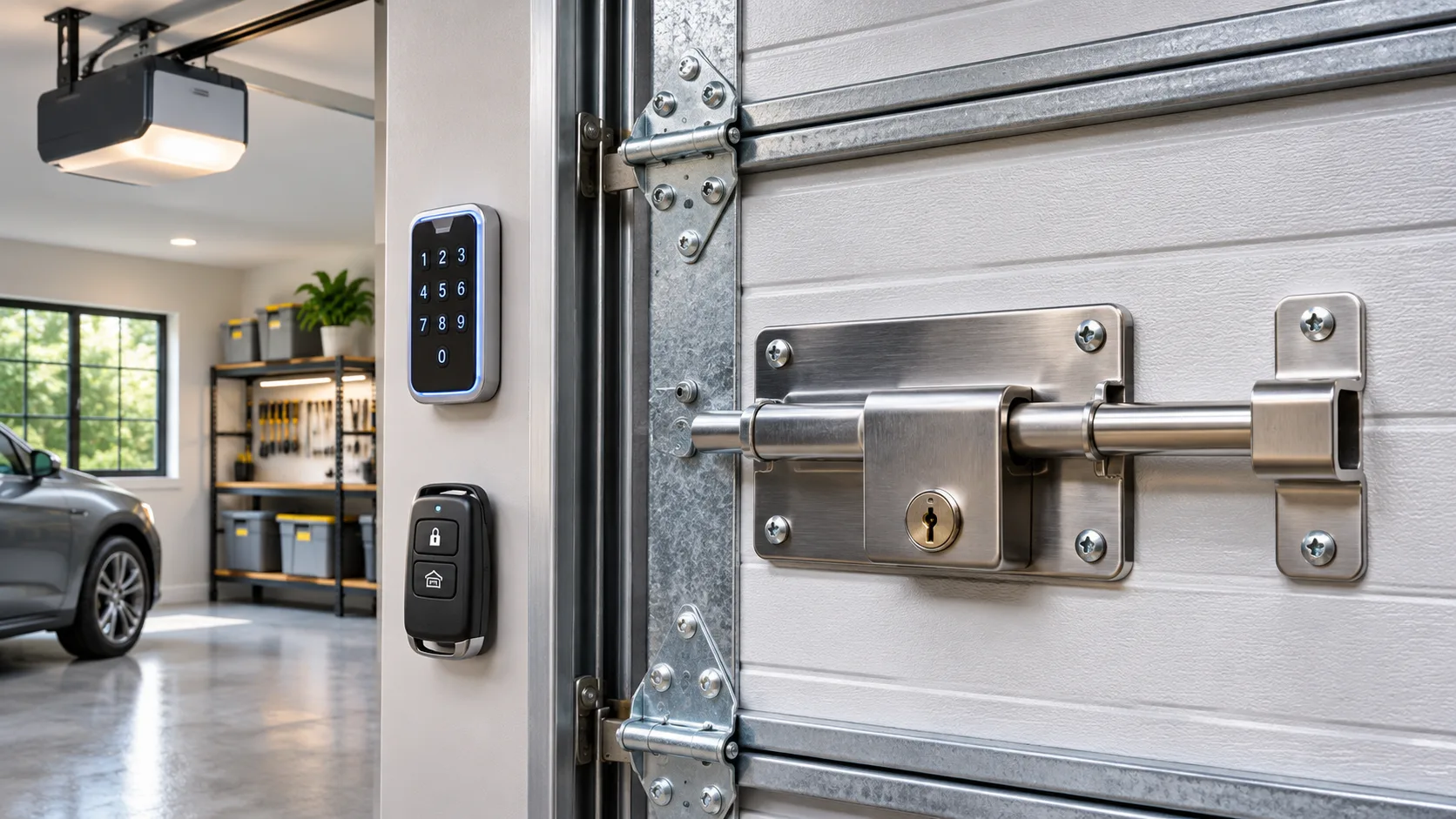
1. Manual Slide Locks
Manual slide locks use a mechanical bolt to secure compatible garage doors. They are commonly found on manually operated sectional garage doors. Their straightforward design makes them relatively easy to maintain.
These locks can provide additional protection when used with appropriate door systems. However, they are not generally suitable for simultaneous operation with automatic garage door openers. Always confirm compatibility with the door manufacturer.
2. T-Handle Garage Door Locks
T-handle locks feature an exterior handle and a key-operated locking mechanism. They are commonly associated with certain manually operated garage doors. Their familiar design provides straightforward access for authorized users.
When selecting a T-handle lock, consider material quality, weather resistance, and compatibility. Replacement hardware must match the existing door requirements. A garage door professional can help confirm suitable options.
3. Automatic Garage Door Locks
Automatic garage door locks work with compatible motorized opening systems. They are designed to secure the door automatically after closing and release appropriately during authorized operation. This reduces the need for separate manual locking.
These locks are particularly appealing to homeowners who frequently use their garages. However, compatibility varies between door and opener models. Manufacturer-approved equipment is essential for reliable and safe operation.
4. Electronic Garage Door Locks
Electronic locking systems use electrical components to manage authorized access. Depending on their design, they may operate through keypads, compatible controllers, or integrated access systems. They can reduce dependence on traditional physical keys.
Electronic locks may provide convenient access management for households with several users. However, they also require reliable power and appropriate maintenance. Review backup access arrangements before selecting a system.
5. Smart Garage Door Security Systems
Smart garage door systems allow users to monitor or manage compatible equipment through connected applications. Some provide notifications when a garage door opens, closes, or remains open. Others support integration with broader home security systems.
However, a smart garage door controller is not necessarily a physical lock. Some products only manage the opener or report door status. Check whether the equipment includes an actual locking mechanism before purchasing.
10 Key Features to Look for in a Garage Door Lock
Buying a garage door lock based entirely on price can lead to disappointing results. Inexpensive hardware may wear quickly, while advanced products may lack compatibility with your existing door. The following features deserve careful attention before purchasing.
1. Strong and Durable Construction
A garage lock needs to withstand regular use and environmental exposure. Poor-quality materials may deteriorate faster and require frequent replacement. Durable construction helps maintain dependable performance over time.
Look for hardware made from suitable materials such as steel, stainless steel, or quality metal alloys. Evaluate the overall construction rather than relying solely on material descriptions. A well-designed locking mechanism should also fit securely within its intended door system.
2. Garage Door Compatibility
Even a high-quality lock can become useless if it does not fit your garage door. Sectional, roller, side-hinged, and up-and-over doors have different structural requirements. Their locking mechanisms may not be interchangeable.
Check the manufacturer’s compatibility information before purchasing replacement hardware. Consider your door model, existing opener, and required mounting arrangements. Professional assessment can prevent installation mistakes and unnecessary returns.
3. Weather and Corrosion Resistance
Garage doors are frequently exposed to rain, moisture, dust, and changing temperatures. Hardware that lacks suitable corrosion resistance may become difficult to operate over time. Weather-resistant construction is particularly important for exterior locking components.
Choose products designed for their intended environmental conditions. Protective coatings and corrosion-resistant materials can help improve durability. Regular inspections also help identify deterioration before it affects normal operation.
4. Convenient Everyday Operation
A garage door lock should provide security without making everyday access unnecessarily difficult. Complicated mechanisms can become frustrating when several household members regularly use the garage. Convenience is especially important during busy mornings.
Look for a system that supports your normal access requirements. Automatic locking may suit frequently used garages, while mechanical locks may suit manually operated storage spaces. The best choice balances usability with dependable protection.
5. Reliable Locking Performance
A lock that operates inconsistently can create uncertainty about garage security. Difficulty turning a key or confirming whether a door is secured may indicate a hardware problem. Reliable operation should be a priority when comparing products.
Choose locking mechanisms designed for repeated use and appropriate operating conditions. Review manufacturer information about durability and maintenance requirements. Seek professional assistance if an existing lock begins operating unpredictably.
6. Secure Access Management
Households may need different access arrangements for family members, maintenance professionals, and other authorized individuals. Managing multiple physical keys can become inconvenient. Compatible electronic systems may provide additional access management options.
Look for features that support controlled access, individual user permissions, or secure keypad operation. Avoid sharing permanent access credentials unnecessarily. Review authorized access whenever household circumstances change.
7. Automatic Locking Capability
Forgetting to secure the garage can be a common concern for busy homeowners. Compatible automatic locks can reduce this uncertainty by coordinating locking with normal door operation. This provides additional convenience without requiring repeated manual actions.
However, not every automatic garage opener includes a separate locking mechanism. Confirm which security features your existing equipment provides. Choose only automatic locks approved for your particular door and opener.
8. Secure Digital Connectivity
Smart garage door systems introduce digital security considerations alongside physical protection. Poor account security or outdated software may affect the reliability of connected features. Evaluating cybersecurity is important when selecting electronic equipment.
Look for products offering secure authentication, regular software updates, and clear privacy information. Multi-factor authentication is another useful feature when available. Strong account protection helps reduce the risk of unauthorized digital access.
9. Safe Backup Access
Electronic garage door equipment may become unavailable during power interruptions or technical failures. Without suitable backup arrangements, accessing the garage can become difficult. Emergency access planning should form part of your purchasing decision.
Review manufacturer-approved backup power and emergency access features. Make sure responsible household members understand the equipment’s official safety instructions. Never modify or disable emergency release mechanisms to improve security.
10. Warranty and Technical Support
A garage door lock represents a long-term investment in your property’s security. Limited technical support can make repairs and replacements unnecessarily difficult. Reliable warranty coverage provides additional confidence when purchasing hardware.
Review warranty conditions, replacement part availability, and installation requirements. Choose manufacturers that provide clear product documentation. Accessible technical support can be especially valuable for automatic and electronic locking systems.
Manual vs. Automatic Garage Door Locks
Many homeowners struggle to decide between traditional and automatic locking mechanisms. Both approaches can provide useful security benefits, but they have different operating requirements. Comparing their features helps you understand which option suits your garage.
| Manual Garage Door Lock | Automatic Garage Door Lock |
|---|---|
| Requires manual operation | Locks through compatible automated controls |
| Generally uses mechanical components | Includes electronic or motorized components |
| Usually has lower initial costs | May require greater initial investment |
| Suitable for compatible manual doors | Suitable for approved automatic door systems |
| Generally has fewer electronic maintenance needs | May require electrical and software maintenance |
| Does not normally require electricity | May depend on power or backup systems |
Manual locks can be practical for garages that are not frequently accessed. Automatic locks may provide greater convenience for households using their garage several times each day. Always prioritize door compatibility and safe operation over additional features.
How to Choose the Right Garage Door Lock
Purchasing the wrong locking mechanism can waste money and create operational difficulties. Some homeowners discover compatibility problems only after buying replacement hardware. Following a structured selection process helps avoid these frustrations.
Consider these steps before purchasing:
- Identify your garage door type and model.
- Review your existing garage door opener.
- Determine your main security requirements.
- Compare compatible locking mechanisms.
- Evaluate material quality and weather resistance.
- Review installation and maintenance requirements.
- Check warranty coverage and technical support.
- Request professional advice when necessary.
Avoid choosing a lock simply because it has more features or a higher price. A suitable locking system should address your actual security requirements while supporting dependable garage door operation.
Do Automatic Garage Doors Need Additional Locks?
Many homeowners assume that automatic garage door openers provide complete physical security. Although modern openers may include features that help resist unauthorized opening, their capabilities vary. Some models support separate automatic locking accessories.
An additional manufacturer-approved lock may provide useful protection when compatible with the existing system. However, installing an unsuitable manual lock alongside an automatic opener can create equipment damage and safety concerns.
Never activate an automatic opener while an incompatible manual lock is engaged. Ask a qualified garage door technician to evaluate your existing equipment before introducing additional locking hardware. Security improvements should never interfere with safe door movement.
Common Garage Door Lock Problems and Their Solutions
A garage lock may develop problems gradually through regular use and environmental exposure. Ignoring early warning signs can lead to unexpected access difficulties. Recognizing common symptoms helps homeowners decide when professional maintenance is necessary.
| Common problem | Recommended solution |
|---|---|
| Key becomes difficult to turn | Arrange inspection of the lock mechanism |
| Visible rust or corrosion | Assess whether replacement is necessary |
| Lock fails to engage | Request professional alignment inspection |
| Automatic lock becomes unresponsive | Contact an authorized service technician |
| Smart system loses connectivity | Review official support guidance |
| Door fails to close properly | Arrange a garage door safety inspection |
| Lost or missing keys | Contact a qualified locksmith |
Avoid forcing a jammed lock or repeatedly activating malfunctioning equipment. Some problems may involve the garage door’s alignment rather than the lock itself. Professional diagnosis helps identify the actual cause.
How to Maintain a Garage Door Lock
Even durable garage door hardware requires occasional attention. Dust, moisture, wear, and unsuitable operating conditions can reduce performance over time. Regular maintenance helps identify problems before they become more serious.
Follow these basic maintenance recommendations:
- Visually inspect accessible hardware for deterioration.
- Keep exterior locking surfaces reasonably clean.
- Follow manufacturer-approved maintenance instructions.
- Pay attention to unusual operating behavior.
- Check electronic system notifications regularly.
- Maintain secure access credentials.
- Arrange professional inspections when necessary.
Do not use unsuitable lubricants or attempt repairs involving garage door springs, cables, or powered components. These parts can present serious safety risks. Qualified technicians should handle internal mechanical and electrical repairs.
How to Improve Garage Door Security Beyond the Lock
Installing a reliable lock is an important step, but garage security involves more than one piece of hardware. Poor maintenance, unsecured access points, and careless credential management can affect overall protection. A layered security approach provides more comprehensive coverage.
Install Suitable Outdoor Lighting
Dark outdoor areas can make it difficult to observe activity around your garage. Appropriate exterior lighting helps improve visibility and makes everyday access more convenient. Motion-activated lighting may provide additional benefits when professionally installed.
Secure the Connecting Door
An attached garage may provide direct access to the main living area. The connecting door should have suitable security hardware and meet applicable fire safety requirements. Keeping it secured provides another layer of household protection.
Keep Access Credentials Protected
Garage remotes, keys, and access codes should be treated like other important security credentials. Avoid leaving them unattended in unsecured locations. Review access permissions when remotes or keys are missing.
Maintain the Garage Door Structure
A quality lock cannot compensate for a badly damaged garage door. Worn hardware, damaged panels, and alignment problems may affect reliable operation. Regular professional maintenance helps keep the entire door system in suitable condition.
Use Door Status Notifications
Compatible smart garage systems may provide alerts when doors remain open unexpectedly. These notifications can help homeowners stay informed about garage access. However, digital monitoring should complement rather than replace physical security measures.
How Much Does a Garage Door Lock Cost?
Budget concerns can make choosing security hardware more complicated. Garage door lock prices vary according to materials, locking technology, compatibility, and installation requirements. Mechanical locks generally cost less than advanced automatic systems.
Factors affecting garage door lock costs include:
- Lock type and construction quality.
- Garage door compatibility.
- Electronic and smart features.
- Professional installation expenses.
- Manufacturer warranty coverage.
- Replacement part availability.
- Long-term maintenance requirements.
Compare the complete cost of ownership rather than focusing only on the purchase price. Request written estimates from qualified installers for accurate local pricing. Spending more on unnecessary features does not automatically provide better protection.
When Should You Replace Your Garage Door Lock?
Homeowners sometimes continue using unreliable hardware because replacing it seems inconvenient. However, worn or damaged locking mechanisms may create unnecessary security concerns. Recognizing replacement indicators can help you avoid unexpected problems.
Consider professional inspection or replacement when:
- The locking mechanism no longer operates reliably.
- Visible corrosion affects hardware condition.
- Physical keys have been lost or stolen.
- The garage door has sustained significant damage.
- Electronic locking features repeatedly malfunction.
- Existing hardware is incompatible with a replacement opener.
- Replacement parts are no longer available.
Not every malfunction requires a completely new lock. Some problems can be resolved through professional servicing or suitable replacement components. An experienced technician can recommend an appropriate solution.
Conclusion
A reliable garage door lock plays an important role in protecting your vehicle, belongings, and household. Features such as durable construction, weather resistance, secure access management, and door compatibility deserve careful consideration. Choosing suitable hardware can improve both security and everyday convenience.
Remember that effective garage security depends on the condition of the entire door system. Regular maintenance, responsible access management, and appropriate protective measures contribute to more reliable protection. Safety should remain a priority when upgrading any mechanical or automatic equipment.
Start today by reviewing the condition of your existing garage door lock. Identify any reliability concerns, confirm equipment compatibility, and discuss necessary improvements with a qualified professional. A few informed decisions can help you create a more secure and dependable garage.
Frequently Asked Questions
What is the best type of garage door lock?
The best garage door lock depends on your door design and opening mechanism. Manufacturer-approved automatic locks suit compatible powered systems, while mechanical locks may suit manually operated garage doors.
Can you add a lock to an automatic garage door?
Yes, compatible automatic locking accessories may be available for certain garage door openers. Consult the manufacturer or a qualified technician to ensure safe installation and reliable operation.
Are smart garage door locks secure?
Smart garage door systems can provide useful security features when properly configured and maintained. Strong authentication, software updates, physical locking capability, and appropriate access controls remain important.
How long does a garage door lock last?
Garage door lock lifespan depends on construction quality, usage frequency, weather exposure, and maintenance. Regular inspections can help identify deterioration and determine when professional servicing or replacement is necessary.
Can I replace a garage door lock myself?
Some simple hardware replacements may be supported by manufacturer instructions. However, automatic locks, powered components, and repairs involving garage door movement should be handled by qualified professionals.