
You have painted the walls, replaced the furniture, and updated the flooring, but something about your living space still feels outdated. Then you notice the staircase. Its bulky railing and old-fashioned design no longer match the rest of your home.
Replacing an entire staircase can be expensive, but updating its railing may create a noticeable improvement. The challenge is finding a design that looks attractive, provides reliable support, and fits your renovation budget.
From minimalist metal designs to warm wooden finishes, there are plenty of modern stair railing ideas worth exploring. This guide will help you discover fresh designs, compare materials, and choose a railing that brings style and functionality together.
What Is a Modern Stair Railing?
A modern stair railing is a staircase safety feature that combines contemporary design with practical functionality. It typically features clean lines, simple shapes, understated finishes, and carefully selected materials.
Unlike traditional railings with elaborate carvings and decorative patterns, modern designs often emphasize simplicity. They can make staircases appear less visually crowded while complementing surrounding architectural features.
Popular materials include glass, stainless steel, aluminum, wood, and powder-coated metal. Many contemporary staircase designs combine two or more materials to create a balanced appearance.
1. Minimalist Black Metal Stair Railing
A staircase with bulky wooden posts can make an otherwise attractive room feel crowded. Replacing complicated decorative elements with simple black metal railings can create a cleaner appearance.
Matte black metal balusters work particularly well with wooden steps, white walls, and neutral flooring. Their understated appearance complements modern, industrial, and Scandinavian-inspired interiors.
Consider vertical metal balusters with a comfortable, graspable handrail. This combination provides visual simplicity while supporting practical staircase safety when properly designed and installed.
2. Frameless Glass Stair Railing
Dark hallways and enclosed staircases sometimes make interiors feel smaller than they actually are. Traditional solid railings may further restrict the movement of natural light.
Frameless glass stair railing systems create an open appearance by reducing visual barriers. They allow surrounding architectural details, flooring, and decorative features to remain visible.
Choose an engineered glass railing system that meets applicable safety requirements. Remember that transparent surfaces require regular cleaning, and a separate graspable handrail may be necessary.
3. Wood and Metal Stair Railing
Some contemporary staircase designs feel too cold because they rely heavily on metal and glass. Introducing natural wood can make the space feel warmer without sacrificing its modern character.
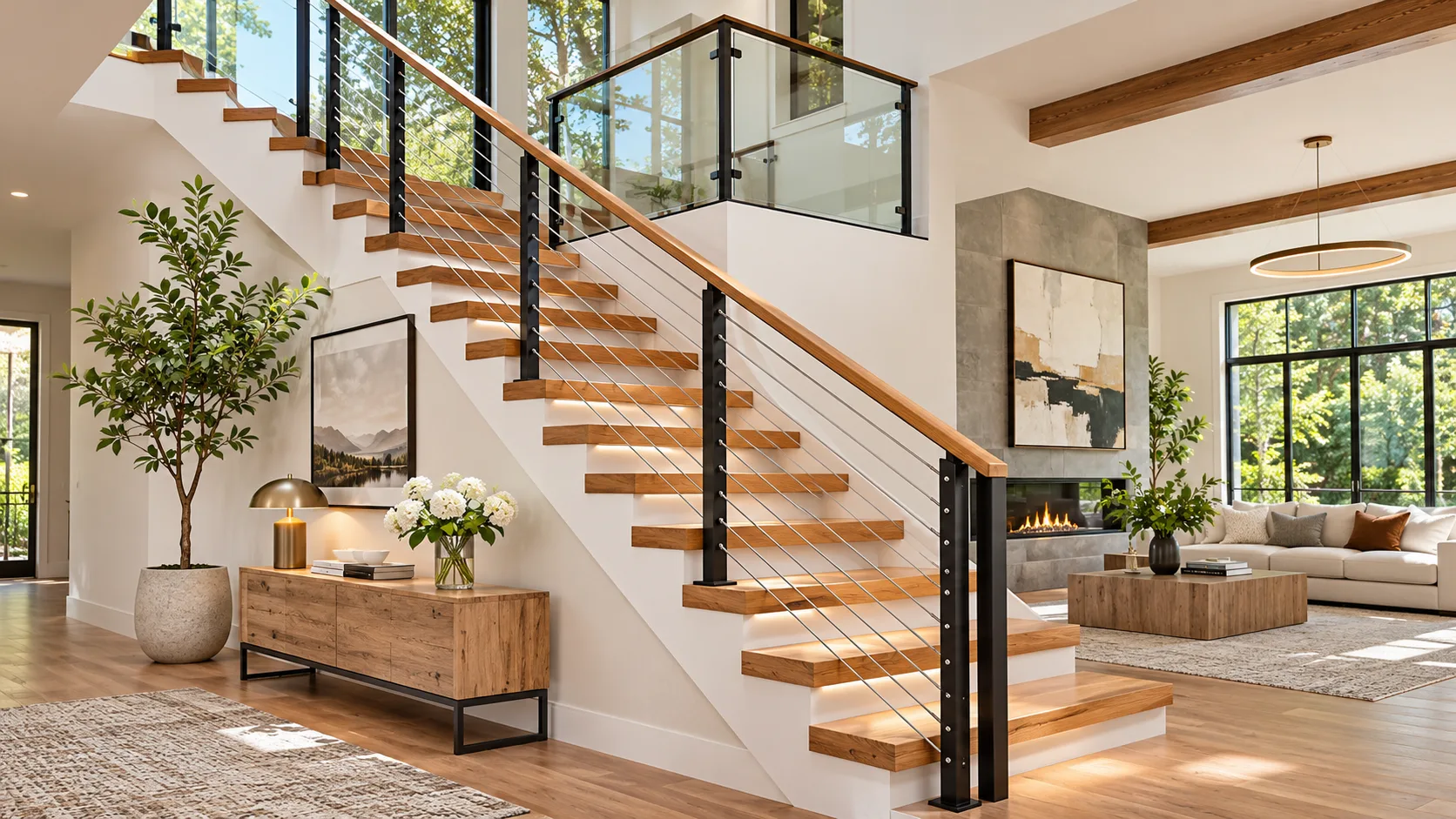
A wooden handrail combined with simple metal balusters creates an attractive contrast. Oak, walnut, and other suitable wood finishes pair particularly well with matte black or brushed metal.
Match the wooden handrail with existing flooring, furniture, or staircase treads. Coordinating these elements helps the railing feel like a natural part of your interior rather than an unrelated addition.
4. Horizontal Metal Stair Railing
Traditional vertical balusters may not suit every architectural style. Horizontal metal railings offer a different visual arrangement that emphasizes the staircase’s length and direction.
These designs often feature slim metal bars arranged between supporting posts. Their clean appearance works well in industrial interiors, open-plan homes, and contemporary spaces.
However, horizontal elements may create climbing opportunities for children and may be restricted in some locations. Discuss household safety needs and local building requirements with a qualified railing professional before choosing this design.
5. Modern Cable Stair Railing
Heavy railing systems can interrupt attractive views across open living areas. Cable stair railings provide a less visually obstructive alternative for suitable staircase layouts.
These systems use tensioned metal cables supported by engineered posts. Stainless steel cables are commonly combined with wooden or metal handrails to create a contemporary appearance.
Cable railing systems require careful structural design, appropriate spacing, and professional installation. Consider their maintenance requirements and suitability for households with young children before making a purchase.
6. Floating Staircase With Modern Glass Railing
A conventional staircase can occupy considerable visual space within a modern home. Floating-style staircases create a lighter appearance by reducing the visibility of supporting structures.
Combining floating stairs with glass railing panels emphasizes the staircase’s architectural design. This arrangement can work particularly well in open-plan living rooms and contemporary entryways.
Floating staircases require specialized structural engineering and appropriate protective barriers. They are generally more suitable for professionally planned renovations or new construction than simple cosmetic upgrades.
7. Contemporary Wooden Stair Railing
You do not necessarily need metal or glass to achieve a modern staircase design. Wooden railings can look equally contemporary when their shapes, finishes, and proportions are carefully selected.
Simple wooden handrails with straight balusters offer a natural and welcoming appearance. Light oak, ash, and other neutral wood tones complement minimalist and Scandinavian-inspired homes.
Avoid overly complicated decorative details if your goal is a cleaner look. Choose smooth finishes, comfortable gripping surfaces, and colors that coordinate with your existing interior.
8. White Stair Railing for Bright Interiors
Dark staircase features can sometimes make narrow hallways appear visually crowded. White stair railings offer an alternative that blends naturally with lighter walls and surrounding architectural details.
A white railing paired with natural wooden steps creates a fresh, understated appearance. This combination works particularly well in coastal, farmhouse, and contemporary residential interiors.
Choose a durable finish suitable for frequently touched surfaces. White railings may show dirt and scratches more easily, making regular cleaning and occasional maintenance important.
9. Industrial Stainless Steel Stair Railing
Some homes need a railing design that complements exposed brick, concrete, and other industrial materials. Decorative wooden railings may not provide the desired visual consistency.
Stainless steel stair railings offer a contemporary appearance with smooth surfaces and clean lines. Brushed finishes can create a softer visual effect than highly polished metal.
Combine stainless steel with neutral wall colors, concrete-style flooring, or suitable wooden steps. Select materials and finishes appropriate for the intended indoor or outdoor environment.
10. Modern Geometric Stair Railing
Minimalist designs do not have to look plain or repetitive. Geometric stair railings introduce visual interest through carefully arranged patterns and architectural shapes.
Popular designs include rectangular panels, angular metal arrangements, and custom geometric infill. These features can turn an ordinary staircase into an attractive focal point.
Keep surrounding decorations relatively simple so the railing does not compete with other design elements. Ensure decorative openings and patterns meet applicable safety requirements.
11. Modern Stair Railing With Integrated Lighting
Poorly illuminated staircases can be uncomfortable to use, particularly during the evening. Overhead lighting alone may not provide sufficient visibility across every step.
Integrated LED lighting can highlight stair edges, illuminate nearby surfaces, and complement modern handrail designs. Soft, warm lighting generally creates a welcoming residential atmosphere.
Have suitable lighting systems professionally installed, particularly when electrical work is required. The lighting should improve visibility without producing distracting glare or interfering with the handrail’s function.
12. Two-Tone Modern Stair Railing
Choosing a single railing color can be difficult when your home contains several contrasting finishes. A two-tone design allows you to combine complementary materials or colors.
Consider white posts with a natural wooden handrail, black balusters with light oak, or brushed metal paired with darker wood. These combinations create visual depth without requiring complicated decorative features.
Limit the design to two main finishes for a more coordinated appearance. Repeat those colors elsewhere in the room through furniture, flooring, or door hardware.
What Are the Best Materials for Modern Stair Railings?
Choosing materials based entirely on appearance can lead to unexpected maintenance and replacement expenses. Different railing materials offer different levels of durability, visual openness, and environmental resistance.
Consider where the staircase is located, how frequently it is used, and how much maintenance you are willing to undertake. A suitable material should provide lasting functionality alongside an attractive appearance.
| Material | Main Advantage | Maintenance | Best For |
|---|---|---|---|
| Wood | Natural warmth | Moderate | Residential interiors |
| Glass | Open appearance | Frequent cleaning | Contemporary homes |
| Stainless steel | Durability | Low to moderate | Industrial and modern spaces |
| Aluminum | Lightweight construction | Generally low | Indoor and outdoor stairs |
| Powder-coated steel | Versatile finishes | Low to moderate | Minimalist interiors |
| Stainless steel cable | Reduced visual obstruction | Periodic inspections | Open staircase designs |
The best modern stair railing material depends on your specific requirements. Combining complementary materials can also help achieve a balance between appearance, comfort, and durability.
Indoor vs Outdoor Modern Stair Railings
A railing that performs well inside your home may deteriorate quickly when exposed to outdoor conditions. Rain, sunlight, moisture, and changing temperatures create additional material requirements.
Modern indoor stair railings generally prioritize comfortable gripping surfaces and coordinated finishes. Outdoor railings require suitable weather resistance, durable construction, and appropriate structural support.
| Feature | Indoor Stair Railing | Outdoor Stair Railing |
|---|---|---|
| Main priority | Comfort and appearance | Weather resistance and safety |
| Common materials | Wood, glass, and metal | Exterior-rated metal and wood |
| Moisture exposure | Usually limited | Frequently higher |
| Maintenance | Routine cleaning | Weather-related inspections |
| Finish | Interior decorative coatings | Exterior protective coatings |
Always check whether the complete railing system is designed for its intended environment. Outdoor suitability involves more than simply choosing a water-resistant material.
How to Choose a Modern Stair Railing for Your Home
With so many attractive railing designs available, choosing the right one can become overwhelming. A design that looks impressive in another home may not suit your staircase dimensions or existing interior.
Start by evaluating your staircase layout, surrounding architecture, household requirements, and renovation budget. These factors will help narrow your choices before you begin comparing individual products.
Consider the following questions:
- Does the railing complement your existing flooring and walls?
- Is the handrail comfortable and easy to grip?
- Does the material suit your maintenance preferences?
- Will the design accommodate your household’s accessibility needs?
- Is the system compatible with your staircase structure?
- Can it meet applicable building and safety requirements?
- Does the complete installation fit your budget?
A thoughtful selection process helps prevent expensive changes later. Prioritize a design that works well every day rather than one that simply looks attractive in photographs.
Best Modern Stair Railing Ideas for Small Spaces
Narrow hallways and compact living areas can feel crowded when staircases contain heavy decorative elements. Large posts and visually complicated railings may contribute to this problem.
Simple vertical metal balusters, lighter wooden finishes, and suitable glass railing systems can create a more open appearance. Wall-mounted handrails may also work well for enclosed staircases.
Avoid unnecessary decorative features that occupy usable space. Have a professional confirm that your preferred design maintains required staircase width, gripping clearance, and protection along exposed edges.
How Much Does a Modern Stair Railing Cost?
Renovation expenses can increase when homeowners underestimate installation requirements. The price of railing materials alone rarely represents the complete cost of a staircase upgrade.
Modern stair railing costs depend on material selection, staircase length, design complexity, structural requirements, and professional labor. Custom glass and specialized architectural systems generally require larger budgets than standard designs.
The main factors affecting costs include:
- Railing length and staircase dimensions.
- Material quality and surface finishes.
- Supporting posts and mounting hardware.
- Removal of existing railing components.
- Custom manufacturing requirements.
- Structural modifications and professional installation.
- Applicable permits and inspections.
Request itemized quotations before committing to a design. Compare complete installation costs rather than selecting a provider solely because of an attractive initial price.
How to Update an Old Stair Railing on a Budget
Replacing an entire staircase may be unnecessary when its existing structure remains suitable. Smaller cosmetic improvements can sometimes create a fresh appearance without requiring a major renovation.
Start by having the existing railing assessed for stability and safety. If its structural components are sound, a professional may recommend retaining suitable elements while updating their appearance.
Budget-friendly staircase renovation ideas include:
- Refinishing an existing wooden handrail.
- Updating outdated railing colors.
- Replacing decorative balusters with simpler alternatives.
- Coordinating stair railing finishes with existing flooring.
- Choosing standard designs instead of custom systems.
- Improving staircase lighting.
- Retaining professionally verified structural components.
Never compromise structural stability to reduce renovation expenses. A smaller, properly planned improvement is preferable to an extensive upgrade that introduces safety problems.
Important Safety Considerations for Modern Stair Railings
Some modern staircase designs prioritize visual openness, but safety should remain the main consideration. Attractive railings offer limited value if they cannot provide reliable support or protect exposed edges.
A staircase handrail provides a gripping surface, while a guardrail helps prevent falls from open sides. Some railing systems combine both functions, but they must satisfy the relevant requirements for each.
Before installation, discuss these considerations with a qualified professional:
- Required handrail and guardrail heights.
- Suitable openings between railing components.
- Structural strength and secure mounting.
- Comfortable and continuous gripping surfaces.
- Child safety and potential climbing hazards.
- Accessibility requirements.
- Suitable materials for the installation environment.
Building regulations vary according to location and property type. Confirm the applicable requirements before purchasing or modifying any staircase railing system.
Common Mistakes to Avoid When Choosing Modern Stair Railings
Homeowners sometimes become so focused on achieving a contemporary appearance that they overlook everyday functionality. This can lead to uncomfortable handrails, difficult maintenance, or unnecessary renovation costs.
Avoid choosing delicate finishes for heavily used staircases or selecting materials unsuitable for outdoor exposure. Overlooking household accessibility needs can also make a new staircase less practical than the original.
Compare your preferred designs carefully, request material samples, and consult a qualified installer. These simple preparations can help you avoid expensive mistakes and achieve more satisfying results.
How to Maintain a Modern Stair Railing
Even high-quality stair railings can develop scratches, stains, loose fittings, or surface damage over time. Regular maintenance helps preserve their appearance and identify potential safety concerns.
Wood requires suitable cleaning products, while glass benefits from regular cleaning with manufacturer-approved solutions. Metal railings should be inspected periodically for corrosion and damaged protective finishes.
Check for visible damage or unusual movement during routine household maintenance. If any part of the railing feels unstable, arrange a professional assessment before relying on it for support.
Conclusion
A modern stair railing can transform an outdated staircase into an attractive and functional architectural feature. From minimalist black metal and natural wood to frameless glass and geometric designs, there are options for different interiors and budgets.
The best railing is not necessarily the most expensive or elaborate one. It is the design that complements your home, provides reliable support, meets applicable safety requirements, and remains manageable to maintain.
Start by selecting three railing styles that match your interior and comparing their materials, maintenance needs, and installation costs. Arrange a professional staircase assessment before making your final decision. A carefully planned upgrade can make your home feel fresher, more comfortable, and better coordinated.
Frequently Asked Questions
What is the most popular modern stair railing style?
Black metal railings, glass railing systems, and wood-and-metal combinations are popular contemporary choices. Their clean lines and versatile finishes complement many modern residential interiors.
What is the cheapest way to modernize a stair railing?
Refinishing existing wooden components or updating railing colors can be affordable when the structure remains sound. Replacing decorative elements may also be an option following a professional assessment.
Are glass stair railings safe?
Glass stair railings can be safe when engineered using appropriate safety glazing, structural supports, and compliant installation methods. Professional design and installation are essential for dependable performance.
What color is best for a modern stair railing?
Matte black, white, natural wood, and brushed metal are versatile choices. The best color depends on your flooring, wall colors, furniture, and overall interior design.
Can you modernize a staircase without replacing the entire railing?
Yes, existing stair railings can sometimes be updated through refinishing, color changes, or compatible component replacements. A qualified professional should confirm that retained structural elements remain safe and suitable.