
Small bedrooms can quickly become cluttered when clothes, shoes, bedding, and everyday essentials compete for limited storage space. However, one of the most useful storage areas is often overlooked: the space underneath your bed. With the right under-bed storage hacks, you can organize your belongings without adding bulky furniture or sacrificing valuable floor space.
Under-bed storage offers a practical solution for small apartments, compact bedrooms, shared rooms, and homes with limited closet space. From rolling storage drawers to vacuum-sealed bags, several affordable organizing methods can help you make better use of unused space. These solutions keep belongings accessible while creating a cleaner, more comfortable bedroom environment.
The key is choosing storage methods that fit your bed height, available space, and personal organization needs. Some solutions work best for seasonal clothing, while others are ideal for shoes, bedding, books, or frequently used items.
1. Use Rolling Storage Bins for Easy Access
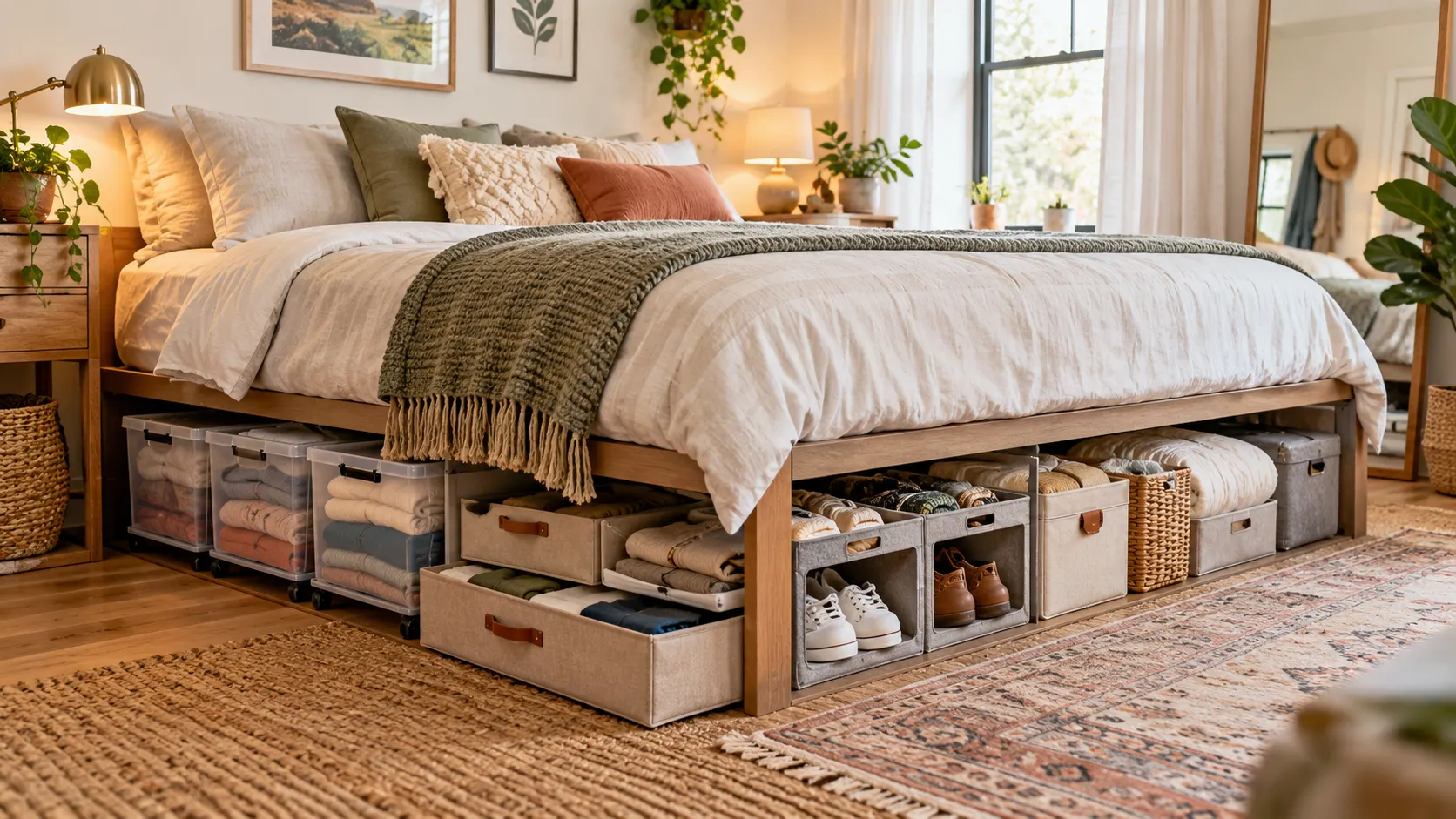
Rolling storage bins are among the most practical under-bed storage ideas for small bedrooms because they make hidden spaces easier to access. Instead of moving heavy containers across the floor, you can slide them out using built-in wheels. These bins are particularly useful for storing shoes, folded clothing, spare blankets, and other belongings you need regularly.
Choose low-profile rolling containers that fit comfortably beneath your bed frame without touching the mattress support. Transparent containers make it easier to identify their contents, while solid-colored options create a more uniform appearance. Look for models with secure lids to protect stored items from dust and keep everything organized between uses.
Before purchasing rolling storage bins, measure the available height, width, and depth underneath your bed. Remember to leave enough clearance for wheels, handles, and any uneven flooring. Proper measurements prevent storage containers from becoming stuck and help you maximize the available space without making daily access difficult.
2. Store Seasonal Clothes in Vacuum Storage Bags
Vacuum storage bags can help reduce the amount of space occupied by bulky seasonal clothing and spare bedding. These bags remove excess air from soft items, allowing sweaters, jackets, comforters, and blankets to occupy less room. This makes them useful for small bedrooms where traditional wardrobes cannot accommodate every seasonal item.
To use vacuum storage bags effectively, begin by washing and completely drying the clothing or bedding you intend to store. Place suitable items inside the bag, seal it according to the manufacturer’s instructions, and remove the air. Once compressed, the bags can fit inside protective containers or designated areas beneath the bed.
Avoid using vacuum compression for delicate garments, leather products, or materials that may lose their shape under prolonged pressure. Natural-filled bedding may also require special storage conditions to preserve its loft. Label each bag with its contents so you can locate seasonal clothing without opening several packages unnecessarily.
3. Add Under-Bed Drawers for Hidden Organization
Under-bed drawers transform unused bedroom space into a practical storage area that functions similarly to a built-in dresser. These drawers provide convenient compartments for clothing, accessories, books, and personal belongings. They are especially valuable in compact bedrooms where adding another chest of drawers would make the room feel crowded.
You can purchase ready-made under-bed drawers or choose a bed frame with integrated storage compartments. Some designs feature wooden drawers that match bedroom furniture, while others use lightweight materials for easier movement. Selecting a style that complements your existing furniture helps create an organized appearance without introducing unnecessary visual clutter.
For better organization, divide each drawer into sections based on the items you plan to store. Socks, folded shirts, sleepwear, and accessories can be separated using adjustable organizers or small storage boxes. This arrangement prevents belongings from becoming mixed together and makes everyday routines more efficient in limited spaces.
4. Organize Shoes with Flat Under-Bed Containers
Shoes can take up considerable closet space, particularly when multiple pairs are stored without an organized system. Flat under-bed shoe organizers provide a practical alternative by keeping footwear arranged in individual compartments. These containers help reduce clutter near bedroom doors and create more room for clothing or other essential items.
Choose shoe organizers with breathable materials or suitable ventilation to help prevent moisture buildup. Fabric organizers with clear covers make it easier to see different pairs without opening every compartment. For larger shoes or boots, select adjustable dividers that can accommodate different sizes without forcing footwear into unsuitable spaces.
Always clean and dry shoes before placing them into long-term storage containers. Storing damp footwear can encourage unpleasant odors and damage certain materials over time. Arrange frequently worn shoes toward the front of the bed and place occasional footwear farther back to make daily access more convenient.
5. Use Bed Risers to Create Extra Storage Space
Bed risers are a simple way to increase the available storage height beneath certain bed frames. By raising the bed slightly, you may create enough clearance for larger containers, storage drawers, or additional organizing baskets. This approach can be useful when your current bed sits too close to the floor for practical storage.
Before installing bed risers, confirm that they are compatible with your bed frame and suitable for its total weight. Follow the manufacturer’s installation instructions, and avoid using risers with unsupported furniture designs. A stable, properly supported bed is essential, especially when additional height could affect how easily someone gets in or out.
Once the bed is safely raised, measure the new clearance before choosing storage containers. Consider using matching bins to create a consistent arrangement underneath the frame. Avoid overfilling the available space, since leaving some clearance makes cleaning, retrieving belongings, and maintaining the bedroom easier.
6. Store Extra Bedding in Fabric Storage Bags
Extra sheets, pillowcases, blankets, and lightweight comforters often occupy valuable closet shelves in small bedrooms. Fabric under-bed storage bags offer a flexible solution for keeping these items together. Their soft construction allows them to fit into shallow spaces where rigid plastic containers may be inconvenient.
Choose durable fabric storage bags with sturdy zippers, reinforced handles, and breathable materials when appropriate. Clear viewing windows can make identifying different bedding sets easier without opening every bag. Keeping complete sheet sets together also reduces the time spent searching for matching pillowcases and fitted sheets during laundry days.
Wash and thoroughly dry bedding before placing it into storage to prevent unwanted moisture and odors. Fold items neatly and avoid packing bags so tightly that zippers become strained. If your bedroom experiences high humidity, check stored bedding periodically and address any moisture problems before they affect the fabric.
7. Create DIY Under-Bed Storage with Old Drawers
Repurposing old furniture drawers is an affordable way to create customized under-bed storage without purchasing an entirely new organizing system. Drawers from unused dressers or cabinets can become practical containers for books, accessories, or folded clothing. This approach also gives existing furniture materials a second purpose instead of immediately discarding them.
Begin by measuring the drawer dimensions and comparing them with the available space beneath your bed. Smooth any rough surfaces, clean the interior, and inspect the structure for damage. Lightweight casters can sometimes improve mobility, provided the drawer construction and wheel installation are suitable for the intended load.
You can paint or decorate the drawer exterior to match your bedroom furniture and create a cohesive appearance. Small labels or drawer dividers make the contents easier to organize. For bedrooms with limited decorating budgets, this DIY storage idea combines practical organization with a personalized furniture improvement project.
8. Use Clear Plastic Boxes for Better Visibility
Clear plastic storage boxes make it easier to identify belongings without opening several containers or removing everything from underneath the bed. They work well for accessories, spare toiletries, hobby supplies, and occasionally used household items. Their rigid construction also helps protect stored belongings from dust and accidental pressure.
Choose stackable, low-profile containers when your bed has enough clearance for the intended arrangement. Containers with secure lids are particularly useful for protecting items that are not needed regularly. Avoid stacking heavy boxes too high or creating arrangements that could become unstable when containers are pulled out.
Organize each box around a specific category rather than mixing unrelated belongings together. For example, one container might hold winter accessories, while another stores spare stationery or gift-wrapping supplies. Clear labeling further improves organization and reduces the time required to locate items during busy routines.
9. Keep Books and Magazines in Under-Bed Organizers
Books and magazines can accumulate quickly in small bedrooms, especially when bedside tables and shelves have limited capacity. Under-bed organizers provide extra space for reading materials without requiring additional bookcases. This solution works particularly well for occasional reading collections, archived magazines, and books you want to keep but rarely use.
Choose sturdy, shallow containers that can support the weight of books without bending or breaking. Arrange books horizontally when necessary, and avoid overcrowding containers that must slide across the floor. Moisture-resistant storage areas are important because paper materials can deteriorate when exposed to damp conditions for extended periods.
Keep your current reading materials within easy reach and move less frequently used books farther underneath the bed. Separating books by subject, author, or personal preference can make finding specific titles easier. This simple organizational method helps maintain a tidy bedroom while preserving access to your reading collection.
10. Divide Under-Bed Storage with Adjustable Organizers
Adjustable organizers help maximize under-bed storage by creating separate compartments for different categories of belongings. Without internal divisions, clothing, accessories, and small household items can become mixed together. Compartments create a more structured arrangement, making stored items easier to find and preventing unnecessary rearranging whenever something is needed.
Fabric drawer dividers, plastic separators, and adjustable compartment systems are useful options for organizing storage containers. You can create dedicated sections for socks, scarves, belts, small bags, and other personal accessories. Choose dividers that fit the container dimensions and remain stable when the storage unit moves.
For the best results, organize belongings according to their size and frequency of use. Keep commonly needed items in compartments closest to the front, where they can be reached quickly. Review your storage layout occasionally to ensure the arrangement still matches your needs as clothing collections and household routines change.
11. Use Sliding Storage Baskets for Everyday Essentials
Sliding storage baskets offer a convenient way to keep everyday essentials within reach without leaving them scattered around the bedroom. They can hold lightweight accessories, folded clothing, craft supplies, or other frequently used belongings. Their open or partially covered designs make it easier to access contents quickly during daily routines.
Choose baskets with smooth edges and suitable bases that will not damage bedroom flooring. Some woven baskets create a decorative appearance, while plastic or metal designs may offer additional durability. If your bed has limited clearance, low-profile baskets with handles can be more practical than taller containers.
Arrange baskets in a consistent order so you always know where different items belong. For example, one basket can hold workout accessories while another stores spare towels or personal organization supplies. Avoid keeping uncovered baskets in dusty areas unless their contents can be cleaned easily and regularly.
12. Store Luggage and Travel Accessories Under the Bed
Suitcases often consume substantial closet space despite being used only occasionally throughout the year. Depending on their dimensions, lightweight luggage can fit underneath a bed and free valuable wardrobe or storage space. This arrangement works particularly well in small apartments where separate luggage closets or storage rooms are unavailable.
Before placing a suitcase underneath the bed, clean the exterior and ensure the interior is completely dry. You can organize suitable travel accessories inside the luggage, including packing cubes, luggage tags, and empty toiletry organizers. Keeping related items together simplifies future packing and prevents small travel essentials from becoming misplaced.
Check the suitcase dimensions carefully because hard-shell luggage may not fit beneath lower bed frames. Soft-sided travel bags are sometimes easier to accommodate in shallow storage areas. Avoid forcing oversized luggage underneath furniture, as this can damage the suitcase, flooring, or bed frame over time.
13. Organize Kids’ Toys in Under-Bed Storage Boxes
Children’s bedrooms often become cluttered when toys, puzzles, and activity supplies spread across limited floor space. Under-bed storage boxes can create designated places for frequently used belongings while keeping play areas more organized. Low-profile containers are especially convenient when children can access them safely without moving heavy furniture.
Choose lightweight containers with rounded edges, easy-grip handles, and lids that do not create trapping or pinching hazards. Separate toys into categories such as building blocks, stuffed animals, puzzles, and art supplies. Picture labels can help younger children recognize storage categories even before they are comfortable reading written descriptions.
Encourage children to return toys to their assigned containers after playtime rather than leaving everything scattered across the floor. Keep heavy items and potentially hazardous objects in appropriate supervised storage locations. A simple, consistent organization system makes cleanup easier and helps maintain a more comfortable bedroom environment.
14. Use Under-Bed Storage for Seasonal Decorations
Seasonal decorations often occupy valuable household storage space despite being needed only a few times each year. Under-bed containers provide a practical location for lightweight decorations, decorative pillow covers, and small holiday accessories. This approach keeps occasional items out of sight while allowing them to remain available when needed.
Choose protective containers based on the fragility and material of the decorations being stored. Delicate ornaments may require padded compartments, while fabric decorations can fit into properly sealed storage bags. Keeping similar items together helps prevent damage and makes seasonal decorating more organized.
Label containers clearly with the appropriate holiday, season, or decoration category. Avoid storing candles, batteries, fragile objects, or temperature-sensitive materials in unsuitable conditions. By organizing seasonal decorations carefully, you can free closet space for everyday belongings and reduce unnecessary searching during special occasions.
15. Choose a Storage Bed with Built-In Drawers
A storage bed can be an excellent long-term solution for small bedrooms where traditional furniture occupies too much space. These bed frames incorporate drawers, lift-up compartments, or other built-in organizing features. By combining sleeping space with hidden storage, they reduce the need for separate cabinets or additional bedroom furniture.
Drawer-style storage beds provide direct access to clothing, bedding, and personal accessories from the sides or foot of the frame. Lift-up storage beds may offer larger internal compartments, depending on their design. The most suitable option depends on bedroom dimensions, accessibility requirements, and how frequently stored belongings need to be retrieved.
Before purchasing a storage bed, measure the entire room and consider the clearance required to open drawers or lift the mattress platform. Review the manufacturer’s weight limits, support system, and safety instructions carefully. Choosing a well-designed storage bed can improve organization while keeping the bedroom visually simple and comfortable.
Conclusion
Under-bed storage is one of the most practical ways to organize a small bedroom without sacrificing valuable floor space. Rolling containers, storage drawers, fabric bags, and adjustable organizers can transform unused areas into convenient storage compartments. These solutions help keep clothing, bedding, shoes, and everyday belongings organized while reducing visible clutter.
The best under-bed storage hacks depend on your bed height, available space, storage needs, and personal preferences. Measuring the area before purchasing containers prevents unnecessary expenses and ensures that storage solutions fit correctly. Choosing durable materials, maintaining cleanliness, and organizing items by category can also improve long-term convenience.
Whether you prefer affordable DIY projects or a bed with built-in drawers, small changes can make a meaningful difference in bedroom organization. Begin with the items that occupy the most space and select storage methods that provide easy access. With thoughtful planning, even a compact bedroom can feel cleaner, more organized, and easier to maintain.
Frequently Asked Questions (FAQs)
What is the best way to store things under a bed?
Rolling storage bins, shallow drawers, and airtight containers are practical options for under-bed storage. The best choice depends on your bed clearance, the items being stored, and how frequently you need access.
How can I create under-bed storage without buying new furniture?
You can reuse sturdy drawers, shallow containers, and existing storage baskets to organize the space beneath your bed. Measure the available clearance first and choose containers that slide easily without damaging the floor.
Is it okay to store clothes under the bed?
Yes, clothes can be stored underneath a bed when they are clean, completely dry, and protected from dust and moisture. Fabric bags, suitable plastic containers, and drawer organizers are useful options.
How do I keep under-bed storage dust-free?
Use containers with secure lids, wash stored fabrics before packing, and clean underneath the bed regularly. Keeping items off damp floors and checking containers periodically also helps protect belongings.
What should I avoid storing under my bed?
Avoid storing perishable food, hazardous chemicals, damp clothing, and fragile items without proper protection. Important documents and valuable electronics may also require more secure, temperature-controlled storage locations.