
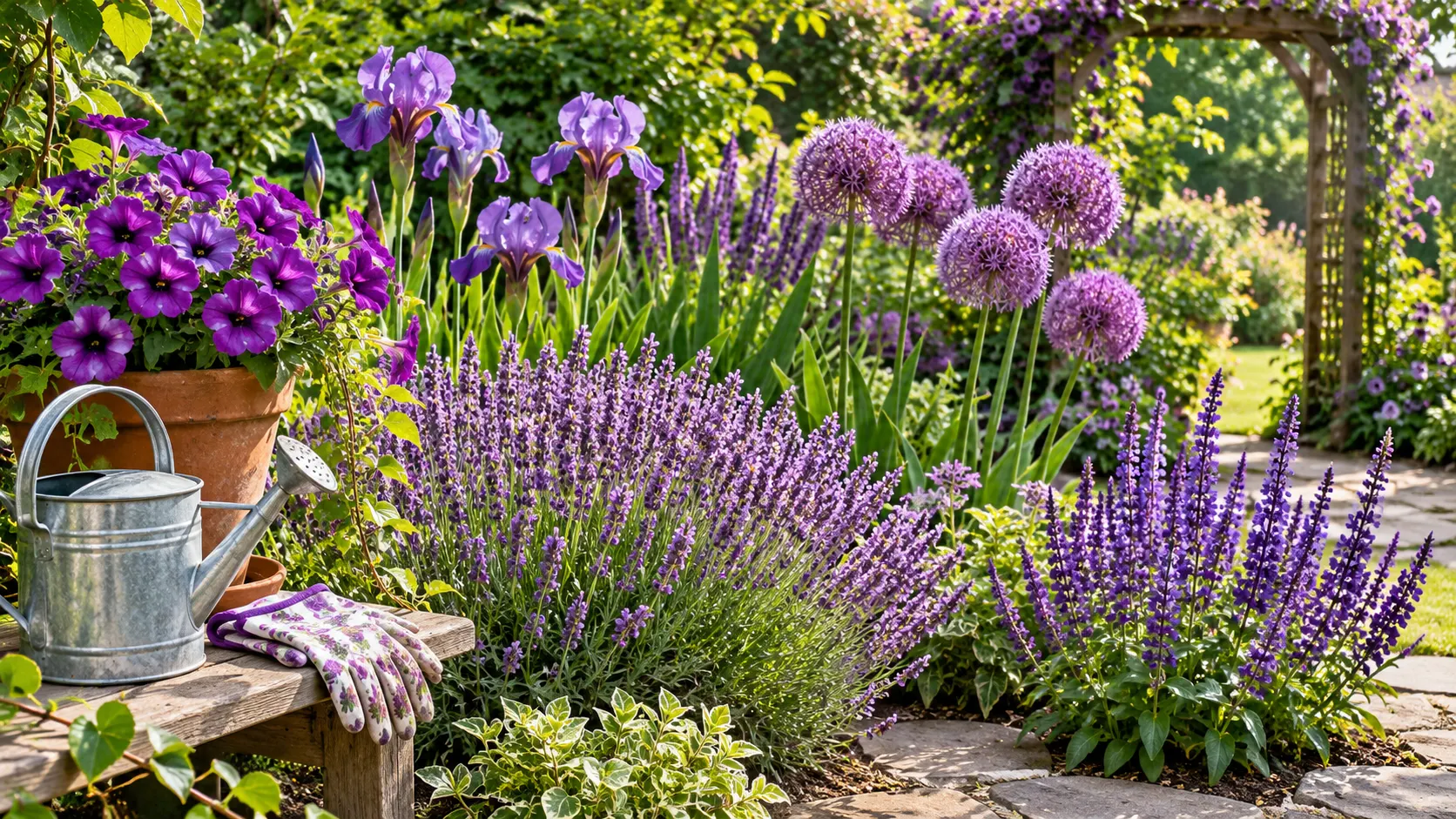
Purple flowers bring elegance, color, and natural beauty to gardens, balconies, and outdoor landscapes. Their shades range from soft lavender and delicate violet to rich plum and deep purple, creating stunning combinations with green foliage and other flowering plants. Whether you prefer fragrant lavender, beautiful irises, or colorful petunias, growing purple flowers can transform an ordinary space into an attractive garden.
However, not every purple flowering plant requires the same growing conditions. Some varieties thrive in direct sunlight and dry soil, while others prefer partial shade and consistent moisture. Understanding the different types of purple blooms, their sunlight requirements, watering needs, and seasonal growing patterns helps gardeners maintain healthy plants and enjoy beautiful flowers throughout the growing season.
What Are Purple Flowers?
Purple flowers are flowering plants that produce blossoms in different shades of violet, lavender, lilac, plum, and purple. Their distinctive colors develop through natural plant pigments, particularly anthocyanins, which contribute to red, blue, and purple coloration. The exact shade can vary according to plant genetics, flower chemistry, growing conditions, and the stage of development.
These flowers appear in many plant groups, including annuals, perennials, shrubs, bulbs, and climbing vines. Some produce small, delicate blossoms, while others develop large flowers that become prominent garden features. Because purple blooms occur across numerous plant families, gardeners can choose varieties suited to different climates, soil conditions, and landscaping preferences.
Purple flowering plants are popular in decorative gardens because their colors complement white, yellow, pink, and green surroundings. They can create attractive borders, brighten containers, or provide seasonal interest in garden beds. Many varieties also attract pollinators, including bees and butterflies, making them useful additions to gardens designed to support local wildlife.
Popular Types of Purple Flowers for Gardens
Lavender is among the most recognizable purple flowering plants, valued for its fragrant blossoms and attractive silver-green foliage. It generally grows best in sunny locations with well-drained soil and good air circulation. Once established, many lavender varieties tolerate relatively dry conditions, making them suitable for gardens where excessive watering can be difficult to manage.
Petunias are another popular choice for gardeners seeking colorful purple blooms throughout the warmer months. These flowering annuals are available in several shades, including deep violet, soft lavender, and purple-and-white combinations. They grow well in containers, hanging baskets, and flower beds when provided with suitable sunlight, regular watering, and occasional feeding.
Irises, salvias, and verbenas also provide attractive options for purple garden flowers. Irises are admired for their distinctive flower shapes, while salvias often produce upright spikes of colorful blossoms. Verbenas can create spreading displays in borders and containers, making them useful for gardeners who want different heights, textures, and flowering patterns within the same landscape.
Best Purple Perennial Flowers for Long-Lasting Beauty
Perennial flowers return for multiple growing seasons when planted in suitable conditions and maintained properly. Purple perennial varieties can provide reliable garden color without requiring complete replanting every year. Popular examples include certain asters, catmint, coneflowers, and perennial salvias, although their winter survival depends on the species, cultivar, and local climate.
Catmint is particularly useful for sunny borders because many varieties develop soft purple-blue flowers above aromatic gray-green foliage. Established plants often tolerate periods of dry weather and can attract pollinating insects. Cutting back selected varieties after flowering may encourage fresh growth and additional blossoms, depending on the plant and remaining growing season.
Purple coneflowers and asters can also provide seasonal interest in perennial gardens. Some coneflower cultivars produce pinkish-purple petals surrounding prominent central cones, while many asters develop clusters of small purple blossoms. Choosing varieties with different flowering periods can extend garden color from early summer into autumn without relying entirely on annual plants.
Beautiful Purple Annual Flowers for Seasonal Color
Annual flowers complete their life cycle within one growing season, making them useful for creating fresh garden displays. Many purple annuals provide abundant blossoms throughout suitable growing conditions and can be replaced when seasons change. Popular choices include petunias, purple varieties of zinnia, annual verbena, and certain flowering salvias used in decorative landscapes.
Petunias are especially attractive for hanging baskets and containers because many cultivars produce numerous trumpet-shaped flowers. They generally prefer sunny locations and well-draining potting mixes that retain enough moisture without becoming waterlogged. Regular watering, appropriate feeding, and occasional trimming can help maintain healthy growth and encourage continued flowering during warm weather.
Purple zinnias provide another colorful option for gardeners who enjoy easy-to-grow summer flowers. These plants typically thrive in full sunlight and benefit from sufficient spacing to maintain airflow around their leaves. Removing faded blossoms can encourage continued flowering, while watering near the soil helps reduce unnecessary moisture on foliage and lowers the risk of certain fungal problems.
Purple Flowering Shrubs for Landscaping
Purple flowering shrubs provide structure, height, and seasonal color in established landscapes. Unlike smaller annual flowers, shrubs often remain in place for several years and can serve as decorative borders or focal points. Popular examples include lilacs, butterfly bushes, and selected hydrangea varieties that produce blossoms ranging from lavender to deep violet.
Lilacs are well known for their fragrant spring flowers and attractive clusters of small blossoms. Many traditional lilac varieties require sufficient winter chilling to bloom reliably, making them better suited to cooler climates. They generally prefer sunny locations, well-drained soil, and good air circulation to support healthy growth and consistent seasonal flowering.
Hydrangeas can produce beautiful purple or bluish-purple flowers, although color depends on the species and cultivar. Certain bigleaf hydrangeas respond to soil chemistry and the availability of aluminum, while other hydrangea species do not change flower color in the same way. Selecting the correct variety and understanding its growing requirements helps gardeners achieve attractive results without unnecessary soil treatments.
Best Purple Flowers for Pots and Containers
Growing purple flowers in containers is an excellent option for balconies, patios, and gardens with limited planting space. Containers allow gardeners to control soil composition, drainage, and plant placement more easily than traditional garden beds. Compact petunias, violas, dwarf salvias, and suitable lavender varieties can create attractive displays when grown in appropriately sized pots.
Choose containers with drainage holes to prevent excess water from accumulating around plant roots. Use a quality potting mix designed for the selected plant rather than relying on heavy garden soil. Because container soil dries more quickly than ground soil, check moisture regularly and adjust watering according to the weather, plant size, and growing conditions.
Combine purple blossoms with complementary foliage or flowers to create balanced decorative arrangements. White alyssum, green foliage plants, and yellow seasonal flowers can provide attractive contrast without overwhelming the main display. When planting several varieties together, choose plants with similar sunlight and watering requirements to simplify maintenance and support healthy growth throughout the season.
How to Plant Purple Flowers Successfully
Successful planting begins with choosing purple flowering varieties suited to your local climate and garden conditions. Check whether each plant prefers full sunlight, partial shade, or protection from intense afternoon heat. Also consider mature height, flowering season, and spacing requirements before deciding where to place plants in your garden or containers.
Prepare the planting area by removing weeds, loosening compacted soil, and improving drainage when necessary. Many flowering plants benefit from soil enriched with suitable organic matter, although varieties such as lavender prefer relatively lean, sharply drained conditions. Avoid adding excessive fertilizer during preparation because overly rich soil can sometimes encourage leafy growth instead of abundant flowers.
When transplanting nursery plants, dig a hole approximately as deep as the root ball and wide enough to accommodate the roots comfortably. Position the plant at its previous growing depth unless its specific care instructions recommend otherwise. Gently firm the surrounding soil, water thoroughly, and provide appropriate protection while the plant establishes itself in its new location.
Sunlight and Soil Requirements for Purple Flowers
Sunlight requirements vary considerably between different purple flowering plants. Lavender, zinnias, and many salvias generally perform best in full sun, receiving approximately six or more hours of direct sunlight daily. Other varieties, including certain violas and hydrangeas, may benefit from partial shade, particularly in regions with intense summer temperatures.
Soil quality also affects flower production, root development, and overall plant health. Many garden flowers prefer well-drained soil that retains sufficient moisture without becoming continuously saturated. However, lavender usually needs faster drainage than moisture-loving flowers, making it important to group plants according to similar soil requirements rather than assuming all purple varieties need identical conditions.
Before planting, observe how sunlight moves across your garden during the day and examine whether water collects after rainfall. Compacted or poorly drained areas may require soil improvement or raised planting beds. Selecting plants that naturally suit existing conditions can reduce maintenance requirements and create healthier, more reliable flowering displays over time.
How Often Should You Water Purple Flowers?
Proper watering is essential for maintaining healthy purple blooms, but the correct frequency depends on the plant variety and growing environment. Newly planted flowers usually require more consistent moisture while their roots establish. Mature plants may have different requirements, with drought-tolerant species needing less frequent watering than plants that prefer evenly moist soil.
Check soil moisture before watering instead of following a fixed daily schedule. For many garden plants, watering becomes appropriate when the upper soil begins drying, although some varieties require different conditions. Apply water around the root area and allow it to penetrate the soil deeply enough to support healthy root development.
Overwatering can create problems such as root damage, poor growth, and yellowing leaves, particularly in poorly drained soil. Underwatering may cause wilting, dry foliage, and reduced flower production during hot weather. Adjust watering during rainy periods, extreme heat, and seasonal temperature changes to maintain suitable moisture without keeping roots continuously wet.
Fertilizing and Pruning Purple Flowering Plants
Fertilizer provides nutrients that support healthy plant growth and flower production when the existing soil cannot supply enough. However, different purple flowers require different feeding schedules, and excessive fertilizer may cause problems. Many container-grown annuals benefit from occasional balanced feeding, while established lavender often performs better with limited fertilization.
Follow product instructions carefully and avoid applying more fertilizer than recommended. If plants grow large amounts of foliage but produce relatively few flowers, excessive nitrogen may be one possible cause. Soil testing can help identify nutrient deficiencies before gardeners apply unnecessary treatments, especially in established garden beds where soil conditions vary.
Pruning and deadheading can also improve the appearance of flowering plants and encourage additional growth in suitable varieties. Removing faded blossoms helps some annuals direct energy toward producing new flowers. For perennial plants and shrubs, follow species-specific pruning recommendations because cutting at the wrong time may remove developing flower buds or damage healthy branches.
Common Problems Affecting Purple Flowers
Purple flowering plants can experience problems caused by unsuitable growing conditions, pests, and plant diseases. Common warning signs include yellow leaves, weak growth, damaged petals, and fewer blossoms than expected. These symptoms may develop because of excessive watering, insufficient sunlight, nutrient imbalances, or environmental stress rather than a single identifiable cause.
Pests such as aphids, spider mites, and thrips may affect certain flowering plants by feeding on leaves, stems, or developing buds. Inspect plants regularly, especially beneath leaves and around new growth, to identify potential problems early. Encourage beneficial insects and use appropriate low-impact management methods when necessary, following local gardening recommendations.
Fungal diseases can also develop when plants experience poor air circulation or prolonged moisture on their foliage. Powdery mildew and certain leaf spot diseases may affect susceptible varieties under favorable conditions. Provide suitable spacing, remove badly affected plant material when appropriate, and avoid unnecessary overhead watering to help reduce conditions that encourage disease development.
How to Use Purple Flowers in Garden Design
Purple flowers provide versatile color options for traditional gardens, modern landscapes, and decorative containers. Deep purple blossoms can create bold focal points, while pale lavender shades produce softer and more relaxed arrangements. Mixing different purple tones with complementary foliage helps create visual depth without requiring large numbers of unrelated flowering varieties.
For an attractive garden border, consider combining tall purple salvias with lower-growing catmint or seasonal petunias. White flowers can brighten the arrangement, while yellow blossoms provide stronger contrast and visual interest. Repeating selected plants throughout the border creates a coordinated appearance, making the garden feel more organized and visually balanced.
Gardeners can also use purple flowering plants to create pollinator-friendly spaces when suitable species are selected. Many salvias, catmints, and asters provide nectar or pollen for beneficial insects. Choose locally appropriate plants, avoid unnecessary pesticide applications, and include flowers with different blooming periods to support garden biodiversity across multiple seasons.
Conclusion
Purple flowers are an excellent choice for gardeners who want to add elegance, variety, and seasonal color to outdoor spaces. From fragrant lavender and delicate violas to beautiful irises and vibrant petunias, numerous varieties can suit different garden styles. Understanding each plant’s growing requirements helps create attractive displays while supporting healthy development and reliable flowering.
Successful flower care depends on selecting suitable sunlight conditions, maintaining appropriate soil drainage, and watering according to plant needs. Regular observation, thoughtful fertilization, and species-specific pruning can also improve garden performance. Because purple flowering plants vary considerably, choosing varieties suited to your climate is more effective than applying identical care methods to every plant.
Whether you are creating a colorful flower border, decorating a balcony, or developing a pollinator-friendly garden, purple blooms provide countless design possibilities. Start with a few manageable varieties and expand your collection as you gain experience. With proper planting and consistent care, purple flowering plants can bring lasting beauty and natural charm to your garden.
Frequently Asked Questions (FAQs)
What Are the Most Popular Types of Purple Flowers?
Popular purple flowers include lavender, petunias, irises, violets, salvias, catmint, asters, and certain hydrangeas. These plants offer different flower shapes, growing habits, and seasonal blooming periods for various garden conditions.
Do Purple Flowers Need Full Sun or Shade?
Sunlight requirements depend on the variety. Lavender, zinnias, and many salvias prefer full sun, while certain violas and hydrangeas can benefit from partial shade, especially in hotter climates.
Which Purple Flowers Bloom for the Longest Time?
Petunias, annual verbena, and some salvias can bloom for extended periods under suitable conditions. Regular watering, appropriate feeding, and removing faded blossoms may help maintain flowering throughout their growing seasons.
Can Purple Flowers Grow in Pots?
Yes, many purple flowers grow successfully in containers, including petunias, violas, compact salvias, and certain lavender varieties. Choose suitable potting soil, provide drainage holes, and match watering and sunlight to each plant.
How Do You Keep Purple Flowers Healthy and Blooming?
Provide appropriate sunlight, well-drained soil, consistent watering, and suitable nutrients. Remove faded flowers where beneficial, inspect plants for pests, and adjust care according to the specific variety and local weather conditions.