
Autumn Joy Sedum is a popular flowering perennial known for its colorful blooms, thick green leaves, and easy maintenance. This beautiful garden plant produces clusters of flowers that gradually change from soft pink to deeper reddish and copper tones as the seasons progress. It attracts pollinators and brings lasting color to gardens during late summer and autumn. Whether you are a beginner or an experienced gardener, understanding Autumn Joy Sedum care can help you grow healthy plants. This guide covers growing conditions, watering, sunlight, pruning, propagation, common problems, and related sedum varieties.
What Is Autumn Joy Sedum?
Autumn Joy Sedum is a hardy perennial succulent known for its attractive foliage and long-lasting seasonal flowers. Its botanical name is Hylotelephium ‘Herbstfreude’, although many gardeners still call it Sedum ‘Autumn Joy’. The plant belongs to the stonecrop group and is valued for its ability to tolerate relatively dry conditions. Its upright growth makes it a useful addition to flower beds and mixed borders.
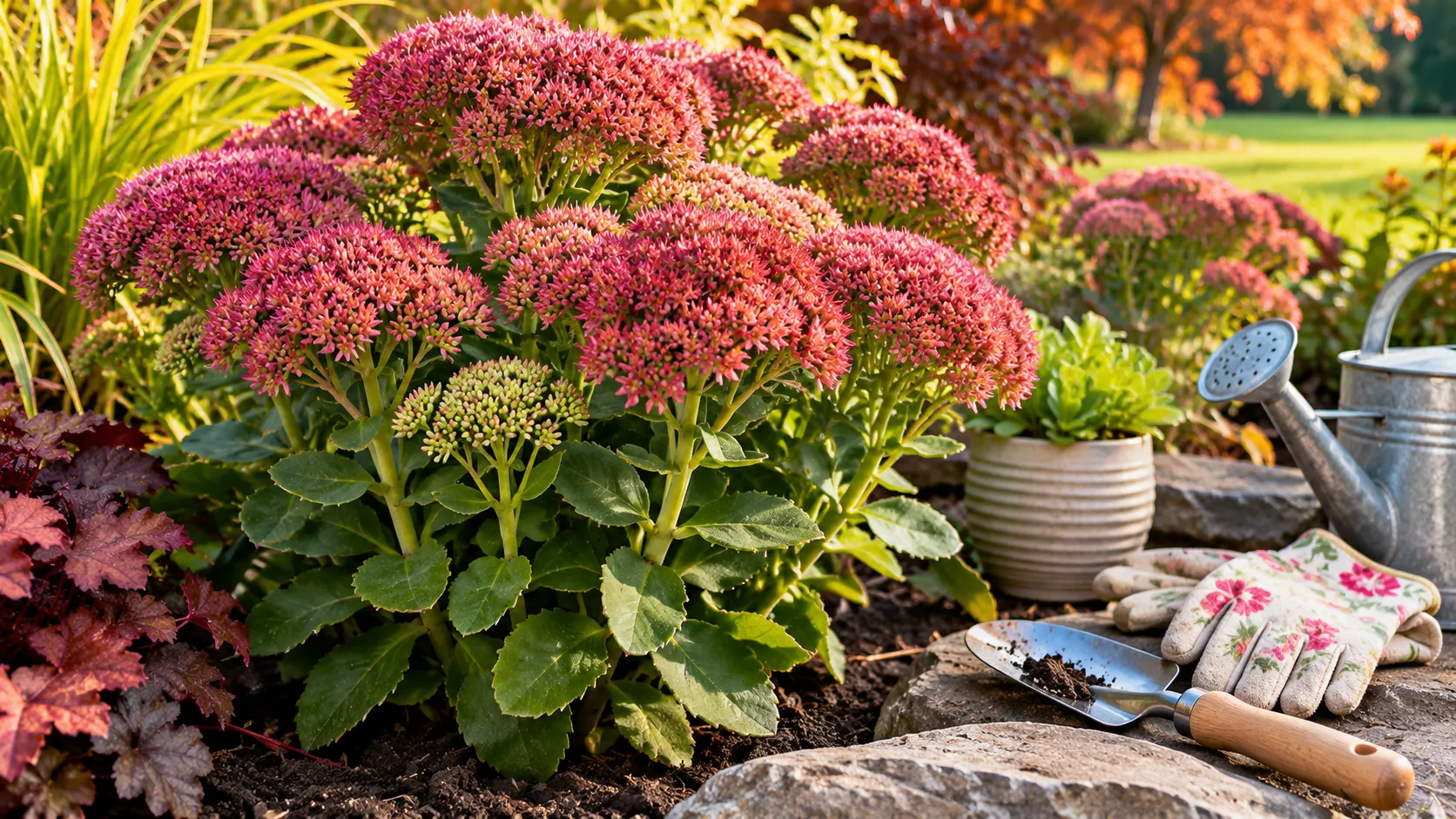
The plant produces fleshy green leaves along sturdy stems that support large clusters of small flowers. During summer, the developing flower heads often appear pale green before gradually turning pink. As autumn approaches, the blooms develop richer reddish and copper shades. The dried flower heads can remain attractive during winter, adding texture to garden landscapes.
Autumn Joy Sedum is particularly popular because it requires relatively little maintenance once established. It grows well in sunny locations with soil that drains effectively after rainfall. Its flowers also provide nectar for bees, butterflies, and other pollinating insects. These characteristics make it a practical choice for gardeners who want seasonal color without demanding care routines.
Autumn Joy Sedum Plant Characteristics
Autumn Joy Sedum has an upright, clump-forming growth habit that creates a structured appearance in garden borders. Mature plants commonly reach around 18 to 24 inches in height, although growing conditions can influence their final size. Their rounded flower clusters form above thick stems and succulent foliage. This combination gives the plant visual interest even before flowering begins.
The leaves are typically blue-green to gray-green and have a thick, fleshy texture. These succulent leaves store water, helping established plants tolerate occasional dry periods. During the growing season, the foliage creates a dense mound that complements nearby ornamental plants. Healthy leaves usually remain attractive until colder temperatures cause the plant to enter dormancy.
One of the most distinctive features is the way flower colors change throughout the season. Early flower clusters develop from pale green buds into pink blossoms during late summer. As temperatures cool, the flowers often become deeper red or rusty copper. These changing colors make Autumn Joy Sedum valuable for gardens needing interest beyond the main summer flowering period.
Best Growing Conditions for Autumn Joy Sedum
Choosing the right growing location is essential for healthy Autumn Joy Sedum plants. This perennial performs best in sunny areas with well-draining soil and sufficient space for mature growth. Established plants are relatively drought tolerant, making them useful for low-maintenance landscaping. However, consistently wet soil can create problems even when other growing conditions are suitable.
Autumn Joy Sedum is generally hardy in USDA growing zones 3 through 9. This broad range allows it to grow in many regions with different seasonal temperatures. The plant usually dies back above ground during winter and produces new growth in spring. Local weather, soil conditions, and drainage can still affect how successfully it survives.
Gardeners should avoid planting Autumn Joy Sedum in locations that remain waterlogged after rainfall. Raised beds, sloping areas, and naturally well-drained borders can provide suitable conditions. Allow enough room between neighboring plants for airflow and normal development. A thoughtful planting location reduces maintenance requirements and helps support healthy stems, leaves, and flowers.
How Much Sunlight Does Autumn Joy Sedum Need?
Autumn Joy Sedum grows best in full sunlight, usually receiving at least six hours of direct sun each day. Adequate light encourages sturdy stems, healthy foliage, and abundant flowering. Plants grown in suitable sunny positions often develop a compact appearance. Sunlight is therefore one of the most important factors affecting their overall performance.
Although Autumn Joy Sedum can tolerate some partial shade, insufficient light may weaken its growth. Stems may stretch toward brighter areas and become less capable of supporting large flower clusters. Flower production can also decrease when the plant receives too little sunlight. Choosing a brighter location often helps prevent these problems.
In regions with extremely hot summers, some afternoon shade may protect plants from intense heat. However, excessive shade should still be avoided because the plant prefers bright growing conditions. Observe how sunlight moves across your garden before selecting a permanent position. Balancing adequate sun exposure with local climate conditions supports reliable seasonal growth.
Best Soil for Growing Autumn Joy Sedum
Well-draining soil is one of the most important requirements for growing Autumn Joy Sedum successfully. The plant can tolerate several soil types, including sandy, gravelly, and moderately fertile garden soil. However, its roots perform poorly when surrounded by standing water for extended periods. Good drainage helps prevent root problems and supports healthy development.
Heavy clay soil may require improvement before planting Autumn Joy Sedum. Incorporating suitable mineral materials or creating a raised planting area can help reduce prolonged water retention. Organic matter may improve soil structure, but excessive moisture-holding amendments should be avoided. The goal is to create soil that drains effectively while allowing roots to establish.
Autumn Joy Sedum generally does not require highly fertile soil to produce attractive flowers. In fact, overly rich conditions can encourage weak, elongated growth. A moderately fertile planting area is usually sufficient for established plants. Before planting, check how quickly the soil drains after watering or rainfall to identify potential problems.
How to Plant Autumn Joy Sedum Step by Step
The best time to plant Autumn Joy Sedum is generally during spring or early autumn when temperatures are moderate. These periods allow roots to establish before intense summer heat or winter dormancy. Choose a location with suitable sunlight and drainage. Preparing the planting area properly makes future maintenance easier and supports healthy growth.
Begin by digging a hole approximately as deep as the plant’s root ball and slightly wider. Remove the plant carefully from its container and gently loosen tightly circling roots if necessary. Position the crown at approximately the same level as it was growing in the pot. Fill the surrounding space with soil and press lightly to remove large air pockets.
Water the newly planted sedum to help settle the soil around its roots. Continue checking moisture during establishment, especially when rainfall is limited. Space plants according to their mature width, typically allowing around 18 to 24 inches between centers. Providing suitable spacing helps improve airflow and allows each plant to develop its natural rounded shape.
How Often Should You Water Autumn Joy Sedum?
Autumn Joy Sedum requires regular attention to watering during its early establishment period. Newly planted specimens need enough moisture to develop healthy root systems. Water thoroughly when the surrounding soil begins to dry rather than following an inflexible daily schedule. The frequency depends on temperature, rainfall, drainage, and the plant’s stage of growth.
Once established, Autumn Joy Sedum is relatively drought tolerant because its succulent leaves store moisture. Mature plants often need little supplemental watering when seasonal rainfall is adequate. During extended hot and dry periods, occasional deep watering may support healthy growth. Always check soil moisture before watering to avoid creating persistently wet conditions.
Overwatering is a common mistake when caring for this perennial. Excess moisture can encourage root rot, weak stems, and yellowing foliage. Allow the soil to dry appropriately between watering sessions, particularly in containers. Avoid assuming that every wilted or discolored leaf indicates drought because overly wet roots can produce similar symptoms.
Fertilizing Autumn Joy Sedum for Healthy Growth
Autumn Joy Sedum usually requires very little fertilizer when planted in suitable garden soil. This perennial naturally performs well in moderately fertile conditions and does not need heavy feeding. Excessive fertilizer can encourage soft, elongated stems that struggle to support developing flowers. A simple approach is generally more effective than frequent nutrient applications.
If plants show signs of poor growth, consider evaluating soil conditions before applying fertilizer. A soil test can help identify nutrient deficiencies or unsuitable soil characteristics. When feeding is necessary, use a suitable balanced fertilizer according to the manufacturer’s directions. Avoid applying more than recommended because additional nutrients do not automatically improve flowering.
Container-grown sedum may need occasional feeding because nutrients can gradually become depleted from potting mixtures. However, modest applications are usually sufficient during active growth. Reduce unnecessary feeding when the plant approaches dormancy. Maintaining appropriate light, drainage, and watering practices generally has a greater influence on plant health than frequent fertilization.
When Does Autumn Joy Sedum Bloom?
Autumn Joy Sedum typically begins flowering during late summer, with colorful displays continuing into autumn. The exact timing depends on local temperatures, daylight, and growing conditions. Flower buds develop as broad clusters near the tops of the stems. These clusters gradually open into numerous small flowers that create an attractive seasonal display.
One appealing characteristic is the gradual transformation of flower color. Developing buds begin with pale green tones before taking on soft pink shades. As the flowers mature, they often deepen into rosy red, burgundy, or copper-colored hues. These changes provide visual interest for several weeks without requiring repeated planting or seasonal replacement.
After flowering, the dried seed heads may remain standing during late autumn and winter. Many gardeners leave them in place because they add structure to otherwise quiet garden beds. Their appearance can be especially attractive after light frost. Removing spent flower heads is optional unless damaged stems or local garden conditions make cleanup necessary.
How to Prune Autumn Joy Sedum Correctly
Pruning Autumn Joy Sedum helps manage its appearance and remove damaged or unwanted growth. However, the plant does not require frequent trimming throughout the growing season. Many gardeners leave the flower heads intact after blooming because they provide winter interest. Major cleanup is commonly performed during late winter or early spring.
Before new growth becomes established, remove the previous season’s dried stems near the base. Use clean, suitable pruning tools and avoid damaging emerging shoots. Removing old material helps create space for fresh spring growth. If the stems remain healthy and decorative during winter, there is usually no need to remove them immediately after flowering.
Some gardeners shorten young stems during late spring to encourage a more compact shape. This technique may reduce excessive height, but it can also delay flowering. Avoid severe pruning late in the growing season when flower buds are developing. Proper sunlight and moderate soil fertility are often more effective for preventing weak, floppy stems.
How to Propagate Autumn Joy Sedum
Autumn Joy Sedum can be propagated through division and stem cuttings, making it relatively easy to produce additional plants. Division is particularly useful when established clumps become crowded or develop less vigorous centers. Spring is a suitable time for this process because new growth is beginning. Healthy divisions can establish more readily when growing conditions are favorable.
To divide a mature plant, carefully lift the clump and separate it into sections containing roots and healthy shoots. Replant each section in well-draining soil at a suitable depth. Water lightly to help settle the surrounding soil. Avoid leaving divided roots exposed to intense sunlight or drying conditions for an extended period.
Stem cuttings provide another propagation method during active growth. Select healthy, nonflowering stems and remove the lower leaves before placing them in a suitable well-draining growing medium. Keep the medium lightly moist rather than saturated while roots develop. Propagation results can vary, so monitor the cuttings and avoid exposing them to excessively wet conditions.
Popular Sedum Varieties Similar to Autumn Joy
Autumn Joy belongs to a group of ornamental stonecrops that includes several attractive cultivars. Although gardeners sometimes call them Autumn Joy varieties, related cultivars are actually separate selections with their own characteristics. They may differ in height, foliage color, flowering time, and overall growth habit. Comparing these plants helps you select suitable options for your garden.
‘Autumn Fire’ is a related cultivar known for its upright growth and colorful late-season blooms. It is often selected by gardeners seeking a similar appearance with sturdy stems. ‘Matrona’ is another popular option featuring attractive foliage and rosy flower clusters. Its stems and leaves can provide additional visual contrast within mixed perennial borders.
‘Brilliant’ is also worth considering for gardens that benefit from bright pink flower clusters. Different cultivars may perform differently depending on growing conditions and local climate. Some remain relatively compact, while others produce taller or broader clumps. Checking mature dimensions and light requirements before purchasing helps you create better planting combinations.
Common Autumn Joy Sedum Problems and Solutions
Autumn Joy Sedum is generally a resilient perennial, but unfavorable conditions can lead to occasional problems. Root rot is one concern when soil remains wet for prolonged periods. Affected plants may develop yellowing leaves, weak growth, or declining stems. Improving drainage and avoiding excessive watering can help reduce the likelihood of these problems.
Floppy stems are another common issue, particularly in shaded locations or overly fertile soil. Plants may stretch toward sunlight and become unable to support heavy flower clusters. Moving them to a sunnier position or reducing unnecessary fertilizer can help improve future growth. Some gardeners also use discreet supports when mature flower heads become especially heavy.
Aphids, fungal diseases, and other garden problems can occasionally affect Autumn Joy Sedum. Inspect foliage and stems regularly to identify unusual changes early. Remove badly damaged material when appropriate and encourage airflow between plants. If a problem continues, identify the cause before choosing treatment rather than applying unnecessary garden chemicals.
Growing Autumn Joy Sedum in Containers
Autumn Joy Sedum can grow successfully in containers when provided with adequate sunlight and well-draining potting media. Choose a pot with drainage holes so excess water can escape easily. The container should also provide sufficient room for developing roots. A stable pot is useful because mature flower clusters can make plants top-heavy.
Use a suitable potting mixture designed for plants that prefer good drainage. Avoid heavy garden soil that may compact inside containers and retain excessive moisture. Position the pot where the plant receives enough direct sunlight to support flowering. During very hot weather, monitor soil conditions because containers can dry more quickly than garden beds.
Container-grown sedum may require more frequent watering than plants established directly in the ground. However, allowing the growing medium to dry appropriately remains important. In colder climates, roots inside containers may need additional winter protection. Moving pots to a sheltered location can help reduce exposure to extreme temperature changes.
Landscaping Ideas With Autumn Joy Sedum
Autumn Joy Sedum works well in perennial borders because its foliage and flowers provide interest across several seasons. During spring and summer, the green leaves create a structured background for other flowering plants. As autumn approaches, colorful flower clusters become more noticeable. This seasonal transition makes the plant valuable for layered garden designs.
You can combine Autumn Joy Sedum with ornamental grasses, coneflowers, black-eyed Susans, and other sun-loving perennials. These plants can create attractive combinations of flower shapes, textures, and colors. Choose companions with compatible sunlight and watering requirements. Proper spacing also helps each plant grow without excessive competition for light and nutrients.
Another useful landscaping idea is planting sedum along pathways or within low-maintenance garden beds. Its relatively compact clumping habit can help define borders without requiring frequent trimming. Pollinator-friendly planting combinations may also attract beneficial insects during flowering periods. Autumn Joy Sedum is particularly effective where gardeners want dependable seasonal interest and manageable care requirements.
Conclusion
Autumn Joy Sedum is a beautiful, hardy perennial that adds colorful flowers and attractive foliage to gardens from summer into autumn. Its changing flower shades, upright growth, and relatively low maintenance needs make it appealing to different gardeners. Understanding its sunlight, soil, and watering requirements is essential for healthy development. With suitable conditions, established plants can return reliably for many growing seasons.
Successful Autumn Joy Sedum care begins with choosing a sunny location and providing soil that drains effectively. Moderate watering, minimal fertilizer, and occasional pruning are generally sufficient for ongoing maintenance. Gardeners can also propagate established plants through division or stem cuttings. Watching for excessive moisture and weak growth helps prevent several common problems.
Whether planted in containers, mixed borders, or pollinator-friendly landscapes, Autumn Joy Sedum offers many possibilities for garden design. Related cultivars such as ‘Autumn Fire’, ‘Matrona’, and ‘Brilliant’ provide additional choices for different planting styles. Start with healthy plants and adjust care according to local conditions. With simple maintenance, this flowering perennial can provide attractive seasonal color year after year.
Frequently Asked Questions
Does Autumn Joy Sedum come back every year?
Yes, Autumn Joy Sedum is a hardy perennial that normally returns each spring when grown in suitable conditions. Its above-ground stems die back during winter, while the established root system survives.
Does Autumn Joy Sedum need full sun?
Autumn Joy Sedum grows best with at least six hours of direct sunlight daily. It can tolerate some partial shade, but insufficient light may cause weak stems and reduced flowering.
How often should I water Autumn Joy Sedum?
Newly planted sedum needs regular moisture while establishing roots. Mature plants are relatively drought tolerant and usually require additional watering only when conditions become unusually dry for extended periods.
Should Autumn Joy Sedum be cut back in winter?
You can leave dried flower heads standing through winter for decorative interest. Cut back old stems during late winter or early spring before fresh growth develops.
Can Autumn Joy Sedum grow in pots?
Yes, Autumn Joy Sedum can grow in containers with drainage holes, suitable potting soil, and adequate sunlight. Monitor moisture carefully and protect container roots during severe winter conditions.