
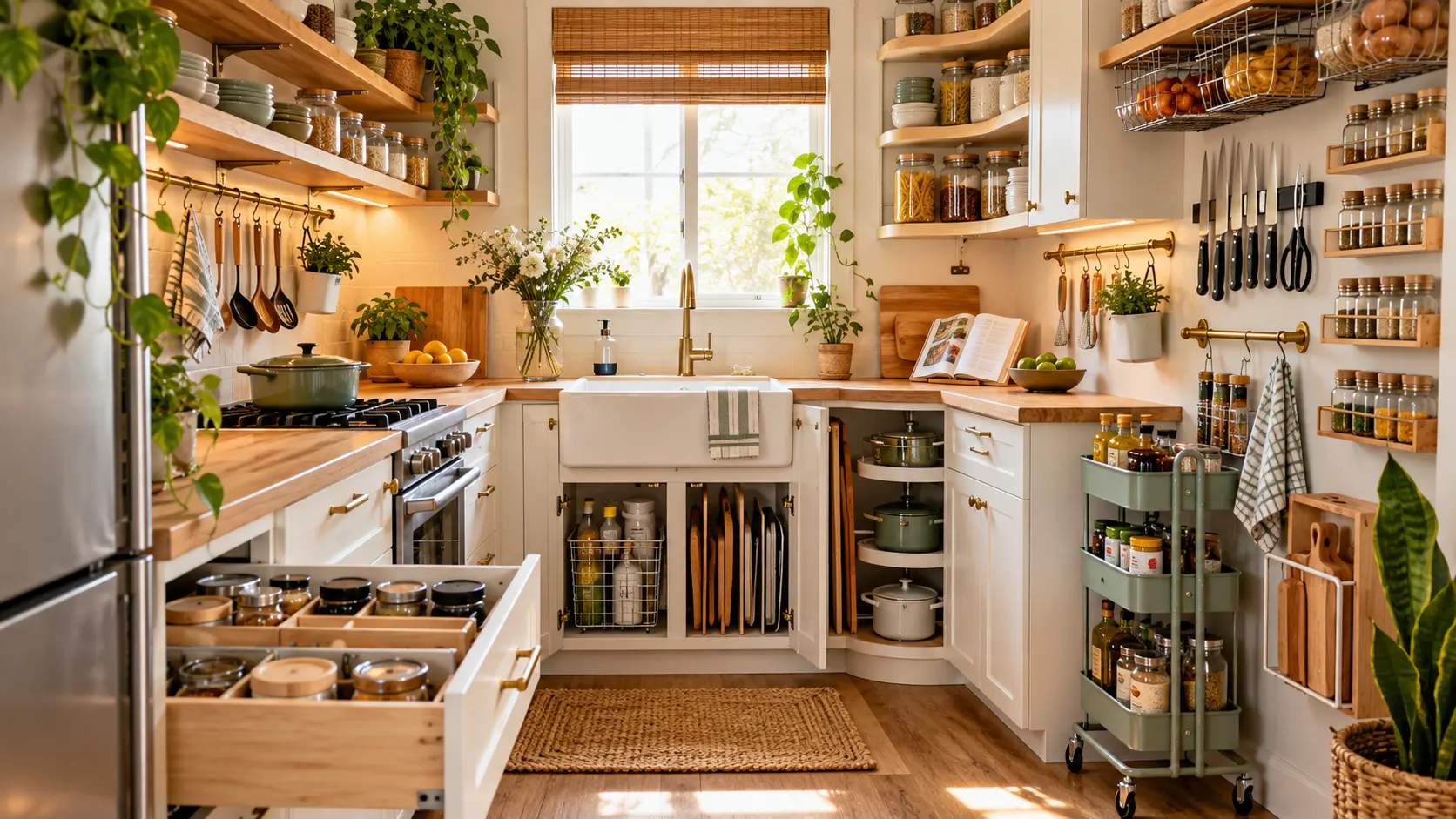
A small kitchen can quickly feel crowded when cabinets overflow, countertops disappear beneath everyday items, and there never seems to be enough room for cooking essentials. However, limited space does not mean you have to sacrifice organization or functionality. With the right kitchen storage hacks for small spaces, even the most compact kitchen can become practical, organized, and easier to use.
The secret to maximizing a small kitchen is using overlooked areas, reducing unnecessary clutter, and choosing storage solutions that fit your daily routine. From vertical shelves and drawer organizers to hidden cabinet storage, simple adjustments can make a noticeable difference. These 17 creative kitchen organization ideas will help you make better use of your available space without requiring an expensive renovation.
1. Use Vertical Wall Space for Extra Storage
Vertical storage is one of the most effective ways to organize a small kitchen because it uses areas that often remain empty. Walls above countertops, beside cabinets, and near preparation areas can provide valuable storage opportunities. Installing suitable shelves or organizers allows you to move frequently used items away from crowded work surfaces.
Wall-mounted shelves can hold everyday dishes, lightweight containers, cookbooks, and decorative kitchen accessories. Keeping commonly used items visible makes them easier to find while reducing the need to search through packed cabinets. Choose shelf dimensions that fit your kitchen layout without interfering with cooking activities or movement.
Before installing wall storage, consider the weight of the items and the strength of the mounting surface. Heavy cookware requires properly secured supports rather than lightweight adhesive fixtures. Leave enough clearance around appliances, sinks, and cooking areas to maintain safe access and prevent storage solutions from creating unnecessary obstacles.
2. Install Pull-Out Shelves Inside Cabinets
Deep kitchen cabinets often become disorganized because items stored at the back are difficult to reach. Pull-out shelves solve this problem by allowing stored items to slide forward when needed. This design makes it easier to see pantry supplies, cookware, and other essentials without removing everything from the cabinet.
Pull-out organizers are particularly useful for lower cabinets where bending and reaching can become uncomfortable. They can accommodate pots, pans, food containers, and cleaning supplies depending on their design and weight capacity. Adjustable systems provide additional flexibility when storing items of different heights and shapes.
Measure the cabinet’s interior carefully before choosing a pull-out shelf system. Hinges, plumbing, and existing cabinet structures may affect the available space. Select durable hardware with an appropriate load rating, and organize heavier objects on lower shelves to maintain stability and convenient access.
3. Add Hooks Under Cabinets and Shelves
The underside of kitchen cabinets and shelves is an overlooked storage area that can accommodate small everyday essentials. Installing suitable hooks can create convenient places for mugs, lightweight utensils, or other frequently used accessories. This simple adjustment helps free space inside cabinets while keeping important items within reach.
Cup hooks work particularly well beneath upper cabinets when there is enough clearance below them. Hanging mugs can make shelves less crowded and create a practical storage arrangement near a coffee or tea station. Small utensils may also be stored on hooks when they can hang securely without interfering with food preparation.
Choose hooks that match the weight of the objects you intend to store. Adhesive options may be suitable for very lightweight accessories, while securely installed fixtures are generally more dependable for heavier items. Avoid placing hanging objects directly above hot cooking surfaces or locations where they could create hazards.
4. Use Magnetic Strips for Metal Kitchen Tools
Magnetic storage strips can help organize suitable metal kitchen tools without occupying valuable drawer or countertop space. These organizers attach to an appropriate wall surface and hold compatible metal objects in an accessible position. They are particularly useful in compact kitchens where traditional utensil storage can become crowded.
A properly installed magnetic knife strip can provide convenient storage for kitchen knives while reducing clutter in drawers. However, the strip must securely support each knife and be positioned away from children and accidental contact. Knives should remain stable when attached, with enough surrounding clearance for safe handling.
Magnetic storage can also be useful for certain lightweight metal utensils and accessories. Always verify that the magnet is strong enough for the intended objects and that the mounting system is reliable. Avoid overcrowding the strip, as secure spacing makes tools easier to access and reduces the likelihood of accidental movement.
5. Organize Drawers With Adjustable Dividers
Kitchen drawers can become messy when utensils, measuring tools, and accessories are stored together without separation. Adjustable drawer dividers create dedicated compartments that keep similar items grouped. This arrangement reduces unnecessary searching and makes it easier to maintain an organized kitchen during everyday cooking activities.
Expandable organizers are particularly useful because they can accommodate different drawer widths. Separate cooking utensils, cutlery, measuring spoons, and smaller accessories according to how frequently you use them. Placing everyday items toward the front can improve convenience while keeping occasional-use tools in less accessible compartments.
Before purchasing organizers, measure the interior width, depth, and height of each drawer. Avoid choosing compartments that are too small for your utensils or that prevent drawers from closing properly. Regularly removing unused tools can also prevent drawer storage from becoming overcrowded over time.
6. Install Over-the-Door Cabinet Organizers
Cabinet doors provide hidden storage space that many small kitchens fail to use effectively. Over-the-door organizers can hold lightweight accessories, cleaning supplies, small containers, or kitchen wraps. These storage solutions are especially helpful when cabinets have limited shelf space but enough clearance around their interior doors.
Slim baskets and hanging racks can keep frequently used items accessible without taking up additional countertop space. For example, cleaning cloths, sponges, and small household accessories can be grouped inside a cabinet door organizer. Keeping these supplies together helps maintain a tidier workspace and simplifies everyday cleaning routines.
Always check that an organizer allows the cabinet door to close without hitting internal shelves or stored items. Avoid overloading lightweight cabinet hinges with heavy objects. Choose moisture-resistant materials for storage near sinks, and keep hazardous cleaning products securely away from food and children.
7. Use Stackable Containers for Pantry Storage
Pantry shelves can quickly become cluttered when dry foods remain in packages of different shapes and sizes. Stackable containers create a more consistent storage arrangement, helping you use available shelf height efficiently. Clear containers also make it easier to identify ingredients and notice when commonly used supplies are running low.
Food-safe containers with secure lids are useful for storing suitable dry goods such as rice, pasta, oats, and flour. Their organized appearance can make small cupboards feel less chaotic while supporting convenient meal preparation. However, not every food needs to be transferred from its original packaging to benefit from better storage.
Choose container sizes based on the actual quantities you purchase rather than appearance alone. Label transferred foods with their names and relevant expiration information to avoid confusion. Keep storage containers clean and dry, and follow appropriate food storage guidance to maintain freshness and prevent contamination.
8. Add a Lazy Susan to Corner Cabinets
Corner cabinets frequently waste space because items placed at the back are difficult to see or retrieve. A rotating organizer, commonly called a Lazy Susan, helps solve this problem by bringing stored objects into view. This practical kitchen storage hack works well for spices, small jars, and other compact supplies.
Rotating trays can also be placed on pantry shelves or inside refrigerators when sufficient clearance is available. Instead of moving several containers to reach one item, you can rotate the tray to locate what you need. This arrangement is especially convenient for ingredients used regularly during cooking.
Select a rotating organizer that fits comfortably inside the available cabinet or shelf area. Check that taller containers will not hit surrounding shelves during rotation. Keeping heavier items evenly distributed and avoiding excessive stacking can help the organizer move smoothly and remain stable during everyday use.
9. Maximize Space Above the Refrigerator
The area above a refrigerator is often overlooked when planning kitchen storage. Depending on the room layout, it may provide a useful location for lightweight items that are not needed every day. Carefully selected storage baskets or an appropriately designed cabinet can help make use of this otherwise empty space.
This area may be suitable for storing occasional-use accessories, lightweight serving items, or spare kitchen linens. Matching baskets can create a neater appearance while keeping smaller objects grouped together. However, stored items should remain easy to retrieve safely rather than requiring unstable climbing or awkward reaching.
Refrigerators need adequate ventilation according to their manufacturers’ installation instructions. Never block required airflow openings or place objects where they could interfere with appliance operation. If the space is difficult to access or requires standing on an unsafe surface, choose a more convenient storage location instead.
10. Use a Rolling Cart for Flexible Kitchen Storage
A slim rolling cart can create additional storage in a small kitchen without permanently changing the room layout. These movable organizers often fit into narrow gaps beside cabinets or other suitable spaces. Their shelves can hold lightweight supplies, cooking accessories, and items that would otherwise occupy valuable countertops.
Rolling carts are particularly useful when your storage needs change throughout the day. You can move the cart closer to your preparation area while cooking and return it to its designated location afterward. This flexibility makes it an appealing option for renters or people who prefer storage solutions without permanent installation.
Choose a cart with stable construction, suitable wheel locks, and shelves strong enough for the intended load. Avoid placing heavy items at the top, which may increase the risk of tipping. Keep carts away from hot appliances and ensure they do not obstruct walkways or emergency exits.
11. Install Shelf Risers Inside Kitchen Cabinets
Kitchen cabinets often contain unused vertical space above short items such as plates, bowls, and mugs. Shelf risers create an additional storage level within the same cabinet. This allows you to organize more items without stacking everything directly on top of one another.
For example, a shelf riser can separate small dishes from larger plates or create extra space for pantry containers. Keeping items on different levels improves visibility and makes them easier to retrieve. This arrangement can be particularly helpful in narrow cabinets where horizontal space is limited.
Look for sturdy shelf risers that fit the interior dimensions of your cabinets. Choose materials that are easy to clean and can support the intended weight. Avoid unstable stacking arrangements, and leave enough clearance to remove dishes safely without knocking surrounding objects.
12. Store Cutting Boards and Baking Trays Vertically
Cutting boards, baking trays, and similar flat kitchen items often take up unnecessary space when stacked horizontally. Vertical storage dividers allow you to stand these items upright and separate them into accessible sections. This makes it easier to remove a single tray without lifting an entire stack.
Dedicated organizers can fit inside lower cabinets, pantry areas, or suitable open shelves. They help keep baking equipment grouped together while reducing clutter around cooking spaces. Organizing items by size and frequency of use can further improve accessibility during meal preparation.
Before choosing a vertical organizer, measure the height and depth of the available cabinet. Make sure larger baking trays fit without preventing cabinet doors from closing. Secure storage is important because heavy metal trays can shift unexpectedly if they are crowded into an unstable divider.
13. Create Storage Around the Kitchen Sink
The area beneath and around the kitchen sink can become disorganized when cleaning products, sponges, and household supplies are stored together. Small baskets and adjustable organizers can create separate spaces for different items. This makes it easier to locate cleaning essentials while reducing clutter around the sink.
Under-sink storage should account for plumbing pipes and any areas that may become damp. Moisture-resistant baskets, removable trays, and suitable shelf systems can provide practical organization. Keeping frequently used cleaning tools together can also make routine kitchen maintenance more convenient.
Store household chemicals securely and follow product instructions for safe handling. Avoid placing hazardous cleaners where children can reach them, and do not mix incompatible products. Check the under-sink area periodically for leaks, because unnoticed moisture can damage stored items and surrounding cabinetry.
14. Use Pegboards for Customizable Wall Storage
Pegboards are versatile storage systems that allow hooks, shelves, and accessories to be arranged in different configurations. They can turn an unused kitchen wall into a functional organization area. This flexibility is particularly useful in small kitchens where storage requirements may change as new utensils or equipment are added.
A kitchen pegboard can hold lightweight cooking tools, measuring cups, and compatible accessories. Some designs also support small shelves for additional storage. Keeping frequently used items visible can reduce time spent searching through drawers, while a consistent arrangement helps maintain an organized appearance.
Install pegboards securely using hardware suitable for the wall material and expected weight. Avoid overcrowding the surface with heavy cookware unless the system is specifically designed for that purpose. Position frequently used items at a comfortable height, leaving clear space around cooking appliances and food preparation areas.
15. Make Use of Narrow Gaps Between Cabinets
Small kitchens sometimes contain narrow spaces between cabinets, appliances, or surrounding walls. These gaps may appear unusable, but carefully selected storage accessories can make them functional. Slim organizers and narrow pull-out racks can accommodate certain lightweight supplies without requiring major structural changes.
A narrow storage unit may be useful for organizing compatible bottles, small pantry containers, or lightweight kitchen accessories. Keeping these items in a dedicated space can free larger cabinets for bulkier cookware and food supplies. Pull-out designs are especially convenient when a narrow opening makes traditional shelving difficult to access.
Measure the width, depth, and height of the gap before purchasing any storage unit. Appliance ventilation, electrical access, and manufacturer clearance requirements must remain unobstructed. Avoid forcing storage into spaces that are needed for airflow, maintenance, or safe appliance operation.
16. Declutter Cabinets and Keep Only Useful Items
One of the simplest kitchen storage hacks requires no special equipment or additional furniture. Removing unnecessary items can immediately create more available space in cabinets and drawers. Small kitchens benefit particularly from reducing duplicate utensils, unused gadgets, and accessories that no longer support everyday cooking needs.
Begin by reviewing one cabinet or drawer at a time. Group similar objects together and identify items that are frequently used, occasionally needed, or no longer useful. Consider donating suitable duplicates and responsibly disposing of broken accessories instead of returning everything to its original location.
Decluttering works best when combined with a practical organization system. Assign each essential item a consistent storage place based on how often it is needed. Reviewing kitchen supplies periodically can prevent clutter from building up again and help maintain an efficient cooking environment.
17. Create a Dedicated Storage Zone for Everyday Essentials
A small kitchen becomes easier to use when frequently needed items are stored near the places where they are used. Creating dedicated zones for cooking, food preparation, cleaning, and beverages can reduce unnecessary movement. This approach makes the existing storage layout more practical without requiring extra cabinets.
For example, keep everyday cooking utensils near the preparation area while storing suitable pantry ingredients together in an accessible cabinet. Mugs, tea supplies, and coffee accessories can share a designated beverage area. Grouping related items helps prevent random storage habits that make small spaces feel disorganized.
The best arrangement depends on your kitchen layout and personal routine. Avoid placing items too close to hot surfaces or where they block appliance access. Focus on convenient, safe storage locations that support everyday tasks and make it easier to return items after use.
Conclusion
Organizing a small kitchen does not have to involve expensive renovations or major design changes. Simple solutions such as vertical shelves, pull-out organizers, drawer dividers, and stackable containers can make better use of available space. These 17 kitchen storage hacks for small spaces offer practical ways to reduce clutter while keeping everyday essentials accessible.
The most effective storage solutions depend on your kitchen layout, available cabinets, and daily cooking habits. Using overlooked spaces, grouping similar items, and removing unnecessary clutter can improve organization without overwhelming the room. Combining several small adjustments often produces better results than relying on one large storage system.
Start with the areas that cause the most frustration, whether that means crowded countertops, messy drawers, or difficult-to-reach cabinets. Make gradual changes and choose durable organizers that suit your needs. With thoughtful planning, even a compact kitchen can become a comfortable, organized, and functional space.
Frequently Asked Questions
How can I create more storage in a small kitchen?
Use vertical wall shelves, cabinet door organizers, pull-out racks, and stackable containers. Decluttering unnecessary items and organizing supplies by frequency of use can also create additional storage without major renovations.
What is the best way to organize small kitchen cabinets?
Group similar items together and use shelf risers, adjustable dividers, and pull-out organizers. Keep frequently used supplies accessible while storing occasional-use accessories in less convenient but safe locations.
How do I organize a small kitchen without cabinets?
Use securely mounted wall shelves, pegboards, suitable rolling carts, and freestanding storage units. Keep countertops organized and choose furniture that fits the available space without blocking walkways or appliances.
Are open shelves good for small kitchens?
Open shelves can make frequently used items accessible and free cabinet space for other supplies. However, they require regular cleaning and careful organization because stored objects remain exposed to dust and kitchen grease.
How can I keep my small kitchen clutter-free?
Give everyday items dedicated storage locations, remove unnecessary duplicates, and regularly review cabinets and drawers. Returning supplies after use and keeping countertops clear can help maintain a more organized kitchen.