

A tiny bathroom can quickly become cluttered when toiletries, towels, cleaning supplies, and everyday essentials compete for limited space. Without proper organization, even a beautifully designed bathroom may feel cramped and difficult to use. Fortunately, smart bathroom storage hacks can help you maximize available space without requiring expensive renovations or major structural changes.
From floating shelves and over-the-toilet organizers to hidden cabinet storage and space-saving accessories, there are many creative ways to organize a small bathroom. The key is to make use of vertical surfaces, overlooked corners, and existing fixtures while keeping frequently used items accessible. Simple improvements can create a cleaner, more functional bathroom.
1. Install Floating Shelves Above the Toilet
The wall above the toilet is often overlooked when planning storage for a tiny bathroom. Installing floating shelves in this space creates additional room for towels, toiletries, and decorative accessories without occupying valuable floor space. This simple solution works particularly well in bathrooms where adding another cabinet would make the room feel crowded.
Choose floating shelves that match your bathroom’s existing colors and materials to maintain a coordinated appearance. Narrow wooden shelves can create a warm atmosphere, while metal or glass options offer a more contemporary look. Keep heavier objects on lower, securely mounted shelves and avoid placing breakable items where they could easily fall.
Organize shelves with a combination of small baskets, folded towels, and frequently used products. Leave some open space between items to prevent the arrangement from appearing cluttered. For moisture resistance, select suitable materials and follow the manufacturer’s installation instructions, especially when mounting shelves on tiled or plasterboard surfaces.
2. Use an Over-the-Toilet Storage Cabinet
An over-the-toilet storage unit is an excellent solution for bathrooms with limited cabinet space. These organizers are designed to fit around the toilet while providing shelves or enclosed compartments above it. They make use of vertical space that would otherwise remain empty, allowing you to store additional bathroom essentials conveniently.
Freestanding over-the-toilet units are available in metal, wood, and moisture-resistant engineered materials. Some feature open shelving, while others include cabinet doors that keep toiletries and cleaning supplies out of sight. Choose a narrow design that fits comfortably around the toilet without interfering with access to the flush controls or surrounding fixtures.
Before purchasing, measure the space behind and above the toilet carefully. Ensure the unit does not obstruct plumbing access or create an uncomfortable arrangement. Tall units should be secured against tipping according to their instructions, particularly in households with children or pets, to maintain a safe and stable bathroom environment.
3. Add Storage Baskets Under the Sink
The space beneath a bathroom sink can provide valuable storage, even when it contains plumbing pipes. Instead of allowing bottles and miscellaneous products to accumulate, use small baskets to separate everyday essentials. This approach helps you locate items quickly while preventing the cabinet from becoming disorganized.
Choose stackable or narrow baskets that fit around the sink’s plumbing configuration. Separate items into practical categories such as hair care, skincare, spare toiletries, and cleaning products. Clear containers make it easier to identify contents, while labeled opaque baskets can create a more uniform and visually organized appearance.
If your bathroom has a pedestal sink without an existing cabinet, consider a slim freestanding organizer designed for that space. Avoid obstructing plumbing connections or placing items where leaks could damage them. Keeping cleaning chemicals securely stored away from children and separate from personal care products is especially important.
4. Install Hooks Behind the Bathroom Door
The back of the bathroom door is another useful storage area that often goes unnoticed. Installing hooks or an over-the-door organizer provides convenient hanging space for towels, bathrobes, and lightweight accessories. This simple bathroom storage hack helps reduce clutter without requiring additional shelves or cabinets.
Over-the-door hooks are particularly useful for renters because many designs require no drilling. Choose a model that allows the door to close properly without scraping the frame or damaging the surface. Adhesive hooks may work for lighter items, but their reliability depends on the wall material, moisture conditions, and recommended weight limits.
Assign individual hooks to different towels or family members to maintain an organized arrangement. Allow wet towels enough room to dry rather than hanging several damp items tightly together. Proper ventilation helps reduce trapped moisture and keeps the bathroom more comfortable, especially in small spaces with limited airflow.
5. Use a Slim Rolling Storage Cart
A slim rolling cart can transform an awkward gap beside the toilet, vanity, or bathtub into practical storage. These narrow organizers typically feature several small shelves that accommodate toiletries, extra toilet paper, and personal care products. Their compact design makes them useful in bathrooms where traditional cabinets cannot fit comfortably.
Choose a cart with smooth wheels, stable construction, and materials suitable for humid environments. Plastic and coated metal options are often easier to clean than untreated wood. Measure the available floor space before purchasing, making sure the cart can move without blocking cabinet doors, walkways, or important fixtures.
Organize the cart by placing frequently used products on the upper shelves and less essential supplies below. Small containers can prevent narrow bottles from tipping or becoming mixed together. Avoid overloading the cart, particularly with heavy products, and use any available wheel locks to keep it stable during everyday use.
6. Add Corner Shelves to Empty Wall Spaces
Bathroom corners often provide unused space that can accommodate compact shelving without making the room feel overcrowded. Corner shelves are particularly helpful near the sink, bathtub, or shower, where everyday products need accessible storage. They allow you to organize smaller items while preserving valuable counter and floor space.
Floating corner shelves work well for lightweight toiletries and decorative accessories, while specialized shower shelves are designed to withstand frequent moisture exposure. Materials such as stainless steel, tempered glass, and suitable plastics can provide practical options. Select shelves that fit the corner dimensions and support the expected weight of stored products.
Position shelves where they can be reached comfortably without creating obstacles. In shower areas, avoid placing sharp-edged accessories near frequently used standing positions. Keep products organized by size and purpose, and clean the shelves regularly to prevent soap residue, water buildup, and unnecessary bathroom clutter.
7. Organize Drawers With Adjustable Dividers
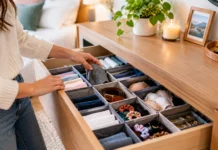
Bathroom drawers often become cluttered with small items such as hair ties, grooming tools, skincare products, and personal accessories. Adjustable drawer dividers help separate these essentials into clearly defined sections. This simple organizational solution makes it easier to find items without repeatedly searching through a crowded drawer.
Choose dividers that fit your drawer dimensions and accommodate the different products you regularly use. Expandable organizers provide flexibility, while smaller removable trays are useful for accessories of varying shapes. Group similar items together and place frequently used products toward the front for convenient access during busy mornings.
Review drawer contents occasionally and remove empty packaging, expired products, or items you no longer need. Avoid filling every compartment completely because a little extra space makes daily organization easier. Keeping drawers tidy can also reduce unnecessary purchases by helping you see which bathroom essentials are already available.
8. Install a Mirrored Medicine Cabinet
A mirrored medicine cabinet combines two important bathroom features into one space-saving fixture. Instead of using a standard wall mirror, this design provides concealed storage for toiletries, grooming accessories, and other lightweight essentials. It is particularly useful in tiny bathrooms where countertop space is limited and additional furniture would feel intrusive.
Wall-mounted medicine cabinets are available in different depths, widths, and interior arrangements. Some models include adjustable shelves that accommodate taller bottles and personal care products. A recessed cabinet can create an especially streamlined appearance, although installation requires checking the wall structure and ensuring plumbing or electrical components are not affected.
Store frequently used items on accessible shelves while keeping heavier products away from fragile compartments. If storing medications, follow their specific storage instructions because bathroom heat and humidity may affect certain products. A well-organized mirrored cabinet can keep everyday essentials convenient while maintaining a cleaner and more spacious-looking vanity area.
9. Use Shower Caddies for Bath Products
A shower caddy is one of the easiest ways to organize shampoo, conditioner, body wash, and other bathing essentials. Instead of leaving bottles scattered around the bathtub or shower floor, a caddy keeps everything grouped in one accessible location. This improves organization while reducing obstacles that could make the bathing area uncomfortable.
Several shower storage styles are available, including hanging organizers, corner caddies, and wall-mounted shelves. Choose a design compatible with your shower fixtures and available space. Rust-resistant materials and drainage openings are particularly useful because they help prevent water from collecting around bottles and other stored accessories.
Place heavier bottles on stable lower shelves and keep frequently used products within easy reach. Avoid overloading organizers that hang from showerheads or delicate fittings, as excessive weight may damage them. Cleaning the caddy regularly helps remove soap residue and maintain a neat bathing environment in a compact bathroom.
10. Create Storage With Wall-Mounted Baskets
Wall-mounted baskets provide additional storage without occupying floor space or requiring a large cabinet. They can hold rolled towels, spare toiletries, washcloths, and lightweight accessories while adding texture to bathroom walls. This arrangement is especially useful in narrow bathrooms where every inch of walking space matters.
Wire baskets offer visibility and ventilation, while moisture-resistant plastic containers provide an easy-to-clean alternative. Decorative woven baskets can also work when placed away from frequent splashes and excessive humidity. Choose materials that complement the bathroom’s design while remaining suitable for the conditions in which they will be used.
Install baskets at comfortable heights and use suitable wall fixings for their expected weight. Avoid placing them where they could interfere with doors, mirrors, or movement around fixtures. Organizing each basket by purpose makes the arrangement more practical and prevents everyday items from becoming mixed together.
11. Maximize Bathroom Vanity Cabinet Space
Bathroom vanity cabinets often contain more usable storage than their existing arrangement suggests. A large open compartment can become inefficient when products are placed randomly around plumbing fixtures. Adding compact shelves, removable organizers, or small containers can create separate storage levels and improve access to everyday essentials.
Under-sink shelving systems are available in adjustable designs that accommodate pipes and different cabinet dimensions. Two-tier organizers can also help separate taller bottles from smaller products, making better use of vertical cabinet space. Choose materials that are easy to wipe clean and suitable for occasional moisture exposure.
Keep products you use frequently near the front of the cabinet while placing spare supplies farther back. Check occasionally for leaks or dampness that could affect stored items. A simple arrangement with designated areas for each product category can make even a narrow vanity cabinet feel significantly more functional.
12. Use Adhesive Storage Accessories
Adhesive bathroom organizers can provide convenient storage without requiring extensive drilling or permanent alterations. These accessories include hooks, small shelves, toothbrush holders, and lightweight baskets. They are especially appealing for rental bathrooms where residents may prefer removable solutions that avoid creating unnecessary holes in walls or tiles.
Adhesive products work best when installed on compatible, clean, dry surfaces according to manufacturer instructions. Smooth tiles and certain glass surfaces may provide suitable mounting areas, while textured walls can reduce adhesion. Weight limits and moisture resistance vary considerably, so carefully check product specifications before installing accessories near showers or sinks.
Use adhesive organizers for lightweight items rather than heavy glass bottles or valuable belongings. Position them away from locations where unexpected detachment could create hazards. When installed correctly and used within their intended limits, these accessories offer a practical way to improve bathroom organization without major modifications.
13. Store Towels With a Wall-Mounted Towel Rack
Bulky towels can occupy considerable space inside a small bathroom cabinet. A wall-mounted towel rack creates a designated storage area while leaving existing shelves available for other essentials. Depending on its design, the rack may accommodate folded towels, rolled towels, or hanging bath linens in an organized arrangement.
Ladder-style towel racks and compact wall-mounted rails are popular options for bathrooms with narrow layouts. Some models include multiple bars that provide separate hanging spaces for different towels. Choose a design that fits comfortably against the wall without interfering with movement around the shower, toilet, or vanity.
Separate dry towel storage from damp towels whenever possible to encourage better airflow. Avoid packing several wet towels tightly together because trapped moisture can create unpleasant odors. A simple towel organization system keeps essential linens accessible while reducing the amount of space they occupy elsewhere in the bathroom.
14. Use Clear Containers for Small Bathroom Essentials
Small bathroom accessories can easily disappear inside crowded drawers or deep cabinets. Clear containers provide a simple way to organize cotton pads, hair accessories, grooming supplies, and other frequently used items. Their transparent design allows you to identify contents immediately, reducing unnecessary searching during everyday routines.
Choose containers in different sizes according to the products you need to store. Small stackable boxes work well inside drawers, while larger containers can help organize shelves or cabinets. Containers with secure lids are useful for protecting suitable items from dust and splashes, although enclosed storage should not trap moisture.
Arrange containers in groups that match your daily routines, keeping frequently used items near the sink or vanity. Avoid transferring every product into decorative containers when original packaging provides important instructions or safety information. The goal is to create a practical organization system that makes bathroom essentials easier to find and maintain.
15. Declutter and Rotate Bathroom Supplies
One of the most effective bathroom storage hacks does not require purchasing anything new. Removing unnecessary products, empty containers, and expired supplies can immediately create additional room in a tiny bathroom. Regular decluttering also helps prevent storage areas from becoming overcrowded with items that are rarely or never used.
Begin by reviewing toiletries, cosmetics, cleaning supplies, and spare accessories. Keep products you use regularly within convenient reach and move suitable extras to another dry storage area when available. Dispose of unwanted products according to local guidance, particularly when handling medications or household chemicals that require special disposal.
Establish a simple routine for checking bathroom storage every few weeks. Replace finished products, wipe down shelves, and return misplaced items to their designated locations. Maintaining an organized bathroom is easier when every essential has a practical storage spot and new purchases do not continually exceed the available space.
How to Make a Tiny Bathroom Look Bigger
A well-organized bathroom can feel more spacious when storage solutions complement the overall design. Light colors, reflective surfaces, and uncluttered countertops create a brighter and more open appearance. Choosing storage accessories that match existing fixtures also helps maintain visual consistency, preventing the small room from feeling overly busy.
Vertical storage is particularly effective because it draws attention upward while reducing the need for bulky furniture. Floating shelves, wall-mounted baskets, and tall narrow cabinets can provide useful organization without covering too much floor area. However, installing excessive storage units may make the space feel crowded, so selecting only necessary solutions is important.
Good lighting and thoughtful placement of mirrors can further improve the bathroom’s appearance. Keep frequently used items organized and avoid covering every visible surface with decorative containers. A balance between practical storage and open space creates a cleaner environment that feels more comfortable during everyday use.
Conclusion
Organizing a tiny bathroom becomes easier when you focus on making better use of existing space. Floating shelves, over-the-toilet cabinets, narrow storage carts, and wall-mounted organizers provide practical ways to store essentials without overcrowding the room. These simple bathroom storage hacks can improve functionality while maintaining an attractive and comfortable environment.
The most effective storage solutions depend on your bathroom’s layout, available wall space, and everyday needs. Some bathrooms benefit from hidden cabinet organizers, while others require open shelving or compact accessories. Combining a few carefully selected ideas is often more useful than installing every available storage product.
Remember that maintaining an organized bathroom requires more than adding shelves and containers. Regular decluttering, thoughtful product placement, and consistent cleaning help prevent clutter from returning. With practical planning and a few creative adjustments, even the smallest bathroom can become a more functional, organized, and welcoming space.
Frequently Asked Questions
How do you maximize storage in a very small bathroom?
Use vertical space with floating shelves, over-the-toilet organizers, and wall-mounted baskets. Add drawer dividers and compact under-sink containers to keep essentials accessible without occupying valuable floor space.
What is the best storage solution for a bathroom without cabinets?
Floating shelves, wall-mounted baskets, shower caddies, and slim rolling carts are practical options. Choose moisture-resistant materials and install organizers where they will not interfere with movement or bathroom fixtures.
How can I organize a small bathroom on a budget?
Start by decluttering and reusing suitable containers already available at home. Affordable hooks, baskets, drawer organizers, and narrow shelves can improve storage without requiring expensive furniture or renovations.
How do you store towels in a tiny bathroom?
Wall-mounted towel racks, hooks, and compact shelves can help organize towels efficiently. Keep spare towels folded or rolled in dry storage areas, and allow used towels enough airflow to dry.
How can I make my small bathroom look less cluttered?
Keep countertops clear, group similar products in containers, and use closed storage for extra supplies. Matching accessories, light colors, and regularly removing unnecessary items can create a cleaner appearance.