

A messy pantry can make everyday cooking more stressful than it needs to be. When food packages are stacked randomly, ingredients become difficult to find, and valuable storage space goes unused. Simple pantry organization hacks can transform crowded shelves into practical storage areas where everything has a clear place.
You do not need a large kitchen, expensive storage containers, or a complete renovation to create an organized pantry. Small changes, such as grouping similar foods, labeling containers, and using vertical space, can make a noticeable difference. These practical ideas work for walk-in pantries, narrow kitchen cabinets, and small apartment storage areas.
Store Dry Ingredients in Clear Containers
Clear storage containers are one of the easiest ways to organize a pantry and improve visibility. Instead of keeping flour, rice, pasta, and cereal in different-sized packages, transfer suitable dry ingredients into food-safe containers. Transparent sides allow you to see what is available without opening every container or searching through crowded shelves.
Choose containers with secure lids that protect ingredients from moisture, pests, and accidental spills. Stackable designs can make better use of shelf space, particularly in small kitchen pantries. However, avoid buying an entire container collection before measuring your shelves and identifying which ingredients would genuinely benefit from being transferred.
Before transferring food, record the product name, expiration date, and any important cooking instructions from its original packaging. Keep allergen information and preparation details accessible when necessary. This simple habit combines the visual benefits of matching containers with the practical information needed for safe food storage and everyday cooking.
Use Baskets to Group Similar Pantry Items
Storage baskets make pantry shelves easier to manage by keeping related products together. Instead of placing every package individually, create groups for snacks, baking ingredients, breakfast foods, and canned goods. This approach reduces searching time because everyone knows where to look when preparing meals or choosing something to eat.
Baskets are especially useful for organizing irregularly shaped packages that do not stack neatly. Small snack bags, seasoning packets, and individually packaged foods can remain contained rather than spreading across shelves. Choose baskets that fit your pantry dimensions and allow enough room to remove items without disturbing surrounding products.
Consider using open baskets for frequently accessed items and deeper containers for lightweight backup supplies. Labeling each basket helps family members return products to their correct locations. Consistent grouping also makes shopping easier because you can quickly identify categories that need replenishing before purchasing additional groceries.
Label Every Container and Storage Basket
Labels help transform a collection of storage containers into a clear and manageable pantry system. Even when containers are transparent, similar-looking ingredients can be difficult to distinguish. Flour, powdered sugar, cornstarch, and other dry ingredients may appear alike, making accurate labeling especially useful during cooking and baking.
Use readable labels that identify the contents without requiring unnecessary decoration. Adhesive labels, reusable tags, and simple handwritten stickers can all work effectively. If ingredients have different varieties or preparation requirements, include enough information to prevent confusion, especially when several household members share the same pantry.
A practical labeling system should remain easy to update when storage needs change. Avoid permanent labels on containers that regularly hold different products unless replacement labels are available. Clear category names on baskets and shelves help maintain organization because everyone can understand where items belong after grocery shopping.
Add Shelf Risers to Create Extra Storage Levels
Shelf risers are useful pantry organizers that create additional storage levels within existing cabinet space. They work particularly well for canned goods, jars, spices, and small packaged ingredients. By raising products at the back, risers make items easier to see and prevent smaller containers from disappearing behind taller packages.
Choose sturdy risers designed to support the weight of the products you intend to store. Adjustable options can accommodate different shelf widths and heights. Before purchasing, measure the available vertical clearance to ensure stacked arrangements will not interfere with removing products or closing cabinet doors.
Shelf risers can improve visibility without requiring permanent changes to kitchen cabinetry. They are especially practical in rental homes or apartments where installing new shelves may not be possible. Keep frequently used products accessible and avoid stacking heavy items too high, since safe access matters as much as maximizing storage space.
Use Turntables for Spices, Sauces, and Small Jars
A rotating turntable, often called a Lazy Susan, can make deep pantry shelves much easier to use. Instead of reaching behind bottles and jars, you can rotate the organizer to bring hidden items forward. This solution works well for spices, sauces, cooking oils, and smaller containers stored together.
Turntables are particularly helpful in pantry corners where traditional storage arrangements leave products difficult to access. Choose models with raised edges when storing bottles that might tip during rotation. The organizer should rotate smoothly without requiring excessive force, even when several lightweight products are placed on it.
Avoid overcrowding a turntable because too many items can make rotation difficult and reduce visibility. Group products by purpose, such as everyday seasonings or cooking condiments, to keep the arrangement practical. Cleaning the surface occasionally also prevents sticky residue from making jars difficult to move or remove.
Install Door Organizers for Hidden Storage Space
The back of a pantry door offers valuable storage space that is often overlooked. Over-the-door organizers can hold small packages, seasoning containers, snacks, and lightweight kitchen supplies. Using this vertical area frees up shelf space while keeping frequently used items visible and within convenient reach.
Choose organizers that match the size and structure of your pantry door. Some attach using hooks, while others require screws or additional mounting hardware. Check the door’s weight capacity and available clearance before installing anything, especially if nearby shelves could interfere with closing it properly.
Door storage works best for lightweight items that are accessed regularly. Heavy glass jars and bulky containers may place unnecessary stress on the door or mounting hardware. Organizing smaller products in this area helps prevent shelves from becoming crowded and makes better use of limited kitchen storage.
Create a Dedicated Snack Station
A dedicated snack station can make pantry organization easier for households that regularly store packaged snacks. Instead of scattering crackers, granola bars, dried fruit, and other snacks across different shelves, place them in one accessible area. Grouping these products simplifies daily routines and reduces unnecessary searching.
Use small baskets or dividers to separate different snack categories within the station. Keep packages visible so older products are less likely to remain forgotten at the bottom. Choose a shelf height that suits the people using the pantry, while keeping products with special storage requirements appropriately separated.
Snack stations do not need to be large or elaborate to work effectively. A single shelf or drawer may provide enough space for frequently used products. Reviewing the section before grocery shopping helps prevent unnecessary duplicate purchases and keeps the collection manageable as household preferences change.
Organize Pantry Shelves by Food Categories
Creating clear food categories is one of the most effective pantry organization ideas for maintaining long-term order. Assign separate areas for baking supplies, grains, canned foods, breakfast ingredients, and snacks. When similar products stay together, you can locate ingredients quickly and notice when essential supplies are running low.
Begin by removing items from the shelves and grouping them according to their usual purpose. Products used together during cooking can share nearby storage locations. For example, pasta and packaged sauces may belong in the same section, while flour, sugar, and baking powder can occupy a dedicated baking shelf.
Avoid creating too many small categories because complicated systems are difficult to maintain. A few clear sections often work better than numerous highly specific labels. The ideal arrangement reflects how your household cooks, shops, and uses ingredients rather than following a decorative layout that looks attractive but feels inconvenient.
Use Stackable Bins to Maximize Vertical Space
Stackable bins help make better use of the unused height between pantry shelves. Many pantries have enough vertical clearance for additional storage layers, but loose packages cannot be safely stacked. Containers designed for stacking create more organized arrangements while keeping smaller products from falling or spreading across shelves.
Choose bins with stable bases, secure stacking features, and dimensions appropriate for your pantry. Lightweight packaged foods work particularly well in these organizers. Heavy jars, large bottles, and frequently used items should generally remain on lower, easily accessible shelves to reduce the risk of falling objects.
Stackable storage is useful for small pantries, but accessibility should remain a priority. If reaching one item requires removing several containers, the arrangement may create more work than it saves. Use stacking strategically and leave enough clearance to lift containers comfortably without disturbing neighboring products.
Store Canned Foods With Tiered Organizers
Canned foods can quickly overcrowd pantry shelves because they are heavy, similarly shaped, and often stacked in several rows. A tiered can organizer raises products at the back so labels remain visible. This makes it easier to identify available ingredients without moving several cans each time you prepare a meal.
Arrange canned foods according to their contents, such as vegetables, beans, soups, and sauces. Keeping similar products together helps simplify meal planning and grocery shopping. When adding new cans, place products with earlier expiration dates toward the front so they are more likely to be used first.
Make sure tiered organizers are sturdy enough for the weight of canned goods. Avoid placing heavy collections on unstable shelves or stacking cans where they might fall. A practical arrangement should provide clear visibility, safe access, and enough space to remove individual products without disturbing the entire shelf.
Keep Frequently Used Ingredients at Eye Level
Placing frequently used ingredients at eye level makes cooking more convenient and reduces unnecessary reaching. Everyday products such as rice, pasta, cereal, cooking oil, and common seasonings should be easy to locate. This simple arrangement allows you to access important ingredients without searching through less frequently used supplies.
Use middle shelves for products you reach for regularly, while reserving higher or lower areas for suitable occasional items. Heavy containers should remain on lower shelves where they can be lifted safely. Avoid putting essential ingredients behind decorative baskets or storage boxes that must be moved repeatedly.
Think about how your household uses the kitchen when deciding which products deserve the most accessible positions. Ingredients used for daily breakfasts may need a different location from baking supplies used only occasionally. Adjusting shelf placement according to actual habits can make an organized pantry noticeably easier to maintain.
Use Drawer Dividers for Small Pantry Items
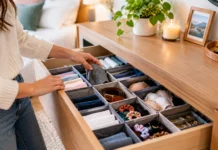
Drawer dividers help organize small pantry products that often become mixed together in deep drawers. Items such as seasoning packets, tea bags, snack bars, and small baking supplies can remain separated in dedicated compartments. This arrangement reduces clutter and prevents smaller packages from becoming buried underneath other products.
Adjustable dividers provide flexibility because compartment sizes can change as storage needs evolve. Small removable trays also work well for organizing different categories within larger drawers. Before purchasing organizers, measure the drawer’s interior dimensions and account for any hardware that may affect the available storage space.
A successful drawer organization system should keep products visible when the drawer opens. Avoid filling compartments so tightly that individual packages become difficult to remove. Periodically reviewing the contents helps eliminate expired items, unnecessary duplicates, and products that belong in another pantry section.
Create a Backstock Area for Extra Groceries
A backstock area is a designated space for unopened grocery supplies that are not currently needed. It can hold additional pasta, canned goods, cereals, and other shelf-stable products purchased for future use. Separating backup supplies from everyday ingredients prevents frequently accessed shelves from becoming overcrowded.
Choose a shelf or storage section where extra products can remain organized without interfering with daily cooking. Group backup items by category and keep expiration dates visible. Avoid storing more supplies than your household can realistically use before their recommended dates, even when products are available at discounted prices.
When an everyday container becomes empty, replenish it from the backstock area before adding the product to your shopping list. This habit reduces unnecessary duplicate purchases and makes grocery planning more accurate. A well-managed backup section should remain compact, visible, and easy to review during routine pantry cleaning.
Use the First In, First Out Storage Method
The first in, first out method, commonly abbreviated as FIFO, is a practical system for reducing forgotten food in your pantry. It involves placing older products toward the front and newer purchases behind them. This encourages households to use existing ingredients before opening recently purchased packages of the same product.
FIFO is particularly useful for canned foods, dry goods, snacks, and other shelf-stable groceries. However, expiration and use-by dates should guide storage order when products have different remaining shelf lives. Items with earlier dates generally belong in the most accessible positions regardless of when they were originally purchased.
Review dates whenever you reorganize shelves or unpack groceries. Food should be stored according to package instructions, and products with safety-related use-by dates should not be kept beyond those dates. Combining FIFO with regular pantry checks helps maintain a practical system that supports better food management.
Make a Small Pantry Feel Bigger With Smart Layouts
Small pantry organization requires thoughtful planning because limited shelves can become crowded quickly. Rather than filling every available space, focus on visibility, accessibility, and the types of products you actually store. Clear containers, narrow baskets, and compact shelf risers can improve organization without requiring additional cabinets.
Using vertical space effectively can help create more room for everyday essentials. Door organizers and stackable containers may be useful when installed safely and appropriately. However, leave enough space between products to remove them comfortably, since an overcrowded pantry can feel even smaller despite containing additional organizers.
Consider using nearby kitchen drawers or cabinets for items that do not need to remain in the pantry. Moving rarely used equipment or unrelated household supplies elsewhere may free valuable storage space. A simple, well-planned layout often provides better everyday functionality than installing numerous organizers without considering actual usage.
Keep Pantry Cleaning Simple With a Monthly Reset
Even a beautifully organized pantry can become cluttered when groceries are added without a consistent system. Scheduling a monthly pantry reset helps maintain order before shelves become difficult to manage. A short review provides an opportunity to check product dates, return misplaced items, and identify ingredients that should be used soon.
Start by removing empty packaging and wiping accessible shelf surfaces with suitable cleaning products. Check for spilled ingredients, damaged containers, and signs of pantry pests. Keep cleaning chemicals separate from food and allow cleaned surfaces to dry before returning products to their designated locations.
A monthly reset does not require completely emptying the pantry every time. Focus on correcting small problems, updating labels, and restoring organized categories. Consistent maintenance prevents minor clutter from turning into a major reorganization project and helps household members continue using the pantry efficiently.
Choose Pantry Organizers That Match Your Budget
Pantry organization does not require expensive matching containers or professionally installed storage systems. Many useful improvements can be made with affordable baskets, reusable jars, labels, and simple shelf accessories. Starting with items already available at home can reduce costs while helping you determine which organizers would provide genuine value.
Before shopping, measure your shelves and make a list of specific storage problems you want to solve. For example, deep shelves may benefit from pull-out baskets, while narrow cabinets may need compact containers. Buying products according to actual requirements prevents wasted spending on organizers that look attractive but do not fit.
It is often better to organize one section at a time instead of purchasing everything immediately. Testing a small arrangement allows you to identify what works before expanding the system. Budget-friendly pantry organization focuses on practical improvements, easy maintenance, and storage solutions that continue supporting everyday routines.
Conclusion
These 17 pantry organization hacks can help transform cluttered kitchen storage into a practical and manageable space. Simple improvements such as clear containers, labeled baskets, shelf risers, and dedicated food categories make everyday ingredients easier to find. The goal is to create a pantry that supports cooking, grocery shopping, and normal household activities.
An organized pantry does not need to look identical to professionally styled kitchens. The best storage system reflects your available space, shopping habits, and household preferences. Using vertical storage, keeping frequently used ingredients accessible, and organizing products by category can improve efficiency without requiring major renovations.
Maintaining pantry organization is just as important as creating the initial arrangement. Regular cleaning, checking food dates, and returning products to their proper locations help prevent clutter from returning. With practical storage solutions and consistent habits, your pantry can remain organized, accessible, and easier to manage throughout the year.
Frequently Asked Questions (FAQs)
What is the best way to organize a small pantry?
Use clear containers, stackable bins, shelf risers, and door organizers to maximize available space. Group similar foods together and keep frequently used ingredients in easily accessible locations for convenient everyday use.
How can I organize my pantry without spending money?
Start by removing unnecessary packaging, grouping similar products, and rearranging shelves according to frequency of use. Reuse suitable food-safe containers and create handwritten labels using materials already available at home.
What should be stored on the top shelf of a pantry?
Top shelves are generally suitable for lightweight, infrequently used products that can be reached safely. Keep heavy containers and everyday essentials on lower shelves to make lifting and accessing items easier.
How often should I clean and reorganize my pantry?
A quick monthly review helps identify expired products, spills, and misplaced items. More thorough cleaning can be completed whenever necessary, particularly after food spills or signs of pest activity.
How do I keep my pantry organized long-term?
Assign clear storage locations, label categories, and place older products toward the front. Regularly review supplies before grocery shopping and encourage household members to return items to their designated places.