
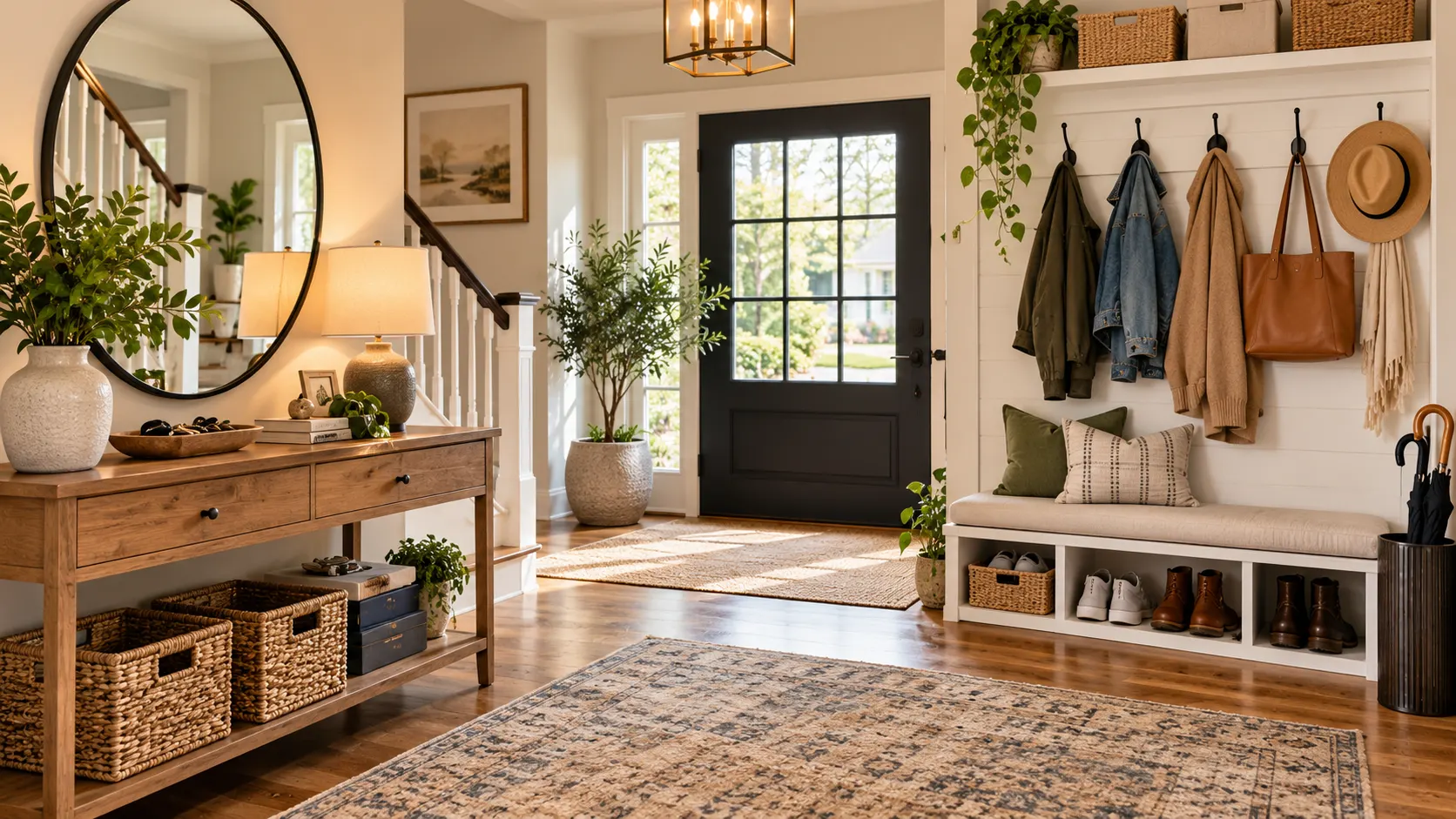
Your entryway is the first thing you see when you enter your home, but it can quickly become a dumping ground for shoes, bags, jackets, and everyday essentials. When everything piles up near the front door, even a beautifully decorated home can feel messy. Fortunately, a few smart entryway organization hacks can transform this busy space into a clean, welcoming area.
The biggest challenge is finding enough storage without making your entrance feel crowded. Small entryways, narrow hallways, and homes without dedicated mudrooms often lack space for traditional cabinets or large furniture. However, with creative storage solutions and simple daily habits, you can organize your belongings without sacrificing comfort or style.
These 17 entryway organization hacks will help you reduce clutter, maximize available space, and create a more functional entrance. From wall hooks and shoe organizers to hidden storage benches and simple decluttering routines, each idea is practical, affordable, and easy to adapt to your home.
1. Install Wall Hooks for Everyday Essentials
Wall hooks are one of the easiest ways to organize a busy entryway without using valuable floor space. Instead of leaving jackets, handbags, and scarves on nearby furniture, you can give each item a dedicated hanging spot. This simple storage solution works especially well in small apartments, narrow hallways, and homes without built-in closets.
Choose sturdy hooks that can support the weight of your everyday belongings. Install them at comfortable heights so everyone in the household can reach their assigned spaces. If you have children, lower hooks can encourage them to hang up their school bags and jackets independently instead of dropping everything near the door.
For a more organized appearance, choose hooks that complement your home’s interior design. Wooden hooks create a warm atmosphere, while metal finishes work well in modern entryways. Avoid placing too many hooks together because overcrowding can make the wall look cluttered and encourage unnecessary items to accumulate over time.
2. Add a Shoe Rack Near the Front Door
Shoes are among the most common causes of entryway clutter, especially in households with several people. A simple shoe rack keeps footwear arranged neatly instead of scattered across the floor. It also makes leaving the house easier because everyone knows exactly where to find their frequently worn shoes.
Choose a shoe organizer that fits your available space and household needs. Narrow vertical racks are useful for small entryways, while wider shelves work well in larger hallways. If you prefer a cleaner appearance, consider a closed shoe cabinet that keeps footwear hidden while still providing convenient access.
Keep only the shoes you regularly use near the entrance to prevent overcrowding. Seasonal footwear and special occasion shoes can remain in bedroom closets or other storage areas. This small habit keeps the shoe rack manageable and makes it easier to maintain a clean, comfortable entryway throughout the week.
3. Use a Storage Bench for Seating and Organization
A storage bench provides two useful functions in one piece of furniture, making it an excellent addition to an organized entryway. It offers a comfortable place to sit while putting on shoes and creates extra room for storing everyday belongings. This combination is particularly helpful in homes where floor space is limited.
Look for a bench with built-in drawers, shelves, or lift-up storage compartments. These spaces can hold shoes, umbrellas, reusable shopping bags, and other items that regularly collect near the front door. For safety, choose a stable bench and follow the manufacturer’s guidance for securing furniture or using lift-up compartments.
A cushioned storage bench can also improve the overall appearance of your entrance. Choose a neutral fabric or durable material that complements your existing furniture. Keeping decorative accessories minimal allows the bench to remain functional while creating a welcoming atmosphere for family members and guests entering your home.
4. Create a Dedicated Drop Zone for Keys and Wallets
Small everyday essentials often disappear because they are placed in different locations throughout the house. Keys, wallets, sunglasses, and access cards can easily become misplaced during busy mornings. Creating a dedicated entryway drop zone provides one convenient location where these important items belong whenever you return home.
A small tray, wall-mounted organizer, or narrow console table can work as your drop zone. Select a location close to the front door that feels natural to use. If multiple people share the space, consider separate compartments so everyone can find their belongings without searching through a collection of unrelated items.
The most important part of this entryway organization hack is consistency. Encourage household members to place their essentials in the same location every day. Over time, this simple habit reduces unnecessary searching, saves time before leaving home, and prevents small objects from creating clutter across nearby surfaces.
5. Maximize Vertical Space With Floating Shelves
When floor space is limited, vertical storage becomes one of the most practical ways to organize an entryway. Floating shelves provide additional room for small baskets, decorative items, and frequently used accessories without taking up valuable walking space. They are particularly useful above benches, narrow tables, and other existing furniture.
Install shelves at heights that allow comfortable access without interfering with movement through the entrance. Use sturdy hardware suitable for your wall type and the weight of the items you plan to store. Decorative baskets can help group smaller belongings while keeping the shelves visually organized and easy to maintain.
Avoid filling every shelf with decorations or unnecessary objects. A combination of useful storage and a few carefully chosen accessories creates a balanced appearance. By keeping frequently used items accessible and displaying only meaningful decorations, floating shelves can improve both the function and style of your entryway.
6. Organize Small Items With Decorative Baskets
Decorative baskets are an affordable way to control the small items that often create entryway clutter. Gloves, scarves, hats, pet accessories, and reusable shopping bags can quickly fill countertops and shelves. Giving these belongings dedicated containers makes the entrance look cleaner while helping everyone find what they need.
Choose baskets according to the size and type of items you want to organize. Small baskets work well for accessories, while larger containers can hold winter clothing or reusable bags. Woven baskets add warmth to traditional interiors, while fabric and plastic options can be practical for modern homes.
Labeling baskets can make the system easier to maintain, especially when several people share the entryway. Place frequently used containers within easy reach and store seasonal items higher up. This approach prevents belongings from becoming mixed together and encourages a simple routine for putting everything back after use.
7. Install an Over-the-Door Organizer
An over-the-door organizer is particularly helpful when your entryway lacks shelves, cabinets, or built-in storage. It uses space that often remains unused while providing compartments for small accessories. Depending on the design, these organizers can hold gloves, scarves, lightweight cleaning supplies, and other everyday items.
Choose an organizer with compartments that match your storage needs instead of automatically selecting the largest option. Fabric pockets work well for lightweight accessories, while sturdy hanging organizers may accommodate larger belongings. Make sure the organizer does not interfere with the door’s movement, closing mechanism, or normal operation.
For a cleaner appearance, avoid overfilling every pocket and assign specific categories to different sections. Consider keeping frequently used items at eye level while placing occasional accessories in higher compartments. This practical storage solution helps create a functional entrance without requiring permanent changes to walls or furniture.
8. Add a Narrow Console Table With Storage
A narrow console table can transform an empty entryway wall into a useful organization area. It provides space for a small tray, everyday essentials, and carefully selected decorations. Unlike bulky cabinets, slim console tables can fit into many narrow hallways while leaving enough room for people to move comfortably.
Choose a design with drawers or a lower shelf if you need additional storage. Drawers can keep smaller accessories hidden, while the lower shelf can accommodate baskets or neatly arranged belongings. Measure your hallway before purchasing furniture and make sure the table does not obstruct the entrance or walking path.
Keep the tabletop simple to prevent it from becoming another cluttered surface. A small key tray, a decorative lamp, and one attractive accessory may be enough. When the table has a clear purpose, it becomes easier to maintain a tidy appearance while providing practical storage for daily essentials.
9. Create a Family Command Center
A family command center brings important household information into one organized location near the entrance. It can include a calendar, a small notice board, and dedicated spaces for essential reminders. This setup helps household members keep track of appointments, school activities, and everyday responsibilities without leaving papers scattered around the home.
Choose a wall section that everyone can access easily without blocking movement. A simple combination of a calendar, corkboard, and labeled folders may be enough for most households. If you prefer a digital approach, a shared calendar can reduce the need for printed schedules and handwritten reminders.
Review your family command center regularly to remove outdated notices and completed tasks. Keeping only current information prevents the area from becoming visually overwhelming. A well-organized system can simplify daily planning, reduce forgotten responsibilities, and make your entryway more useful without requiring a large amount of space.
10. Use Drawer Dividers to Separate Essentials
Entryway drawers can quickly become cluttered when keys, receipts, accessories, and miscellaneous objects are stored together. Drawer dividers solve this problem by creating smaller compartments for different categories. Instead of searching through a crowded drawer, you can immediately identify where each item belongs and retrieve it more easily.
Adjustable dividers are useful because they can accommodate drawers of different shapes and sizes. Small containers can also work when dedicated organizers are unavailable. Separate frequently used belongings from occasional accessories, and avoid keeping unrelated objects simply because there is extra space inside the drawer.
Review drawer contents every few weeks to remove unnecessary papers, damaged accessories, and items that belong elsewhere. This simple habit prevents storage spaces from becoming overloaded. When drawers contain only useful belongings, maintaining an organized entryway becomes easier and daily routines feel more manageable.
11. Install a Wall-Mounted Mail Organizer
Letters, delivery notices, and important documents often accumulate near the entrance because there is no clear place to store them. A wall-mounted mail organizer keeps incoming paperwork together while preventing it from covering console tables or other surfaces. This solution is especially helpful for households that receive regular correspondence.
Choose an organizer with separate compartments for incoming mail, important documents, and items requiring attention. Position it near your entryway drop zone so sorting becomes part of your normal routine. A compact design with labeled sections can make the system easier to understand and prevent paperwork from becoming mixed together.
Sort incoming mail regularly instead of allowing it to collect for several weeks. Recycle unwanted advertising materials and move important documents to a more secure filing location. By keeping only active paperwork near the entrance, you can reduce visual clutter and maintain a cleaner, more organized household.
12. Use Hidden Storage for Seasonal Accessories
Seasonal accessories can take up unnecessary space when they remain in the entryway throughout the year. Winter gloves, thick scarves, and extra rain gear may be useful during certain months but rarely needed during others. Hidden storage provides a simple solution for keeping these items available without overcrowding daily organization areas.
Consider using closed cabinets, storage benches, or baskets with lids to keep seasonal belongings out of sight. Select containers that fit comfortably beneath furniture or inside existing cupboards. Group similar accessories together so they remain easy to locate when the weather changes or specific items become necessary.
Review your seasonal storage whenever you change your household routines for the weather. Move frequently used accessories into accessible spaces and store unnecessary items elsewhere. This approach keeps your entrance focused on current needs while reducing the amount of clutter that gathers around the front door.
13. Add an Umbrella Stand for Rainy Days
Wet umbrellas can create puddles and unnecessary clutter when they are left beside the front door. A dedicated umbrella stand gives them a proper storage location and helps protect nearby flooring. It also makes umbrellas easier to find when the weather changes unexpectedly and someone needs to leave the house quickly.
Choose a stand with a stable base and a removable water-catching tray when possible. Place it near the entrance without blocking the door or walking area. Compact umbrella holders work well in small spaces, while larger stands may be more suitable for families that keep several umbrellas available.
Empty collected water regularly and allow umbrellas to dry before storing them tightly together. This helps reduce unpleasant odors and unnecessary moisture around the entrance. A simple umbrella station may seem like a minor detail, but it contributes to a cleaner and more practical entryway during rainy weather.
14. Use Matching Storage Containers for a Clean Look
Matching storage containers can make an entryway appear more organized even when several categories of belongings need to remain accessible. Different colors, shapes, and materials sometimes create visual clutter, especially in small spaces. Choosing containers with a consistent appearance helps create a calmer environment while maintaining practical storage for everyday items.
Start by measuring the shelves, cabinets, or open spaces where your containers will sit. Select boxes or baskets that fit comfortably without creating overcrowding. Neutral colors such as white, beige, gray, and natural wood tones often work well because they complement many interior styles and create a balanced appearance.
Remember that matching containers should serve a useful purpose rather than simply hiding unnecessary belongings. Assign each container a specific category and avoid filling it with unrelated objects. This combination of visual consistency and clear organization can help your entryway remain attractive, functional, and easy to maintain throughout the year.
15. Make Use of Awkward Corners and Unused Spaces
Small entryways often contain narrow corners or awkward spaces that seem difficult to organize. However, these areas can provide useful storage when you choose furniture designed for limited dimensions. A compact corner shelf, narrow basket, or slim shoe cabinet may turn previously unused space into a practical organization area.
Before adding furniture, measure the available space and consider how people move through the entrance. Avoid placing storage units where they interfere with doors, stairs, or walking paths. Wall-mounted options may be more suitable when floor space is extremely limited, especially in apartments with narrow entrance areas.
The goal is to use available space efficiently without making the entryway feel overcrowded. Even one carefully selected storage solution can improve daily organization. Focus on items that solve an existing problem rather than filling every empty corner with additional furniture or decorative accessories.
16. Create a Simple Five-Minute Entryway Cleaning Routine
Even the best entryway organization systems require regular maintenance to remain effective. Shoes get misplaced, jackets accumulate, and small objects return to surfaces throughout the week. A simple five-minute cleaning routine can prevent these minor problems from becoming overwhelming and help keep your entrance ready for everyday use.
Start by returning shoes to their rack, hanging jackets, and placing small accessories in their designated containers. Next, remove any unnecessary papers or belongings that should be stored elsewhere. A quick floor check can also help identify dirt, moisture, or other messes that need attention before they spread.
Encourage everyone in the household to participate in maintaining the space rather than leaving the responsibility to one person. When putting belongings away becomes a daily habit, organization requires less effort. A short routine completed consistently can make a noticeable difference in how clean and welcoming your entryway feels.
17. Follow the One-In, One-Out Decluttering Rule
The one-in, one-out rule is a simple way to prevent your entryway from gradually becoming overcrowded. Whenever you add a new frequently used item, consider removing or relocating something that no longer serves a purpose. This habit helps maintain balance and keeps storage areas from filling beyond their intended capacity.
For example, when purchasing a new everyday pair of shoes, review whether an older pair still belongs near the entrance. The same approach can work for jackets, bags, umbrellas, and seasonal accessories. Items that remain useful can be stored elsewhere, donated when appropriate, or recycled through suitable local services.
This rule does not require removing useful belongings simply to create empty space. Instead, it encourages thoughtful decisions about what deserves a place in your daily environment. By regularly reviewing entryway essentials, you can maintain an organized entrance without constantly purchasing more furniture, shelves, or storage containers.
Conclusion
A clean and organized entryway creates a more welcoming atmosphere and makes everyday routines easier to manage. Simple solutions such as wall hooks, shoe racks, storage benches, and decorative baskets can reduce clutter without requiring expensive renovations. The most effective approach is to choose storage options that match your space and household needs.
These 17 entryway organization hacks can work in small apartments, narrow hallways, and larger family homes. Start with the areas that create the most frustration, whether that means scattered shoes, missing keys, or overcrowded surfaces. Making a few thoughtful improvements can deliver noticeable results without changing your entire home layout.
Maintaining an organized entryway also depends on consistent habits and realistic storage limits. Encourage household members to return belongings to their designated places and review unnecessary items regularly. With practical storage solutions and a little daily attention, your entrance can remain clutter-free, functional, and welcoming throughout the year.
Frequently Asked Questions
How do I organize a small entryway with limited space?
Use wall hooks, floating shelves, narrow shoe racks, and over-the-door organizers to maximize vertical storage. Choose multifunctional furniture and keep only frequently used belongings near the entrance to avoid overcrowding.
What should every organized entryway have?
A practical entryway should include storage for shoes, jackets, keys, and everyday essentials. Depending on available space, a storage bench, small console table, or labeled baskets can provide additional organization.
How can I keep my entryway clutter-free every day?
Create a simple daily routine for putting shoes, bags, and accessories away. Assign dedicated storage spaces, remove unnecessary items regularly, and encourage everyone in the household to maintain the organization system.
What is the best storage solution for a narrow hallway?
Wall-mounted hooks, floating shelves, and slim shoe cabinets are excellent options for narrow hallways. They provide useful storage while preserving walking space and reducing the need for bulky furniture.
How can I make my entryway look stylish and organized?
Choose matching storage containers, simple furniture, and a consistent color palette. Combine practical organizers with a few decorative details, such as a mirror or small plant, to create a welcoming appearance.