

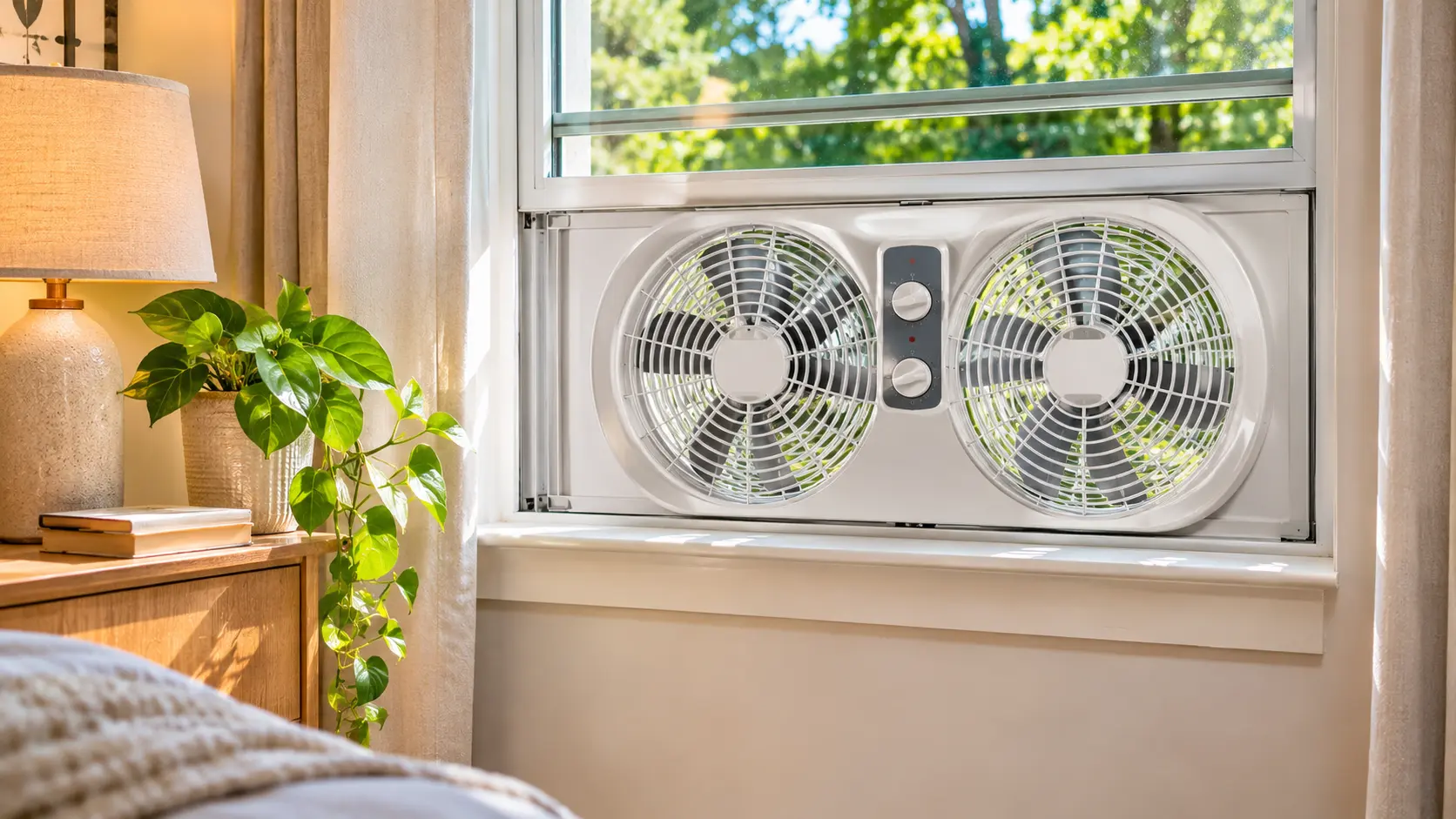
Keeping your home comfortable during warm weather can be challenging, especially when indoor air feels trapped and rooms lack proper ventilation. Opening a window may not always create enough airflow, while running an air conditioner continuously can increase electricity costs. A window fan offers a practical way to move air between indoor and outdoor spaces. Understanding how window fans work can help you choose a suitable option for your home.
Window fans are available in different designs, including single-blade, twin-blade, reversible, and adjustable models. They can help introduce outdoor air, remove warm indoor air, or support cross-ventilation when conditions are suitable. However, not every window fan fits every window or provides the same airflow. This guide explains window fan types, common uses, benefits, important features, installation considerations, and practical buying tips.
What Is a Window Fan?
A window fan is an electric ventilation device designed to fit inside or near an open window. It moves air between indoor and outdoor environments using rotating blades powered by a motor. Depending on the model and installation, it can bring outdoor air inside or push indoor air outside. This makes it useful for managing airflow in selected rooms.
Unlike an air conditioner, a window fan does not actively refrigerate the air. Instead, it relies on air movement and differences between indoor and outdoor conditions. Its effectiveness depends on temperature, humidity, outdoor air quality, and window placement. Understanding these limitations helps set realistic expectations.
Window fans are commonly used in bedrooms, kitchens, living rooms, and other spaces that need additional ventilation. Some designs are compact and lightweight, while others have adjustable panels for wider windows. Modern models may include thermostats, timers, and remote controls. Choosing the right design depends on your window and ventilation requirements.
How Does a Window Fan Work?
A window fan works by rotating blades that create airflow through a window opening. When configured for intake, it draws outdoor air into a room. When configured for exhaust, it pushes indoor air outside. Some models can reverse airflow electronically, while others must be repositioned manually.
The direction of airflow influences how the fan affects indoor comfort. Bringing in cooler outdoor air may help reduce indoor temperatures under suitable conditions. Exhausting warm indoor air can also encourage replacement air to enter through another opening. However, airflow depends on the layout of the room and building.
Window fans generally work best when there is a clear path for air to move. For example, opening another window elsewhere in the home may support cross-ventilation. The results vary with wind conditions and the position of openings. A fan is most useful when installed as part of a sensible ventilation arrangement.
Main Types of Window Fans
Window fans come in several designs that suit different room sizes and ventilation needs. Common categories include single-blade, twin-blade, reversible, and electronically controlled models. Some fans are designed specifically for horizontal sliding windows, while others fit double-hung windows. Compatibility should always be confirmed before purchase.
Basic window fans usually offer straightforward airflow controls and manual adjustments. More advanced models may include temperature sensors, multiple speeds, and automatic operation. Certain twin-fan designs allow different airflow directions at the same time. These features can provide additional flexibility.
The best type depends on how you intend to use the fan. A compact model may be suitable for occasional bedroom ventilation, while a wider twin-fan unit may provide more options. However, airflow ratings and noise levels also matter. Comparing practical specifications helps identify the right design.
Single-Blade Window Fans
Single-blade window fans use one fan assembly to move air through an open window. They often feature a simple design with straightforward speed settings. Many models are relatively compact, making them suitable for smaller window openings. Their uncomplicated operation can appeal to users who prefer basic ventilation.
Some single-fan models are designed mainly for intake or exhaust operation. Others allow the user to reverse the fan’s direction by changing its orientation. This depends on the manufacturer’s design. Checking the available airflow options is important before choosing a model.
A single-blade window fan may be practical for a bedroom or small home office. However, it does not automatically provide less airflow than every twin-fan model. Blade size, motor performance, and overall construction influence its effectiveness. Compare measured airflow and noise specifications rather than relying only on fan quantity.
Twin Window Fans
Twin window fans contain two separate fan assemblies within one housing. This design allows airflow through two fan sections positioned side by side. Many models provide multiple speed settings and adjustable operating modes. They are commonly used in bedrooms, living rooms, and other residential spaces.
Some twin window fans allow both fans to pull air inward or push air outward. Certain models also support simultaneous intake and exhaust operation. However, using both directions in the same window does not always create effective whole-room ventilation. The building layout and placement of other openings remain important.
Twin models can provide flexible operation, but they may require wider window openings. Their dimensions should be checked carefully before purchase. Look for secure extension panels and a suitable installation method. A well-fitting fan is generally more useful than one with additional features that cannot be installed correctly.
Reversible Window Fans
Reversible window fans allow users to change the direction of airflow. This makes it possible to bring outdoor air inside or remove indoor air without necessarily repositioning the entire unit. Some models use electronic controls, while others require manual adjustment. The available method depends on the product.
Intake mode can be useful when outdoor conditions are cooler and air quality is acceptable. Exhaust mode may help remove warm indoor air or certain household odors. However, a general window fan should not be treated as a replacement for a properly installed kitchen exhaust system. Specialized ventilation may be required for certain activities.
Reversible operation provides flexibility when weather conditions change throughout the day. For example, a fan may exhaust warm indoor air before being switched to intake when outdoor temperatures fall. However, this approach works only when outdoor conditions are suitable. Checking humidity and air quality is important.
Thermostat-Controlled Window Fans
Some window fans include built-in temperature sensors or thermostat controls. These features may automatically turn the fan on or off according to selected settings. This can reduce the need for constant manual adjustment. However, the exact functions vary between models.
A thermostat-controlled fan may be convenient during evenings when indoor temperatures change. Certain designs also offer automatic mode switching or programmable operation. These features can help manage ventilation more consistently. Still, a temperature sensor does not necessarily measure outdoor humidity or pollution.
Before buying, check what the thermostat actually controls. Some fans only switch on or off, while others adjust speed or airflow direction. Consider whether the added functions match your needs. A simpler model may be sufficient if you prefer to control ventilation manually.
Window Fans vs. Box Fans
Window fans and box fans both move air, but they are designed for different placements. Window fans typically include housings or adjustable panels that help them fit window openings. Box fans are commonly freestanding and can be placed in different indoor locations. Both can support airflow when used appropriately.
A box fan positioned near an open window may help move air, although it may not seal the opening as effectively as a dedicated window fan. Window fans are generally designed for more secure installation within specific window types. However, fit and safety still depend on the individual model.
The best choice depends on whether you need dedicated window ventilation or a fan that can be moved between rooms. Box fans offer greater placement flexibility. Window fans can provide a more integrated solution for bringing air in or pushing it out. Product specifications and installation requirements should guide the decision.
Window Fans vs. Air Conditioners
Window fans and air conditioners serve different purposes. A window fan moves air between indoor and outdoor spaces without actively cooling it through refrigeration. An air conditioner removes heat from indoor air using a cooling system. These differences affect comfort, electricity use, and performance.
Window fans generally use less electricity than conventional room air conditioners. However, their ability to improve indoor temperatures depends heavily on outdoor conditions. When the air outside is hotter or more humid, bringing it inside may reduce comfort. Air conditioning can provide more reliable temperature and humidity control.
Some households use window fans during cooler evenings and air conditioning during hotter periods. The best approach depends on climate, indoor conditions, and household needs. During extreme heat, a window fan may be insufficient for safe cooling. Fans should not replace effective cooling measures when indoor heat creates health risks.
Benefits of Using a Window Fan
One major benefit of a window fan is improved airflow when outdoor conditions are suitable. The fan can bring fresh outdoor air into a room or help remove warm indoor air. This may make the space feel more comfortable. However, results depend on ventilation design and environmental conditions.
Window fans can also provide a relatively inexpensive way to support household ventilation. Many models consume less electricity than air-conditioning systems. Some include multiple settings that help users adjust airflow according to their preferences. Their practicality makes them attractive for selected residential applications.
Another advantage is that many window fans can be installed without permanent changes to the building. Adjustable panels allow certain models to fit common window designs. However, installation requirements vary. A secure fit is important for both performance and safety.
Best Uses for a Window Fan in the Home
Window fans can be useful in rooms where additional airflow is needed. Bedrooms, living rooms, and home offices are common examples. They may help circulate cooler outdoor air during suitable weather. The results depend on room size, fan capacity, and window placement.
A window fan may also help reduce stale indoor air by exchanging it with outdoor air. However, ventilation should be used carefully when outdoor pollution, smoke, or allergens are elevated. Bringing polluted air indoors can worsen air quality. Always consider local environmental conditions before using intake mode.
Window fans are particularly useful when indoor temperatures are higher than outdoor temperatures. During cooler evenings, exhausting warm indoor air or bringing cooler air inside may improve comfort. However, the best configuration varies between buildings. Testing airflow arrangements can help identify a suitable setup.
How to Use a Window Fan for Better Ventilation
Effective window fan use starts with selecting an appropriate airflow direction. Intake mode introduces outdoor air, while exhaust mode removes indoor air. Choose the direction according to temperature, humidity, and air quality. Proper placement can influence the effectiveness of the entire ventilation setup.
Opening another window can provide a path for replacement air to move through the building. This may support cross-ventilation between different rooms. However, keeping doors and windows open is not appropriate in every security or weather situation. The arrangement should reflect household conditions.
Avoid blocking the fan with curtains, furniture, or other objects. Restricted airflow can reduce performance and potentially interfere with safe operation. Keep the fan securely mounted and follow the manufacturer’s instructions. Regularly reviewing ventilation conditions helps maintain comfortable indoor airflow.
How to Choose the Right Window Fan Size
Window fan size should match the dimensions and design of the window opening. Before shopping, measure the usable width and height of the opening. Consider window tracks, frames, handles, and screens that might affect installation. Accurate measurements reduce the risk of purchasing an incompatible fan.
Some window fans include expandable side panels to accommodate different window widths. Others are designed for a narrower range of sizes. These panels should fit securely without leaving excessive gaps. A poorly fitted unit may be unstable or allow unwanted outdoor air and insects inside.
Room size also matters when selecting fan capacity. A small fan may provide limited airflow in a large room. However, physical dimensions alone do not indicate ventilation performance. Compare the manufacturer’s airflow information alongside installation compatibility.
Understanding Window Fan Airflow Ratings
Airflow is commonly measured in cubic feet per minute, abbreviated as CFM. This indicates the volume of air a fan can move under specified testing conditions. A higher CFM rating generally suggests greater airflow capacity. However, actual performance may differ after installation.
For example, a fan with a higher advertised airflow rating may not perform effectively if the window opening is poorly configured. Restricted intake or exhaust pathways can reduce the amount of air exchanged. Wind conditions and room layout can also influence ventilation. CFM should therefore be considered alongside practical installation factors.
When comparing window fans, review airflow ratings at different speed settings if available. Some manufacturers provide detailed performance information, while others list only general specifications. Avoid assuming that a larger fan always performs better. A suitable combination of airflow, fit, and noise level is more useful.
Noise Levels and Quiet Window Fan Features
Noise is an important consideration when purchasing a window fan for bedrooms or study areas. Fan motors and moving air produce sound, and noise levels can increase at higher speeds. Some models are designed to operate more quietly than others. Actual comfort depends on individual sensitivity and room conditions.
Look for manufacturers that provide noise measurements in decibels when available. However, test conditions may differ, making direct comparisons difficult. Customer feedback can provide additional context about rattling, vibration, and everyday sound levels. A securely installed fan is also less likely to produce unnecessary movement.
Multiple speed settings can be helpful when quiet operation is important. Lower speeds may provide enough airflow during cooler weather without producing excessive noise. Timers and remote controls may add convenience. Consider whether the fan will operate during sleep, work, or occasional daytime ventilation.
Energy Efficiency and Electricity Costs
Window fans generally consume relatively little electricity compared with conventional air conditioners. However, energy use varies according to motor size, speed, and operating time. Understanding wattage can help estimate running costs. Product labels often provide this information.
A simple electricity calculation involves multiplying the fan’s power in kilowatts by the number of hours used. For example, a 50-watt fan operating for eight hours uses approximately 0.4 kilowatt-hours of electricity. The actual cost depends on the local electricity rate. This provides a practical way to compare operating expenses.
Energy efficiency should not be considered separately from ventilation performance. A low-wattage fan that provides insufficient airflow may not meet your needs. Similarly, a powerful fan may use more electricity than necessary for a small room. Selecting appropriate capacity helps balance performance and energy use.
Important Features to Look for When Buying
The most useful window fan features depend on how you plan to use the product. Reversible airflow, adjustable speeds, and secure extension panels are practical considerations. Some models also include automatic shutoff or temperature controls. These features can improve convenience when they match your needs.
Remote controls and timers may be useful for bedroom installations. A removable grille can make cleaning easier, while a durable housing may support longer-term use. Some fans offer digital displays or automatic settings. However, additional electronics can increase the purchase price.
Prioritize essential features rather than choosing the model with the longest specification list. A secure fit, dependable airflow, and acceptable noise level are often more important than decorative functions. Review warranty terms and replacement part availability. A practical, well-built fan can provide better value than one with unnecessary extras.
How to Install a Window Fan Safely
Window fan installation should follow the manufacturer’s instructions for the specific model. Start by confirming that the window type and dimensions are compatible. Place the fan according to the recommended orientation and secure it using the provided components. Avoid improvising support methods that could allow the unit to fall.
Ensure that the power cord is routed safely and does not become trapped in the window frame. Do not operate the fan where the plug, outlet, or electrical components may become wet unless the product is specifically rated for those conditions. Never use damaged cords or unsuitable electrical connections. Outdoor exposure requirements vary by product.
Check that the installed unit does not interfere with emergency exits or important window functions. Avoid leaving accessible openings that could create security risks. A window fan is not a substitute for a window guard or other fall-prevention measures. If installation requirements are unclear, seek appropriate professional assistance.
How to Clean and Maintain a Window Fan
Regular cleaning helps maintain airflow and prevent excessive dust buildup. Before cleaning, switch off the fan and disconnect it from the electrical supply. Follow the manufacturer’s directions for removing accessible grilles or panels. Avoid disassembling components that are not intended for user maintenance.
Use appropriate cleaning tools to remove dust from accessible surfaces and fan blades. Avoid allowing water to enter the motor or electrical components. Some removable parts may have specific washing instructions. Allow all cleaned components to dry completely before reassembling the fan.
Inspect the fan occasionally for unusual noises, vibration, or visible damage. Make sure adjustable panels remain secure and that airflow openings are not blocked. If the motor behaves unusually, discontinue use and consult the manufacturer’s guidance. Proper maintenance can support reliable operation and extend the useful life of the product.
Common Window Fan Buying Mistakes
One common mistake is buying a window fan without checking the dimensions of the window opening. Even a highly rated model may be unsuitable if it cannot be installed securely. Window design and opening direction are important considerations. Measuring carefully before purchase helps avoid compatibility problems.
Another mistake is focusing only on airflow ratings while ignoring noise and operating features. A powerful fan may be uncomfortable in a bedroom if it produces too much sound. Similarly, a fan without reversible operation may not meet your ventilation needs. Comparing multiple specifications provides a clearer picture.
Buyers may also overlook outdoor air quality, humidity, and seasonal conditions. A window fan cannot provide reliable cooling when outdoor air is hotter than indoor air. It may also introduce smoke, pollution, or excessive humidity. Understanding these limitations helps ensure the product matches its intended purpose.
When Should You Avoid Using a Window Fan?
A window fan may be unsuitable when outdoor air quality is poor. Smoke, heavy pollution, and high allergen levels can make bringing outside air indoors undesirable. In such conditions, keeping windows closed and using appropriate indoor air cleaning or cooling systems may be more suitable. Local air quality guidance can help inform decisions.
During extremely hot weather, a window fan may not provide sufficient cooling to maintain safe indoor temperatures. Moving very hot air can be ineffective and may increase discomfort. People should not rely on a window fan as their only protection during dangerous heat. Effective cooling and suitable indoor conditions remain priorities.
Window fans should also be avoided when installation cannot be made secure or when electrical components may be exposed to unsafe conditions. Heavy rain, damaged window frames, or unsuitable outlets may create hazards. Always follow product safety instructions. Choosing a different ventilation method may be necessary when the installation environment is inappropriate.
Conclusion
A window fan offers a practical way to improve airflow and exchange indoor and outdoor air when environmental conditions are suitable. Different designs, including single-blade, twin-blade, and reversible models, provide varying levels of convenience. Some include thermostats, timers, and adjustable speed settings. Understanding these differences helps homeowners select suitable ventilation equipment.
When buying a window fan, consider window dimensions, airflow ratings, noise levels, energy use, and installation requirements. The best model should fit securely and provide enough airflow for the intended room. However, window fans do not actively cool the air like air conditioners. Their effectiveness depends on temperature, humidity, outdoor air quality, and household layout.
Proper installation, regular maintenance, and responsible use can improve the overall experience. Avoid operating window fans during unsafe air quality or extreme heat when they cannot provide adequate cooling. Compare features according to your actual needs rather than relying only on advertised performance. With careful selection, a window fan can become a useful part of a comfortable home ventilation strategy.
Frequently Asked Questions (FAQs)
What is a window fan used for?
A window fan moves air between indoor and outdoor spaces. It can bring cooler outdoor air inside, exhaust warm indoor air, or support cross-ventilation when temperature and air quality conditions are suitable.
Is a window fan better than an air conditioner?
A window fan generally uses less electricity but does not actively refrigerate the air. An air conditioner provides more reliable cooling and humidity control, especially during hot or humid weather.
Should a window fan face inward or outward?
Face the fan inward when outdoor air is cooler and suitable for ventilation. Use exhaust mode to remove warm indoor air. The best direction depends on weather and airflow conditions.
Can you leave a window fan running overnight?
Some window fans are designed for extended operation, but follow the manufacturer’s instructions. Ensure secure installation, safe electrical conditions, suitable outdoor air quality, and comfortable indoor temperatures before nighttime use.
How do you choose the best window fan?
Measure your window, compare airflow ratings and noise levels, and consider features such as reversible airflow, adjustable speeds, and thermostats. Choose a model that fits securely and meets your ventilation needs.