
Weeds can quickly take over gardens, driveways, patios, and walkways, making outdoor spaces look untidy and competing with desirable plants for resources. While commercial weed killers are widely available, many homeowners prefer exploring simple alternatives before purchasing additional gardening products. One popular option is vinegar, a familiar household ingredient that can damage certain unwanted plants.
However, understanding how to kill weeds with vinegar requires knowing which weeds respond, why the treatment has limitations, and how to protect nearby plants. Ordinary household vinegar may damage young weeds, but it is not a reliable solution for established plants with extensive root systems. This guide explains how vinegar works, when it may be useful, common mistakes to avoid, and alternative methods for maintaining a healthier, well-managed garden.
Does Vinegar Really Kill Weeds?
Vinegar can damage weeds because it contains acetic acid, a substance that affects plant tissues when it comes into direct contact with leaves. This action causes exposed foliage to lose moisture and become damaged. However, the effectiveness depends on the plant species, its maturity, the vinegar concentration, and environmental conditions.
Ordinary household white vinegar typically contains approximately 5% acetic acid. At this concentration, it may damage very young weeds and delicate seedlings, but established plants frequently survive. Larger weeds with developed stems and extensive roots are particularly difficult to eliminate because the treatment usually affects only the exposed vegetation.
It is important to distinguish between visible leaf damage and complete weed removal. A plant may appear brown or dried out while its roots remain alive beneath the soil. This is why vinegar sometimes produces temporary improvements without preventing regrowth, making additional weed management practices necessary for long-term results.
How Does Vinegar Work as a Natural Weed Killer?
The weed-controlling properties of vinegar come primarily from acetic acid, which can damage the protective surfaces and cells of exposed plant tissues. When susceptible foliage comes into contact with the acid, moisture loss and tissue injury may occur. This can cause young plants to wilt, develop brown patches, or become visibly damaged.
Unlike certain systemic herbicides, vinegar does not reliably travel throughout the plant to destroy underground roots. Its action is primarily limited to the plant surfaces it contacts. Consequently, weeds with substantial root reserves may generate new shoots even after their visible leaves have been damaged or destroyed.
Another important consideration is that vinegar does not selectively recognize unwanted plants. Desirable flowers, vegetables, ornamental plants, and lawn grasses can experience similar damage when exposed. Understanding this limitation is essential because an uncontrolled application may create more gardening problems than it solves, particularly in densely planted spaces.
What Type of Vinegar Is Best for Killing Weeds?
Different vinegar products contain different concentrations of acetic acid, which affects both their weed-control properties and potential hazards. Standard household white vinegar generally contains around 5% acetic acid and is primarily intended for food preparation or household uses. While it may affect tiny seedlings, research indicates that its weed-control performance is often inconsistent.
Some commercial gardening products contain substantially stronger acetic acid formulations designed for vegetation control. Although these products may damage foliage more effectively, concentrated acids can cause serious skin burns and eye injuries. They should not be treated as ordinary kitchen ingredients, and their handling requires strict attention to product labels and safety requirements.
For most home gardeners, safer methods such as hand weeding, mulching, and regular cultivation offer more dependable results than experimenting with concentrated vinegar. If vinegar-based weed control is being considered, a properly labeled gardening product and its specific instructions are more reliable than homemade recipes. Stronger concentrations should never be assumed to be safer simply because their active ingredient also occurs in household vinegar.
How to Kill Weeds with Vinegar: Practical Steps
Before considering vinegar, identify the weeds growing in the affected area and assess their size. Tiny annual seedlings are more susceptible to contact treatments than mature perennial weeds with established root systems. If weeds are already large or growing among valuable plants, removing them manually may provide a more reliable and controlled solution.
Next, examine the surrounding area for desirable vegetation, exposed soil, drainage channels, and surfaces that could be affected. Vinegar can damage plants indiscriminately, so broad application around flowers, vegetables, or lawns is not appropriate. Where a registered vinegar-based weed-control product is used, follow its label directions rather than creating an untested homemade mixture.
Finally, monitor the area for signs of recovery and new seedling growth. Brown foliage does not necessarily mean the entire root system has died, especially with perennial weeds. Remove surviving plants where practical, and consider mulch or other preventive measures to reduce future germination instead of relying on repeated applications alone.
Best Places to Use Vinegar for Weed Control
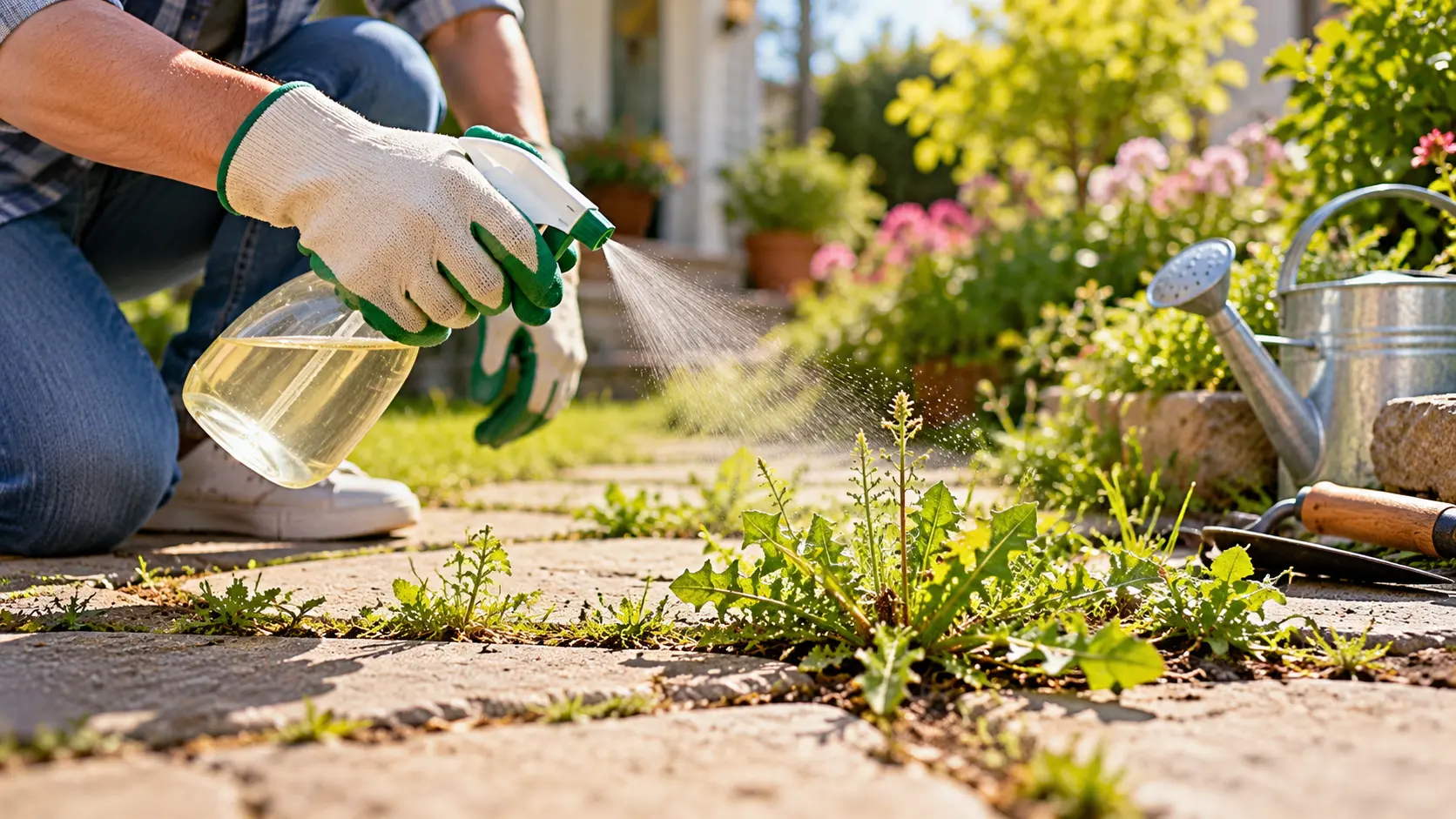
Weeds growing between paving stones, along walkways, and in gravel areas are often among the most frustrating garden problems. These locations may contain small seedlings that are easier to remove before their roots become established. Because desirable plants are frequently farther away, isolated hardscape areas may be easier to manage than densely planted garden beds.
However, vinegar does not necessarily provide permanent weed control between paving stones or cracks. Seeds can remain in small amounts of soil and organic debris, allowing new weeds to emerge after existing plants disappear. Removing accumulated debris and regularly checking these spaces can help reduce recurring growth without depending exclusively on contact treatments.
Garden beds, vegetable patches, and lawns require considerably more caution. Vinegar can damage valuable plants and does not distinguish between weeds and healthy vegetation. In these areas, hand pulling, mulching, careful hoeing, and improving plant coverage are generally more appropriate approaches for controlling unwanted growth while preserving the surrounding landscape.
How Long Does Vinegar Take to Kill Weeds?
The time required for visible weed damage varies according to plant characteristics, environmental conditions, and the particular treatment involved. Susceptible seedlings may show wilting or browning relatively quickly after exposure to an effective acetic acid product. Other plants may show limited changes or continue growing despite temporary leaf damage.
Warm and dry conditions can influence how contact weed-control products affect exposed foliage. However, weather alone cannot compensate for an ineffective concentration or a weed with extensive underground growth. Rainfall, plant maturity, and the structure of the leaves can also affect treatment performance, creating substantial differences between individual weeds.
Even when leaves appear damaged within a short period, complete plant death is not guaranteed. Established perennial weeds may recover from surviving roots and produce fresh growth later. Monitoring the area over several weeks provides a more realistic understanding of results than judging effectiveness solely by the initial appearance of damaged foliage.
Can Vinegar Kill Weeds Permanently?
Vinegar is generally not considered a reliable permanent solution for established weeds. Its contact action primarily affects exposed plant tissues rather than consistently eliminating roots beneath the soil. This limitation becomes particularly noticeable when dealing with aggressive perennial weeds that store energy underground and regenerate after their foliage is damaged.
Young annual weeds are easier to control because their root systems are less developed and they have fewer stored resources. However, even successfully removing one generation does not prevent additional seeds from germinating. Wind, birds, soil movement, and existing seed banks can continually introduce new weeds into previously cleared spaces.
Long-term weed management therefore requires prevention alongside removal. Maintaining mulch, reducing bare soil, improving desirable plant coverage, and checking problem areas regularly can help limit recurring growth. Combining these strategies is often more effective than expecting vinegar or any single contact treatment to eliminate weeds permanently.
Can You Use Vinegar to Kill Weeds in Your Lawn?
Using vinegar on a lawn is generally not recommended because it is a nonselective contact treatment. This means it can damage ordinary lawn grasses just as it damages unwanted weeds. Even small areas of accidental exposure may result in brown patches, making the lawn appear uneven or unhealthy.
Lawn weeds often develop because underlying conditions allow them to compete successfully with grass. Compacted soil, inconsistent watering, excessive shade, and mowing practices can create opportunities for unwanted vegetation. Addressing these contributing factors may help desirable grass grow more effectively and reduce the available space for weeds.
For isolated weeds, hand removal is often a practical starting point, particularly when roots can be extracted without disturbing large areas. Maintaining appropriate mowing heights and improving lawn health can also reduce future infestations. Persistent or widespread problems may require identifying the weed species and choosing a suitable management approach.
Does Vinegar Kill Weeds Between Pavers and Driveways?
Weeds frequently appear between pavers because cracks collect dust, soil particles, moisture, and organic material. These conditions create small growing environments where seeds can germinate and establish roots. Although vinegar may damage delicate seedlings in these spaces, it does not eliminate the underlying conditions that encourage future growth.
Removing weeds before they mature and produce seeds is one of the most practical ways to manage paved areas. A narrow weeding tool or suitable manual scraper can help remove vegetation from accessible gaps. Regular sweeping also reduces accumulated debris, making it harder for new plants to establish themselves between stones.
Long-term prevention may involve repairing damaged joints, maintaining appropriate paving materials, and improving drainage where necessary. These measures address the conditions that support recurring weeds rather than repeatedly treating visible foliage. Homeowners should also consider the surrounding landscape before using any contact weed-control product near valuable plants.
Should You Mix Vinegar with Salt or Dish Soap?
Many online gardening recipes recommend combining vinegar with salt and dishwashing liquid to create a homemade weed killer. These mixtures are often presented as simple alternatives to commercial herbicides. However, familiar household ingredients are not automatically harmless when combined or used for purposes different from their intended applications.
Salt can accumulate in soil and interfere with the ability of plants to absorb water, potentially affecting desirable vegetation as well as weeds. Dishwashing products may also contain ingredients that are unsuitable for garden soil or plant surfaces. Homemade mixtures lack the standardized testing and specific application directions associated with appropriately registered products.
For these reasons, adding salt or household detergents is not necessary or recommended as a routine weed-management practice. Never combine vinegar with bleach or other cleaning chemicals, because dangerous reactions can occur. Gardeners seeking a lower-impact approach are generally better served by mechanical removal, preventive landscaping practices, and clearly labeled gardening products.
Is Vinegar Safe for Soil, Flowers, and Other Plants?
Vinegar is sometimes described as environmentally friendly because acetic acid occurs naturally and breaks down under many environmental conditions. However, natural origin does not automatically mean a substance is harmless to plants or soil. Concentration, exposure, application frequency, and surrounding conditions all influence potential effects.
Direct contact with vinegar can damage the leaves and stems of ornamental plants, vegetables, and lawn grasses. Repeated or excessive exposure may also temporarily affect soil acidity and organisms involved in maintaining soil health. These risks are especially important in productive garden beds where healthy soil supports beneficial roots and microorganisms.
Protecting desirable vegetation should remain a priority whenever managing weeds. Manual removal, mulch, and proper planting arrangements can often address unwanted growth without exposing valuable plants to acidic treatments. For areas containing delicate flowers or edible crops, selecting methods that preserve soil conditions is generally the more practical long-term strategy.
Common Mistakes When Using Vinegar for Weeds
One common mistake is assuming that ordinary household vinegar will eliminate every type of weed. While small seedlings may be susceptible, mature plants often recover because their roots remain alive. Understanding the difference between temporary foliage damage and complete removal helps prevent unrealistic expectations about the results.
Another mistake involves using vinegar too close to valuable plants or treating large areas unnecessarily. Because acetic acid affects exposed vegetation indiscriminately, accidental contact can damage flowers, vegetables, and grasses. Using stronger products without understanding their hazards introduces additional risks, particularly when concentrated acids are mistaken for ordinary household vinegar.
A third mistake is ignoring the reasons weeds keep returning. Even when existing plants are removed successfully, exposed soil and accumulated debris can support additional germination. Combining removal with prevention, improving garden maintenance habits, and monitoring problem areas can produce more dependable results than repeatedly attempting the same treatment.
Natural Alternatives to Vinegar for Killing Weeds
Hand weeding remains one of the most dependable options for small gardens, flower beds, and isolated patches of unwanted vegetation. Removing the entire plant, including as much of the root system as practical, can reduce regrowth. This method also allows gardeners to work selectively around desirable plants without exposing them to nonselective chemical treatments.
Mulching provides another practical option for preventing many weeds from establishing themselves. Organic materials such as wood chips and shredded leaves can limit the amount of sunlight reaching weed seeds while supporting soil moisture retention. Maintaining an appropriate mulch layer can reduce new germination, although existing perennial weeds may still require removal.
Other approaches include shallow hoeing, using suitable ground covers, and maintaining healthy lawns or densely planted garden beds. These strategies make growing conditions less favorable for weeds while supporting desirable vegetation. Choosing the right combination depends on the location, weed species, soil conditions, and amount of maintenance required.
How to Prevent Weeds from Growing Back
Preventing weeds begins with reducing the conditions that support their establishment. Bare soil provides opportunities for seeds to germinate, particularly when moisture and sunlight are readily available. Covering suitable areas with mulch or desirable vegetation can reduce open growing spaces and make future weed management easier.
Regular garden inspections also play an important role in controlling recurring growth. Small weeds are usually easier to remove before their roots expand and seeds mature. Establishing a simple maintenance schedule allows you to address new growth early rather than waiting until unwanted plants become widespread and difficult to manage.
Long-term prevention also involves understanding the differences between annual and perennial weeds. Annual species generally complete their life cycles through seeds, while perennial plants may survive underground and regenerate repeatedly. Identifying which weeds are present helps determine whether seed prevention, root removal, soil improvement, or a combination of methods will provide the best results.
Is Vinegar Better Than Commercial Weed Killers?
Vinegar and commercial herbicides differ in their active ingredients, intended applications, and ability to control particular plants. Acetic acid works primarily through contact with exposed foliage, while some commercial products are designed to affect plants through other mechanisms. Consequently, their effectiveness cannot be compared accurately without considering the specific weeds and formulations involved.
Household vinegar is inexpensive and familiar, but its weed-control effectiveness is often limited. Commercial gardening products may provide more predictable results when selected and used correctly for their intended purposes. However, every product has limitations and safety requirements, and stronger substances should not be considered automatically preferable.
For home gardens, the best approach often combines appropriate weed identification with preventive and mechanical management practices. Hand pulling, mulching, improving soil coverage, and maintaining outdoor spaces can reduce dependence on repeated treatments. Product selection should be based on specific gardening needs, label instructions, environmental considerations, and the protection of surrounding plants.
Conclusion
Learning how to kill weeds with vinegar involves understanding both its potential benefits and important limitations. Vinegar contains acetic acid, which can damage exposed plant tissues and may affect certain young seedlings. However, ordinary household vinegar is not consistently effective against established weeds, and visible leaf damage does not necessarily mean the roots have been eliminated.
Effective weed control also requires protecting desirable plants, maintaining healthy soil, and avoiding unnecessary chemical exposure. Stronger vinegar products can introduce serious safety hazards, while homemade mixtures involving salt or detergent may create additional problems. For many home gardens, manual removal, mulching, and regular maintenance offer more dependable and manageable solutions.
Ultimately, keeping weeds under control is an ongoing gardening process rather than a one-time treatment. Identifying problem plants, removing them before they spread, and reducing opportunities for new growth can produce lasting improvements. A thoughtful combination of prevention and appropriate removal methods will help maintain a healthier, more attractive outdoor space.
Frequently Asked Questions (FAQs)
Does white vinegar kill weeds permanently?
White vinegar may damage very young weeds, but it usually does not eliminate established root systems. Perennial weeds can regrow, and new seedlings may appear unless preventive gardening measures are maintained.
How long does vinegar take to kill weeds?
Visible foliage damage may develop relatively quickly on susceptible plants, but results depend on vinegar concentration, weather, and weed maturity. Brown leaves do not necessarily indicate that the roots have died.
Can vinegar kill weeds without harming grass?
Vinegar cannot reliably distinguish weeds from desirable grass. Direct contact may damage lawn vegetation, so hand removal and appropriate lawn maintenance are generally better choices for controlling isolated weeds.
Is vinegar and salt a good homemade weed killer?
Adding salt to vinegar is not recommended for routine garden weed control. Salt can accumulate in soil and damage desirable plants, while homemade mixtures may produce inconsistent results and unintended environmental effects.
What is the best natural way to stop weeds growing back?
Removing weeds before they produce seeds, maintaining mulch, improving desirable plant coverage, and regularly inspecting problem areas can reduce regrowth. Established perennial weeds may also require careful root removal.