

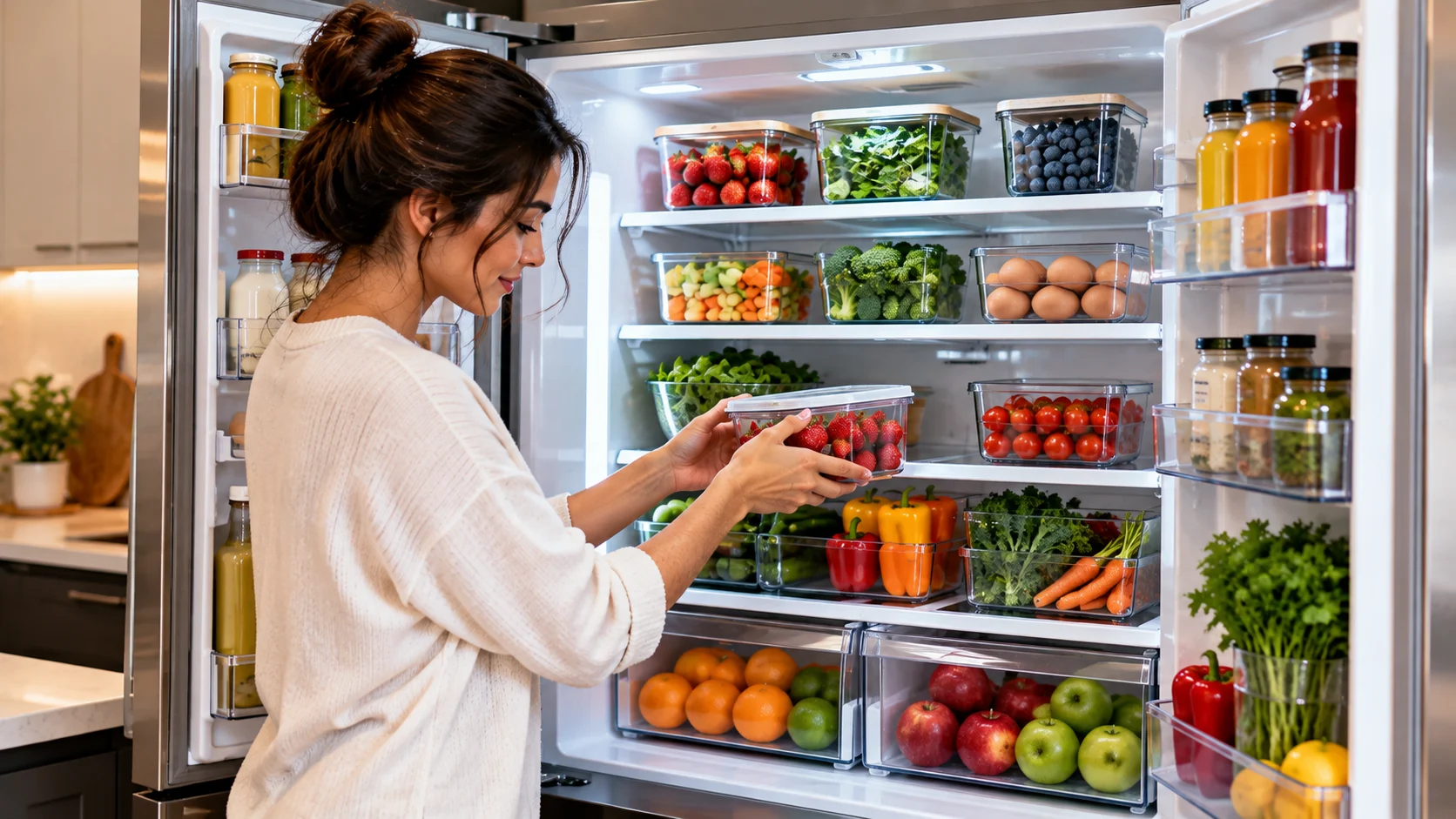
A messy refrigerator can make everyday cooking more stressful than it needs to be. When food gets pushed behind containers or hidden under other items, it becomes easy to forget what you have. This often leads to spoiled vegetables, expired leftovers, unnecessary grocery purchases, and wasted money.
Learning a few simple fridge organization hacks can completely change how you use your refrigerator. You do not need expensive storage systems or a larger fridge to keep everything organized. Small adjustments, such as grouping similar foods, using clear containers, and creating dedicated storage zones, can make a noticeable difference.
An organized refrigerator also helps you maintain proper food storage conditions and find ingredients quickly. Whether you have a compact apartment fridge or a large family refrigerator, these 15 practical ideas will help you maximize storage space, reduce food waste, and keep your kitchen running smoothly.
1. Start With a Complete Fridge Cleanout
The first step toward better refrigerator organization is removing everything from the shelves, drawers, and door compartments. This gives you a clear picture of what you already have and how much storage space is available. Check expiration dates, examine leftovers, and discard food that has spoiled or has been stored unsafely.
Once the refrigerator is empty, clean the interior using warm water and mild dish soap. Wipe down shelves, drawers, and frequently touched surfaces to remove spills, crumbs, and sticky residue. Dry everything thoroughly before putting food back, and keep perishable items chilled in a cooler if cleaning takes an extended period.
Before restocking, group similar foods together on your kitchen counter while keeping perishables safely chilled. Separate fruits, vegetables, dairy products, beverages, condiments, and leftovers into categories. This simple sorting process makes it easier to see duplicate purchases, identify unnecessary packaging, and decide where each item should go inside the refrigerator.
2. Use Clear Storage Bins to Group Similar Foods
Clear refrigerator storage bins are one of the easiest ways to create a more organized layout. Instead of placing individual yogurt cups, snacks, and condiment bottles randomly across shelves, group related products inside separate containers. Transparent bins allow you to see their contents immediately, reducing the chances of forgetting food hidden at the back.
Choose bins that fit your refrigerator shelves without blocking airflow or making the compartments difficult to access. Rectangular containers often make better use of available space than oversized round baskets. Select removable bins with smooth surfaces so they can be cleaned easily whenever spills occur or food packaging becomes sticky.
You can create individual bins for breakfast ingredients, sandwich supplies, healthy snacks, or meal preparation essentials. Keeping frequently used foods together also makes breakfast preparation and lunch packing more efficient. When everything has a designated place, maintaining refrigerator organization becomes easier because you know exactly where each item belongs after grocery shopping.
3. Create Dedicated Zones for Different Food Categories
A simple refrigerator organization system begins by assigning specific areas to different types of food. Keeping dairy products, prepared meals, beverages, and fresh produce in separate zones improves visibility and makes ingredients easier to locate. It also helps prevent smaller packages from getting lost behind larger containers or stacked grocery items.
Consider placing ready-to-eat foods and leftovers on upper shelves, with dairy and other commonly used ingredients nearby. Store raw meat, poultry, and seafood in leakproof containers on the lowest practical shelf to prevent juices from dripping onto other foods. Follow your refrigerator manufacturer’s guidance when choosing storage locations.
Creating consistent zones makes refrigerator maintenance easier for everyone in the household. Instead of rearranging products every time someone opens the fridge, each category has a familiar location. This reduces unnecessary searching, helps identify missing groceries, and encourages family members to return ingredients to their designated storage areas.
4. Use Stackable Containers to Maximize Vertical Space
Many refrigerators have unused vertical space between shelves, especially when storing small containers and leftover food. Stackable food storage containers help make better use of this space without creating unstable piles. Choosing containers with flat lids allows you to arrange meals efficiently while keeping shelves accessible and reducing unnecessary clutter.
Select sturdy, food-safe containers that are designed to stack securely without slipping. Matching container sizes can make the refrigerator look more organized while simplifying storage. Avoid stacking heavy containers too high or placing fragile items underneath, since unstable arrangements can lead to spills, broken containers, and wasted food.
Stackable containers work particularly well for cooked rice, chopped vegetables, prepared meals, and leftovers. Using several smaller containers can be more convenient than storing everything in one oversized box. Keep enough space between stored items for cold air to circulate, ensuring that your refrigerator maintains safe and consistent temperatures.
5. Label Containers With Names and Storage Dates
Labels are a simple but effective tool for keeping refrigerator contents organized and reducing food waste. When several containers look similar, it can be difficult to remember what each one contains or when it was prepared. Adding a food name and storage date makes identification easier and prevents unnecessary guessing.
Use removable labels, washable markers, or small pieces of freezer-safe tape for marking storage containers. Write clearly so the information remains readable even when containers are stacked close together. For homemade meals, include the preparation date, while transferred packaged foods should retain important original labeling information whenever possible.
Dating leftovers is particularly useful because refrigerated cooked foods generally should be consumed within three to four days. Labeling helps you prioritize older meals before preparing something new. This simple habit supports better meal planning, encourages timely food consumption, and makes refrigerator organization easier to maintain throughout a busy week.
6. Follow the First In, First Out Storage Method
The first in, first out method is a useful refrigerator organization strategy that encourages you to use older food before newer purchases. When restocking milk, yogurt, vegetables, or other groceries, move existing products toward the front. Place newly purchased items behind them so older products remain visible and easier to reach.
This method is especially helpful for households that buy groceries several times each week. Without a consistent system, newer products may get used first while older packages remain forgotten at the back. Organizing items by purchase date and freshness helps prevent unnecessary spoilage and makes it easier to monitor what needs attention.
However, always consider actual food safety rather than relying only on purchase dates. Products with earlier use-by dates or shorter remaining storage times may need priority. By combining date awareness with a consistent refrigerator layout, you can reduce duplicate purchases, improve food rotation, and make better use of groceries already available.
7. Adjust Refrigerator Shelves to Fit Your Groceries
Adjustable refrigerator shelves can help create additional usable space without purchasing new storage accessories. Many people leave shelves in their original positions even when the arrangement does not match their usual grocery needs. Changing shelf heights can provide more room for tall bottles, food containers, and frequently used products.
Before adjusting shelves, examine which items occupy the most space and how often you access them. You might create a taller compartment for milk cartons and pitchers while keeping another area suitable for smaller containers. Follow the manufacturer’s instructions when removing or repositioning shelves to avoid damaging refrigerator components.
A well-planned shelf arrangement improves storage efficiency and reduces the need to stack products awkwardly. Keep heavier containers on sturdy shelves where they can be lifted safely. Leave adequate room around stored items so refrigerator airflow remains unrestricted and cold temperatures can circulate effectively throughout the interior.
8. Organize the Refrigerator Door Carefully
The refrigerator door is a convenient storage area, but it generally experiences more temperature fluctuations than interior shelves. Every time the door opens, items stored there are exposed to warmer kitchen air. Understanding this difference can help you decide which foods belong in door compartments and which require more consistent refrigeration.
Use door shelves for products such as pickles, many condiments, and other items that tolerate temperature changes better. Store milk, eggs, and highly perishable foods on interior shelves where temperatures are typically more stable. Always check package instructions because some sauces and condiments have specific refrigeration requirements after opening.
Arrange door items by height and frequency of use to make them easier to access. Tall bottles can go in suitable compartments, while smaller jars can be grouped together where they remain visible. Avoid overcrowding the door because heavy or tightly packed items may interfere with proper closing and reduce refrigerator efficiency.
9. Use Crisper Drawers Properly to Keep Produce Fresh
Crisper drawers are designed to provide storage conditions that help fruits and vegetables maintain their quality. Many refrigerators include humidity controls that allow you to adjust moisture retention according to the produce being stored. Understanding these settings can help vegetables remain crisp while reducing premature spoilage caused by unsuitable storage conditions.
High-humidity settings are often suitable for leafy greens, broccoli, carrots, and other vegetables that benefit from moisture retention. Low-humidity settings generally work better for many fruits, including apples and pears. Always consider the specific storage needs of each item because some fruits and vegetables are better kept outside the refrigerator until ripe.
Avoid packing crisper drawers so tightly that produce becomes crushed or difficult to inspect. Remove spoiled items promptly and check drawers regularly for moisture buildup. Using breathable produce bags or suitable storage containers can also help manage excess moisture while keeping fresh ingredients organized and accessible.
10. Store Fruits and Vegetables Separately When Possible
Keeping certain fruits and vegetables separate can help extend their freshness and reduce food waste. Some fruits, including apples, bananas, and pears, release ethylene gas as they ripen. This natural plant hormone can accelerate ripening and deterioration in sensitive produce stored nearby, making thoughtful refrigerator placement useful.
Vegetables such as broccoli, lettuce, and some leafy greens may deteriorate faster when exposed to higher concentrations of ethylene. When refrigerator space allows, separate ethylene-producing fruits from sensitive vegetables using different drawers or storage containers. Remember that not all produce requires refrigeration, so storage decisions should match the specific food.
For smaller refrigerators, complete separation may not always be practical or necessary. Instead, focus on grouping compatible produce and inspecting fruits and vegetables frequently. Remove overripe items when needed, avoid trapping excess moisture, and use delicate produce earlier to maintain freshness and reduce unnecessary grocery waste.
11. Create an Eat First Section for Expiring Foods
An eat first section is one of the simplest fridge organization hacks for preventing forgotten food. Choose a small, visible space near the front of a refrigerator shelf and reserve it for items that should be consumed soon. This might include opened ingredients, ripe produce, or leftovers approaching the end of their recommended storage period.
Use a clear container or dedicated shelf area to keep these foods together without overcrowding the refrigerator. Label the section clearly so other household members understand its purpose. Check the contents before preparing meals or shopping for additional groceries, and prioritize anything that needs to be eaten promptly.
This method works particularly well for busy families that prepare several meals throughout the week. Instead of searching through every shelf for ingredients, you can start with foods in the designated section. Using ingredients before they spoil helps reduce food waste, save grocery money, and encourage more creative meal planning.
12. Use Lazy Susans for Jars and Small Condiments
A rotating tray, commonly called a Lazy Susan, can make small jars and condiment bottles easier to reach. Instead of moving several containers to access something at the back, you can rotate the tray to find what you need. This is especially useful for wide refrigerator shelves where smaller items often become hidden.
Choose a compact rotating tray that fits securely on a flat, stable shelf. Measure the available space before purchasing one, and make sure it rotates without striking other containers. Keep heavier products toward the center when practical and avoid loading the tray beyond its recommended weight capacity.
Lazy Susans work well for salad dressings, sauces, jams, and small condiment containers that tend to accumulate over time. Group similar items together to make the arrangement more useful. Regularly inspect the products for spoilage, storage instructions, and unnecessary duplicates so the rotating tray remains organized rather than becoming another cluttered area.
13. Remove Unnecessary Packaging to Save Shelf Space
Bulky packaging can occupy valuable refrigerator space without providing additional benefits once certain products are opened. For example, individual yogurt cups may arrive inside large cardboard sleeves that take up unnecessary room. Removing appropriate outer packaging can make items easier to arrange and improve visibility across crowded refrigerator shelves.
However, avoid discarding packaging that contains important food safety information, expiration dates, or storage instructions without recording those details. Keep foods in their original sealed containers when appropriate, especially products that require protection from contamination. Transfer ingredients only into clean, suitable food-safe containers that can be sealed properly.
When you simplify packaging thoughtfully, refrigerator shelves become easier to clean and organize. Smaller containers can often be arranged more efficiently than oversized cartons or loosely packed bags. The goal is not to remove every package but to eliminate unnecessary bulk while maintaining freshness, food safety, and easy product identification.
14. Make Meal Prep Containers Part of Your Fridge System
Meal preparation can help reduce refrigerator clutter by giving cooked ingredients and ready-to-eat meals designated storage locations. Instead of keeping multiple pots, bowls, and partially opened packages on different shelves, transfer suitable foods into sealed containers. This creates a more consistent arrangement and makes weekly meal planning easier.
Use containers that match your usual portion sizes and everyday cooking habits. Transparent containers allow you to identify meals quickly, while matching shapes make stacking more practical. Refrigerate cooked food promptly in shallow containers, allowing it to cool safely without leaving perishable ingredients at room temperature for extended periods.
Keep prepared meals in a dedicated section where they remain easy to reach. Label them with preparation dates and use most refrigerated leftovers within three to four days. If you prepare more food than you can eat safely during that period, freeze suitable portions promptly to reduce waste and preserve meal options.
15. Schedule a Weekly Fridge Organization Routine
Even the best refrigerator organization system needs occasional maintenance to remain effective. A short weekly check helps you identify forgotten leftovers, spoiled produce, empty packages, and unnecessary clutter. Choose a convenient day, ideally before grocery shopping, to review the refrigerator and plan how existing ingredients can be used.
Start by checking storage dates, wiping small spills, and moving older products toward the front. Remove spoiled items and make space for groceries you actually need. This process can help prevent duplicate purchases while encouraging you to plan meals around vegetables, dairy products, and leftovers already available.
Keeping your refrigerator organized does not require a complicated cleaning schedule. Spending a few minutes on regular maintenance can prevent the need for major cleanouts later. When everyone follows the same storage system, food stays easier to find, shelves remain more functional, and reducing household food waste becomes a manageable habit.
Additional Tips for Maintaining a Clean and Efficient Refrigerator
Keeping food organized is only one part of maintaining an efficient refrigerator. Proper temperature control is equally important because cold storage slows the growth of many harmful microorganisms. Keep the refrigerator at 40°F (4°C) or below, ideally around 37°F (3°C), and use an appliance thermometer to verify the actual temperature.
Avoid filling every available shelf space because refrigerated air needs room to circulate. Overcrowding can interfere with consistent cooling, especially when food packages block vents. At the same time, avoid leaving the door open unnecessarily while searching for ingredients, since frequent warm-air exposure makes the appliance work harder to maintain its temperature.
Pay attention to refrigerator seals, shelf cleanliness, and unusual moisture buildup. Damaged door gaskets or blocked vents can contribute to inefficient cooling and inconsistent storage conditions. Maintaining the refrigerator alongside your organization routine creates a cleaner, safer, and more convenient environment for storing everyday groceries.
How Fridge Organization Helps Reduce Food Waste and Grocery Costs
An organized refrigerator makes it easier to understand exactly what ingredients are available before visiting the grocery store. When food remains visible, you are less likely to purchase products you already own. This simple improvement can help reduce unnecessary spending and prevent fresh ingredients from sitting unused until they spoil.
Better organization also encourages practical meal planning around foods that need attention. For example, vegetables approaching the end of their freshness can be added to soups, stir-fries, or cooked meals when still safe. Leftovers can become convenient lunches, while opened ingredients can be incorporated into recipes before their recommended storage periods end.
Over time, these small habits can make household food management more efficient and less stressful. You spend less time searching for ingredients, cleaning unexpected spills, or throwing away forgotten products. The greatest benefit of effective refrigerator organization is not simply a tidy appearance but a storage system that supports smarter shopping and everyday cooking.
Conclusion
These 15 fridge organization hacks show that maintaining an organized refrigerator does not require expensive accessories or complicated routines. Simple changes such as using clear bins, adjusting shelves, labeling containers, and separating food categories can create a more practical storage system. The key is choosing organization methods that fit your refrigerator size and daily habits.
Proper food storage also plays an important role in maintaining freshness and reducing waste. Keeping the refrigerator at a safe temperature, using appropriate storage zones, and prioritizing older ingredients can improve everyday food management. With thoughtful preparation, you can make ingredients easier to access while reducing the likelihood of forgotten or spoiled groceries.
Start with a complete cleanout and gradually introduce the organization ideas that work best for your household. Maintain your system through regular checks, sensible grocery planning, and consistent storage habits. A well-organized fridge can save valuable space, simplify meal preparation, and help you make better use of the food you buy.
Frequently Asked Questions (FAQs)
What is the best way to organize a refrigerator?
Group foods into dedicated zones, use clear storage containers, and keep frequently used ingredients accessible. Store raw meat securely on a lower shelf, place suitable condiments in door compartments, and maintain proper refrigerator temperatures.
How can I create more space in a small fridge?
Use stackable containers, adjustable shelves, and compact storage bins to maximize available space. Remove unnecessary outer packaging when appropriate and avoid overcrowding shelves so cold air can circulate effectively.
Where should fruits and vegetables be stored in the fridge?
Store suitable fruits and vegetables in crisper drawers according to their humidity needs. Leafy greens often benefit from higher humidity, while many fruits prefer lower humidity and separation from ethylene-sensitive vegetables.
How often should I clean and organize my refrigerator?
Check refrigerator contents weekly to remove spoiled food, inspect leftovers, and wipe minor spills. Perform a more thorough cleaning periodically or whenever spills occur, while maintaining safe food storage temperatures.
Does organizing your fridge help food last longer?
Yes, proper fridge organization can help preserve food quality by supporting suitable storage conditions and reducing forgotten ingredients. However, freshness also depends on food type, packaging, temperature, and safe handling practices.