
Smart Small Space Storage Hacks to Make Every Inch Count
Living in a compact home does not mean sacrificing comfort, organization, or personal style. With the right small space storage hacks, even the tiniest apartment can feel functional, welcoming, and beautifully arranged. From hidden compartments to clever vertical organizers, simple changes can transform overlooked areas into useful storage without making your rooms feel crowded.
The secret to organizing small spaces lies in making existing furniture, walls, corners, and cabinets work more efficiently. Instead of adding bulky storage units, focus on flexible solutions that maximize available space. Creative storage ideas can help reduce visible clutter, improve accessibility, and make everyday routines easier, whether you live in a studio apartment or a small family home.
This guide explores 20 practical small space storage hacks designed to maximize every inch of your living environment. You’ll discover clever ideas for bedrooms, kitchens, bathrooms, closets, and multipurpose living areas. Many of these solutions are affordable, renter-friendly, and easy to personalize, allowing you to create an organized home that feels both spacious and stylish.
1–2. Use Vertical Wall Shelves and Over-the-Door Organizers
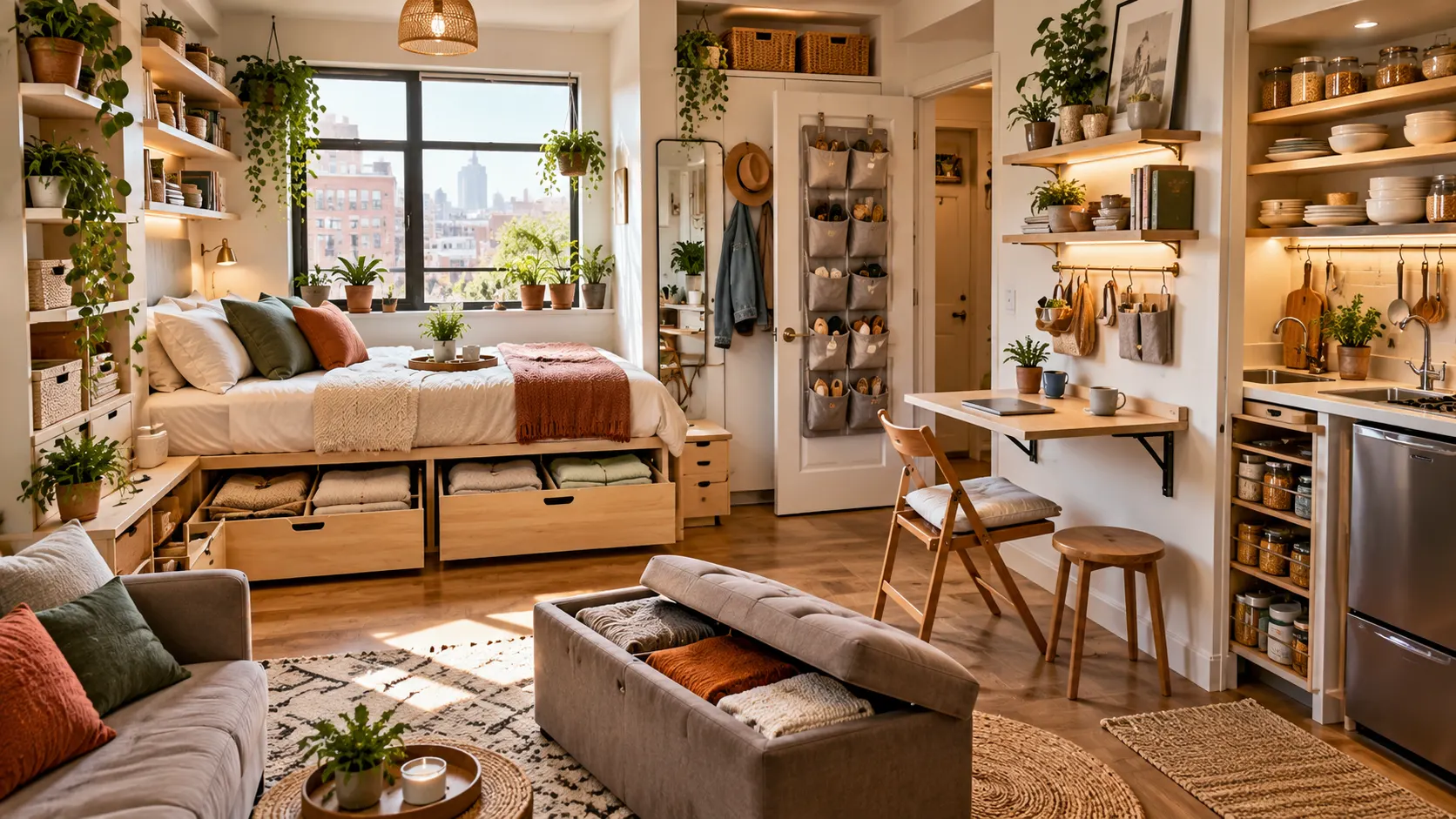
Vertical wall shelves are among the most effective small space storage hacks because they turn unused wall areas into practical storage. Floating shelves can hold books, decorative accessories, small baskets, and everyday essentials without occupying valuable floor space. Installing shelves above desks, sofas, or storage cabinets creates additional organization while maintaining an open and uncluttered appearance.
Over-the-door organizers provide another convenient solution for rooms with limited storage furniture. Hanging pockets or lightweight racks can hold accessories, toiletries, cleaning supplies, and other frequently used belongings. Bedroom doors, pantry doors, and bathroom doors often have overlooked storage potential, making them ideal places to introduce simple organizing systems without major renovations.
For the best results, choose shelves and organizers that match your room’s decorating style and available dimensions. Keep heavier objects on appropriately rated, securely installed shelves and avoid overloading door hardware. Using coordinated baskets or containers helps maintain a neat appearance while making stored items easy to find whenever you need them.
3–4. Maximize Under-Bed Storage and Choose Storage Beds
The space beneath your bed is often one of the largest unused storage areas in a small bedroom. Low-profile containers can hold seasonal clothing, extra bedding, shoes, and other belongings that are not needed every day. Choosing transparent boxes or clearly labeled containers makes it easier to locate items without repeatedly pulling everything out.
A storage bed offers an even more integrated solution by combining sleeping space with built-in drawers or compartments. Platform beds with accessible storage can reduce the need for additional bedroom furniture. This approach is particularly useful in studio apartments and compact bedrooms where every piece of furniture needs to serve a practical purpose.
Before purchasing containers or furniture, measure the available height and width beneath your bed. Choose storage solutions that slide smoothly and allow adequate ventilation around fabrics and bedding. Keeping frequently used items near accessible edges while storing seasonal belongings farther inside makes the entire system more convenient and efficient.
5–6. Invest in Multifunctional Furniture and Storage Ottomans
Multifunctional furniture is essential for maximizing storage in small apartments because it performs several tasks without requiring extra floor space. A coffee table with built-in drawers can store remote controls, magazines, and small accessories. Similarly, a compact bench with storage compartments can provide seating while keeping everyday clutter neatly hidden.
Storage ottomans are especially versatile because they can function as footrests, occasional seating, or convenient storage containers. They are ideal for holding blankets, cushions, games, and other living room essentials. Some designs also feature removable trays, allowing them to double as small tables when additional surface space is needed.
When choosing multifunctional furniture, prioritize pieces that fit your room’s proportions and support your daily activities. Avoid purchasing oversized items simply because they offer additional compartments. A carefully selected storage ottoman, convertible table, or built-in bench can improve organization while preserving comfortable movement throughout the room and maintaining visual balance.
7–8. Add Corner Shelves and Use Narrow Rolling Carts
Corners are frequently overlooked when organizing small spaces, yet they can provide valuable room for additional storage. Compact corner shelves fit naturally into unused angles and create convenient places for books, decorative objects, or small household essentials. Wall-mounted corner units are particularly useful because they increase storage capacity without taking up much floor space.
Narrow rolling carts are another practical solution for awkward gaps between appliances, cabinets, or furniture. These movable organizers can hold kitchen supplies, bathroom products, craft materials, or office essentials. Their slim profiles make them especially useful in compact rooms where traditional storage cabinets would interfere with movement or occupy too much space.
Measure narrow gaps carefully before selecting a rolling cart, allowing enough clearance for smooth movement. Choose stable designs with suitable weight limits and avoid positioning carts where they create tripping hazards. Combining corner shelving with compact mobile organizers can turn previously neglected spaces into accessible storage areas that support everyday organization.
9–10. Organize Closets With Double Hanging Rods and Shelf Dividers
A small closet can often hold more belongings when its existing space is organized effectively. Double hanging rods create separate levels for shorter clothing items such as shirts, skirts, and folded trousers on hangers. This arrangement makes better use of vertical space while helping prevent garments from becoming crowded or difficult to access.
Shelf dividers offer another effective way to organize folded clothing, handbags, towels, and other closet essentials. These simple accessories separate stacks and prevent items from sliding into one another. Adjustable dividers are particularly helpful because they can accommodate changing storage needs without requiring permanent modifications to existing shelving.
Before adding organizers, remove items you no longer need and group remaining belongings by category. Measure hanging lengths to ensure clothing fits comfortably between rods, and reserve full-height space for longer garments. Using matching hangers and labeled containers can create a cleaner appearance while making your small closet easier to maintain.
11–12. Install Pegboards and Magnetic Storage Strips
Pegboards offer flexible wall storage that can be customized for kitchens, home offices, craft areas, and utility rooms. Hooks, baskets, and small shelves attach to the board, creating dedicated spaces for frequently used supplies. Because accessories can be repositioned, pegboards are especially useful when storage needs change or new items need convenient locations.
Magnetic storage strips provide another compact organizing option for suitable metal tools and accessories. In kitchens, purpose-designed magnetic racks can hold compatible utensils, while small magnetic organizers may help arrange lightweight office supplies. These solutions keep items visible and accessible without requiring additional drawers, countertop containers, or bulky storage furniture.
When installing wall-mounted systems, choose appropriate fasteners and follow the manufacturer’s weight recommendations. Keep sharp or heavy objects away from areas accessible to young children, and use purpose-designed holders where needed. Combining pegboards with magnetic organizers creates flexible storage that can be adjusted while keeping work surfaces clear and functional.
13–14. Create Hidden Storage Under Sofas and Window Seats
Living rooms often contain useful storage opportunities beneath existing furniture. Depending on the design, shallow containers may fit beneath raised sofas and provide space for extra blankets, seasonal decorations, or rarely used accessories. This approach helps maintain a tidy appearance because belongings remain out of sight without requiring another freestanding cabinet.
Window seats with built-in storage are another clever way to maximize limited floor space. A cushioned bench can provide a comfortable reading spot while concealing compartments for books, cushions, or household supplies. In compact bedrooms and living rooms, this combination of seating and storage adds useful functionality without making the area feel overcrowded.
Choose storage compartments that are easy to open and maintain, especially when furniture sits close to walls. Avoid blocking ventilation openings, electrical connections, or mechanisms built into sofas and seating units. Thoughtful hidden storage helps reduce visible clutter while preserving a comfortable living environment where essential items remain conveniently accessible.
15–16. Use Stackable Containers and Cabinet Door Organizers
Stackable storage containers can dramatically improve organization inside kitchen cabinets, pantry shelves, and utility cupboards. Containers with compatible shapes allow belongings to be arranged vertically rather than scattered across available surfaces. Clear designs make identifying contents easier, while labels help maintain order when storing dry goods, household supplies, or small accessories.
Cabinet door organizers take advantage of unused interior surfaces without requiring additional floor space. Lightweight racks or hanging pockets can hold cleaning cloths, small supplies, or suitable kitchen accessories. In bathrooms, similar organizers provide convenient storage for toiletries and personal care items that would otherwise crowd drawers or countertops.
Before adding door-mounted organizers, check that cabinets can still close completely without damaging hinges or stored objects. Avoid placing excessive weight on thin cabinet doors, and keep cleaning chemicals securely stored according to their safety instructions. Combining stackable containers with suitable door organizers creates an efficient storage system that improves accessibility and reduces wasted cabinet space.
17–18. Make Use of Bathroom Wall Space and Shower Organizers
Small bathrooms often become cluttered because toiletries, towels, and cleaning products compete for limited storage. Wall-mounted shelves above appropriate open areas can provide convenient places for lightweight essentials. Compact towel hooks and hanging organizers also help free up countertops, making the bathroom look cleaner while keeping frequently used items within easy reach.
Shower organizers are particularly useful when built-in bathroom storage is limited. Corner caddies, hanging racks, and suitable adhesive-mounted containers can hold shampoo, soap, and other bathing essentials. Choosing rust-resistant materials helps maintain durability in humid conditions, while designs with drainage openings reduce water accumulation around stored products.
Keep shower storage positioned where it does not interfere with movement or create falling hazards. Avoid overloading adhesive accessories, particularly on surfaces exposed to constant moisture. A combination of wall shelves, practical hooks, and compact shower organizers can make even a very small bathroom feel more organized and comfortable.
19–20. Use Vacuum Storage Bags and Modular Storage Systems
Vacuum storage bags can be useful for reducing the space occupied by certain bulky seasonal fabrics. They are commonly used for suitable blankets, spare linens, and clothing that will not be needed for some time. By removing excess air, these bags allow selected soft items to occupy less room inside closets or under-bed containers.
Modular storage systems provide a different advantage by allowing compartments and shelves to be rearranged as household needs evolve. Stackable cubes, adjustable shelving, and interchangeable baskets can support storage in bedrooms, offices, and living rooms. These flexible systems are especially practical in rental homes or apartments where permanent renovations may not be possible.
Use vacuum bags only for materials suitable for compression, since some delicate textiles and insulated products can lose their shape. For modular storage, secure tall units appropriately and follow the manufacturer’s stability and weight instructions. Choosing adaptable solutions makes it easier to maintain organization without repeatedly replacing furniture as your belongings and routines change.
Conclusion
Small space storage hacks can transform compact homes into comfortable, functional, and visually appealing living environments. From vertical shelving and under-bed containers to hidden compartments and multifunctional furniture, practical solutions can make unused areas more productive. The key is selecting storage methods that complement your daily routine while maintaining enough open space for comfortable movement.
Organizing a small apartment or room does not require an expensive renovation or an entirely new collection of furniture. Simple additions such as shelf dividers, door organizers, rolling carts, and stackable containers can make a noticeable difference. Planning carefully, measuring available areas, and reducing unnecessary clutter help ensure that every storage improvement contributes to long-term convenience.
The most effective approach combines creativity with realistic storage needs and consistent organization habits. Start with the areas that create the most daily frustration, then introduce solutions gradually as you discover what works. With thoughtful planning and these 20 small space storage hacks, you can maximize every inch while creating a home that feels welcoming and organized.
Frequently Asked Questions (FAQs)
What are the best storage hacks for small spaces?
Vertical shelves, under-bed containers, multifunctional furniture, door organizers, and stackable bins are among the most useful options. These solutions improve storage capacity while preserving valuable floor space in compact rooms.
How can I create more storage in a small bedroom?
Use under-bed containers, storage beds, wall-mounted shelves, and closet organizers. Furniture with hidden compartments can also help store bedding, clothing, and accessories without requiring additional bulky storage units.
How do you organize a small apartment without closets?
Combine modular shelves, storage ottomans, wall hooks, and under-bed organizers. Group belongings by category and use labeled containers to create accessible storage without depending on built-in closets.
What is the cheapest way to maximize small space storage?
Affordable solutions include reusable containers, wall hooks, shelf dividers, and simple door organizers. Rearranging existing furniture and removing unnecessary items can also create additional usable space without major expenses.
How do you make a small room look bigger while adding storage?
Choose vertical organizers, appropriately sized furniture, and concealed storage to reduce visible clutter. Keeping floors relatively open and using coordinated storage containers can create a cleaner, more spacious appearance.