Plan Your Garden Around the Space You Have
A beautiful home garden starts with understanding the space available to you. Look at the size of your yard, patio, balcony, or terrace and note how much sunlight each area receives. Consider where people walk, where water collects, and which spots feel empty. Planning around your existing space helps you create a garden that looks attractive without making the area feel crowded.
Think about how you want to use the garden before adding plants. Some homeowners want a peaceful seating area, while others prefer colorful flower beds, a small vegetable patch, or a mix of decorative and edible plants. Defining your main purpose makes design decisions easier. It also helps you choose plants, containers, paths, and furniture that work together naturally.
If you are building your first garden, start with a simple layout rather than trying to transform everything at once. Our beginner garden guide explains the basics of choosing a location, preparing soil, and selecting suitable plants. A clear starting plan makes it easier to create a beautiful outdoor space that can grow with your experience.
Create Colorful Flower Beds
Flower beds are one of the easiest ways to add color and personality to a home garden. Choose a combination of plants that bloom at different times so the space stays visually interesting throughout the growing season. Mixing annuals and perennials can provide both quick color and long-term structure. Try to repeat a few colors or plant varieties to create a more organized appearance.
Consider plant height when designing your flower beds. Taller flowers can go toward the back of a border, medium-height plants can fill the center, and lower-growing flowers can soften the front edge. This layered approach helps every plant remain visible. It also creates depth, making a small garden appear more thoughtfully designed and visually balanced.
Do not overcrowd the bed just because young plants initially look small. Flowers need enough room for leaves, stems, and roots to develop properly. Good spacing also improves airflow and makes watering or weeding easier. As plants mature, they will gradually fill empty areas and create the lush garden look many homeowners want without sacrificing plant health.
Use Containers to Add Flexible Garden Style
Container gardening works well when outdoor space is limited or when you want greater control over your garden design. Pots can be placed near entrances, patios, stairs, balconies, or seating areas to introduce color and greenery. They are also easy to rearrange when you want a fresh look. Containers allow you to experiment without permanently changing your landscape.
Mix different container sizes to create visual interest while keeping the overall style consistent. Large pots can hold small shrubs or statement plants, while medium and smaller containers are ideal for flowers and herbs. Grouping pots in odd numbers can create a natural arrangement. Try to avoid using too many unrelated container styles because the display can quickly look cluttered.
Always choose containers with adequate drainage holes. Plants in pots depend heavily on good drainage because excess water cannot move away as easily as it can in open soil. Use a suitable potting mix instead of filling containers with heavy garden soil. Check moisture frequently because containers often dry faster than plants growing directly in garden beds.
Add a Small Herb Garden
A herb garden can make your outdoor space both beautiful and practical. Basil, parsley, rosemary, thyme, mint, and chives can add fragrance, texture, and greenery while also providing fresh ingredients for cooking. Many herbs grow well in containers, raised beds, or small garden sections. This makes them suitable for homeowners who want useful plants without needing a large growing area.
Place frequently used herbs somewhere easy to reach, such as near a patio door or outdoor kitchen area. Convenient placement encourages regular harvesting and makes plant care easier. Different herbs have different growing needs, so group plants with similar sunlight and watering requirements. Mediterranean herbs such as rosemary and thyme generally prefer different moisture conditions from herbs like mint.
Some herbs can also produce attractive flowers that support pollinators when allowed to bloom. Their different leaf shapes and shades of green can add texture to ornamental plantings. You can even combine herbs with flowering plants for a softer, more informal look. A well-designed herb garden proves that productive plants can also contribute to an attractive landscape.
Design a Relaxing Garden Seating Area
Adding a seating area can turn your garden from a space you simply look at into a place you actually enjoy. A bench, small table, or pair of outdoor chairs can create a comfortable spot for reading, relaxing, or spending time with family. Position seating where you can enjoy your favorite plants, views, or areas of shade.
Use plants to make the seating area feel more inviting. Containers filled with flowers, aromatic herbs, or compact shrubs can soften hard furniture and create a more natural atmosphere. Climbing plants on a nearby trellis can provide additional privacy. Keep enough open space around chairs and pathways so the area feels comfortable rather than tightly packed.
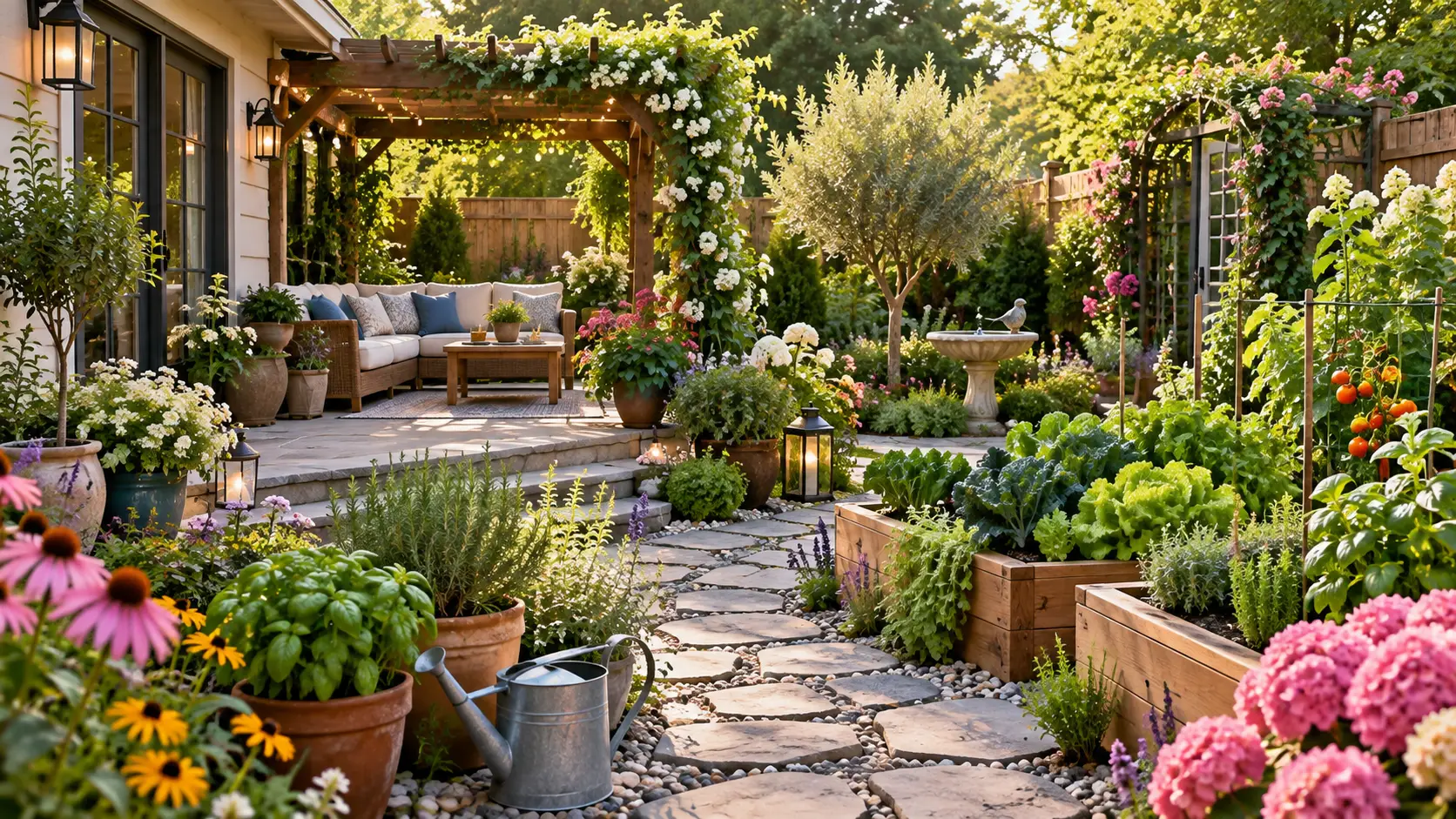
Shade is also worth considering, especially in gardens that receive intense afternoon sun. A pergola, umbrella, shade sail, or strategically placed tree can make outdoor seating more usable during warmer weather. Choose materials that suit your home and climate. When seating, plants, and shade work together, the garden begins to feel like an extension of your indoor living space.
Use Vertical Gardening to Save Space
Vertical gardening is an excellent option for small yards, balconies, and patios because it uses walls and upright structures rather than valuable ground space. Trellises, hanging planters, wall-mounted pots, and vertical plant stands can all support creative displays. Climbing flowers, vines, herbs, and some vegetables are especially suitable for growing upward in compact outdoor areas.
Vertical structures can also solve design problems in larger gardens. A trellis covered with plants can hide an unattractive wall, create privacy, or divide different garden zones. Climbing plants can soften fences and add height where the landscape otherwise feels flat. Choose supports strong enough for the mature size and weight of the plant you intend to grow.
Avoid filling every wall with plants because vertical gardens still need good airflow and access for maintenance. Make sure each plant receives enough light and water, especially in hanging containers that may dry quickly. Periodically check supports and ties as vines grow. Used thoughtfully, vertical gardening adds height and greenery without making your outdoor space feel overcrowded.
Create Attractive Garden Pathways
Garden paths help organize outdoor spaces while guiding people naturally from one area to another. They can connect patios, doors, vegetable beds, flower borders, and seating zones. Gravel, stepping stones, bricks, pavers, and natural stone can all create attractive pathways. Choose a material that complements your home while remaining practical for regular foot traffic.
Curved paths can create a softer, more relaxed garden style, while straight paths often suit modern or formal landscapes. The shape should match the size and overall design of your outdoor space. Keep paths wide enough to walk comfortably without brushing against plants. Avoid creating unnecessary routes that divide a small garden into too many sections.
Plants can help paths feel integrated into the landscape. Low-growing flowers or ground covers along the edges can soften hard lines and add seasonal color. However, choose plants that will not quickly spread across walking surfaces. Maintaining clear edges and removing weeds regularly keeps pathways neat while helping the entire garden appear more organized.
Add Raised Garden Beds
Raised beds can give a home garden a clean, structured appearance while making plants easier to access. They are useful for growing vegetables, herbs, flowers, or a combination of all three. Raised beds also allow you to control the soil mixture more easily. This can be especially helpful if the existing ground is compacted or difficult to work.
Choose a bed height and width that allow you to reach the center comfortably without stepping onto the soil. Beds can be built from suitable wood, stone, blocks, or other durable garden materials. Keep enough space between multiple beds for walking and maintenance. A simple arrangement of raised beds can make even a productive vegetable garden look tidy and intentional.
You can also use raised beds as design features. Planting flowers around the edges or combining edible crops with ornamental plants can soften their appearance. Matching the bed material with nearby pathways or furniture can create a more cohesive look. Raised beds work particularly well when you want your garden to feel organized without losing its natural character.
Bring Interest With Different Plant Heights and Textures
A garden becomes more visually appealing when plants are not all the same height, shape, and texture. Combine upright plants, rounded shrubs, soft grasses, spreading ground covers, and delicate flowers to create contrast. Different leaf sizes and forms can remain interesting even when plants are not flowering. This gives your landscape more depth throughout the year.
Use taller plants to create background structure or focal points, while medium and lower plants can gradually transition toward paths and lawn areas. Avoid arranging every plant in perfectly straight rows unless you want a highly formal style. Slightly varied groupings usually feel more natural. Repeating similar plants in different areas can still create a sense of unity.
Texture is especially important in gardens that rely heavily on greenery. Glossy leaves, feathery foliage, broad leaves, and ornamental grasses all reflect light differently. Combining these features prevents green spaces from appearing flat or repetitive. When selecting plants, think beyond flower color and consider how foliage contributes to the overall garden design.
Make Your Garden More Private
Privacy can make an outdoor space feel more comfortable and peaceful. Tall shrubs, hedges, climbing plants, screens, and small trees can help block unwanted views while adding greenery. Instead of creating a solid wall everywhere, focus on the specific areas where privacy matters most. This approach can preserve natural light and prevent the garden from feeling enclosed.
Layering plants often creates a softer privacy solution than relying on one tall hedge. Combine taller shrubs with medium plants and lower flowers to create depth. A trellis covered with a climbing plant can also work well beside patios or seating areas. Choose plants based on their mature height so they do not eventually become too large for the space.
Remember that privacy plants still need regular maintenance. Fast-growing species may require frequent pruning, while dense plantings can reduce airflow if placed too closely together. Leave enough room for mature growth and access. Thoughtful screening can make your garden feel secluded while remaining attractive, healthy, and easy to manage.
Add Simple Garden Lighting
Outdoor lighting can extend the enjoyment of your garden after sunset and highlight important features. Small path lights can improve visibility along walkways, while soft lights near seating areas create a welcoming atmosphere. You can also illuminate a tree, wall, or architectural plant as a focal point. Keep the overall effect subtle rather than turning the garden into an overly bright space.
Solar-powered lights are convenient for areas where electrical connections are difficult to install. They can work well along paths, beside containers, or around decorative features if they receive enough sunlight during the day. String lights can also add warmth around pergolas and patios. Choose fixtures designed for outdoor conditions so they can handle weather changes safely.
Avoid placing strong lights directly toward windows or seating areas because glare can make the space uncomfortable. Lighting should support the garden design rather than dominate it. A few carefully positioned fixtures are often more effective than many scattered lights. Soft illumination creates depth and allows the garden to remain relaxing during evening hours.
Support Pollinators With a Diverse Planting Scheme
A pollinator-friendly garden can be both beautiful and beneficial to local wildlife. Planting a range of flowers can provide nectar and pollen for bees, butterflies, and other helpful insects. Choose varieties that bloom at different times so food sources remain available across several seasons. Grouping similar flowers together can also make them easier for pollinators to find.
Different pollinators are attracted to different flower colors, shapes, and sizes. Including a mixture of flowering herbs, native plants, annuals, and perennials increases diversity. Avoid focusing only on highly ornamental varieties if they offer little value to visiting insects. A balanced selection can support wildlife while still creating an attractive home landscape.
Reduce unnecessary pesticide use, especially when plants are flowering. Some treatments can affect beneficial insects along with the pests you are trying to manage. Regular monitoring and targeted solutions are usually better than treating the entire garden automatically. Supporting pollinators adds movement and life to your outdoor space while contributing to a healthier garden ecosystem.
Keep the Garden Easy to Maintain
A beautiful garden does not need to require hours of work every day. Choose plants that match your soil, climate, sunlight, and available time so maintenance stays realistic. Hardy perennials, locally adapted plants, and well-placed shrubs often need less attention than unsuitable varieties. Designing for easy maintenance allows you to enjoy the garden instead of constantly working on it.
Mulching garden beds can reduce weeds and help soil retain moisture. Installing efficient watering methods can also simplify regular care, especially during warmer months. Keep pathways clear and tools organized so basic maintenance remains convenient. A simple routine of watering, weeding, pruning, and inspection is usually more effective than occasional large cleanup sessions.
Review your garden each season and make small improvements based on what you observe. Move containers that receive too much shade, replace plants that consistently struggle, and divide overcrowded perennials when necessary. Gardens naturally change as plants mature. Adapting the design over time helps your outdoor space stay attractive, practical, and healthy.
Conclusion
Creating a beautiful outdoor space starts with thoughtful planning rather than expensive landscaping. Flower beds, containers, herbs, vertical gardens, pathways, raised beds, and comfortable seating can all transform an ordinary yard or patio. Choose ideas that match your available space and lifestyle. A garden feels more successful when every feature has a clear purpose.
Balance is important when combining different home gardening ideas. Use varied plant heights, colors, and textures, but repeat certain elements so the landscape still feels connected. Leave enough open space for movement and plant growth. Good garden design should feel inviting without becoming crowded with too many plants, decorations, or competing features.
Most importantly, create an outdoor space that you genuinely enjoy using. Your garden can be colorful, productive, peaceful, wildlife-friendly, or a combination of all these qualities. Start with a few improvements and allow the design to develop gradually. With thoughtful plant choices and consistent care, even a simple home garden can become a beautiful and relaxing outdoor retreat.
FAQs
What are the easiest home gardening ideas for beginners?
Start with container plants, a small flower bed, herbs, or one raised garden bed. These options are easy to manage and allow you to improve your outdoor space without taking on a large maintenance workload.
How can I make a small garden look beautiful?
Use vertical planting, grouped containers, layered plant heights, and a limited color palette. Keeping paths clear and avoiding overcrowding can also make a small outdoor space appear more organized and spacious.
What plants are best for a beautiful home garden?
The best plants depend on your climate, sunlight, soil, and available space. Combining locally suitable flowering plants, shrubs, herbs, ornamental grasses, and ground covers can create an attractive and balanced landscape.
How can I make my garden look good all year?
Choose a mix of evergreen plants, seasonal flowers, textured foliage, and varieties that bloom at different times. Garden structures, paths, containers, and lighting can also provide visual interest when fewer plants are flowering.
How can I create a low-maintenance outdoor garden?
Choose hardy plants suited to your conditions, use mulch, maintain proper spacing, and simplify watering. Avoid planting too many high-maintenance varieties and focus on a manageable garden design that fits your available time.