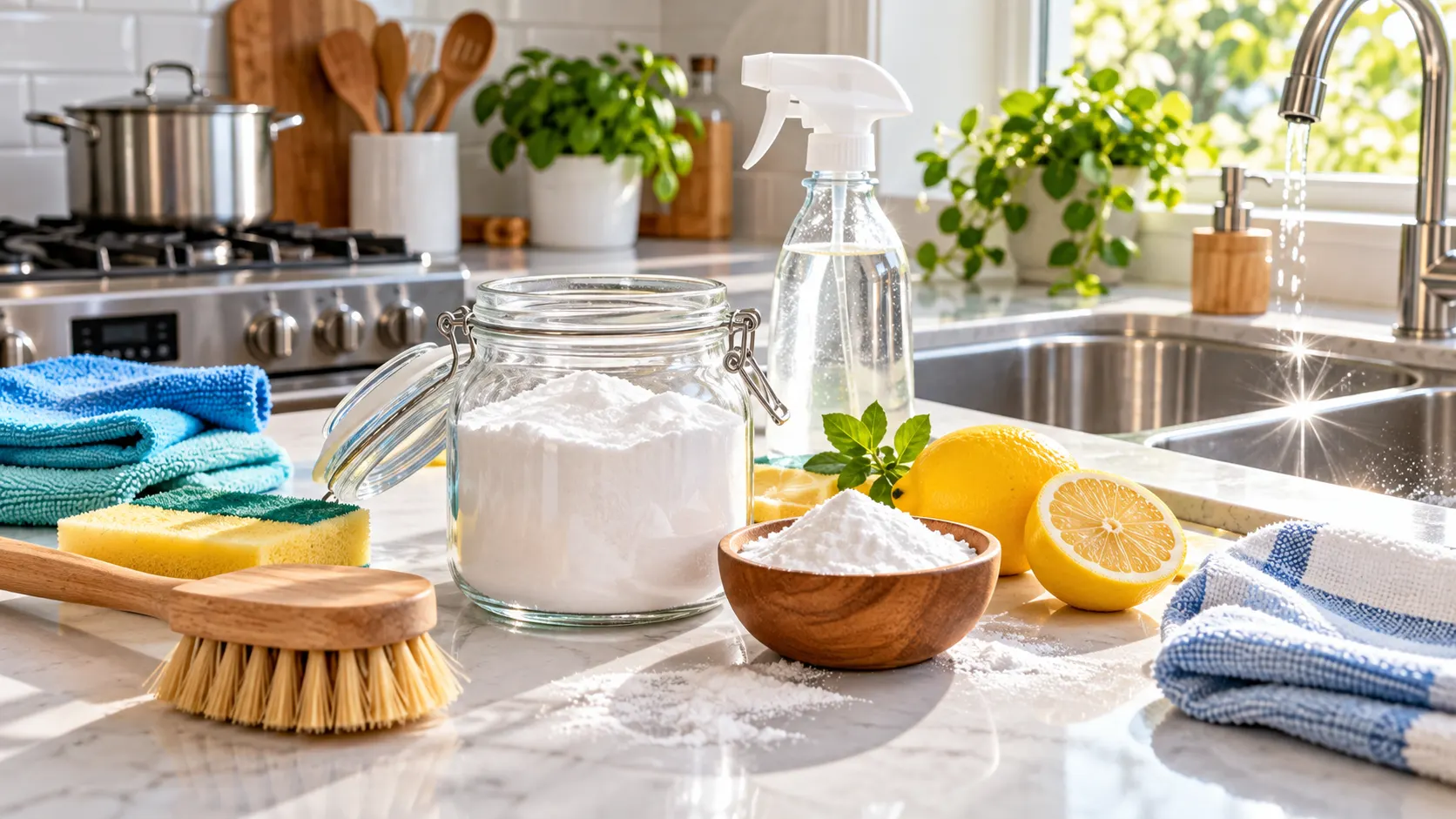
Baking soda is one of the most versatile household staples for everyday cleaning. It is inexpensive, widely available, and useful for tackling odors, light grime, greasy residue, and certain stains without requiring a cabinet full of specialty products. When used correctly, it can simplify several common cleaning jobs around the home.
The key to using baking soda effectively is understanding where it works well and where it should be avoided. Its mildly abrasive texture can help loosen buildup, but that same quality may scratch delicate or glossy surfaces. A little care goes a long way when choosing the right application.
These practical baking soda cleaning hacks focus on realistic household tasks such as freshening carpets, cleaning sinks, deodorizing bins, and improving appliance maintenance. Always check manufacturer guidance before using baking soda on specialty finishes, natural stone, aluminum, coated surfaces, or delicate materials.
1. Freshen Carpets and Rugs With Baking Soda
Carpets and rugs can trap everyday odors from shoes, pets, food, and general household activity. A light sprinkling of baking soda can help absorb some of these smells before vacuuming. Apply only a small amount to a compatible dry carpet and let it sit briefly before removing it thoroughly.
Avoid pouring large quantities into the fibers because fine powder can be difficult to extract completely. Some vacuum manufacturers also advise against collecting excessive powder, so check your machine’s instructions first. This hack is best used occasionally rather than as a substitute for regular vacuuming and proper carpet cleaning.
For delicate, antique, or specialty rugs, skip this method unless the care instructions clearly allow it. Professional cleaning may be more appropriate for valuable materials. Used carefully, baking soda can be a simple way to freshen certain carpets between deeper cleaning sessions.
2. Deodorize the Refrigerator Naturally
Refrigerators can develop lingering food odors even when shelves look clean. Placing an open container of baking soda inside can help absorb some unwanted smells over time. Keep it somewhere stable where it will not spill, such as toward the back of a shelf.
Replace the baking soda periodically so it continues to work effectively. It should not be used as a substitute for removing spoiled food, wiping spills, or cleaning shelves and drawers. Odor control works best when the source of the smell is handled first.
You can also use baking soda during a refrigerator cleanout by mixing a small amount with water for compatible interior surfaces. Always check appliance care instructions before applying any cleaning solution. A clean refrigerator combined with a simple deodorizing method can help keep the space fresher.
3. Clean Stainless Steel Sinks With a Gentle Baking Soda Paste
A stainless steel sink can develop water marks, dull residue, and light food stains over time. A small amount of baking soda mixed with water can create a gentle paste for compatible stainless steel surfaces. Apply it with a soft cloth or non-abrasive sponge.
Rub carefully in the direction of the visible grain rather than scrubbing aggressively. Baking soda is mildly abrasive, so too much pressure may create unwanted marks. Rinse the sink thoroughly afterward and dry it with a clean cloth to reduce water spots.
Avoid using this method on specialty-coated sinks unless the manufacturer approves it. Composite, stone, enamel, and other sink materials may require different care. When used appropriately, baking soda can help restore a cleaner appearance without relying on heavy-duty abrasive cleaners.
4. Freshen Trash Cans Between Washes
Trash cans can hold unpleasant odors even after the bag has been removed. Once the bin is empty and dry, a small amount of baking soda sprinkled at the bottom can help absorb some lingering smells. This works especially well in kitchen and bathroom bins.
Do not use baking soda to cover up actual food residue or leaks. If the bin is dirty, wash and dry it first before adding any deodorizing powder. Keeping the surface clean is more important than simply masking odors with another product.
You can also place baking soda inside a small breathable container instead of sprinkling it directly into the bin. This reduces loose powder while still providing odor control. Regular washing combined with occasional deodorizing can keep trash areas much fresher.
5. Remove Light Odors From Upholstered Furniture
Fabric sofas and chairs can pick up odors from pets, food, and everyday use. On compatible upholstery, a very light application of baking soda may help absorb some mild smells. Sprinkle sparingly and allow it to sit before vacuuming with an appropriate upholstery attachment.
Always test this method on a hidden section first and check the furniture care label. Delicate fabrics, specialty coatings, and certain upholstery materials may not respond well to powders. Avoid using baking soda on furniture that requires professional or solvent-based cleaning.
Vacuum slowly and thoroughly so no residue remains trapped in the fabric. This hack works best for light odor control rather than stains or deep cleaning. Regular vacuuming and proper fabric care remain the most important parts of maintaining upholstered furniture.
6. Tackle Greasy Baking Trays and Pans
Baked-on food and greasy residue can make some cookware difficult to clean. For compatible pans, sprinkling baking soda onto the surface and adding warm water can help loosen stubborn buildup. Let the mixture sit before gently scrubbing with a non-damaging sponge.
Avoid using baking soda aggressively on nonstick coatings, polished aluminum, or specialty cookware unless the manufacturer specifically approves it. Abrasive cleaning can damage protective surfaces and shorten the life of the pan. Always follow the care instructions for the material you are cleaning.
For ordinary durable cookware, soaking first often reduces the amount of physical scrubbing required. Rinse everything thoroughly after cleaning to remove any powdery residue. This simple technique can make certain kitchen cleanup jobs less frustrating after cooking.
7. Freshen Shoes With a Small Amount of Baking Soda
Shoes can develop persistent odors when moisture and daily wear accumulate. A small amount of baking soda placed inside suitable dry shoes overnight can help absorb some unpleasant smells. Shake or vacuum it out thoroughly before wearing the shoes again.
For easier cleanup, place baking soda inside a small breathable pouch or clean sock rather than pouring it directly into the shoe. This helps contain the powder while still allowing it to absorb odors. Make sure the shoes are dry before using this method.
Do not use baking soda on delicate leather interiors or specialty materials without checking care instructions. Cleaning insoles and allowing shoes to air properly are also important for odor control. Baking soda works best as one part of a broader footwear-care routine.
8. Clean Bathroom Grout With a Baking Soda Paste
Bathroom grout can collect soap residue and surface dirt that make tile areas look dull. A thick paste made from baking soda and water can help loosen light buildup on compatible grout. Apply it carefully and use a small soft brush or old toothbrush.
Scrub gently rather than using heavy pressure, especially if the grout is old, cracked, or already damaged. Rinse the area thoroughly after cleaning so powder does not remain in the joints. Good bathroom ventilation can help the surface dry properly afterward.
Avoid using this method on natural stone tiles without checking care recommendations first. Baking soda may be too abrasive for certain finishes. For mold, deep discoloration, or deteriorating grout, a more specialized cleaning or repair approach may be necessary.
9. Deodorize Mattresses During Routine Cleaning
Mattresses can collect odors from sweat, humidity, and everyday use. On compatible dry mattresses, a light sprinkling of baking soda can be used during a routine refresh. Allow it to sit for a short period before vacuuming thoroughly with a clean upholstery attachment.
Do not soak the mattress or combine baking soda with excessive moisture. Moisture trapped inside a mattress can create bigger problems, including unpleasant odors and mildew. Always make sure the surface remains dry throughout the process.
Check the mattress manufacturer’s care instructions before trying any powder-based treatment. Regularly washing bedding, using a mattress protector, and maintaining good airflow are still more important for cleanliness. Baking soda can simply provide an occasional extra freshness boost.
10. Use Baking Soda to Clean Certain Kitchen Surfaces
Baking soda mixed with a little water can help remove light residue from some durable kitchen surfaces. It may be useful around sinks, certain stovetop components, and washable utility areas where grime has become slightly stubborn. Apply a small amount and clean gently.
Do not assume it is safe for every countertop or appliance. Glossy finishes, natural stone, glass cooktops, aluminum, and coated surfaces can be scratched or dulled by abrasive powders. Always confirm compatibility before using baking soda beyond basic sink or utility cleaning.
Rinse cleaned areas thoroughly so no chalky residue remains behind. Baking soda is most useful when used selectively rather than everywhere. Matching the method to the surface helps you get the cleaning benefits without creating unnecessary damage.
How to Use Baking Soda Safely for Cleaning
Baking soda is often described as gentle, but it is still mildly abrasive. That means it can scratch some glossy, polished, or coated materials if used too aggressively. Always begin with a small amount and use soft tools rather than rough scrubbers.
Avoid combining baking soda with random household chemicals in an attempt to create a stronger cleaner. Mixing ingredients can be ineffective or unsafe depending on what is involved. Use simple methods and follow product or surface instructions rather than experimenting with untested combinations.
If you are unsure whether a surface can handle baking soda, test a hidden area first. Specialty finishes, natural stone, aluminum, nonstick cookware, and delicate fabrics deserve extra caution. Safe cleaning is always more important than forcing one household ingredient to work everywhere.
Common Baking Soda Cleaning Mistakes to Avoid
Using too much baking soda is one of the most common mistakes. Thick layers are harder to rinse or vacuum away and usually do not improve the result. A light application is often enough for deodorizing and basic cleaning tasks.
Another mistake is scrubbing too hard. Because baking soda has a fine abrasive texture, aggressive pressure can damage surfaces that would otherwise tolerate gentle use. Let soaking time or a mild paste do some of the work instead of relying on force.
Do not use baking soda to replace proper cleaning when the real issue is heavy grease, mold, deep stains, or spoiled food. It is useful for maintenance and light buildup, but some problems require dedicated products or professional treatment. Knowing its limits helps you use it more effectively.
Why Baking Soda Is So Useful for Household Cleaning
Baking soda is popular because one inexpensive product can serve several purposes. It can help absorb odors, provide mild abrasion, and support routine cleaning in kitchens, bathrooms, bedrooms, and utility areas. That versatility can reduce the number of specialty products you need for basic maintenance.
It is also easy to store and use in small amounts. A single box can last through many cleaning jobs when you avoid overusing it. This makes baking soda a practical addition to a simple household cleaning routine.
However, versatility does not mean universal compatibility. The best results come from using baking soda only where the material allows it. Pairing practical household knowledge with careful surface testing makes this common ingredient far more useful.
Conclusion
Baking soda can be a valuable cleaning tool when used thoughtfully. It can freshen carpets, mattresses, shoes, refrigerators, and trash bins while also helping with certain sinks, grout lines, pans, and household surfaces.
The most important rule is to match the hack to the material you are cleaning. Baking soda is mildly abrasive, so delicate finishes, stone, specialty cookware, and coated surfaces may need different methods. Gentle application and proper rinsing can help prevent problems.
Used as part of a regular cleaning routine, baking soda can simplify several everyday chores without requiring a large collection of products. A small amount, the right technique, and careful surface selection are usually all you need to get useful results.
FAQs
What can baking soda clean around the home?
Baking soda can help freshen carpets, mattresses, shoes, trash cans, and refrigerators while also cleaning certain sinks, grout lines, cookware, and compatible household surfaces.
Is baking soda safe on all surfaces?
No. Its mild abrasiveness can scratch or dull glossy finishes, natural stone, coated appliances, aluminum, and other delicate materials. Always check care instructions first.
Can baking soda remove bad smells?
Yes, it can help absorb some mild household odors from refrigerators, carpets, shoes, mattresses, and bins. Cleaning the original source of the odor is still essential.
Can I mix baking soda with other cleaners?
It is better not to combine cleaning ingredients randomly. Some mixtures are ineffective or unsafe, so use simple methods and follow manufacturer or product instructions.
How much baking soda should I use for cleaning?
Usually, only a light sprinkle or small paste is needed. Using more does not necessarily improve cleaning and can make residue harder to rinse, wipe, or vacuum away.