
A sagging door is a common household problem that can make opening, closing, and locking difficult. Over time, doors may shift out of alignment because of loose hinges, worn hardware, changing humidity, or problems with the surrounding frame. You might notice the door scraping against the floor, sticking near the top, or leaving an uneven gap. Fortunately, many minor door alignment problems can be corrected without replacing the entire door.
Learning how to fix a sagging door starts with identifying what causes the door to hang unevenly. Sometimes, tightening a few hinge screws is enough to improve alignment. In other situations, the problem may involve damaged screw holes, worn hinges, or a shifted door frame. Understanding these differences helps prevent unnecessary repairs and further damage.
This guide explains the common causes of sagging doors, how to inspect the hinges and frame, and practical ways to restore proper alignment. You will also learn about adjustments for wooden and interior doors, signs of structural problems, and maintenance tips. With careful inspection and suitable repairs, you can improve how your door functions and prevent recurring issues.
What Is a Sagging Door?
A sagging door is a door that no longer hangs correctly within its frame. One side may sit lower than intended, causing the door to rub against the floor, threshold, or surrounding trim. The gaps between the door and frame may also become uneven. These problems can make ordinary use frustrating.
Most hinged doors rely on properly positioned hinges to support their weight and maintain alignment. When hinges loosen or supporting materials deteriorate, the door may tilt slightly. Even a small change can affect how the latch meets the strike plate. This is why a door may suddenly become difficult to close or lock.
Sagging is not always caused by the door itself. Changes in the frame, building movement, or swelling of wooden materials can create similar symptoms. Identifying the source is important before making adjustments. A careful inspection can help determine whether the problem is minor or requires professional repair.
Common Signs Your Door Is Sagging
One of the clearest signs of a sagging door is an uneven gap between the door and its frame. The space near the top hinge may look different from the gap on the opposite side. The upper corner may also sit closer to the frame than intended. These changes suggest that the door is no longer properly aligned.
Another common symptom is scraping or rubbing when the door opens and closes. The bottom edge may drag across the floor or threshold, while the latch side may catch against the frame. A door that previously closed smoothly may now require additional force. This can gradually damage paint, flooring, or hardware.
Difficulty locking the door is another possible warning sign. When the door shifts, the latch may no longer align with the strike plate. You might hear the latch hitting the metal plate instead of entering the opening. Identifying these symptoms early can help prevent additional wear and more expensive repairs.
Why Do Doors Sag Over Time?
Doors can sag for several reasons, including loose hinges, worn screws, and changes in the surrounding structure. Heavy doors place continuous pressure on their hinges, especially when the hardware is not securely attached. Repeated opening and closing can gradually loosen fasteners. Over time, the door may begin to hang unevenly.
Wooden doors and frames can also respond to seasonal changes in temperature and humidity. Moisture may cause wood to expand, while dry conditions can produce shrinkage. These changes sometimes create sticking that resembles a sagging problem. However, swelling and hinge-related sagging require different solutions.
Older homes may experience gradual settling that affects door openings and frames. A shifted frame can prevent the door from fitting correctly even when its hinges remain secure. Structural movement should not be ignored when multiple doors or windows develop alignment problems. Determining the cause helps ensure the repair addresses the actual issue.
Check the Door Hinges Before Making Repairs
Inspecting the hinges is an important first step when troubleshooting a sagging door. Open the door carefully and examine the hinges attached to the frame and door edge. Look for loose screws, bent hinge plates, or visible gaps between the hardware and wood. These signs may help explain why the door has shifted.
The upper hinge deserves particular attention because it helps resist the force created by the door’s weight. Loose fasteners near this hinge may allow the outer edge of the door to drop. However, the middle and lower hinges should also be inspected. All hinges need to remain securely attached and properly aligned.
Check whether the hinge knuckles and pins appear damaged or unusually worn. Rust, bent hardware, or excessive movement can indicate that replacement may be necessary. Avoid forcing the door during inspection because this can create additional strain. Supporting a heavy door while checking its hardware is especially important.
How to Fix a Sagging Door by Tightening Hinges
Loose hinge screws are among the easiest door alignment problems to address. When fasteners no longer hold the hinge plates firmly against the wood, the door may shift downward. Tightening them can sometimes restore proper alignment. This is often a useful first repair when the door and frame are otherwise in good condition.
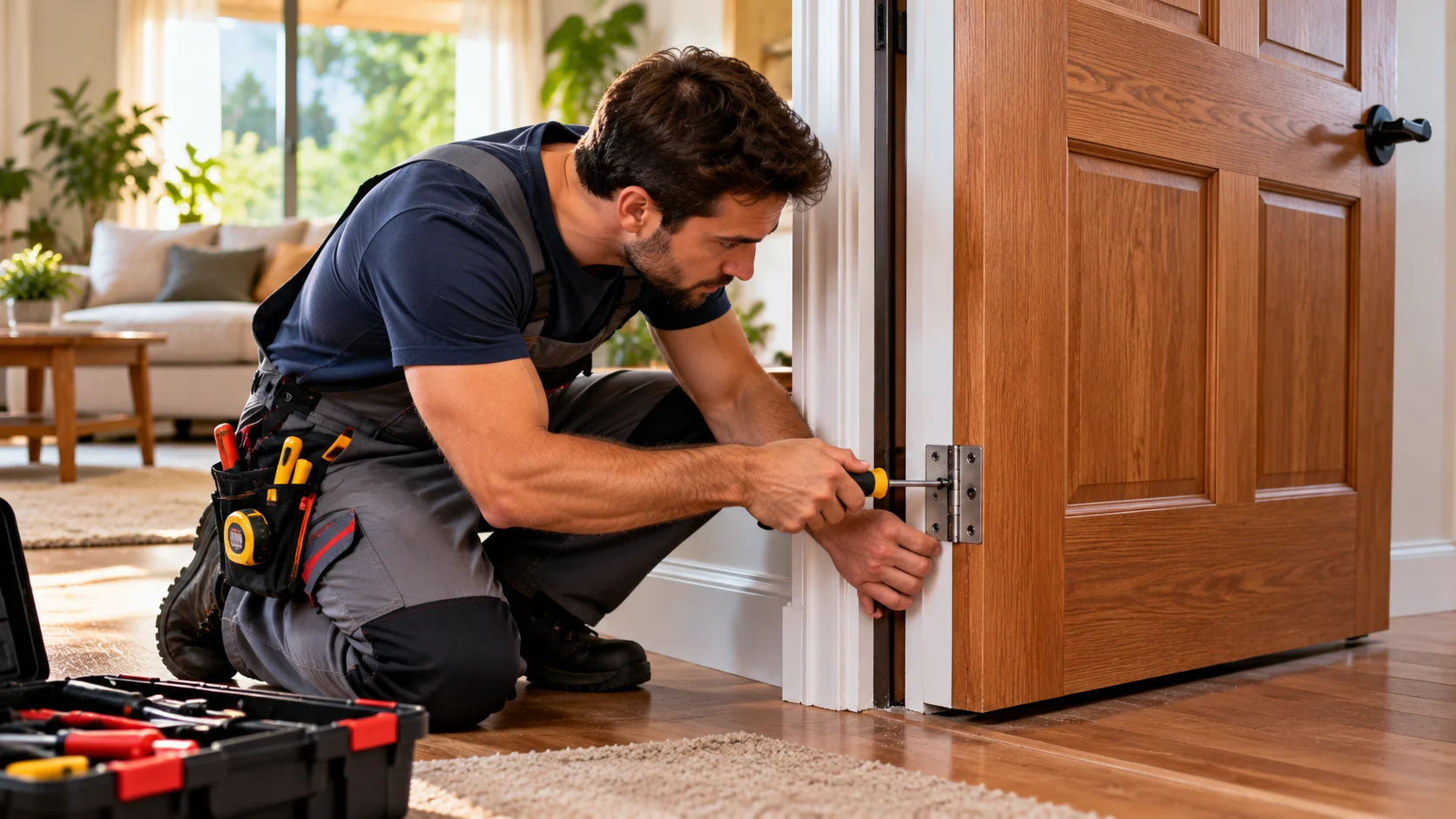
Begin by checking which hinge screws are loose and whether their heads are damaged. Use a screwdriver that fits the screw head correctly, and support the door when needed. Tighten loose fasteners gently until the hinge plates sit securely against the surface. Avoid excessive force because overtightening can strip the screw holes.
After checking the hinges, close the door slowly to see whether the gaps have improved. Observe whether the latch aligns and whether the door still rubs against the frame. If the problem remains, damaged screw holes or worn hardware may be involved. Additional repairs should address these issues rather than repeatedly tightening screws that no longer grip.
Repair Stripped Hinge Screw Holes
Stripped screw holes are a common reason hinge screws become loose repeatedly. When the surrounding wood fibers deteriorate, screws can no longer maintain a secure connection. The hinge may move slightly even after tightening. This problem is especially common in older wooden door frames that have experienced repeated repairs.
A suitable repair involves restoring the screw hole’s ability to hold the fastener securely. Depending on the condition of the wood, a professional may use an appropriate wood repair method or replace damaged material. The correct solution depends on the door’s weight, frame construction, and extent of deterioration. A quick cosmetic fix may not provide adequate support.
Heavy exterior doors and fire-rated doors require particular care because their hardware serves important safety functions. Poorly repaired fasteners can allow the door to shift again. If the wood is severely damaged, professional carpentry may be necessary. A secure hinge attachment is essential for maintaining long-term alignment.
When to Replace Worn or Damaged Door Hinges
Not every sagging door can be repaired through screw adjustments alone. Hinges can become worn, bent, corroded, or damaged after years of use. When the hinge components no longer support smooth movement, the door may hang unevenly. Replacing unsuitable hardware can sometimes restore reliable operation.
Look for visible bending, excessive looseness, rust damage, or unusual movement around the hinge pin. A damaged hinge may cause squeaking, sticking, or inconsistent door positioning. Replacement hardware should match the door’s weight and installation requirements. Using hinges that are too small or poorly suited to the door may lead to recurring problems.
Hinge replacement requires keeping the door properly supported and maintaining accurate alignment. Heavy doors can be difficult to manage safely without assistance. Fire-rated doors may require specific approved hinge types and installation practices. When the door is unusually heavy or the hardware requirements are unclear, professional installation is the safer option.
How to Fix a Door That Rubs Against the Frame
A sagging door often begins rubbing against the frame because its position has changed. The contact point can provide useful information about the alignment problem. For example, rubbing near the upper latch-side corner may indicate a different issue from dragging along the threshold. Identifying the exact location helps guide the repair.
Before removing wood or changing the door’s shape, inspect the hinges and surrounding frame. Minor hinge adjustments may restore clearance without damaging the door. Check whether paint buildup or seasonal swelling is contributing to the contact. These issues may require different corrective measures.
If the door continues rubbing after the hinges have been checked, the frame may be out of square or the door may have changed shape. Removing material unnecessarily can create large gaps when humidity changes again. A carpenter can evaluate whether the door needs fitting or the frame requires correction. Preserving the original door dimensions is generally preferable when simple adjustments can solve the problem.
Adjust the Strike Plate for Better Latch Alignment
When a door sags, the latch may no longer line up with the strike plate on the frame. This can make closing difficult even if the door does not scrape against nearby surfaces. The latch might strike the edge of the plate instead of entering its opening. Poor alignment can also affect security and everyday convenience.
Start by examining how the latch meets the strike plate while the door closes. If the hinges are loose, correcting them should come first because the latch problem may disappear afterward. A properly aligned door should close without excessive pressure. Avoid relying on latch adjustments to conceal a significant hinge or frame problem.
Minor strike plate adjustments may sometimes be appropriate once the door itself hangs correctly. However, the plate must remain securely attached and provide reliable latch engagement. Exterior doors require special attention because proper locking is essential for security. If the latch still fails to engage correctly, professional assistance may be appropriate.
Check Whether the Door Frame Is Out of Alignment
Sometimes a door appears to sag because the surrounding frame is no longer square. Building settlement, moisture damage, and installation problems can affect the position of the jambs. When the frame changes shape, the gaps around the door become uneven. Tightening hinge screws alone may not solve this problem.
Look for unusual gaps, cracked trim, damaged wood, or sections of the frame that appear to have shifted. A door that was recently installed may also have been fitted incorrectly. If several nearby doors or windows develop similar problems, broader building movement may be involved. These patterns deserve careful attention.
Repairing a distorted frame can involve more extensive work than adjusting the hinges. In some cases, the underlying cause must be corrected before the door can be realigned. Significant settlement, spreading cracks, or moisture-related deterioration should be evaluated professionally. Addressing the structural issue helps prevent repeated alignment problems.
How Humidity and Moisture Affect Wooden Doors
Wood naturally responds to changes in the surrounding environment by absorbing and releasing moisture. During humid weather, wooden doors may expand and begin rubbing against their frames. In drier conditions, they can shrink slightly. This movement may create seasonal sticking even when the hinges remain properly aligned.
Moisture problems can also weaken wooden frames and contribute to damaged screw holes. Repeated exposure to water may cause swelling, discoloration, or deterioration. Bathrooms, exterior entrances, and poorly ventilated spaces may be particularly affected. Identifying the moisture source is essential for preventing recurring damage.
Maintaining reasonable indoor humidity and addressing water leaks can help protect wooden doors. Suitable finishes may also reduce excessive moisture absorption when properly maintained. However, finishing products cannot correct severe rot or structural problems. If the wood has become soft or extensively damaged, professional repair or replacement may be necessary.
How to Fix a Sagging Interior Door
Interior doors are often lighter than exterior doors, making some minor alignment problems easier to correct. Common symptoms include rubbing against the frame, uneven gaps, and difficulty closing. Loose hinges and worn fasteners are frequent causes. A careful inspection can reveal whether the issue is limited to the hardware.
Begin by checking the hinges, screws, and visible condition of the wooden frame. Make sure the door is supported while assessing loose components. If the hardware remains secure, examine the clearance around the entire door. Seasonal swelling or paint buildup may explain why it sticks.
Interior doors should close smoothly without requiring excessive force. If the door continues sagging after basic hardware checks, the supporting wood or frame may need additional repair. Avoid repeatedly forcing the door shut because this can damage the latch and hinges. A straightforward inspection often helps distinguish a minor adjustment from a larger carpentry problem.
How to Fix a Sagging Exterior Door
Exterior doors are generally heavier and more demanding than many interior doors. They may also include security hardware, weather seals, and insulated construction. When an exterior door sags, it can create gaps that affect locking, drafts, and moisture protection. These problems should be addressed before they cause additional damage.
Begin by examining the hinges, latch alignment, threshold clearance, and weather seals. Look for loose fasteners or deterioration around the frame. A heavy door may require another person to help support it during inspection. If the door is fitted with a closer or specialized hardware, follow the manufacturer’s maintenance guidance.
Because exterior doors provide security and protection from the weather, repairs need to maintain reliable operation. Improper hardware changes may affect locking or weather resistance. Fire-rated entry doors can also have specific installation requirements. Professional assistance is recommended when hinges, frames, or locking components show significant damage.
Can You Fix a Sagging Door Without Removing It?
Many minor door alignment problems can be investigated and corrected while the door remains attached to its frame. Loose hinge screws, latch misalignment, and certain hardware problems may be accessible without complete removal. This can make simple maintenance more convenient. However, the appropriate approach depends on the door’s condition and weight.
Keeping the door attached does not remove the need for proper support. A heavy door can shift unexpectedly if important fasteners are loosened. The safest approach is to avoid disturbing structural hardware unless the door is adequately supported. Some repairs may require specialized tools or assistance.
If the hinges need replacement or the frame requires substantial work, removing the door may become necessary. This is particularly relevant when damaged wood or severely worn hardware is involved. For large, heavy, or fire-rated doors, professional help can reduce the risk of damage or injury. The repair method should always match the situation.
Common Mistakes to Avoid When Repairing a Sagging Door
One common mistake is assuming that the door itself must be trimmed whenever it rubs against the frame. Removing material before inspecting the hinges can create unnecessary gaps. Seasonal swelling may also disappear when environmental conditions change. Identifying the cause before modifying the door helps preserve its fit.
Another mistake is overtightening screws that have already lost their grip. This can worsen damaged holes and make future repairs more difficult. Using mismatched hardware or unsuitable fasteners may also lead to recurring alignment problems. The door’s weight and frame construction should influence repair choices.
Ignoring moisture damage, structural movement, or deteriorating hinges can also create problems. A temporary improvement may not last if the underlying issue remains unresolved. Safety is especially important with heavy doors and specialized installations. When the repair exceeds basic maintenance, consulting a qualified professional is more reliable than forcing a quick solution.
How to Prevent a Door From Sagging Again
Preventing door sagging begins with keeping the hinges and surrounding frame in good condition. Periodic inspections can reveal loose fasteners before they cause noticeable movement. Hinges should remain securely attached and free from significant corrosion or bending. Early maintenance helps reduce unnecessary strain on the door.
Avoid placing additional weight on doors, particularly by hanging heavy objects from handles or upper edges. Repeated forceful closing can also contribute to hardware wear. Doors should move smoothly within their frames without scraping or sticking. Addressing small problems early can help extend the life of the hardware.
Moisture management is another important preventive measure for wooden doors and frames. Repair leaks, maintain suitable ventilation, and inspect exposed wood for signs of deterioration. Exterior doors may need periodic attention to weather seals and finishes. Good maintenance supports reliable alignment and reduces the likelihood of recurring problems.
When Should You Call a Professional?
Professional assistance may be necessary when a door continues sagging despite basic hinge checks. Significant frame distortion, damaged wood, and recurring latch problems can indicate more complicated issues. A carpenter or qualified door installer can assess the complete assembly. The goal is to identify the underlying cause rather than repeatedly making temporary adjustments.
Heavy exterior doors, commercial doors, and fire-rated doors may require specialized hardware and installation knowledge. Incorrect repairs can affect safety, security, or compliance with building requirements. Doors that no longer close or lock reliably should receive prompt attention. Visible frame movement or extensive moisture damage also deserves professional assessment.
If several doors suddenly become misaligned or new structural cracks appear around openings, the issue may extend beyond ordinary door hardware. A qualified building professional can investigate possible movement in the surrounding structure. Seeking expert advice at this stage may prevent unnecessary repairs. Proper diagnosis supports a lasting and safe solution.
Conclusion
A sagging door can create frustrating problems, including scraping, sticking, uneven gaps, and difficulty locking. Loose hinges, stripped screw holes, worn hardware, and changes in the surrounding frame are common causes. Understanding the source of the problem is the first step toward an effective repair. Many minor issues can be corrected through careful maintenance.
Learning how to fix a sagging door involves checking its hinges, evaluating screw connections, and observing how the door fits within the frame. Basic hardware adjustments may restore smooth movement when the supporting materials remain sound. More complicated problems involving moisture damage or structural changes require additional attention. Proper repairs should maintain safety and reliable operation.
Regular maintenance can help prevent future sagging and extend the lifespan of your doors. Inspect loose hardware, protect wooden components from moisture, and avoid unnecessary strain on hinges. Seek professional assistance when the door is heavy, severely damaged, or difficult to secure. With thoughtful inspection and appropriate care, most door alignment problems can be addressed effectively.
Frequently Asked Questions
What is the easiest way to fix a sagging door?
The easiest first step is checking and gently tightening loose hinge screws. If the door still hangs unevenly, inspect the screw holes, hinges, and frame for damage before making additional adjustments.
Why is my door suddenly sagging?
A door may suddenly sag because of loose hinges, damaged fasteners, moisture-related swelling, or movement in the surrounding frame. A recent impact or hardware failure may also contribute.
Can a sagging door be fixed without replacing it?
Yes, many sagging doors can be repaired through hinge maintenance, secure fastener connections, or appropriate alignment adjustments. Replacement may be necessary when the door or frame is severely damaged.
Can humidity make a door sag?
Humidity can cause wooden doors and frames to expand, making them stick or appear misaligned. Long-term moisture exposure can also weaken supporting materials and contribute to hardware problems.
When should I replace the hinges on a sagging door?
Hinges may need replacement when they are bent, excessively worn, corroded, or unable to support the door securely. Choose hardware appropriate for the door’s weight and installation requirements.