

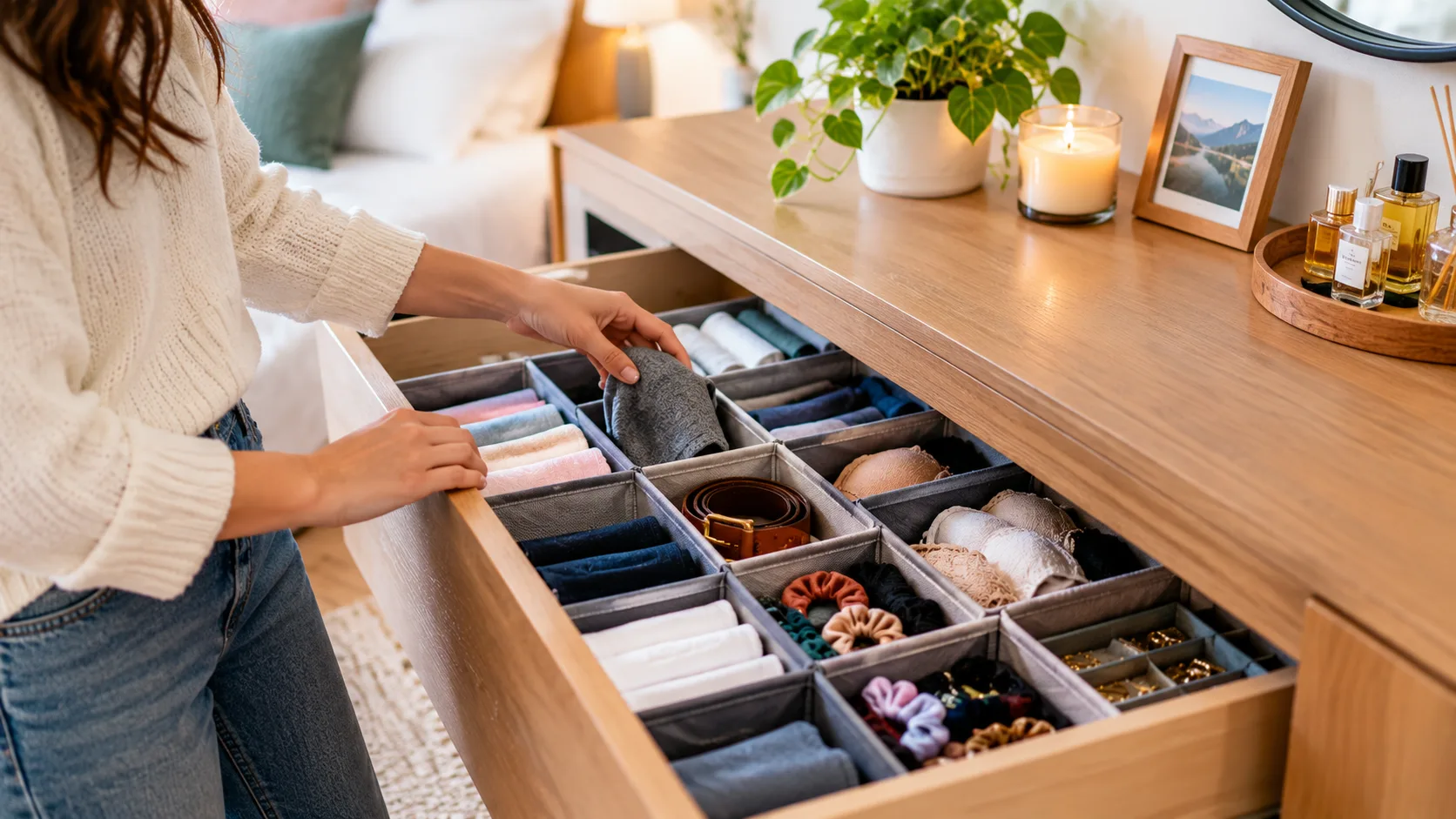
Drawer organization can transform cluttered storage spaces into practical areas where everything has a place. Whether you are dealing with messy kitchen utensils, overflowing clothing drawers, or scattered office supplies, simple organizing techniques can make a noticeable difference. The right drawer organization hacks help maximize available space while making everyday essentials easier to find.
Many drawers become disorganized because they contain unrelated items, lack proper dividers, or simply hold more than their available space allows. Over time, this creates unnecessary clutter and makes routine activities frustrating. Fortunately, organizing drawers does not always require expensive storage products or major changes to your home.
These 15 drawer organization hacks offer practical solutions for kitchens, bedrooms, bathrooms, home offices, and other storage areas. From adjustable dividers to creative folding techniques, each idea focuses on improving accessibility and maintaining order. With a few thoughtful adjustments, you can create organized drawers that remain functional during everyday use.
Why Drawer Organization Matters for a Clutter-Free Home
Organized drawers make everyday activities easier by reducing the time spent searching for frequently used belongings. When each item has a designated place, you can quickly locate clothing, utensils, accessories, or important supplies. This simple improvement makes storage spaces more functional and helps prevent unnecessary frustration during busy routines.
Effective drawer organization also allows you to use existing storage space more efficiently. Instead of allowing objects to overlap randomly, you can arrange them according to size, purpose, and frequency of use. This approach often reveals unused space and reduces the perceived need for additional cabinets or storage furniture.
Another advantage is that organized drawers make it easier to recognize what you already own. Hidden duplicates, damaged items, and forgotten supplies become more noticeable during the organizing process. Maintaining visibility can encourage more thoughtful purchasing decisions and help keep household belongings manageable over time.
Hack 1: Empty Every Drawer Before Organizing
The first step toward effective drawer organization is removing everything from the drawer. This allows you to see the available space and evaluate the items you have been storing. Beginning with an empty drawer also makes it easier to identify unnecessary objects that contribute to clutter.
Place the contents on a clean surface and group similar belongings together. Separate frequently used items from things that are broken, outdated, or no longer needed. This sorting process provides a clearer understanding of what belongs in the drawer and what might be better stored elsewhere.
Before returning anything, clean the drawer’s interior and check for damaged surfaces or loose hardware. Measure the available width, depth, and height if you plan to introduce organizers. Starting with a clean, empty space creates a practical foundation for arranging belongings in a more intentional way.
Hack 2: Use Adjustable Drawer Dividers
Adjustable drawer dividers are among the most versatile solutions for keeping different categories of belongings separated. They create individual sections within a drawer without requiring permanent modifications. This makes them particularly useful for organizing kitchen utensils, office supplies, clothing accessories, and personal care items.
Choose dividers that fit securely within the drawer and allow enough space for items to be removed comfortably. Expandable models can accommodate different drawer widths, while removable partitions offer flexibility when storage requirements change. The goal is to create useful compartments rather than dividing the space into unnecessarily small sections.
Arrange dividers according to the categories you use most frequently. For example, a kitchen drawer might contain separate sections for cooking utensils, measuring tools, and smaller accessories. Keeping similar objects together improves visibility and prevents items from becoming mixed during ordinary use.
Hack 3: Try Vertical Folding for Clothes
Vertical folding is a practical clothing organization technique that allows garments to stand upright inside drawers. Instead of stacking clothes in traditional piles, fold them into compact shapes that fit neatly beside one another. This arrangement makes individual items easier to identify without disturbing everything else.
The technique works particularly well for T-shirts, leggings, pajamas, and certain lightweight clothing items. Fold each garment into a shape that matches the drawer’s height and depth. Avoid compressing clothing too tightly because crowded compartments can make removal difficult and cause the arrangement to collapse.
Organize folded clothing by type, color, or everyday use according to your preference. You might place frequently worn shirts near the front and seasonal items toward the back. Vertical folding helps maintain a clearer view of your wardrobe and encourages you to use existing clothing more efficiently.
Hack 4: Repurpose Small Boxes as Drawer Organizers
Small boxes can become inexpensive drawer organizers when they are clean, sturdy, and appropriately sized. Packaging boxes, gift boxes, and other shallow containers can hold accessories, stationery, or small household items. Repurposing these materials offers a practical alternative to purchasing specialized storage products.
Arrange several boxes inside the drawer to create compartments for different categories. Select containers with heights that allow the drawer to close smoothly. You can reinforce lightweight cardboard boxes or cover them with decorative paper if you want a more coordinated appearance.
This technique works especially well for office drawers, craft supplies, and lightweight personal accessories. However, cardboard may not be suitable for damp environments or items that frequently become wet. Choosing materials according to the drawer’s location helps ensure the organizers remain useful and maintain their condition.
Hack 5: Organize Items by Frequency of Use
One of the simplest drawer organization hacks is arranging belongings according to how often you use them. Frequently needed items should occupy the easiest-to-reach areas, while occasional supplies can remain toward the back. This method makes everyday routines smoother because essential objects are immediately accessible.
For example, place regularly used cooking tools near the front of a kitchen drawer. Less frequently needed specialty utensils can occupy deeper compartments or another storage location. In bedroom drawers, everyday clothing should remain easier to reach than accessories reserved for particular occasions.
Review your arrangement occasionally because household routines and seasonal needs may change. Items that were previously important might become less frequently used over time. Adjusting storage based on actual habits keeps your drawer system practical rather than forcing you to follow an arrangement that no longer works.
Hack 6: Use Clear Containers for Small Accessories
Clear containers provide an effective way to organize small items without making their contents difficult to identify. They are useful for hair accessories, stationery, craft materials, and other lightweight belongings. Transparent storage allows you to see what each compartment contains before opening or moving individual containers.
Choose shallow containers that fit comfortably inside the drawer and allow easy access to their contents. Avoid selecting oversized bins that create unnecessary empty spaces or make smaller items difficult to locate. Several appropriately sized containers can create a more functional arrangement than one large storage box.
Clear organizers are especially convenient in bathroom vanity drawers and home office storage. However, choose washable materials in areas where moisture or spills may occur. Regular cleaning and simple category groupings help maintain visibility and prevent the containers from becoming cluttered themselves.
Hack 7: Separate Kitchen Utensils by Category
Kitchen drawers often become overcrowded because cooking tools, serving utensils, and small accessories are stored together. Separating these items into categories can make food preparation more convenient. Start by grouping similar tools and deciding which categories deserve their own sections within the available space.
Use dividers or shallow trays to separate everyday utensils from less frequently used equipment. For example, keep measuring spoons, peelers, and small preparation tools in designated compartments. Place longer utensils in appropriately sized sections so they do not overlap or prevent the drawer from opening smoothly.
Avoid storing more tools than the drawer can comfortably accommodate. If a utensil drawer remains crowded, move occasional-use equipment to another accessible storage area. Keeping the drawer focused on regularly used items supports a more efficient kitchen workflow and makes cleaning easier.
Hack 8: Create Dedicated Spaces for Makeup
Makeup drawers can become disorganized when brushes, palettes, and smaller products are stored without clear boundaries. Creating dedicated compartments for different product categories makes everyday routines more manageable. It also allows you to identify products that need cleaning, replacement, or more appropriate storage.
Use shallow washable trays to separate brushes, lip products, eye makeup, and other cosmetics. Keep frequently used products within easy reach while reserving less accessible spaces for occasional items. Check that containers allow enough clearance for the drawer to close without damaging taller products.
Review makeup products periodically and follow appropriate storage and expiration guidance. Avoid keeping items that have changed in smell, appearance, or consistency. Organized storage makes it easier to maintain cleanliness and reduces the likelihood of overlooking products hidden beneath unrelated accessories.
Hack 9: Use Labels to Maintain Organization
Labels help identify drawer sections and communicate where different belongings should be returned after use. They are particularly useful in shared household storage areas where several people access the same supplies. Clear labeling can reduce confusion and support consistent organization without requiring everyone to memorize the arrangement.
Use simple category names such as stationery, charging cables, kitchen tools, or craft supplies. Labels should remain easy to read without occupying unnecessary space. Removable labels are especially practical when categories change or the drawer is reorganized for different purposes.
Not every compartment requires a label, particularly when its contents are already obvious. Focus on areas where similar-looking items or multiple categories create confusion. A straightforward labeling system helps maintain order while keeping drawer organization flexible and easy to update.
Hack 10: Organize Cables and Electronic Accessories
Charging cables, adapters, and electronic accessories can quickly turn an ordinary drawer into a tangled collection of wires. Separating these items improves accessibility and makes it easier to identify the correct cable when needed. Begin by checking which accessories are still compatible with the devices you use.
Use small compartments, reusable cable ties, or individual pouches to keep accessories separated. Coil cables loosely rather than bending them tightly around sharp edges. Labeling similar adapters can also reduce confusion, especially when several household devices use different charging connections.
Avoid keeping damaged cables or accessories with exposed wiring in everyday storage. Such items should be handled and disposed of according to appropriate electronic waste guidance. Organizing functional accessories separately from unused equipment helps reduce clutter and makes technology-related tasks more convenient.
Hack 11: Maximize Deep Drawers With Layered Storage
Deep drawers provide useful storage capacity, but they can become difficult to manage when smaller items disappear beneath larger objects. Layered storage can help create separate levels for belongings with different dimensions. This approach works best when organizers fit securely and allow the drawer to move without obstruction.
Removable shallow trays can hold lightweight items above larger supplies stored underneath. Some organizers are designed to slide or lift out, providing access to the lower compartment. Check the drawer’s internal height carefully because excessive layering may prevent smooth opening and closing.
Consider whether the stored items will remain easy to access after introducing multiple levels. If retrieving something requires removing several containers every time, the arrangement may be unnecessarily complicated. The best deep drawer organization system balances storage capacity with convenience and visibility.
Hack 12: Keep Bathroom Drawers Moisture-Resistant
Bathroom drawers require special attention because humidity, water splashes, and personal care products can affect stored belongings. Moisture-resistant organizers help protect drawer surfaces and make routine cleaning easier. Materials such as washable plastic are often more practical than untreated cardboard in these environments.
Create separate sections for grooming accessories, hygiene products, and everyday personal care essentials. Use containers that can be removed easily when cleaning the drawer. Keep damp items out of enclosed storage until they are dry to reduce unwanted moisture buildup and unpleasant odors.
Check products periodically for leaks, damaged packaging, or storage instructions requiring particular conditions. Avoid overcrowding because tightly packed items may conceal spills or make cleaning difficult. Maintaining a dry, organized bathroom drawer supports better hygiene and keeps essential supplies accessible.
Hack 13: Divide Junk Drawers Into Useful Categories
Junk drawers often collect unrelated objects that do not have a clearly designated storage location. Over time, batteries, stationery, small tools, and miscellaneous household supplies become mixed together. Instead of eliminating the drawer completely, you can turn it into a practical storage area with defined categories.
Start by sorting every item and removing objects that belong elsewhere. Create small sections for useful household essentials, such as adhesive notes, measuring tapes, or spare accessories. Avoid using the drawer as a permanent home for broken items or supplies you no longer need.
Set a reasonable limit for each category based on the available compartment space. When a section becomes full, review its contents before adding more belongings. This simple approach prevents the junk drawer from returning to its previous condition while preserving its usefulness for everyday household items.
Hack 14: Use Non-Slip Liners to Keep Organizers in Place
Drawer organizers sometimes shift when drawers open and close, causing neatly arranged items to become mixed. Non-slip liners can help reduce unwanted movement and keep lightweight containers more stable. They are particularly useful in kitchen drawers, office storage, and other frequently accessed spaces.
Choose a liner suitable for the drawer material and cut it to fit the interior dimensions. Place organizers on the liner and check that everything remains stable during normal drawer movement. Avoid thick materials that interfere with drawer clearance or make containers difficult to remove for cleaning.
Non-slip liners may also help protect certain drawer surfaces from minor scratches caused by movable organizers. However, they do not replace proper sizing or secure storage arrangements. Combining suitable liners with well-fitting compartments creates a more reliable system that requires fewer adjustments during everyday use.
Hack 15: Follow the One-Minute Drawer Reset
The final drawer organization hack focuses on maintaining order after the initial cleaning process. A short daily reset can help prevent small amounts of clutter from becoming a larger problem. Returning items to their designated compartments often takes less effort than reorganizing an entire drawer later.
Choose a convenient moment to check frequently used drawers and return misplaced belongings. For example, you might straighten office supplies after finishing work or arrange kitchen utensils while cleaning up. The objective is not perfect presentation but keeping storage areas functional and easy to use.
A simple maintenance habit works best when the original organization system is easy to follow. If items repeatedly end up in the wrong compartments, consider whether the arrangement matches actual household routines. Adjusting the system when necessary helps maintain long-term organization without creating unnecessary daily work.
How to Choose the Right Drawer Organizers
Choosing suitable drawer organizers begins with measuring the interior dimensions of your storage space. Record the available width, depth, and height before purchasing containers or dividers. Accurate measurements help prevent wasted spending on organizers that cannot fit or make the drawer difficult to close.
Consider the types of belongings you need to store and how often they will be accessed. Small accessories may benefit from multiple compartments, while larger utensils require open sections with more clearance. Materials should also match the environment, especially in bathrooms, kitchens, or other areas exposed to moisture.
Avoid selecting storage products only because they appear attractive in photographs. An effective organizer should improve access, maintain separation, and accommodate changes in household needs. Comparing functionality, durability, and maintenance requirements helps you choose solutions that remain useful beyond the initial organizing session.
Common Drawer Organization Mistakes to Avoid
One common mistake is purchasing organizers before sorting the drawer’s contents. This can result in containers that do not match the items you actually need to store. Decluttering first provides a better understanding of required compartment sizes and helps avoid unnecessary purchases.
Another mistake involves dividing storage space into too many small sections. Although compartments can improve organization, excessive separation may make everyday items difficult to retrieve. Choose a manageable number of categories and allow enough room for objects to be removed without disturbing neighboring belongings.
Ignoring regular maintenance is another reason organized drawers gradually become cluttered again. Household needs change, and storage systems should adapt rather than remain fixed indefinitely. Periodic reviews, realistic storage limits, and simple organization habits can prevent the need for repeated major cleanouts.
Conclusion
Drawer organization does not require expensive products or complicated storage systems to produce meaningful improvements. Simple techniques such as adjustable dividers, vertical folding, clear containers, and labeled compartments can transform disorganized spaces. These practical solutions make frequently used belongings easier to locate while helping maximize existing storage capacity.
The most effective approach begins with removing unnecessary items and organizing what remains according to everyday use. Different spaces require different solutions, whether you are arranging kitchen utensils, clothing, cosmetics, or office supplies. Selecting suitable organizers and avoiding overcrowding helps maintain a functional arrangement.
Keeping drawers organized becomes easier when the system reflects your actual household routines. Small maintenance habits and occasional adjustments can prevent clutter from returning. By applying these 15 drawer organization hacks, you can create cleaner, more convenient storage spaces throughout your home.
Frequently Asked Questions (FAQs)
What is the easiest way to organize a messy drawer?
Empty the drawer, sort belongings into categories, and remove unnecessary items. Use suitable dividers or small containers to separate what remains, placing frequently used objects where they are easiest to reach.
How can I organize drawers without buying organizers?
Repurpose small boxes, sturdy containers, and clean packaging materials to create compartments. Vertical folding, category grouping, and removing unnecessary items can also improve drawer organization without requiring additional purchases.
How do I maximize space in small drawers?
Use appropriately sized compartments, fold suitable clothing vertically, and arrange items according to frequency of use. Avoid overcrowding because excessive storage can make small drawers less practical and harder to maintain.
What is the best way to organize kitchen drawers?
Group kitchen tools by purpose and separate frequently used utensils with dividers or shallow trays. Store larger or occasional-use equipment elsewhere when necessary to keep essential items accessible and organized.
How often should I reorganize my drawers?
A complete reorganization is usually unnecessary when your storage system works well. Brief maintenance checks and occasional reviews are often sufficient, particularly when household needs or the types of stored belongings change.