
A cluttered kitchen can make everyday cooking more stressful than it needs to be. When cabinets are filled with mismatched containers, stacked cookware, and forgotten ingredients, finding what you need becomes frustrating. Fortunately, a few practical cabinet organization hacks can transform messy storage spaces into functional areas without requiring an expensive kitchen renovation.
The best kitchen cabinet organization ideas focus on maximizing available space, improving accessibility, and keeping everyday essentials within easy reach. Whether you have a small apartment kitchen or a spacious cooking area, simple storage solutions can make a noticeable difference.
Declutter Your Cabinets and Create Dedicated Storage Zones
The first cabinet organization hack is removing items you no longer need or regularly use. Empty each cabinet and examine everything inside, including cookware, dishes, food containers, and small kitchen accessories. Set aside damaged items, expired food, and unnecessary duplicates so you can understand how much useful storage space is actually available.
Another effective technique is dividing your kitchen cabinets into dedicated storage zones based on their purpose. Keep cooking essentials near the stove, dishes near the dishwasher, and food preparation tools near the countertop where you normally work. This arrangement reduces unnecessary movement and makes it easier to find items during daily cooking activities.
Before returning everything to its place, wipe cabinet surfaces and check for damaged shelving or loose fittings. Organize similar items together while leaving enough space to remove them comfortably. Starting with a clean, thoughtfully arranged storage system creates a practical foundation for the remaining cabinet organization ideas and helps prevent clutter from returning.
Keep Everyday Items Accessible and Add Shelf Risers
One of the simplest kitchen cabinet organization hacks is placing frequently used items at comfortable, accessible heights. Store everyday plates, glasses, bowls, and cooking essentials where you can reach them without moving other objects. Reserve higher or less convenient shelves for occasional serving dishes, seasonal kitchen accessories, and items you rarely use.
Shelf risers provide another practical solution for cabinets with unused vertical space. These small organizers create an additional storage level, allowing you to arrange cups, dishes, or lightweight containers more efficiently. Instead of stacking everything directly on top of other items, you can separate groups and access them with less effort.
Choose shelf risers that fit securely inside your cabinets and support the weight of the items you intend to store. Measure the available height before purchasing organizers, especially when cabinet shelves cannot be adjusted. Properly arranged risers can improve visibility, reduce unstable stacking, and make ordinary kitchen storage feel more spacious.
Use Pull-Out Bins and Rotating Cabinet Organizers
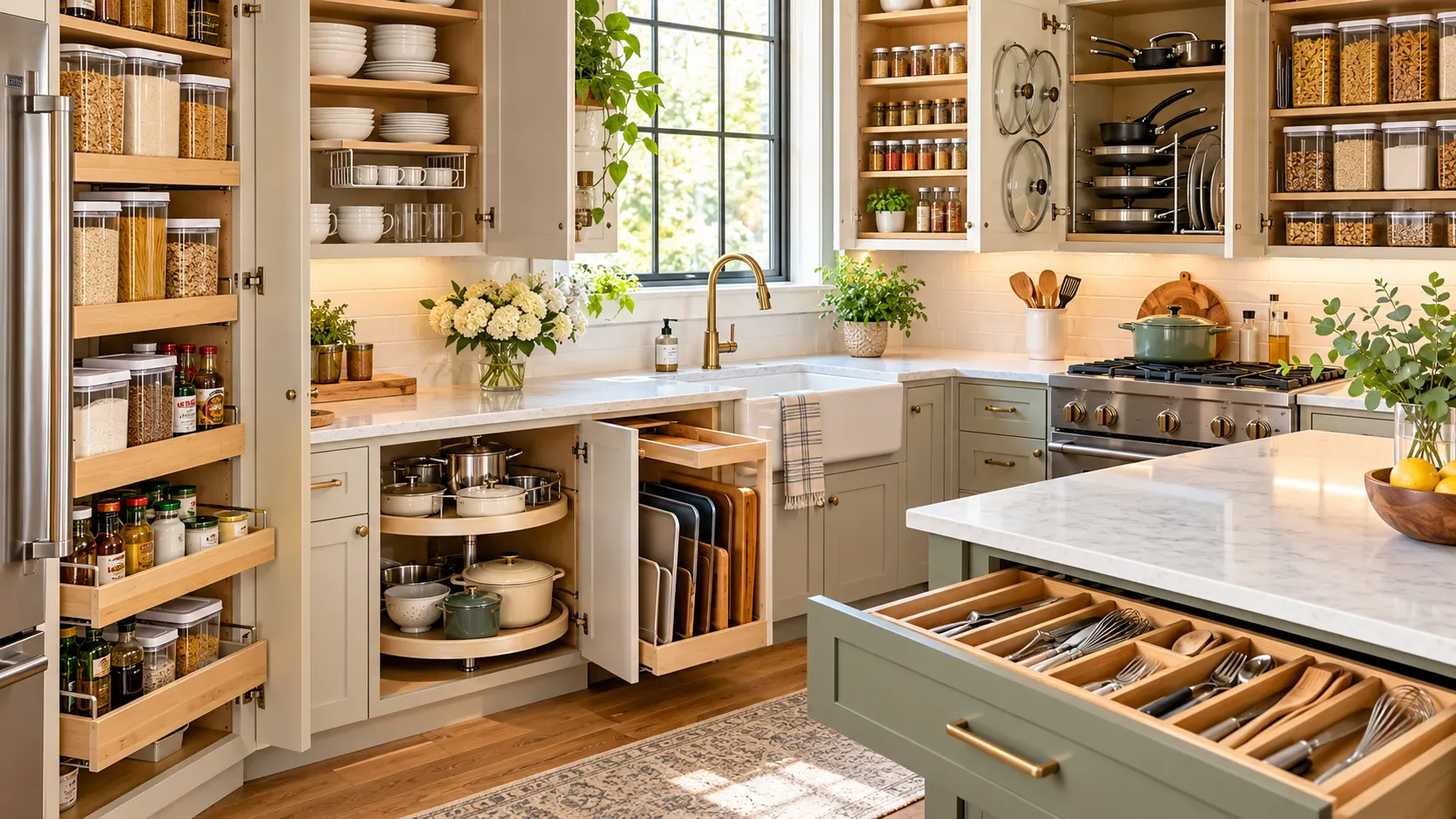
Pull-out storage bins are especially useful for deep kitchen cabinets where items often disappear toward the back. Long bins with convenient handles allow you to bring several products forward together instead of reaching behind other supplies. They work well for packaged foods, baking ingredients, small containers, and kitchen accessories that would otherwise become difficult to access.
Rotating organizers, commonly called Lazy Susans, offer another convenient way to improve cabinet accessibility. These turntables allow you to rotate stored items without rearranging everything around them. They are particularly helpful for spices, sauces, small jars, and cooking ingredients stored in corner cabinets or other awkward spaces.
When choosing between pull-out bins and rotating organizers, consider the shape and depth of your available storage area. Rectangular containers often work well in narrow cabinets, while turntables suit wider spaces with enough room to rotate freely. Both solutions help reduce forgotten items and make daily kitchen tasks more convenient.
Store Pots and Pans Vertically and Organize Their Lids
Stacking several pots and frying pans inside one cabinet can make cooking unnecessarily inconvenient. Vertical cookware organizers provide separate spaces for individual pans, reducing the need to lift heavy stacks whenever you need something. These racks can also help protect certain cookware surfaces from repeated contact with other metal or ceramic items.
Pot lids deserve their own storage system because their handles and different sizes make stacking difficult. A dedicated lid rack can keep them upright and separated, making it easier to identify the correct lid quickly. Some organizers fit inside cabinets, while suitable wall-mounted or cabinet-door options provide additional storage possibilities.
Before installing organizers, measure your largest cookware pieces and the cabinet’s available dimensions. Heavier pots should remain on strong, accessible shelves rather than being placed in unstable racks. Keeping cookware and lids organized separately can improve kitchen efficiency while reducing the clutter commonly found around cooking equipment.
Organize Food Containers and Store Baking Trays Upright
Food storage containers often become a source of cabinet clutter when bowls and lids are stored without a consistent system. Nest compatible containers by size whenever their design allows it, and keep matching lids together in a nearby divider or basket. This method saves space and reduces time spent searching for suitable lids.
Another useful kitchen storage hack is arranging baking trays, cutting boards, and muffin tins vertically. Instead of stacking flat items horizontally, use a sturdy divider designed for upright storage. This arrangement makes it easier to remove one tray without disturbing everything else and helps you see available items immediately.
Choose organizers with enough space to accommodate different tray sizes without forcing items into narrow sections. Keep frequently used baking equipment in accessible cabinets, especially when you prepare meals or bake regularly. Separating flat cookware from everyday containers also creates clearer storage categories and makes cabinet maintenance more manageable.
Use Clear Storage Bins and Label Pantry Essentials
Clear storage bins help organize pantry cabinets by keeping related items visible and easy to locate. Group packaged snacks, baking supplies, breakfast products, and other dry goods into separate containers or baskets. Transparent organizers reduce the need to search through multiple shelves and make it easier to notice when supplies are running low.
Labeling storage containers is another simple way to maintain an organized kitchen. Labels can identify food categories, ingredients, or storage locations, helping everyone return items to the correct place. For ingredients transferred from original packaging, include useful information such as the product name, expiration date, and preparation instructions when necessary.
Avoid transferring every pantry product into decorative containers unless doing so genuinely improves your storage system. Some foods are easier to manage in their original packaging, especially when labels contain important allergy or cooking information. Choose airtight, food-safe containers when appropriate, and keep similar ingredients together to simplify meal preparation.
Maximize Cabinet Doors and Add Under-Shelf Storage
Cabinet doors often provide unused space that can accommodate lightweight kitchen accessories. Suitable door-mounted organizers can hold measuring spoons, pot holders, small packets, or other frequently used items. This approach makes use of existing storage surfaces without requiring additional cabinets or taking valuable countertop space away from food preparation activities.
Under-shelf hooks and hanging organizers provide another way to use available vertical space. Depending on the cabinet design, these accessories can support lightweight mugs, small utensils, or other compatible items. They are especially helpful when standard shelves have considerable unused space between stored objects and the cabinet above.
Before installing any door-mounted or under-shelf organizer, check the manufacturer’s weight limits and available clearance. Heavy attachments can damage cabinet doors or interfere with hinges when installed incorrectly. Select storage accessories that fit securely and allow doors to close normally, ensuring the additional organization remains practical and safe.
Create an Organized Under-Sink Cabinet With Storage Caddies
The cabinet beneath the kitchen sink often becomes cluttered with cleaning supplies, spare sponges, and household accessories. A practical organization hack is using removable storage caddies to keep related products together. Separate dishwashing supplies from other cleaning items so everything has a clear location and can be accessed without unnecessary searching.
Another useful solution is installing a suitable tension rod to hold lightweight items when the cabinet layout allows it. Some people use these rods to support empty spray bottle handles or small accessories, although the installation must remain stable. Avoid placing heavy objects on tension rods because they may slip under excessive weight.
Under-sink organization should prioritize safety because this area often contains pipes, moisture, and household cleaning products. Keep chemicals in their original labeled containers, away from food, and secured from children and pets. Leave plumbing connections accessible and check occasionally for leaks that could damage storage containers or cabinet surfaces.
Divide Small Accessories and Create Organized Snack Sections
Small kitchen accessories can create clutter when they are stored together without clear boundaries. Adjustable dividers provide a useful way to separate measuring cups, reusable food accessories, small utensils, and other compact items. By assigning each category a specific section, you can reduce unnecessary searching and make better use of limited cabinet space.
Creating dedicated snack sections is another practical cabinet organization idea for busy households. Use small baskets to group crackers, snack packets, dried fruit, and other packaged foods according to your family’s needs. Keeping commonly used snacks in an accessible location can simplify meal preparation and prevent individual packets from spreading across multiple shelves.
Choose baskets and dividers that fit the actual dimensions of your cabinets rather than purchasing organizers based only on appearance. Containers that are too large may waste space, while very small compartments can become inconvenient. A simple arrangement with clear categories is often easier to maintain than an overly complicated storage system.
Rotate Seasonal Kitchen Items and Maintain a Weekly Reset
Seasonal storage rotation helps prevent rarely used equipment from occupying valuable everyday cabinet space. Move holiday serving dishes, specialized baking molds, and occasional entertaining accessories to higher shelves or other suitable storage areas. Keep the tools and dishes you use most frequently in convenient locations where they can be reached without unnecessary effort.
A short weekly cabinet reset is another effective way to maintain long-term organization. Check whether items have been returned to their designated places, remove empty packaging, and reorganize supplies that have become scattered. This regular routine can prevent small storage problems from developing into another time-consuming kitchen decluttering project.
You can also review your cabinet organization system whenever cooking habits or household requirements change. New appliances, additional food supplies, or changing routines may require different storage arrangements. Treating cabinet organization as a flexible process helps maintain a tidy kitchen without repeatedly purchasing new products or completely reorganizing every storage area.
Conclusion
Keeping kitchen cabinets organized does not require expensive renovations or complicated storage systems. Simple cabinet organization hacks such as decluttering, shelf risers, pull-out bins, and vertical cookware storage can make everyday kitchen activities easier. The most effective solutions use available space efficiently while ensuring frequently needed items remain easy to find.
Organizing kitchen cabinets also involves creating practical systems that match your cooking habits and household needs. Clear storage containers, dedicated pantry sections, and thoughtful placement can reduce unnecessary clutter. When each item has a suitable location, preparing meals and cleaning up afterward become more convenient and less frustrating.
The key to maintaining a tidier kitchen is consistency rather than perfection. Start with one cabinet, make improvements using the supplies you already own, and introduce additional organizers only when necessary. By applying these 20 cabinet organization hacks gradually, you can create a functional kitchen storage system that remains manageable over time.
Frequently Asked Questions (FAQs)
What Is the Best Way to Organize Kitchen Cabinets?
Start by removing unnecessary items and grouping similar essentials together. Keep frequently used products easily accessible, use suitable cabinet organizers, and assign specific storage areas based on your normal cooking activities.
How Can I Organize Kitchen Cabinets Without Spending Money?
Declutter unused items, rearrange existing shelves, and reuse clean boxes or containers for suitable nonfood storage. Group similar products together and maintain consistent storage locations to improve organization without purchasing additional accessories.
How Do You Organize Deep Kitchen Cabinets?
Use long pull-out bins, handled baskets, or suitable sliding organizers to access items near the back. Keep heavier products on stable lower shelves and arrange frequently used supplies toward the front.
What Should You Store in Upper Kitchen Cabinets?
Upper cabinets are suitable for lightweight dishes, glasses, dry food products, and frequently used kitchen accessories. Store heavier cookware lower down and avoid placing difficult-to-lift items on high shelves.
How Often Should You Organize Kitchen Cabinets?
A quick weekly reset can help maintain your existing storage system. Consider a more thorough review every few months to remove expired food, reassess storage needs, and reorganize frequently used items.