
A cluttered bedroom can make even a beautiful space feel crowded and uncomfortable. Clothes piling up on chairs, overflowing drawers, and crowded nightstands can quickly turn a relaxing room into a disorganized environment. Fortunately, creating a tidy bedroom does not always require expensive furniture, major renovations, or additional square footage. Small storage improvements can make a noticeable difference.
The best bedroom storage hacks focus on making better use of existing space while keeping everyday essentials easy to access. From under-bed storage containers to floating shelves and closet organizers, practical solutions can help you manage clothing, accessories, bedding, and personal belongings. These ideas are especially useful for smaller bedrooms where every available inch matters.
Whether you live in an apartment, share a bedroom, or simply want a more organized sleeping space, the following 20 bedroom storage hacks can help keep clutter under control. Each idea offers a practical way to improve organization without sacrificing comfort, convenience, or your personal decorating style.
Use Under-Bed Storage Containers to Save Space
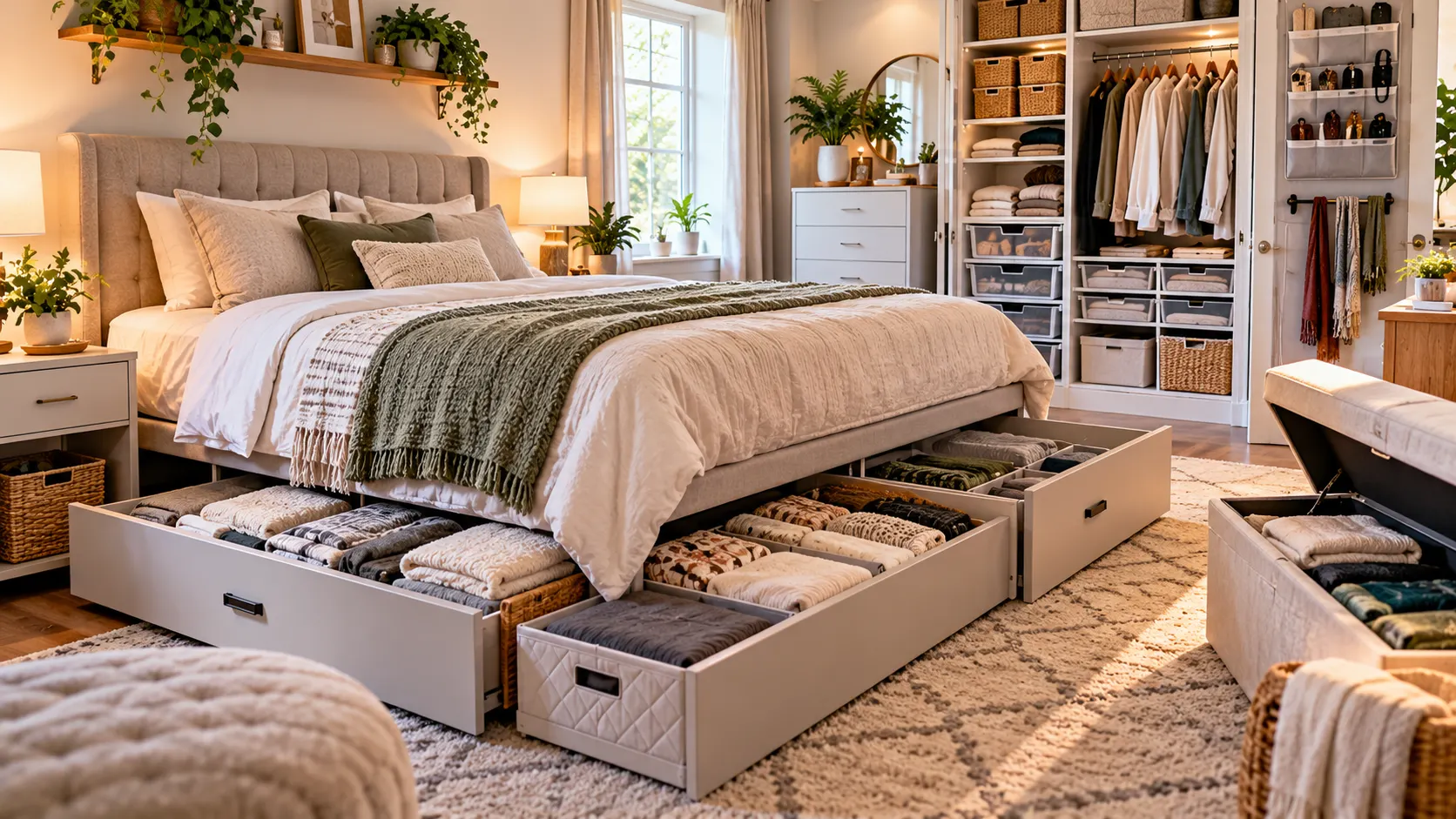
The space beneath your bed is one of the most overlooked storage areas in a bedroom. Instead of allowing it to collect dust, consider using shallow storage containers for items that are not needed daily. Seasonal clothing, extra bedding, and spare pillows can fit neatly underneath many bed frames. This approach keeps belongings accessible without occupying valuable floor space.
Choose containers that match the available clearance beneath your bed. Clear plastic bins make it easier to identify contents, while fabric organizers can provide a softer appearance. Containers with wheels are particularly convenient when you need to retrieve items frequently. Always measure the available space before purchasing organizers to avoid storage boxes that are difficult to move.
Keep under-bed belongings organized by separating items into categories. For example, store winter accessories in one container and spare linens in another. Labeling each box helps prevent unnecessary searching when you need something specific. Avoid filling the space so tightly that airflow becomes restricted or cleaning underneath the bed becomes difficult.
Install Floating Shelves for Vertical Storage
Floating shelves provide useful storage without taking up additional floor space. They are especially valuable in small bedrooms where traditional bookcases or cabinets may feel overwhelming. Wall-mounted shelves can hold books, decorative objects, small baskets, and other lightweight belongings. Using vertical space helps create a more organized room while maintaining an open and comfortable appearance.
Consider installing shelves above a desk, beside a dresser, or along an otherwise empty wall. Their placement should support daily convenience without making the bedroom feel crowded. Choose shelf sizes that complement your existing furniture and decorating style. Proper mounting is important, particularly when shelves will hold heavier items or require attachment to specific wall materials.
Avoid overcrowding floating shelves with too many objects. Group similar belongings together and leave some open space to maintain a balanced appearance. Small storage baskets can hide loose accessories while keeping surfaces visually tidy. This combination of practical organization and simple decoration makes floating shelves a useful addition to bedrooms of different sizes.
Choose a Bed Frame With Built-In Drawers
A storage bed combines sleeping space with concealed compartments for clothing and household essentials. Bed frames with built-in drawers are especially practical when a bedroom lacks room for additional dressers. These drawers can accommodate spare sheets, pajamas, seasonal accessories, and other belongings. Combining two furniture functions helps maximize available space without introducing unnecessary pieces.
Before choosing a storage bed, consider the location of other bedroom furniture. Drawers require sufficient clearance to open comfortably, which may be difficult in narrow layouts. Some models provide drawers on both sides, while others offer storage accessible from the foot of the bed. Selecting a suitable design makes everyday organization easier.
Keep built-in drawers organized with dividers or small fabric containers. Separating clothing by type prevents items from becoming mixed together during regular use. Frequently needed belongings should remain in the most accessible compartments. A well-organized storage bed can reduce pressure on bedroom closets while helping maintain a cleaner and more functional sleeping environment.
Organize Your Closet With Double Hanging Rods
Closets often contain unused vertical space beneath shorter hanging garments. Installing a second hanging rod can provide additional room for shirts, jackets, skirts, and folded trousers. This arrangement works particularly well when most clothing does not require full-length hanging space. Dividing the closet into two hanging levels can increase organization without expanding its overall footprint.
Begin by separating long garments from shorter clothing. Dresses and coats may require a dedicated full-height section, while shirts and other shorter items can occupy the double-rod area. Adjustable closet systems offer flexibility as storage needs change. Measure garment lengths carefully to ensure clothes remain accessible and do not bunch against the lower rod.
Closet organization becomes easier when similar clothing categories are grouped together. Arrange everyday items at a comfortable height and keep less frequently used garments in secondary sections. Avoid overloading rods beyond their recommended weight capacity. A thoughtful closet layout helps reduce clutter while making it easier to find appropriate clothing during busy mornings.
Add Drawer Dividers to Organize Small Items
Bedroom drawers can quickly become disorganized when socks, accessories, and smaller clothing items are stored together. Drawer dividers create separate compartments that prevent belongings from mixing during everyday use. They also make it easier to see available items without removing everything. This simple bedroom organization hack can improve convenience while reducing unnecessary searching.
Adjustable dividers are useful because they can accommodate drawers of different dimensions. Fabric organizers work well for socks and underwear, while smaller compartments can hold jewelry or personal accessories. Measure drawer interiors before selecting an organizer. Choosing a design that fits properly prevents wasted space and allows drawers to open and close smoothly.
Organize each drawer according to how frequently its contents are needed. Everyday essentials should remain easy to reach, while occasional accessories can occupy less accessible areas. Folding clothing neatly helps maximize available space without excessive compression. Regularly removing unused items keeps drawers functional and prevents the compartments from becoming overcrowded again.
Use Over-the-Door Organizers for Extra Storage
The back of a bedroom or closet door can provide valuable storage space. Over-the-door organizers use an area that often remains completely unused. Depending on their design, these organizers can hold shoes, accessories, scarves, belts, and smaller personal belongings. They are particularly useful in rental properties where permanent storage modifications may not be practical.
Choose an organizer based on the items you plan to store. Pocket organizers work well for lightweight accessories, while sturdy hanging racks may accommodate other household essentials. Make sure the organizer does not interfere with the door’s movement. Checking weight limits and door clearance helps prevent damage and ensures that the storage solution remains convenient.
Keep heavier belongings away from organizers that are designed only for lightweight objects. Arrange frequently used accessories in the easiest pockets to reach. Labeling compartments can help when several similar items are stored together. An organized door storage system reduces pressure on drawers and shelves while keeping smaller bedroom essentials readily available.
Replace Bulky Nightstands With Wall-Mounted Options
Traditional nightstands can occupy valuable floor space, especially in narrow bedrooms. Wall-mounted bedside shelves provide a practical alternative by keeping essential items within reach without requiring bulky furniture. These compact surfaces can accommodate a phone, book, alarm clock, or small lamp. Their simple design can also make the sleeping area appear less crowded.
Choose a wall-mounted nightstand that provides enough surface area for your everyday needs. Models with small drawers or enclosed compartments offer additional storage for personal belongings. Position the shelf at a comfortable height beside the bed. Secure installation is essential to prevent loose fixtures or overloaded shelves from becoming a safety concern.
Keep bedside storage limited to the items you actually use. Excessive decoration, unused chargers, and scattered accessories can quickly recreate the same clutter problems. A small tray can help organize frequently needed objects. Maintaining a clear bedside surface creates a calmer bedroom atmosphere and makes daily routines more convenient.
Store Seasonal Clothes in Vacuum Storage Bags
Seasonal clothing can occupy significant closet space even when it is not being used. Vacuum storage bags compress many soft items, making them easier to store in drawers, containers, or suitable closet areas. They can be useful for bulky winter clothing and certain spare textiles. Reducing storage volume frees up space for garments needed during the current season.
Before using vacuum bags, ensure clothing is clean and completely dry. Moisture trapped inside sealed packaging can damage fabrics and create unpleasant odors. Avoid compressing delicate materials, leather, structured garments, or items that may lose their original shape. Follow fabric care instructions and the storage bag manufacturer’s recommendations when choosing suitable belongings.
Label each bag with its contents so that seasonal clothing is easy to locate. Store compressed bags in a clean area away from extreme temperatures and moisture. Check stored belongings periodically, especially during longer storage periods. Used appropriately, vacuum bags can support bedroom organization while reducing the space needed for selected textiles.
Use Storage Ottomans for Hidden Organization
A storage ottoman provides seating and concealed storage within a single piece of furniture. This makes it particularly useful for bedrooms that need additional organization without more cabinets or shelving. Depending on its size, an ottoman can hold spare blankets, decorative pillows, books, or accessories. Its upholstered appearance also helps storage blend naturally into bedroom decoration.
Consider placing a storage ottoman at the foot of the bed or near a suitable seating area. Choose dimensions that allow comfortable movement around surrounding furniture. Models with sturdy hinges and secure lids are generally more convenient for regular access. Always check the manufacturer’s weight and seating recommendations before using an ottoman as a chair.
Avoid filling the compartment with unrelated objects that become difficult to locate. Store similar items together and leave enough room for the lid to close properly. A small internal organizer can help separate accessories from larger belongings. This practical furniture choice adds storage while maintaining a tidy and comfortable bedroom environment.
Organize Shoes With Compact Storage Racks
Shoes can create clutter when they are scattered across bedroom floors or stored in overcrowded closets. A compact shoe rack provides a dedicated location that keeps footwear organized and easy to find. Vertical designs are particularly useful in smaller bedrooms because they use height instead of floor width. Choosing suitable shoe storage also helps protect footwear from unnecessary damage.
Place a shoe rack inside the closet, beside an appropriate wall, or in another accessible location. Consider the number and types of shoes you actually use before selecting its size. Adjustable racks can accommodate different footwear styles. Keeping daily shoes near the front and occasional pairs farther away makes the system more convenient.
Clean footwear before placing it into enclosed storage compartments, especially after exposure to dirt or moisture. Allow damp shoes to dry properly in a ventilated area. Avoid stacking delicate pairs under heavy footwear that could alter their shape. A consistent shoe organization routine helps maintain clearer floors and reduces everyday bedroom clutter.
Use Decorative Baskets for Everyday Essentials
Decorative baskets offer an easy way to organize belongings while adding texture and warmth to bedroom decoration. They can hold folded blankets, scarves, accessories, and other lightweight items that otherwise accumulate on furniture. Baskets also work well on shelves and inside larger cabinets. Their versatility makes them useful for bedrooms with different layouts and storage requirements.
Choose baskets that match the size of the items being stored. Small containers are useful for accessories, while larger baskets can accommodate spare cushions or casual textiles. Materials such as woven fabric, sturdy plastic, or suitable natural fibers offer different appearances. Select options that are easy to clean and comfortable to handle.
Assign each basket a clear purpose to prevent random clutter from accumulating. For example, one basket might hold reading accessories while another contains spare bedding. Place frequently used baskets where they are easy to access. This simple organizing habit helps maintain order while allowing storage solutions to complement the bedroom’s overall design.
Make Use of Empty Corners With Tall Shelving
Bedroom corners often remain unused because standard furniture does not fit comfortably into them. Tall, narrow shelving units can transform these areas into practical storage spaces. They provide room for books, organizers, and selected decorative objects without requiring a large footprint. Vertical corner storage is particularly helpful when wall space and floor space are limited.
Look for shelving that fits the available corner without restricting doors or walking routes. Open shelves can make a bedroom feel lighter, while enclosed compartments help conceal visual clutter. Choose materials and finishes that complement nearby furniture. Tall units should be properly secured when required to reduce the risk of tipping.
Arrange heavier objects on lower shelves and lighter belongings toward the top. Frequently used items should remain within comfortable reach to avoid unnecessary stretching. Decorative boxes can organize smaller possessions while keeping the shelves visually balanced. A well-planned corner unit adds useful storage without making the bedroom feel unnecessarily crowded.
Keep Jewelry Organized With Dedicated Storage
Jewelry can become difficult to manage when necklaces, rings, and bracelets are stored together in one drawer. Tangled chains and misplaced accessories can make daily routines frustrating. Dedicated jewelry storage helps protect delicate items and makes individual pieces easier to locate. It also prevents smaller accessories from spreading across dressers and bedside tables.
Consider using compartment trays, jewelry boxes, or suitable hanging organizers. Divided compartments help separate rings and earrings, while hooks can prevent necklaces from becoming tangled. Choose storage materials that will not scratch delicate surfaces. Valuable jewelry may require additional security rather than being displayed openly in accessible bedroom areas.
Organize jewelry according to frequency of use or accessory type. Keep regularly worn pieces within easy reach and store occasional items separately. Periodically review your collection to identify damaged or unused accessories. A dedicated system protects belongings while keeping dresser surfaces clear and organized.
Add Hooks for Bags, Hats, and Accessories
Wall hooks provide convenient storage for items that are frequently used but difficult to organize inside drawers. Bags, hats, scarves, and lightweight accessories can be kept visible and accessible without occupying valuable furniture space. Hooks are especially helpful near bedroom entrances or closet areas. They encourage belongings to return to a consistent location after use.
Choose hooks that suit the weight and size of the accessories being stored. Individual wall hooks work well for selected items, while mounted rails provide several hanging positions. Proper installation helps prevent fixtures from loosening over time. In rental bedrooms, suitable removable hooks may be useful for lightweight objects when permitted by the surface and manufacturer.
Avoid turning every available hook into a crowded collection of belongings. Limit visible accessories to items used regularly and move seasonal pieces into suitable storage. Leaving space between hanging objects makes them easier to retrieve. A simple arrangement of hooks can improve convenience while reducing clutter on chairs, floors, and other bedroom surfaces.
Create a Dedicated Storage Area for Laundry
Clothing that has been worn but not put away can quickly accumulate around a bedroom. A dedicated laundry hamper provides a clear location for garments waiting to be washed. This prevents laundry from spreading across chairs, beds, and floors. Choosing a suitable hamper also helps establish a predictable routine for managing clothing.
Consider hampers with separate compartments if you regularly sort laundry by fabric type or washing requirements. Slim designs work well in narrow spaces, while fabric baskets can fit into closets. Choose a container that allows appropriate ventilation for stored clothing. Damp garments should be dried or washed promptly rather than left inside enclosed hampers.
Position the laundry hamper where clothing changes normally happen. Convenient placement makes it easier to maintain the habit of putting worn clothes away. Empty the hamper regularly to prevent overflowing. A simple laundry organization system can improve bedroom cleanliness without requiring complicated routines or additional furniture.
Use Pegboards for Flexible Wall Organization
Pegboards provide adjustable storage for small belongings while making use of vertical wall space. Their modular design allows hooks, shelves, and containers to be repositioned as storage requirements change. This flexibility makes pegboards useful for accessories, creative supplies, and selected personal items. They are especially practical when a bedroom also serves as a workspace.
Install a pegboard above a desk, dresser, or another suitable area where frequently needed objects can remain accessible. Select hooks and attachments designed for the board’s material and weight capacity. Small baskets can accommodate accessories that would otherwise become scattered. A coordinated layout helps the storage system appear organized rather than overly busy.
Review the pegboard arrangement whenever your storage needs change. Move frequently used items into convenient positions and remove objects that no longer belong there. Avoid overloading hooks or placing heavy belongings on unsuitable attachments. This adaptable solution helps maintain bedroom organization while allowing storage arrangements to evolve over time.
Organize Your Dresser With Clear Storage Zones
A dresser can provide substantial bedroom storage, but poorly organized drawers often become difficult to manage. Dividing the dresser into clear zones makes clothing easier to locate and return after use. Each drawer can hold a particular category, such as shirts, sleepwear, or accessories. This arrangement reduces unnecessary searching and makes everyday organization more consistent.
Begin by removing everything from the dresser and grouping similar belongings together. Review which items are needed regularly and identify clothing that no longer serves a useful purpose. Arrange the remaining pieces using folding methods that make them easy to see. Drawer dividers and small organizers can provide additional structure when necessary.
Keep the top of the dresser as organized as the drawers underneath. Use a small tray for daily essentials rather than allowing loose belongings to spread across the surface. Limit decorative objects to a manageable number. Maintaining clear storage zones helps the dresser function efficiently while contributing to a calmer overall bedroom appearance.
Install Shelves Above Existing Furniture
The wall space above dressers and desks can offer additional storage without requiring more floor area. Installing shelves in these locations allows you to organize books, decorative boxes, and occasional belongings vertically. This approach makes existing furniture arrangements more functional. It is particularly useful when limited bedroom space makes extra cabinets impractical.
Choose shelf dimensions that complement the furniture below without extending awkwardly into walking areas. Position shelves so that everyday activities remain comfortable and safe. Avoid installing heavy objects directly above sleeping areas or where falling items could cause injury. Proper wall anchors and suitable mounting methods are essential for reliable support.
Use the shelves to store items that do not require constant access. Lightweight storage boxes can conceal occasional accessories, while a few decorative objects maintain visual interest. Avoid overcrowding the arrangement with unnecessary belongings. Thoughtful use of existing wall space provides practical storage while preserving a balanced bedroom layout.
Keep Cables and Electronics Neatly Organized
Charging cables, headphones, and electronic accessories can create visual clutter around bedside tables and desks. Tangled wires may also make it difficult to identify the correct charger when needed. Cable organizers provide a simple way to manage these items. Keeping electronics arranged neatly improves convenience and helps bedroom surfaces appear cleaner.
Use cable clips, reusable ties, or suitable organizers to group wires without bending or damaging them. A dedicated charging station can provide one location for compatible devices. Position chargers where they remain accessible and properly ventilated. Avoid placing powered equipment beneath bedding or using damaged cords, because these practices can create safety hazards.
Remove unused cables and outdated accessories from everyday storage areas. Label similar charging cords when they are difficult to distinguish. Store spare electronics in a dedicated drawer or container rather than leaving them scattered across surfaces. Regular cable management helps maintain an organized bedroom while making frequently used devices easier to access.
Declutter Regularly to Maintain an Organized Bedroom
Even the best storage solutions become ineffective when a bedroom contains more belongings than the available space can comfortably hold. Regular decluttering helps prevent unnecessary items from accumulating. Reviewing clothing, accessories, and decorative objects creates opportunities to simplify organization. Maintaining manageable belongings often produces better results than continuously purchasing additional storage containers.
Start with one drawer, shelf, or clothing category rather than attempting to organize the entire bedroom at once. Identify items that are useful, damaged, rarely worn, or no longer needed. Decide whether unwanted belongings should be donated, recycled, repaired, or discarded appropriately. Small organizing sessions can make the process easier to manage.
Develop simple daily habits that keep the bedroom organized after decluttering. Return accessories to their designated locations, place laundry in its hamper, and clear unnecessary objects from surfaces. A brief weekly review can help prevent clutter from rebuilding. Consistency makes bedroom organization more sustainable and reduces the need for frequent major cleanups.
Conclusion
Keeping a bedroom organized does not require a complete redesign or expensive furniture purchases. Practical storage solutions such as under-bed containers, floating shelves, drawer dividers, and closet organizers can make better use of available space. These bedroom storage hacks help reduce clutter while keeping clothing, accessories, and personal belongings conveniently accessible.
Small bedrooms can particularly benefit from furniture that performs multiple functions and storage systems that use vertical space. Storage beds, wall-mounted nightstands, tall shelving units, and decorative baskets provide useful alternatives to bulky cabinets. Combining these solutions with clear organization zones helps create a comfortable and visually balanced sleeping environment.
The best way to keep bedroom clutter under control is to choose storage solutions that match your needs and maintain simple organizational habits. Regular decluttering, consistent item placement, and thoughtful furniture arrangements make everyday upkeep easier. By applying these 20 bedroom storage hacks, you can create a cleaner, more functional bedroom without sacrificing style or comfort.
Frequently Asked Questions
How can I organize a small bedroom with limited storage?
Use under-bed containers, floating shelves, wall hooks, and multifunctional furniture to maximize available space. Organize belongings by category and remove unnecessary items to prevent limited storage areas from becoming overcrowded.
What is the best way to keep a bedroom clutter-free?
Create designated locations for clothing, accessories, and everyday essentials. Return items after use, manage laundry regularly, and review storage areas periodically to prevent unnecessary belongings from accumulating.
How can I add bedroom storage without buying new furniture?
Use existing wall space, add drawer dividers, install suitable hooks, and organize closet shelves more efficiently. Repurposing baskets and containers can also provide affordable storage without introducing large furniture pieces.
What should I store under my bed?
Under-bed storage works well for seasonal clothing, spare bedding, and other items that are not needed daily. Use clean, appropriately sized containers to protect belongings from dust and moisture.
How often should I declutter my bedroom?
A brief weekly tidy-up can prevent everyday clutter from accumulating. Review clothing, drawers, and storage containers more thoroughly whenever belongings become difficult to organize or available space begins to feel crowded.