
Keeping a swimming pool clean requires regular attention, and choosing the right equipment can make maintenance much easier. Leaves, dirt, sand, and other debris gradually collect on pool surfaces, affecting appearance and water quality. A pool vacuum helps remove these unwanted materials and reduces the effort involved in routine cleaning. However, different pool cleaners work in different ways, making it important to understand your options before purchasing.
Buying a pool vacuum involves more than selecting a product with attractive features or a low price. You need to consider your pool’s size, surface material, filtration system, and typical cleaning requirements. Some models require manual operation, while others work automatically. This guide explains the different types of pool vacuums, their advantages, common limitations, and practical factors to consider before making a purchase.
What Is a Pool Vacuum and How Does It Work?
A pool vacuum is a cleaning device designed to remove dirt, sand, leaves, and other debris from swimming pool surfaces. It works by using suction or a mechanical collection system to capture unwanted materials. Depending on the design, debris may enter the pool’s existing filtration system or a separate collection container. Regular vacuuming supports cleaner water and more comfortable swimming conditions.
Traditional pool vacuums connect to the filtration system and use the pool pump to generate suction. The vacuum head moves across the floor while debris travels through a hose into the filtration system. Some models require the user to guide them manually. Automatic cleaners perform much of this movement independently, although their capabilities vary.
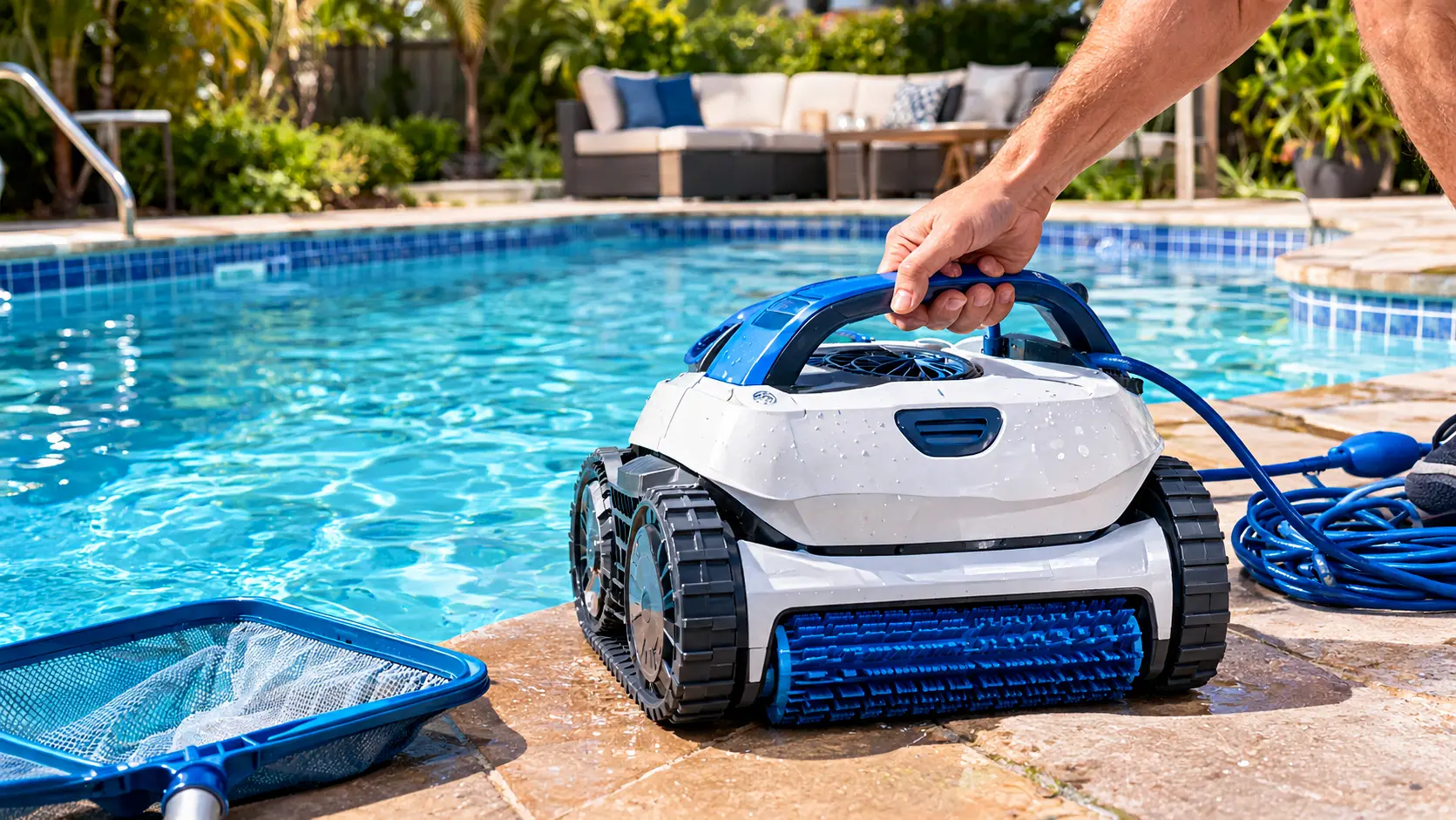
Modern robotic pool vacuums operate differently because they contain their own motors and filtration components. These machines move through the pool while collecting debris inside an onboard filter. Some advanced models also clean walls and waterlines. Understanding how each system functions helps buyers select equipment compatible with their pool.
Different Types of Pool Vacuums Available
Pool vacuums generally fall into four categories: manual, suction-side, pressure-side, and robotic cleaners. Each type uses a different cleaning method and has its own advantages. Manual vacuums offer direct control, while automatic models reduce the need for continuous supervision. The most suitable option depends on your pool’s design and maintenance requirements.
Suction-side cleaners connect to the pool’s suction system and depend on the main pump for operation. Pressure-side cleaners use pressurized return water and sometimes require an additional booster pump. Robotic cleaners operate independently using onboard motors and filters. These differences affect installation requirements, operating costs, and cleaning performance.
Before comparing specific models, identify which cleaner categories are compatible with your existing equipment. Some pools lack the plumbing connections needed for particular automatic systems. Others may have surfaces that require specialized brushes or wheels. Choosing the correct cleaner type first makes the remaining buying decisions much simpler.
Manual Pool Vacuum: Features and Benefits
Manual pool vacuums are commonly used for targeted cleaning and routine maintenance. They typically include a vacuum head, telescopic pole, and flexible hose connected to the pool’s filtration system. The user guides the vacuum across the pool floor to collect debris. This design provides direct control over which areas receive attention.
One advantage of manual cleaners is their relatively simple construction. They generally contain fewer electronic components than robotic models and can be more affordable initially. Pool owners can focus on specific areas where leaves, dirt, or sediment accumulate. However, cleaning requires physical effort and enough time to cover the necessary surfaces.
Manual pool vacuums may be suitable for small pools or owners who prefer direct control over maintenance. They can also complement automatic cleaners when occasional spot cleaning is necessary. Before purchasing, check the vacuum head’s compatibility with the pool surface and filtration system. Properly matched equipment helps make cleaning more manageable.
Suction-Side Pool Vacuum: How It Works
Suction-side pool vacuums use the pool’s existing pump and filtration system to collect debris. These cleaners generally connect through a skimmer or designated suction port. Water movement creates the suction needed to collect dirt as the cleaner travels across the pool. Their operation depends on suitable pump flow and properly configured plumbing.
A major advantage is that suction-side cleaners can provide automatic cleaning without requiring a separate electric motor inside the pool. They are often less expensive initially than advanced robotic systems. However, collected debris generally passes into the pool’s filtration system. This may increase filter cleaning requirements and affect overall maintenance.
Suction-side cleaners work best when the pool’s pump and plumbing provide sufficient flow. Larger leaves or other bulky debris may cause blockages in some models. Certain cleaners also perform better on floors than walls. Checking manufacturer specifications helps determine whether a suction-side vacuum suits your pool’s conditions.
Pressure-Side Pool Vacuum: Advantages and Limitations
Pressure-side pool cleaners use water pressure from the pool’s return system to move and collect debris. Many models capture leaves and larger materials in a separate collection bag. This reduces the amount of debris entering the primary pool filter. However, some systems require additional equipment to provide sufficient operating pressure.
These cleaners can be useful for outdoor pools that frequently collect leaves, small twigs, or similar debris. Their collection bags may handle larger materials more effectively than certain suction-side designs. Performance varies according to the cleaner’s construction and available water pressure. Some models also include features that improve movement around pool obstacles.
One important consideration is whether the cleaner requires a booster pump. Additional equipment can increase installation expenses, energy consumption, and maintenance responsibilities. Buyers should confirm compatibility with the existing return lines before purchasing. A pressure-side cleaner may provide useful performance, but its total ownership cost deserves careful evaluation.
Robotic Pool Vacuum: Is It Worth Buying?
Robotic pool vacuums are automatic cleaning machines equipped with motors, brushes, and internal filtration systems. They operate independently of the pool’s main pump, making them convenient for many pool owners. After being prepared according to the manufacturer’s instructions, they perform programmed cleaning cycles. Some models clean floors, walls, and waterlines.
One advantage of robotic cleaners is their ability to collect debris without sending it through the pool’s main filtration system. This can reduce the additional debris load on the pool filter. Certain models also provide navigation systems, cleaning schedules, and multiple cleaning modes. However, these features vary significantly between products.
Robotic pool vacuums typically cost more upfront than basic manual or suction-side cleaners. Owners must also consider replacement filters, brushes, batteries, or other components. Their convenience can justify the expense for people who regularly maintain larger pools. Before purchasing, compare cleaning coverage, compatibility, maintenance requirements, and warranty terms.
Corded vs Cordless Robotic Pool Vacuums
Corded robotic pool vacuums receive power through a cable connected to an approved external power supply. They can support cleaning sessions without depending on a rechargeable battery. However, buyers must consider cable length, handling, and the placement of the power supply. Proper electrical safety arrangements are essential around swimming pools.
Cordless robotic cleaners use rechargeable batteries instead of a continuous power cable. This design can reduce cable management and make handling more convenient. However, cleaning duration depends on battery capacity, operating mode, and pool conditions. Buyers should compare advertised runtime with the cleaning requirements of their particular pool.
Battery maintenance is another consideration when selecting a cordless model. Rechargeable batteries gradually lose capacity through normal use and may eventually require replacement. Some products provide removable batteries, while others require manufacturer servicing. Checking replacement costs and warranty coverage can help prevent unexpected long-term expenses.
Choosing a Pool Vacuum Based on Pool Size and Shape
Pool size is one of the most important considerations when selecting a vacuum. A small backyard pool may not require the same equipment as a large residential swimming pool. Manufacturers often specify recommended pool dimensions and cleaning coverage. Selecting a cleaner within these limits helps improve the likelihood of consistent performance.
Pool shape also influences cleaning requirements. Rectangular pools with relatively open floors may be easier for certain automatic cleaners to navigate. Irregular designs, curved walls, steps, and narrow corners can introduce additional challenges. Some robotic models use navigation technology to improve coverage, but capabilities differ between products.
Consider the pool’s depth and surface changes as well. A cleaner designed for flat-bottom pools may struggle with steep slopes or unusual transitions. Buyers should also check whether a model supports steps and benches. Understanding the pool’s physical layout helps prevent purchasing equipment that cannot reach important cleaning areas.
Pool Surface Compatibility: What Buyers Should Check
Swimming pools are constructed using different surface materials, including concrete, fiberglass, vinyl liners, and tile. These materials have different textures and cleaning requirements. A vacuum designed for one surface may not be suitable for another. Checking compatibility helps protect the pool finish and supports effective debris removal.
Brush design is particularly important for robotic and automatic pool cleaners. Some models use soft brushes intended for smooth surfaces, while others include stronger scrubbing components. Using unsuitable equipment may cause unnecessary wear or ineffective cleaning. Manufacturers usually explain supported pool surfaces in their product specifications.
Pool owners should also consider whether the cleaner can move safely across transitions between different materials. Steps, decorative tiles, and textured finishes may affect traction. A model advertised for universal use should still be checked against the manufacturer’s detailed requirements. Surface compatibility is often more valuable than additional convenience features.
Important Pool Vacuum Features to Compare
Cleaning coverage should be one of the first features you evaluate. Some pool vacuums clean only the floor, while others can climb walls and scrub waterlines. These capabilities are not automatically included in every robotic cleaner. Buyers should verify the exact surfaces a product is designed to clean.
Filtration quality also influences how effectively a vacuum collects different materials. Large debris baskets are useful for leaves, while finer filters can capture smaller particles such as sand and dust. Filter performance depends on the product and installed filter type. Easy access to the collection compartment can also simplify routine maintenance.
Other useful features include programmable cleaning cycles, adjustable settings, convenient carrying handles, and accessible replacement components. Some advanced robotic cleaners provide app connectivity and remote monitoring. These features may improve convenience but are not essential for every pool. Prioritizing practical cleaning performance can prevent unnecessary spending on functions you rarely use.
How Much Does a Pool Vacuum Cost?
Pool vacuum prices vary according to cleaner type, construction quality, brand, and included features. Basic manual cleaning equipment is generally more affordable than automatic systems. Suction-side cleaners often provide a lower-cost automated option, while robotic vacuums usually require a larger initial investment. Exact prices depend on the product and local market.
Pressure-side cleaners may also involve installation expenses if additional plumbing or a booster pump is necessary. Robotic models can require replacement batteries, filters, brushes, or other components over time. Buyers should consider these expenses rather than comparing purchase prices alone. A cheaper model may not always provide the lowest long-term cost.
Operating expenses are another important part of ownership. Pump-dependent cleaners use the pool’s circulation equipment, while robotic models have separate electrical requirements. Energy consumption varies according to equipment efficiency and operating duration. Comparing the total cost of ownership helps identify a cleaner that fits both cleaning needs and budget expectations.
Pool Vacuum Maintenance and Long-Term Care
Regular maintenance helps pool vacuums continue operating effectively. Debris baskets, filter compartments, hoses, and brushes should be inspected according to manufacturer recommendations. Removing collected debris prevents unnecessary buildup and supports reliable cleaning. The exact maintenance process differs between manual, suction-side, pressure-side, and robotic systems.
Robotic vacuums may require periodic cleaning of their internal filters and inspection of moving components. Suction-side cleaners may need hose and connection checks, while pressure-side models can require collection bag maintenance. Damaged components should be replaced with suitable parts. Following product instructions helps avoid unnecessary wear or performance problems.
Proper storage can also influence equipment longevity. Some robotic cleaners should be removed from the pool after cleaning and stored in a suitable location. Excessive heat, prolonged sunlight, and inappropriate moisture exposure may affect certain components. Checking the manufacturer’s storage recommendations is particularly important for models containing rechargeable batteries or electrical equipment.
Pool Vacuum Safety and Common Buying Mistakes
Safety should remain a priority when selecting equipment for a swimming pool. Electrical pool cleaners must be designed for their intended environment and used according to manufacturer instructions. Suitable electrical protection and proper power-supply placement are essential. Never enter the water while a robotic cleaner is operating unless the manufacturer explicitly permits it.
One common buying mistake is assuming every automatic pool vacuum can clean walls, stairs, and the waterline. Many entry-level cleaners are designed primarily for pool floors. Another mistake is overlooking pump compatibility when purchasing suction-side or pressure-side equipment. Reviewing specifications before ordering helps avoid these problems.
Buyers should also avoid selecting equipment solely because it includes numerous advanced features. A simpler cleaner that matches the pool’s design may provide more practical value. Consider ease of maintenance, replacement part availability, warranty coverage, and overall reliability. Taking time to compare these factors supports a more informed purchase.
How to Choose the Best Pool Vacuum for Your Needs
Choosing the best pool vacuum begins with identifying your most common cleaning challenges. Pools surrounded by trees may collect large amounts of leaves, while other pools mainly accumulate sand or fine dust. The type of debris influences which filtration and collection systems are most suitable. Understanding these conditions helps narrow your options.
Next, compare the pool’s size, surface, plumbing, and available budget with the cleaner’s specifications. A manual vacuum may suit occasional spot cleaning, while an automatic system can reduce ongoing effort. Robotic cleaners may be convenient for owners who want independent operation. There is no single model that works best for every pool.
Finally, evaluate the practical details that affect ownership after purchase. Read warranty conditions, confirm replacement part availability, and check cleaning limitations. Independent customer feedback can provide additional context, although individual experiences vary. Choosing a compatible, maintainable cleaner is generally more important than buying the most expensive option.
Conclusion
Buying a pool vacuum requires understanding the different cleaning systems and how they match your swimming pool. Manual, suction-side, pressure-side, and robotic cleaners each provide distinct advantages and limitations. Pool size, surface material, debris type, and existing equipment influence performance. Evaluating these factors helps prevent unsuitable purchases and supports more effective routine maintenance.
The right pool vacuum should provide dependable cleaning without creating unnecessary operating expenses or complicated maintenance. Features such as wall cleaning, filtration quality, battery life, and automatic navigation may be useful depending on your needs. However, not every advanced feature is essential. Choosing practical capabilities over unnecessary extras can provide better long-term value.
Before purchasing, compare product specifications, safety requirements, warranty terms, and ongoing maintenance costs. A well-matched vacuum can make pool care more convenient and reduce the effort involved in removing everyday debris. Whether you choose a basic manual cleaner or an advanced robotic model, informed decisions help create a cleaner and more enjoyable swimming environment.
Frequently Asked Questions
What is the best type of pool vacuum to buy?
The best pool vacuum depends on pool size, surface type, debris, and budget. Robotic cleaners provide independent automatic cleaning, while manual and suction-side models can suit simpler maintenance requirements.
Are robotic pool vacuums worth the money?
Robotic pool vacuums can be worthwhile for people who value automatic cleaning and independent filtration. However, higher initial costs, replacement components, and the model’s cleaning capabilities should be considered before purchasing.
Can a pool vacuum clean walls and stairs?
Some advanced robotic pool cleaners can climb walls and clean waterlines, but stair-cleaning performance varies. Many manual and automatic models focus mainly on the pool floor, so check the manufacturer’s specifications.
How often should you vacuum a swimming pool?
Many residential pools benefit from vacuuming approximately once a week, although heavily used pools or those collecting frequent debris may need additional cleaning. Adjust the schedule according to water conditions.
What should I check before buying a pool vacuum?
Check pool size, surface compatibility, debris collection, filtration performance, power requirements, maintenance needs, and warranty coverage. Confirm that the cleaner supports your pool’s design and existing equipment before purchasing.