
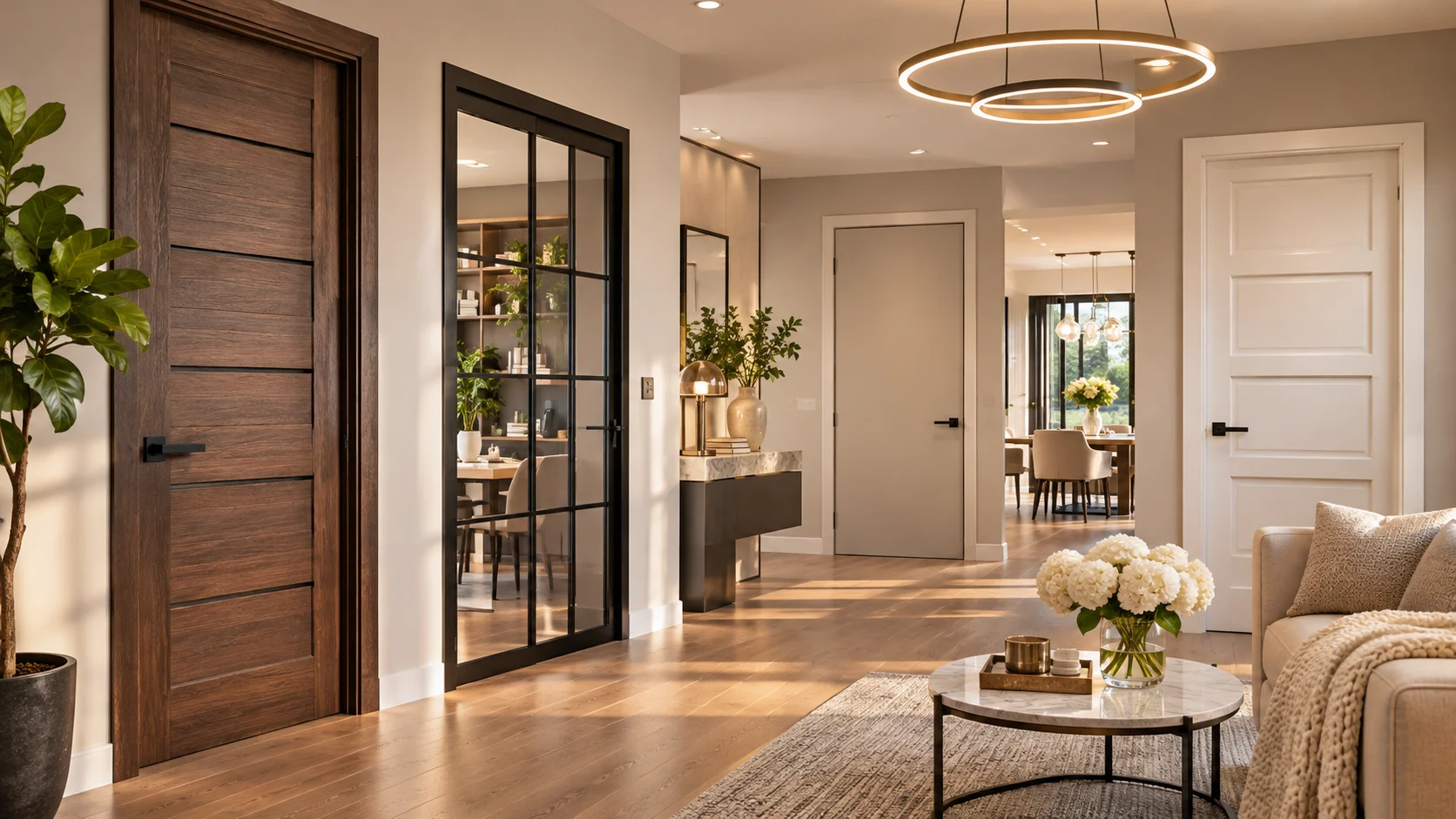
Modern interior doors are more than simple barriers between rooms. They are important design elements that influence how your home looks, feels, and functions. From sleek flush doors and elegant glass panels to minimalist wooden designs, the right door can enhance your interior while providing privacy, improving room separation, and supporting your overall decorating style.
Choosing modern interior doors involves considering materials, colors, finishes, hardware, and available space. Whether you’re renovating an existing property or designing a new home, today’s interior door styles offer options for almost every room and budget. This guide explores beautiful modern interior door ideas, popular materials, design trends, practical features, and helpful tips for selecting doors that complement your home.
What Are Modern Interior Doors?
Modern interior doors are designed with clean lines, practical features, and a relatively simple appearance. Unlike traditional doors with elaborate moldings and decorative carvings, modern styles often emphasize smooth surfaces, geometric shapes, and understated hardware. These features create a streamlined look that works well in contemporary homes, apartments, and renovated interiors.
Modern doors are available in several designs, including flush, paneled, glass, sliding, and pivot styles. Some feature natural wood textures, while others use painted finishes or combinations of different materials. This variety allows homeowners to select doors that match their preferred aesthetic without sacrificing everyday functionality.
A modern interior door should also support the practical requirements of its location. Bedroom doors may need greater privacy and sound reduction, while living room doors can benefit from decorative glass panels. Choosing the right combination of appearance and performance helps create interiors that feel attractive, comfortable, and easy to use.
Popular Modern Interior Door Styles
Flush doors are among the most recognizable modern interior door styles because they feature smooth, uninterrupted surfaces. Their simple design works particularly well in minimalist spaces where clean architectural lines are important. Available in wood veneer, laminate, and painted finishes, flush doors can complement a wide range of contemporary decorating schemes.
Modern panel doors provide another attractive option by combining subtle recessed or raised sections with simple geometric arrangements. Horizontal grooves, narrow vertical panels, and understated rectangular designs can add visual interest without appearing overly decorative. These doors suit homeowners who want a contemporary appearance with slightly more detail than a completely flat surface.
Glass, sliding, and hidden doors are also popular in modern interiors. Glass designs allow light to move between rooms, while sliding systems can help manage limited floor space. Hidden doors blend into surrounding walls or cabinetry, creating a continuous appearance that feels especially suitable for carefully planned architectural interiors.
Modern Flush Doors for a Minimalist Look
Modern flush doors are ideal for homeowners who appreciate simple surfaces and uncluttered design. Their flat appearance creates a smooth visual transition between rooms without introducing unnecessary decorative details. Painted white, warm gray, or natural wood finishes can help these doors blend into different contemporary interiors.
One advantage of flush doors is their versatility. They work well in bedrooms, home offices, hallways, and other areas where a straightforward design is preferred. Depending on construction, flush doors may have hollow, solid, or engineered cores, allowing homeowners to choose different levels of weight, durability, and sound reduction.
Hardware selection can further influence the appearance of a flush door. Matte black handles create contrast against lighter finishes, while brushed metal hardware provides a softer contemporary effect. Matching door hardware with nearby fixtures and furniture can help create a consistent interior design without making every detail look identical.
Modern Wooden Interior Doors for Natural Warmth
Wooden interior doors bring warmth, texture, and natural character into modern homes. Oak, walnut, maple, and other wood species offer different grain patterns and color variations. These materials can soften rooms featuring concrete, metal, glass, or neutral painted walls while maintaining a clean contemporary appearance.
Natural wood doors are available in solid wood, engineered wood, and veneer constructions. Each option has different characteristics involving cost, stability, maintenance, and appearance. Engineered designs may offer improved dimensional consistency in certain environments, while solid wood provides a distinctive natural material experience.
Modern wooden doors work particularly well with minimalist furniture, neutral flooring, and simple architectural finishes. Light oak can create an airy Scandinavian-inspired atmosphere, while darker walnut adds depth to contemporary spaces. Choosing a finish that complements existing cabinetry and flooring helps maintain visual harmony throughout the home.
Modern Glass Interior Doors for Brighter Spaces
Glass interior doors can help distribute natural light between rooms while creating a more open atmosphere. They are particularly useful in spaces where solid doors block light from hallways or adjoining areas. Clear, frosted, and textured glass options provide different balances of visibility, privacy, and decorative interest.
Clear glass works well between communal spaces where visual connection is desirable. Frosted or obscured glass may be more appropriate for rooms that need additional privacy, such as home offices or certain bathroom arrangements. However, glass transparency and privacy performance vary, so the specific product should be evaluated before installation.
Safety is an important consideration when selecting glass doors. Appropriate safety glazing should be used according to applicable building requirements and installation conditions. Quality frames, suitable hinges, and properly installed hardware help support reliable operation while maintaining the clean appearance expected from contemporary glass door designs.
Modern Sliding Interior Doors for Small Rooms
Sliding interior doors are practical for spaces where conventional hinged doors require too much clearance. Instead of swinging into a room, the door moves along a track or into a concealed wall pocket. This arrangement can improve furniture placement and circulation in compact bedrooms, bathrooms, and home offices.
Surface-mounted sliding doors remain visible against the wall when opened, allowing them to become decorative features. Pocket doors disappear into wall cavities, creating a more discreet appearance. Both options require careful planning because tracks, handles, wall construction, and nearby electrical installations can affect compatibility.
Sliding doors are available in wood, glass, and composite materials, providing flexibility for different design preferences. However, some systems offer less acoustic privacy than properly sealed hinged doors. Selecting suitable hardware and understanding the room’s requirements helps ensure that space-saving benefits do not compromise everyday comfort.
Modern French Interior Doors for Elegant Rooms
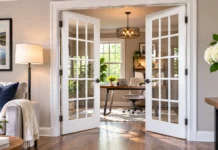
Modern French interior doors combine traditional double-door functionality with simplified contemporary designs. They commonly feature large glass panels, narrow frames, and minimal decorative details. This approach creates an attractive connection between rooms while allowing natural light to move through adjoining spaces.
These doors work well between living rooms, dining areas, home offices, and other spaces that benefit from flexible separation. Clear glazing maintains visual openness, while frosted glass offers additional privacy. Black metal-style frames, natural wood, and painted finishes can create different contemporary appearances.
Before installing French doors, consider the available swing clearance and the dimensions of the opening. Both door leaves need sufficient room to operate comfortably unless a specialized arrangement is used. Accurate measurements and appropriate hardware help ensure that the finished installation looks balanced and functions smoothly.
Modern Black Interior Doors for Bold Contrast
Black interior doors have become popular because they create a strong contrast against light-colored walls and neutral interiors. Their simple appearance can add architectural definition without requiring elaborate decorative details. Matte and satin finishes are particularly effective for homeowners who prefer an understated contemporary style.
Black doors work well with white, beige, gray, and natural wood surroundings. They can also complement black window frames, lighting fixtures, cabinet handles, and other interior accents. Repeating a few similar finishes throughout a room helps create a coordinated appearance without making the space feel overly uniform.
However, black doors may show dust, fingerprints, and surface marks differently depending on the finish. Choosing a durable, easy-to-clean coating can simplify regular maintenance. Consider the room’s lighting and overall color palette before selecting a dark finish, especially in compact areas with limited natural light.
White Modern Interior Doors for Timeless Appeal
White modern interior doors provide a clean and versatile appearance that suits many decorating styles. They can blend naturally with light-colored walls or create contrast against darker paint. Their understated design makes them suitable for bedrooms, hallways, living areas, and other spaces where visual simplicity is important.
Flush white doors are especially popular in minimalist and Scandinavian-inspired interiors. Subtle panel designs offer a slightly more detailed alternative without overwhelming the surrounding decoration. Warm white finishes can create a softer appearance, while cooler whites may complement contemporary gray or blue color schemes.
Choosing the correct white finish involves considering wall colors, trim, and lighting conditions. Slightly different white shades may become noticeable when placed directly beside each other. Testing paint samples and reviewing finish options under natural and artificial light can help achieve a more coordinated result.
Modern Interior Door Colors and Finishes
Door color can influence the atmosphere of a room and help connect different interior design elements. Neutral shades such as white, beige, gray, and black remain popular because they coordinate easily with many materials. However, muted greens, warm browns, and soft blues can also create attractive contemporary effects.
Natural wood finishes provide another option for adding texture and visual warmth. Light wood tones can complement airy interiors, while darker finishes introduce stronger contrast. Painted doors offer greater flexibility when homeowners want to match walls, create a feature, or update an existing design.
Finish selection is just as important as color. Matte coatings provide a subdued appearance, while satin finishes offer a subtle sheen that may be easier to clean in certain applications. Consider the manufacturer’s durability recommendations, cleaning requirements, and expected wear before selecting a final surface treatment.
Modern Interior Door Materials Compared
Modern interior doors are manufactured using several materials, each offering different advantages. Solid wood provides natural character, while engineered wood products can offer consistent construction and varied finishes. MDF and composite doors are also widely used because they support smooth painted surfaces and detailed manufacturing.
Hollow-core doors are often lighter and more affordable than solid-core alternatives. However, their sound reduction and impact resistance may differ considerably depending on construction. Solid-core doors can provide improved acoustic performance and a more substantial feel, making them useful for bedrooms and home offices.
| Door Material | Main Advantages | Considerations |
|---|---|---|
| Solid Wood | Natural texture and durability | Cost and moisture movement |
| Solid-Core Composite | Substantial feel and sound reduction | Heavier construction |
| Hollow-Core | Lightweight and economical | Less sound insulation |
| MDF | Smooth painted finish | Moisture sensitivity varies |
| Glass | Natural light and openness | Privacy and safety glazing |
| Wood Veneer | Natural appearance with engineered core | Finish and edge durability |
When comparing materials, consider maintenance, moisture exposure, available budget, and intended room use. A bathroom door may need better moisture resistance than a bedroom door. Selecting suitable construction helps ensure that your modern interior doors maintain their appearance and performance over time.
Modern Interior Doors for Bedrooms
Bedroom doors should provide a comfortable balance of privacy, durability, and attractive design. Solid-core flush doors are a practical option because their construction can help reduce sound transmission compared with many hollow-core alternatives. Simple panel designs also work well when homeowners want subtle decorative interest.
The door finish should complement bedroom furniture, flooring, and wall colors. Light wood creates warmth, while painted white or gray doors support minimalist interiors. Darker finishes can introduce contrast when the surrounding room has sufficient lighting and complementary details.
Hardware is another important part of bedroom door selection. Comfortable lever handles and suitable privacy functions can improve everyday convenience. Proper installation, secure latching, and appropriate clearances help ensure smooth operation while supporting the room’s privacy requirements.
Modern Interior Doors for Bathrooms
Bathroom doors need materials and finishes that can tolerate frequent changes in moisture and humidity. Painted solid-core composite doors and other suitable products may provide useful options, depending on manufacturer specifications. Selecting moisture-resistant surfaces helps reduce the risk of swelling, peeling finishes, or other deterioration.
Privacy is especially important in bathroom door design. Solid doors provide visual separation, while properly selected frosted glass may be suitable in certain layouts. Privacy locking hardware should function reliably and include an appropriate emergency release feature when required.
Ventilation and installation details also influence bathroom door performance. Poor airflow can contribute to persistent moisture problems that affect surrounding finishes. Choose hardware, coatings, and door construction suitable for the environment while following applicable building requirements and manufacturer recommendations.
Modern Interior Doors for Living Rooms
Living room doors can influence how connected or separated adjoining spaces feel. Glass doors and modern French doors are popular because they preserve light and visual openness. Solid flush doors may be preferable when homeowners want a quieter or more private room arrangement.
Double doors can create a wide opening between living and dining areas, supporting flexible use during gatherings. Sliding doors provide another option for managing room separation without requiring conventional swing space. The best choice depends on the room layout and how frequently the opening will be used.
Consider furniture placement, walking paths, and nearby architectural features before selecting a living room door style. Large glazed panels can become attractive design elements, while minimalist wooden doors blend easily with surrounding surfaces. A carefully selected door helps support both the room’s appearance and practical functionality.
Modern Interior Doors for Small Spaces
Small rooms benefit from interior doors that use available space efficiently. Pocket doors and surface-mounted sliding systems can reduce the clearance required by conventional hinged doors. This may create additional room for furniture, storage, and comfortable movement in compact residential layouts.
Light colors and glass panels can also influence how spacious a room feels. A white flush door may blend with nearby walls, while a suitable glass door allows light to pass between adjoining areas. However, visual openness should not come at the expense of necessary privacy.
Before choosing a space-saving door, check the wall structure and installation requirements. Pocket doors need suitable cavities, while surface-mounted systems require unobstructed wall space beside the opening. Accurate planning helps prevent interference with electrical services, furniture, and other building components.
Modern Interior Door Hardware and Handles
Door hardware plays an important role in the overall appearance and usability of modern interior doors. Minimalist lever handles, concealed hinges, and simple locking mechanisms can complement clean architectural lines. Popular finishes include matte black, brushed nickel, satin chrome, and warm metallic tones.
The selected hardware should match the door’s thickness, construction, and intended function. Passage handles suit rooms that do not require locking, while privacy sets are commonly used for bedrooms and bathrooms. Door closers, magnetic latches, and other specialized components may be appropriate for particular designs.
Consistency can help create a coordinated appearance throughout the home. Using similar handle finishes across related rooms provides visual continuity without requiring every door to look identical. Choose reliable products that feel comfortable to operate and meet relevant installation requirements.
How Much Do Modern Interior Doors Cost?
Modern interior door prices vary according to material, construction, design, and manufacturer. In the United States, basic interior door slabs may cost approximately $50 to $200, while solid-core and decorative options can cost substantially more. Premium wood, glass, and specialized sliding systems may require larger budgets.
Installation expenses depend on whether the project involves replacing an existing door slab or changing the entire frame and hardware. Standard replacements are generally simpler than custom openings or structural modifications. Labor rates also vary by location, making local quotations useful for establishing realistic costs.
Additional expenses may include hinges, handles, trim, painting, delivery, and adjustments to the door opening. Homeowners should compare complete project costs rather than focusing only on the advertised door price. A well-planned budget helps balance appearance, functionality, material quality, and long-term maintenance requirements.
How to Choose the Right Modern Interior Doors
Choosing the right door begins with understanding the purpose of the room. Bedrooms and bathrooms usually need privacy, while shared living spaces may benefit from glazed designs. Identifying these practical requirements helps narrow the available options before considering colors, materials, and decorative features.
Measure the door opening carefully, including width, height, thickness, and frame condition. Check the swing direction and available clearance for hinges, furniture, and nearby walls. These details are important because even an attractive door may become inconvenient when its dimensions or operating mechanism do not suit the space.
Finally, compare construction quality, finish durability, hardware compatibility, and maintenance needs. Consider whether the door complements your home’s existing architectural features and will remain practical as your needs change. Selecting a suitable product rather than following every passing trend can provide better long-term value.
Common Mistakes When Choosing Modern Interior Doors
One common mistake is selecting a door based only on appearance without considering room requirements. A large glass panel may look attractive but provide insufficient privacy for certain spaces. Similarly, a lightweight hollow-core door may not offer the sound reduction expected in a home office or bedroom.
Incorrect measurements can also create expensive installation problems. Door slabs, prehung assemblies, and replacement frames have different sizing requirements. Measuring the existing opening and checking manufacturer specifications before purchasing helps reduce the risk of incompatible products.
Another mistake is overlooking hardware and maintenance costs. A specialized sliding door may require additional tracks, fittings, and installation work beyond the original purchase price. Considering the complete project from the beginning helps avoid unexpected expenses and supports a more successful home improvement result.
Conclusion
Modern interior doors can improve the appearance and functionality of almost any home. From minimalist flush designs and natural wooden finishes to decorative glass panels and space-saving sliding systems, there are options for many architectural styles. Choosing the right combination of design and practicality helps create interiors that feel comfortable and visually coordinated.
Materials, colors, hardware, and room requirements should all influence your decision. Solid-core doors may suit spaces requiring additional sound reduction, while glazed designs can improve light distribution between rooms. Accurate measurements and suitable installation methods are equally important for achieving reliable long-term performance.
Whether you’re renovating a single room or updating doors throughout your property, thoughtful selection can make a noticeable difference. Focus on construction quality, everyday usability, and finishes that complement your interior. Well-chosen modern interior doors can enhance your home’s appearance while supporting comfortable daily living for years.
Frequently Asked Questions
What Are the Most Popular Modern Interior Doors?
Popular modern interior doors include flush doors, minimalist panel doors, glass doors, sliding doors, and contemporary French doors. Each style offers different advantages depending on room layout and design preferences.
Are Solid-Core Interior Doors Better Than Hollow-Core Doors?
Solid-core doors generally provide better sound reduction and a more substantial feel. Hollow-core doors are usually lighter and more affordable, making them practical for certain residential applications.
What Color Is Best for Modern Interior Doors?
White, black, gray, and natural wood finishes are popular choices. The best color depends on your walls, flooring, furniture, lighting, and preferred interior design style.
Can Modern Interior Doors Be Used in Small Rooms?
Yes, modern sliding doors, pocket doors, and simple flush designs can work well in small rooms. Space-saving mechanisms may improve furniture placement and reduce swing clearance requirements.
How Much Does It Cost to Replace an Interior Door?
Basic interior door slabs may cost approximately $50 to $200, while premium designs cost more. Hardware, labor, painting, and frame modifications can increase the total replacement expense.